
A local guide to Cape Town’s storied theatres
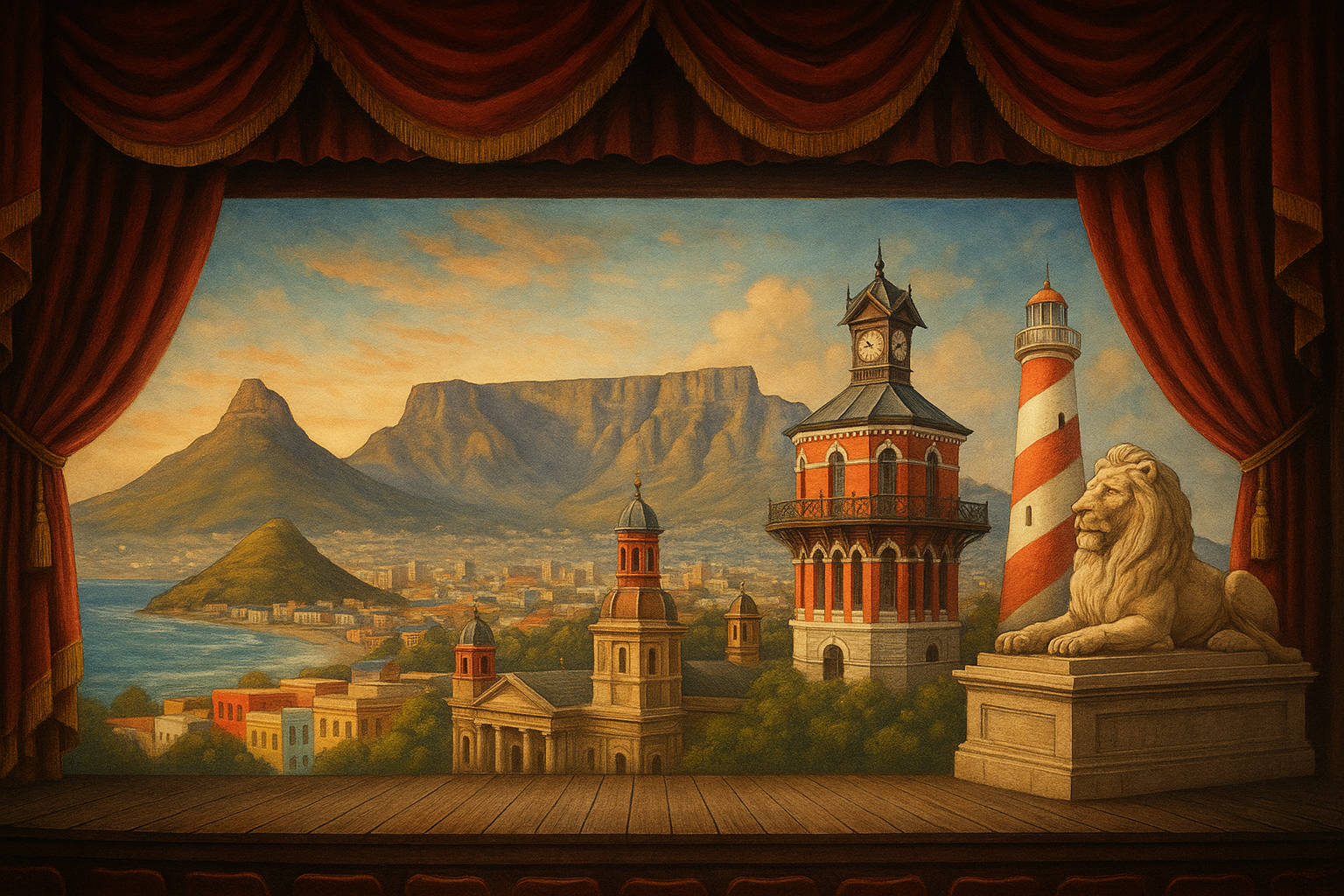
Explore Cape Town's vibrant, ever-evolving theatre scene, from its 1800 origins to modern-day resilience and innovation.
Cape Town's theater scene is like a chameleon, always changing! From early plays in dusty storerooms to secret shows that bravely fought apartheid, it has always found a way to perform. Now, it's a buzzing mix of modern tech, pop-up stages, and friends from all over the world. It’s a lively mirror reflecting the city's ups and downs, never stopping its amazing show.
How has Cape Town's theater scene adapted and evolved throughout its history?
Cape Town's theater scene has consistently demonstrated remarkable adaptability, transforming from makeshift stages in storerooms and warehouses during its early days, through periods of political resistance where performances covertly challenged apartheid, to its current vibrant, diverse iteration utilizing modern technology, pop-up venues, and international collaborations, always reflecting the city's dynamic social and political landscape.
Get Cape Town news in your inbox
Stay updated with the latest stories from the Mother City.
Candlelit Storerooms to Marble Palaces – The First 150 Years
Cape Town never waits for anyone to build it a playhouse. In 1800, bored officers hammered surplus planks inside a garrison near the Castle of Good Hope, stuck candles in bottles and let Venice and London flicker across the rough-cast walls. Twenty-odd years later, the African Theatre rose on today’s Riebeeck Square; its graceful pillars promised civility, yet the floor was still packed earth and the lamps reeked of whale oil. When flames devoured the place in 1834, actors simply shifted to a harbour warehouse, proving the colony would rather invent a new room than live without make-believe.
Gold and shipping money paid for the 1860 Theatre Royal on Landros Street: three gaudy tiers, gas chandeliers, backstage doors tall enough for a rented camel. Neapolitan divas earned standing ovations, but local writers slipped Afrikaans couplets between the arias and Malay comics mocked the customs man mid-monologue. By the 1880s, “coloured” choirs from District Six were hiring halls for variety bills that slammed ghoema beats against operatic cadenzas. Theatre had already become the city’s polyglot diary, scribbled in whoever’s ink hadn’t dried yet.
Smoke from world wars, the 1913 Land Act and the ’22 Rand revolt drifted across the footlights. The Alhambra on lower Long switched to talking pictures yet kept Thursdays for jazz operettas officials pretended not to notice. In 1931, UCT’s Little Theatre opened with only 200 seats, but its student producers - most of them women locked out of professional boards - cut ticket prices so factory hands could attend after the siren. Minimal flats, Brechtian lamps and scripts that jeered at Berlin or Pretoria set the tone: the stage would answer politics with its own spotlight.
Coding Resistance in Neon and Uniform
World War II filled houses six nights a week, but censorship thickened the moment apartheid was elected in 1948. Councils demanded scripts in triplicate; directors replied with Trojan metaphors. A toga drama about land theft quietly roasted the Group Areas Act; a Biblical exile sang of forced removals in Psalm cadence. In 1950, Maynardville’s first outdoor Shakespeare - licensed because bureaucrats thought A Midsummer Night’s Dream harmless - let every coloured listener hear Titania’s line “I am spirit of a place” as a battle-cry of belonging.
The 1960s poured concrete confidence into the Foreshore: the Nico Malan (today’s Artscape) arrived clothed in marble, its ballet seasons imported and polite. Around the corner, an attic called Space Theatre seated eighty on wobbly chairs. Here Athol Fugard’s Boesman and Lena opened with a mixed cast, queueing past the Immorality Act’s seating clauses. Sets were collapsible; if police climbed the stairs, the show morphed into a “rehearsal” before the third line. Password clubs such as The Factory and Thelab taught audiences knock-codes and the wisdom of bringing their own cushions.
By the 1980s, the Baxter had joined the game. Director Barney Simon invited township playwrights to run workshops, filling the lobby with isiXhosa, SeSotho and slapstick. Subsidies vanished, but Swedish attachés and Danish NGOs slipped in lighting rigs and bursaries. A protest piece rehearsed in Langa could play Amsterdam, return with refurbished gear, and seed two new troupes in Gugulethu before the year was out. Theatre schools sprouted in church cellars; photocopied manuals explained how to bake a PAR can from a baked-bean tin.
Democracy, Data, and the Pop-Up Republic
1994’s freedom detonated rather than soothed the scene. State grants reappeared but were thin soup; Andrew Lloyd Webber’s chandelier sucked sponsorship from every small house for eighteen glittering months. Yet stages multiplied faster than malls. Community halls in Khayelitsha and Mitchells Plain mounted tri-lingual pieces that toured on flatbed trucks. Derelict movie houses - The Luxurama, The Bioscope - revived as 300-seat crucibles for hip-hop musicals, Afrikaans kabaret, and climate-grief dance. Internet cafés doubled as box offices; shebeens printed handbills alongside happy-hour flyers.
Rising inner-city rents shoved companies outward. Magnet Theatre occupied a disused shoe factory in Observatory, packed rammed-earth walls for acoustics and ferried schoolkids in a borrowed minibus. Kalk Bay’s 140-year-old church morphed into a playhouse where chandeliers hung from fishing rope and jazz combos jammed after curtain call. Maynardwood stone pines became living scenery; spectators text-voted whether Puck should taunt in Kaaps or fluent isiXhosa. Even a global bank tried romance: every December a shipping container unfolded into a 90-seat black box on the V&A Waterfront, then hitched a ride to Stellenbosch for harvest-season Shakespeare.
Technology rewired the ritual. A 2015 livestream of an isiXhosa Macbeth reached 48 rural schools powered by a single generator and a satellite dish no bigger than a car wheel. When lockdown shuttered halls in 2020, Artscape technicians couriered green-screen kits to actors’ lounges and stitched a TikTok Hamlet shot in a Langa backyard; the clip circled the planet and lured Netflix scouts. Virtual-reality rigs now let home viewers wander among sweating dancers - yet data costs sharpen the divide, and candle-lit, load-shed nights still draw crowds happy to surrender phones at the door.
Funding Wars and the Palimpsest Future
Cashflow is three-dimensional chess. Lottery boards freeze, municipal grants adore rugby. Venues moonlight as wedding factories, whisky-tasting parlours and corporate improv arenas; risky art piggybacks on bouquet tosses. Some artistic directors speak fluent Swedish and Excel; others rely on micro-patrons who each chip R200 a month to keep a 40-seater breathing, their names handwritten on the dressing-room door like living programmes. In Muizenberg, the Masque Theatre still honours a R50 membership dreamt up in 1957; its new asbestos-free roof was paid for by auctioning vintage programmes on bidorbuy.
Education loops keep widening. Magnet’s two-year course takes performers who never finished Grade 10 and exports them to Sweden; they come home to run toddler theatre in Delft crèches. The Baxter’s “Zabalaza” festival locks veteran directors and first-time writers in a 72-hour boot-camp; winners earn a main-stage slot plus taxi money that fills the house with Cape Flats pensioners. Artscape ferries gogos to free dress rehearsals, then remixes their WhatsApp voice notes into the final lighting plot. Farmworkers’ grandchildren watch their own gestures mirrored under professional Fresnels, and the pipeline leaks talent in every direction.
International co-productions grow stranger: a 2023 Reykjavik exchange swapped casts for an eco-saga about melting glaciers; Japanese butoh dancers spent June in Gugulethu hostels, folding funeral steps into a condemned hostel piece scheduled for demolition. Visas collapse, flights evaporate, yet thwarted plans germinate new monologues - lost luggage becomes puppetry, Zoom break-ups loop as soundscape.
Audiences keep morphing: German backpackers flash e-tickets, Khayelitsha book-club aunties arrive in matching ankara, TikTok hunters prowl backstage for 30-second fame. Ushers pull double shots of espresso; programmes arrive as QR codes. Still, Maynardville regulars debate whether 1974’s Oberon overdid the eyeliner, and Masque volunteers still fry koeksisters while arguing over follow-spots. The stage is a palimpsest: Victorian melodrama under grime rap, gender-fluid fairies flirting with Voortrekker ghosts, each curtain call both finale and audition for the next uprising of stories.
Night after night the loop reboots. In Observatory a choreographer tapes LEDs to a graffitied wall, syncing flicker to an unborn heartbeat. In Salt River a retired fitter welds scrap torsos that will belch smoke during a climate satire. On District steps an elder rehearses quadruple-tongued lines - Afrikaans, English, isiXhosa, Urdu - code-switching every breath to mimic the suburb’s lost babel. A naval museum stays open late so audiences in hard hats can stalk a submarine thriller among torpedo tubes; tickets vanish in forty-three minutes.
There is no single hub, only restless orbit. A teenager who once swept popcorn at Theatre on the Bay flies to New York, returns to stage a musical about 18th-century mermaid slavers, casts old usher mates as singing anemones. A Nyanga busker who cracked jokes outside Maynardville now charges tourists to point at the jacaranda where he first kissed a girl in a fairy costume. A lighting tech who learnt his craft during township blackouts now rigs Swedish opera houses, yet every December he’s back inside a Philippi shipping container, plotting a community nativity with cable ties and love.
Every show ends; the city refuses the final blackout. Costumes reappear at protest marches, monologues resurface in taxi-rank rap battles, spotlight bulbs twist into rural clinic ceilings. Each ticket stub is a seed, each dimmed bulb a latent star, and Cape Town keeps writing new co-ordinates across its restless, luminous sky.
How has Cape Town's theater scene adapted and evolved throughout its history?
Cape Town's theater scene has consistently demonstrated remarkable adaptability, transforming from makeshift stages in storerooms and warehouses during its early days, through periods of political resistance where performances covertly challenged apartheid, to its current vibrant, diverse iteration utilizing modern technology, pop-up venues, and international collaborations, always reflecting the city's dynamic social and political landscape.
What were the earliest forms of theater in Cape Town and how did they operate?
In its earliest days, around 1800, Cape Town's theater began with bored officers hammering together planks in a garrison near the Castle of Good Hope, using candles for light. The African Theatre, built later, had a packed earth floor and whale oil lamps. When it burned down, actors simply moved to a harbor warehouse, showing a constant need for performance regardless of dedicated venues.
How did theater in Cape Town resist apartheid?
During apartheid, censorship was prevalent, but theater found creative ways to resist. Directors used Trojan metaphors, such as toga dramas about land theft to critique the Group Areas Act, and biblical exiles singing of forced removals. The Space Theatre famously staged Athol Fugard's Boesman and Lena with a mixed cast, bypassing Immorality Act seating laws. Secret

Aiden Abrahams is a Cape Town-based journalist who chronicles the city’s shifting political landscape for the Weekend Argus and Daily Maverick. Whether tracking parliamentary debates or tracing the legacy of District Six through his family’s own displacement, he roots every story in the voices that braid the Peninsula’s many cultures. Off deadline you’ll find him pacing the Sea Point promenade, debating Kaapse klopse rhythms with anyone who’ll listen.
View all articles →