
Abigail Kok crowned South Africa’s top matric achiever
Abigail Kok, South Africa's top student, achieved national fame through extraordinary dedication, unique study habits, and a passion for science and empowering others. Discover her inspiring journey.
The Girl Who Climbed Faster Than the Gautrain: Inside Abigail Kok’s 95.3 % NSC Triumph
Abigail Kok is a super smart student who got an amazing 95.3% on her big final exams, the best in 2025! She even got the highest grade ever for a girl in tough science since 2014, scoring a fantastic 97%. Abigail worked incredibly hard, waking up super early and studying tons, even helping other students learn. She's so dedicated that she's already doing advanced science research, showing everyone that learning never stops, even after school.
What is Abigail Kok's academic achievement?
Abigail Kok achieved an exceptional 95.3% national matric average, placing her at the top of the 2025 Senior Certificate pyramid. She secured the highest mark awarded to a female in Physical Sciences since CAPS began in 2014, with an outstanding 97%.
Get Cape Town news in your inbox
Stay updated with the latest stories from the Mother City.
1. A Canvas Tote at the Summit
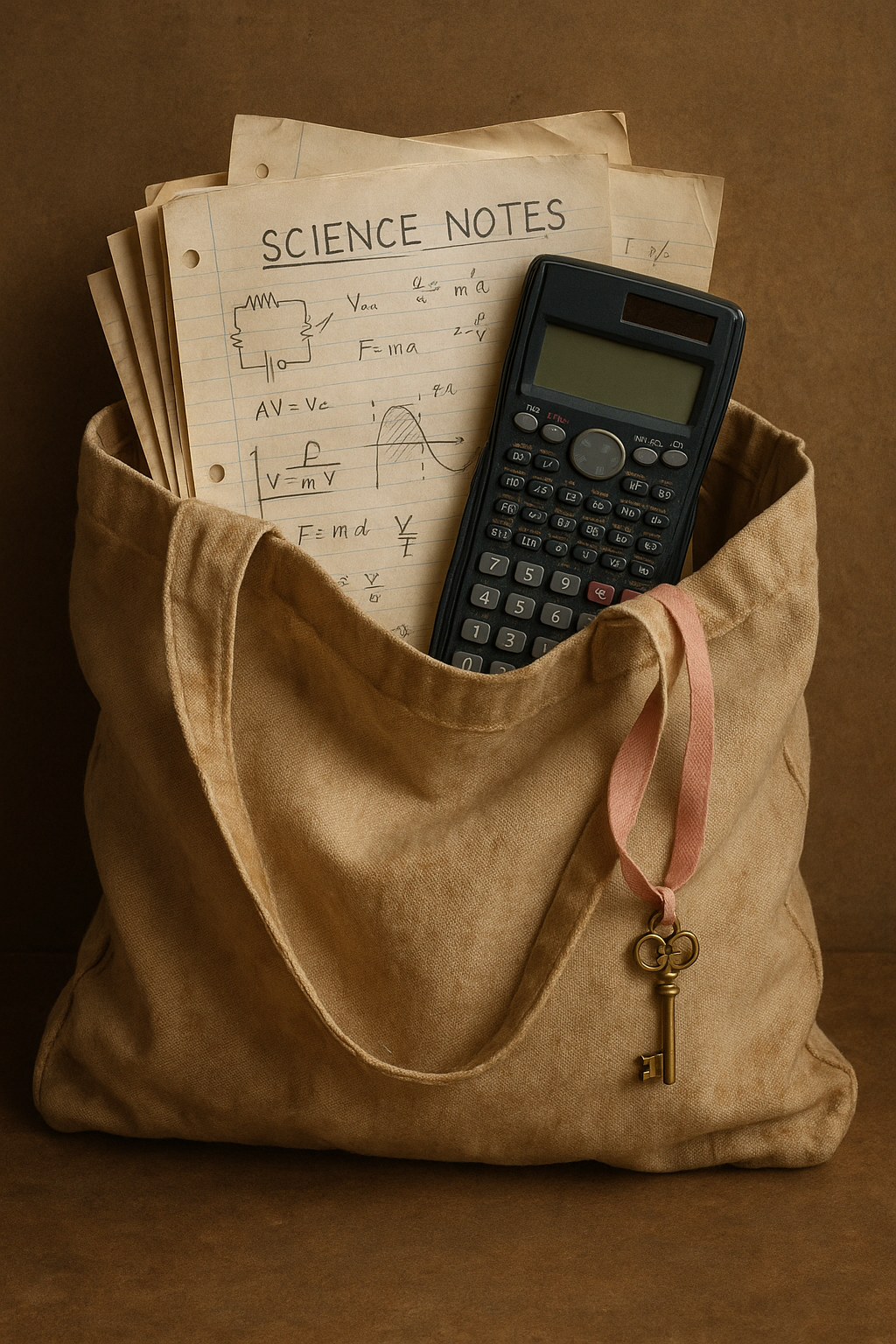
Abigail Kok’s 95.3 % national matric average has shoved her name to the very top of the 2025 Senior Certificate pyramid, yet the eighteen-year-old from George still bounds up the York High staircase two steps at a time. Her faded canvas carrier - inked by every science teacher she has ever had - flaps against her knee while yesterday’s lab scribbles and a well-worn calculator poke out the top. Classmates once mocked the tatty bag; now they wonder aloud whether it will one day sit behind glass in the school foyer. She laughs off the museum idea, but the sound is gentler than the tense giggles that ricocheted through the corridors during the June mock-season.
Between the first day of February and the last Friday of October she clocked 312 laboratory afternoons, 94 of them after the janitor had already padlocked the gate. A pink-ribboned duplicate key - cast from a Prestik impression the robotics club showed her on YouTube - still dangles beside her bedroom mirror, a quiet trophy for every extra diffraction-grating experiment or steel-ball swing she timed to the hundredth of a second.
Those extra hours were not heroic accidents; they were booked with the precision of an airline schedule. She trained her body to snap awake at 04:35 - five minutes before Sandton’s first Gautrain slips away - because, she says, “if the economy is already breathing, so should I.” A two-minute arctic shower shocks her vagus nerve awake; by 05:00 she is at the dining-table performing a ritual she labels “blank-page recall,” rewriting the previous day’s notes from memory on A3 sheets. Red ink flags any gap she cannot reconstruct; those scarlet blanks become sunrise targets. At 06:15 she and her father Johann, a fitter-and-turner who never completed matric, sprint 5 km along the Outeniqua foothills while debating entropy and municipal tariff formulas he records in a leather notebook titled “Abi’s Universe – Vol. III.”
2. Breakfast, Break-times and the Question Engine
Her first meal never varies: three scrambled eggs, half an avocado, one slice of rye, 250 ml of sugarless rooibos. The macro-nutrient ratio sheet is taped inside the pantry door; she has eaten this exact plate since Grade 10. By 07:20 she is 40 minutes early for school, staking claim to the library cubicle that catches dawn light at the shallowest angle and therefore the lowest screen glare. For three consecutive terms she volunteered to shelve returned books, a subtle campaign that earned her unofficial squatters’ rights to the sun-drenched corner.
When the lunch bell rings she does not head for the cafeteria. Instead she straps on earphones and power-walks the rugby-field perimeter while listening to a 42-minute playlist she engineered herself: every syllabus definition re-recorded at 1.75× speed, 2 847 sentences in her own voice, the exact lap-time of the field. By the final whistle she is back at the science block, blood pumped and brain freshly marinated in chemical-equilibrium explanations.
The habit that really sets her apart is the torrent of questions she fires each day. On average she scrawls 23 queries on 10 × 10 cm tear-offs, colour-codes them by Bloom’s taxonomy level, and pins them on the staff-room “Query Wall.” Teachers compete informally to purge the most squares; her physics mentor, Mr. Davids, photographed the afternoon he knocked out 18 in 45 minutes. The squares are then glued into a hard-cover “evidence journal” that weighed 4.3 kg by October. When a national examiner stumbled on the brick of paper he emerged perspiring and muttered, “This learner is already setting next year’s supplementary paper.”
3. From George to the Galaxy: e-STEM and the Gender Gap
Abigail’s ascent coincided with the quiet rollout of the Western Cape Education Department’s e-STEM initiative, a 2022 project piping plasma-screen lessons, Arduino kits and university-level data sets to rural hubs. York High, once a traditional English-medium ex-Model C campus, became one of those nerve centres. She immediately volunteered as a weekend tutor, boarding department minibuses to Uniondale, Haarlem and Murraysburg. Township classes with patchy Wi-Fi forced her to adapt: learners sketched mind maps from memory on chipped chalkboards, photographed them with cracked phones and reviewed the shots later. Her Saturday group of 14 Murraysburg Grade-11s lifted their physics average from 38 % to 67 % in six months; the district office begged for a tutorial video. She filmed it in one take on a Huawei propped against an old hospital drip stand, compressed the file to 100 MB, and watched it detonate to 18 000 teacher-group downloads in two days. Province has since commissioned a full MOOC with her name on the co-author slide.
National data remind us how steep the mountain still is. Of the 1.034 million full-time candidates who wrote the 2025 NSC, only 5 712 earned a Physical Sciences distinction - about 0.55 %. Boys outnumber girls in that elite slice 1.6 to 1, a ratio that has inched down just 0.04 since 2020. Abigail’s 97 % is the highest mark awarded to a female in the subject since CAPS began in 2014. Umalusi’s technical report praised her “second-year university” treatment of an optional astrophysics question in which she derived a Roche-limit expression and critiqued its zero-tensile-strength premise using a liquid-mirror analogy.
The morning after the country learned her name she was nowhere near a television crew. She had boarded the 05:30 Intercape to Stellenbosch to spend two days in an engineering wind tunnel, analysing aeroelastic flutter in grape-vine canopies - research that plugs directly into the drought-resistant trellises her father drafts for local vineyards. By the time reporters reached York High, she was 250 km away, unreachable, calibrating vortex shedding on Pinotage stems.
4. Cobalt Steeples, MIT Portals and Tomato-Yarn Beanies
Back home, George is rebranding itself “Home of the Queen of Science.” The Dutch-Reformed steeple glows cobalt blue - the colour of the matric science textbook - and the mayor seeded a R50 000 bursary trust with money from a pepper-growers’ cooperative. Corner spaza shops push an “Abigail Special”: a R5 cone of NikNaks and a 500 ml Coo-ee grape, the Thursday snack she has bought since Grade 8. York High would like to rename the science block “Kok Wing,” but only if she approves after her first undergraduate year. “I prefer living buildings to stone epitaphs,” she told the principal.
Recruiters are swarming like fruit-bats. MIT has flagged her folder “Priority A – Global STEM,” a tag normally reserved for Physics-Olympiad medalists. Cambridge’s Robinson College posted a handwritten letter quoting her Grade-11 graphene essay and threw in a choral scholarship though she cannot yet read notation. Stellenbosch dangles a full Vice-Chancellor’s Scholarship plus a guaranteed renewable-energy research post. Yet insiders say she is haggling with UCT’s Electrical Engineering faculty to tailor a mechatronics track fusing their new AI major with work at the V&A Waterfront Renewable Energy Hub, and she wants residence credit for living in the township tech lab she helped launch in Pacaltsdorp - currently against residence rules but under 2026 review.
Between scholarship negotiations she still crochets beanies from “tomato-yarn,” thin plastic ribbon spun from greenhouse waste, selling them for R80 and pouring profits into sanitary-pad care packages for her rural Saturday classes. She is learning conversational isiXhosa via WhatsApp voice notes with Yolanda, a Grade-10 Tembalethu learner she met at winter school. Her latest prototype is a DVD-fragment spectrometer jammed into a cardboard toilet roll; it already resolves chlorophyll degradation at 2 nm precision, enough to warn farmers of Cabernet leaf-roll virus before the vines yellow.
On the final day of the school year the York High microphone died during the prefect hand-over. Abigail stepped forward, cupped her hands and delivered a farewell that skipped the usual fireworks: “Remember, the syllabus ends; learning doesn’t. Keep asking questions - the ones that make teachers stutter. Curiosity is open-source; no key needed.” No ribbon was cut, yet 800 adolescents inhaled her sentence like oxygen, already remixing it into tomorrow’s atmosphere.
[{"question": "What is Abigail Kok's main academic achievement?", "answer": "Abigail Kok achieved an outstanding 95.3% national matric average, placing her at the top of the 2025 Senior Certificate pyramid. She secured the highest mark awarded to a female in Physical Sciences since CAPS began in 2014, with an exceptional 97%."}, {"question": "How did Abigail Kok prepare for her exams?", "answer": "Abigail demonstrated incredible discipline, waking up at 4:35 AM daily, taking an arctic shower, and performing 'blank-page recall' of the previous day's notes. She also exercised with her father and spent extensive hours in the lab, often after school hours, even using a duplicate key she made. During lunch breaks, she would power-walk and listen to a self-engineered playlist of syllabus definitions at high speed."}, {"question": "What is the \"Query Wall\" and how did Abigail use it?", "answer": "The \"Query Wall\" was a staff-room board where Abigail pinned an average of 23 questions daily, color-coded by Bloom's taxonomy level. Teachers informally competed to answer the most questions. These questions, once answered, were glued into an 'evidence journal' that weighed 4.3 kg by October, demonstrating her relentless pursuit of understanding."}, {"question": "How has Abigail contributed to STEM education in her community?", "answer": "Abigail volunteered as a weekend tutor for the Western Cape Education Department's e-STEM initiative, traveling to rural hubs like Uniondale, Haarlem, and Murraysburg. She adapted her teaching methods for areas with patchy Wi-Fi, helping a group of 14 Murraysburg Grade-11s raise their physics average from 38% to 67% in six months. She even filmed a tutorial video that garnered 18,000 downloads."}, {"question": "What are Abigail's plans for higher education?", "answer": "Abigail is being heavily recruited by top universities worldwide, including MIT (flagged 'Priority A – Global STEM'), Cambridge (offering a choral scholarship), and Stellenbosch (offering a full Vice-Chancellor's Scholarship and research post). However, she is reportedly negotiating with UCT’s Electrical Engineering faculty to tailor a mechatronics track, fusing their new AI major with work at the V&A Waterfront Renewable Energy Hub, and seeking residence credit for living in a township tech lab she helped launch."}, {"question": "Beyond academics, what other initiatives is Abigail involved in?", "answer": "Abigail crochets beanies from 'tomato-yarn' (plastic ribbon from greenhouse waste), selling them for R80 to fund sanitary-pad care packages for her rural Saturday classes. She is also learning conversational isiXhosa and has developed a prototype DVD-fragment spectrometer that can detect chlorophyll degradation, helping farmers identify Cabernet leaf-roll virus early."}]

Aiden Abrahams is a Cape Town-based journalist who chronicles the city’s shifting political landscape for the Weekend Argus and Daily Maverick. Whether tracking parliamentary debates or tracing the legacy of District Six through his family’s own displacement, he roots every story in the voices that braid the Peninsula’s many cultures. Off deadline you’ll find him pacing the Sea Point promenade, debating Kaapse klopse rhythms with anyone who’ll listen.
View all articles →