
ACSA airports dominate Africa rankings at 2026 Skytrax Awards
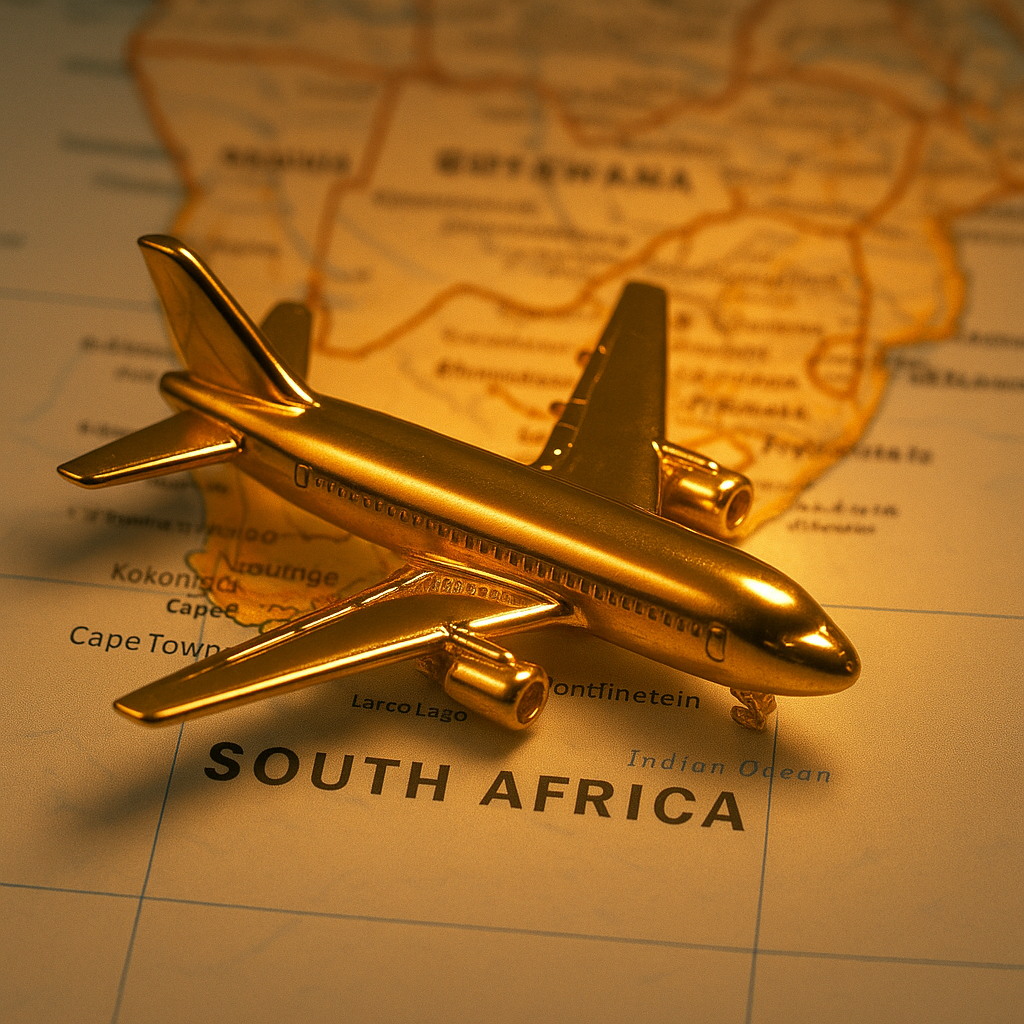
South Africa's airports, led by ACSA, have become Africa's gold standard, winning top Skytrax awards for design, efficiency & gastronomy.
South African airports recently shocked the world by winning many top Skytrax awards, including 'Best Airport in Africa' for Cape Town. They did this by making things better for travelers, like shorter waits and cool new features like day-use hotel rooms and gardens with local food. They also use green technology and have quiet terminals. This amazing success shows how these airports, once not so great, are now global leaders.
What factors contributed to South African airports winning multiple Skytrax awards?
South African airports achieved global recognition by implementing innovative strategies. This includes reducing security wait times, offering unique passenger amenities like day-use suites and indigenous food gardens, embracing green technology for sustainability, and adopting "Quiet Terminal" policies. These efforts led to improved passenger experience and operational efficiency.
Get Cape Town news in your inbox
Stay updated with the latest stories from the Mother City.
1. The Night the Envelope Shocked the World
London’s Passenger Terminal EXPO is normally a polite parade of bar charts and lukewarm coffee. On 18 March 2026, however, the hall detonated in cheers when the last white envelope ripped open. For the first time since the Skytrax World Airport Awards began 26 years ago, one African operator - Airports Company South Africa - collected every regional trophy on offer and still had breath to sprint into two global top-ten lists. Cape Town International prolonged its eleven-year grip on “Best Airport in Africa,” yet the bigger narrative is how a group once roasted for serpentine queues and grimy floors now writes the playbook for spotless terminals, biometric flow and, improbably, airport cuisine that travellers reminisce about weeks later.
Behind the confetti lies a survey beast: 21.6 million eligible questionnaires in nineteen languages, collected face-to-face inside the terminal within 45 minutes of a flight. Skytrax refuses online rants, which is why network planners treat these numbers like scripture; climb five positions and you may wake up to an extra weekly 777 from the Gulf or an upgrade from 787 to A380 for a European mega-hub.
2. O.R. Tambo, King Shaka and the Regional Dark Horses
O.R. Tambo’s silver-medal regional finish hides turbo-charged momentum. The gateway moved 22.7 million passengers in 2025, a 31 % jump over pre-pandemic figures, yet average security wait time shrank to six minutes 42 seconds after a R380-million parallel belt system capable of swallowing 550 trays an hour. More startling: the InterContinental O.R. Tambo muscled into Africa’s top-five airport hotels, turf historically owned by Addis Ababa and Doha. General manager Thuli Mthembu rents 26 m² day-use suites - shower, Peloton, barista coffee - for USD 42 between 09:00 and 17:00 to crews battling fatigue. Occupancy is 92 %, and Lufthansa now parks two A350s in Johannesburg instead of one, citing crew rest as the clincher.
King Shaka International, north of humid Durban, is the category killer. Serving only 6.2 million passengers a year, it still nabbed tenth place globally among airports its size, leaving Lyon, Calgary and Brisbane in its prop wash. The secret is a 270-hectare cushion of coastal dune forest that works as both carbon sponge and noise barrier, permitting round-the-clock operations without a curfew. The terminal’s lazy-S curve keeps the farthest gate a mere 285 m from security. Between gates A14 and A15, an indigenous food garden supplies seventy per cent of the herbs eaten on site; passengers pluck fresh spearmint for a cup of tea while waiting to board.
Smaller strips grabbed their own share of stardom. Chief Dawid Stuurman International outside Gqeberha vaulted to fourth in the regional rankings, thanks to a new 4C runway that welcomes A321neos from Frankfurt and a 28-bed air-side “sleep-a-pod” wing. Each pod, inspired by Japanese capsule hotels, costs R180 for four hours and is disinfected between guests by UV-C robots originally built for Kimberley diamond mines. Bram Fischer in Bloemfontein brands itself the “wind-energy airport”: 2.1 MW of rooftop turbines provide 43 % of daytime power and have sliced landing fees by twelve per cent, tempting low-cost carriers that used to overfly the Free State. King Phalo in East London wins hearts with a thirty-second live marimba greeting - recorded by local schoolkids and beamed from a directional speaker inaudible five metres away - so transit passengers keep their peace while arriving visitors taste instant culture.
3. Green Tech, Quiet Floors and the Fight Against Gridlock
Fani Mphaphuli, ACSA’s Acting Group Executive for Operations, fronted the media in a waistcoat sewn from retired runway windsocks, a wink to circularity. She unpacked a R46 billion capital pipeline for 2025–2030, with sixty-two per cent ticketed for green hardware: photovoltaic glass, grey-water hydroponics that grow lettuce beneath escalators, and a R2.3-billion baggage tunnel that will erase 1,200 daily tractor journeys at O.R. Tambo. “We’re not hunting trophies,” she said. “We’re chasing decibels - how quiet an airport can be - and grams of carbon per passenger.” Investors like what they hear: ACSA’s five-year green bond now trades eighteen basis points below South African sovereign debt, a pricing once unimaginable for a state-owned enterprise.
Soft surprises pepper the journey. Cape Town’s “Quiet Terminal” policy, launched in 2024, killed every gate-side announcement; instead, boarding calls ping personal devices in the language used to buy the ticket. Volunteers wearing heart-rate trackers recorded a 27 % drop in stress, and duty-free tills still rang up a 9 % sales bump, proving calm wallets open wider. O.R. Tambo’s “Tech on the Go” lockers rent power banks pre-loaded with African-braided cables - USB-C, Lightning, micro-USB - solving plug anarchy; ninety-six per cent are returned, a rate European bike schemes can only envy.
Growth is a double-edged blade. Traffic is swelling 8.4 % a year, outrunning the 6 % capacity baked into current concrete. One ill-timed strike, a late fuel truck or an Eskom sag could still smudge the gloss. ACSA’s retort is “dynamic stand-planning” software lifted from Formula-1 pit crews; during peak dawn hours aircraft receive gate assignments only ninety minutes before arrival, wringing an extra fourteen movements per hour from the same apron.
4. Global Ripples, Future Menus and the Long Ascent
The reverberations reach far. Ethiopian Airlines has long sold Addis Ababa as the “Crossroads of Africa,” but leisure flows are drifting south now that Cape Town offers one-stop hops to Windhoek, Victoria Falls and newly jet-linked St Helena. Qatar Airways has already redeployed one of its two daily Doha-Addis rotations to a 04:00 touchdown in Cape Town, freeing an A350 for Boston. Emirates is haggling with ACSA over a dedicated A380 double-decker gate by 2029, complete with biometric corridors able to flush 850 passengers in eighteen minutes - the structural speed limit set by jet-bridge geometry.
Whispers inside the EXPO hall say Skytrax will mint a “Best African Airport Dining” trophy next year after judges nibbled braai-biltong macarons at Cape Town’s Emerald Blue and peri-peri rabbit at King Shaka’s Shisa Nyama, both sourcing ingredients within a 120-kilometre radius. If the category surfaces, South Africa’s trophy cabinet may yet overflow.
For now, the 2026 statuettes - hand-forged from recycled Boeing 747 aluminium - are winging their way south. They are not finish-line tape but altitude markers on a longer climb, living proof that an African airport family once dismissed as also-ran can, by fusing Swiss-grade sterility, Japanese spatial craft and South African audacity, set the standard for how the world first touches - and last remembers - a continent.
[{"question": "
What factors contributed to South African airports winning multiple Skytrax awards?
", "answer": "South African airports achieved global recognition by implementing innovative strategies. This includes reducing security wait times, offering unique passenger amenities like day-use suites and indigenous food gardens, embracing green technology for sustainability, and adopting 'Quiet Terminal' policies. These efforts led to improved passenger experience and operational efficiency."}, {"question": "Which South African airport was named 'Best Airport in Africa'?
", "answer": "Cape Town International Airport maintained its eleven-year streak as the 'Best Airport in Africa' at the Skytrax World Airport Awards."}, {"question": "What unique amenities are offered at O.R. Tambo International Airport and King Shaka International Airport?
", "answer": "O.R. Tambo International offers 26 m² day-use suites for crew and passengers, complete with showers, Pelotons, and barista coffee. King Shaka International features a 270-hectare coastal dune forest for environmental benefits and a terminal design that keeps gates close to security. It also boasts an indigenous food garden that supplies 70% of the herbs used on-site, allowing passengers to pick fresh spearmint for tea."}, {"question": "How are smaller South African airports innovating?
", "answer": "Smaller airports like Chief Dawid Stuurman International offer 'sleep-a-pod' wings inspired by Japanese capsule hotels, disinfected by UV-C robots. Bram Fischer in Bloemfontein is branded as a 'wind-energy airport' with rooftop turbines reducing landing fees. King Phalo in East London provides a unique thirty-second live marimba greeting recorded by local schoolchildren."}, {"question": "What green technology initiatives are South African airports implementing?
", "answer": "ACSA is investing heavily in green hardware, including photovoltaic glass, grey-water hydroponics that grow lettuce, and a R2.3-billion baggage tunnel at O.R. Tambo to reduce tractor journeys. They are focused on reducing noise levels and carbon emissions per passenger."}, {"question": "How are South African airports addressing potential issues like gridlock and increasing passenger traffic?
", "answer": "Despite an 8.4% annual traffic increase, South African airports are implementing solutions like 'dynamic stand-planning' software, inspired by Formula-1 pit crews, to efficiently manage gate assignments and increase movements per hour. Cape Town's 'Quiet Terminal' policy also helps reduce stress and improve passenger flow by using personal device notifications instead of gate-side announcements."}]
Kagiso Petersen is a Cape Town journalist who reports on the city’s evolving food culture—tracking everything from township braai innovators to Sea Point bistros signed up to the Ocean Wise pledge. Raised in Bo-Kaap and now cycling daily along the Atlantic Seaboard, he brings a palpable love for the city’s layered flavours and even more layered stories to every assignment.
View all articles →