
Africa Food Show comes to Cape Town’s CTICC
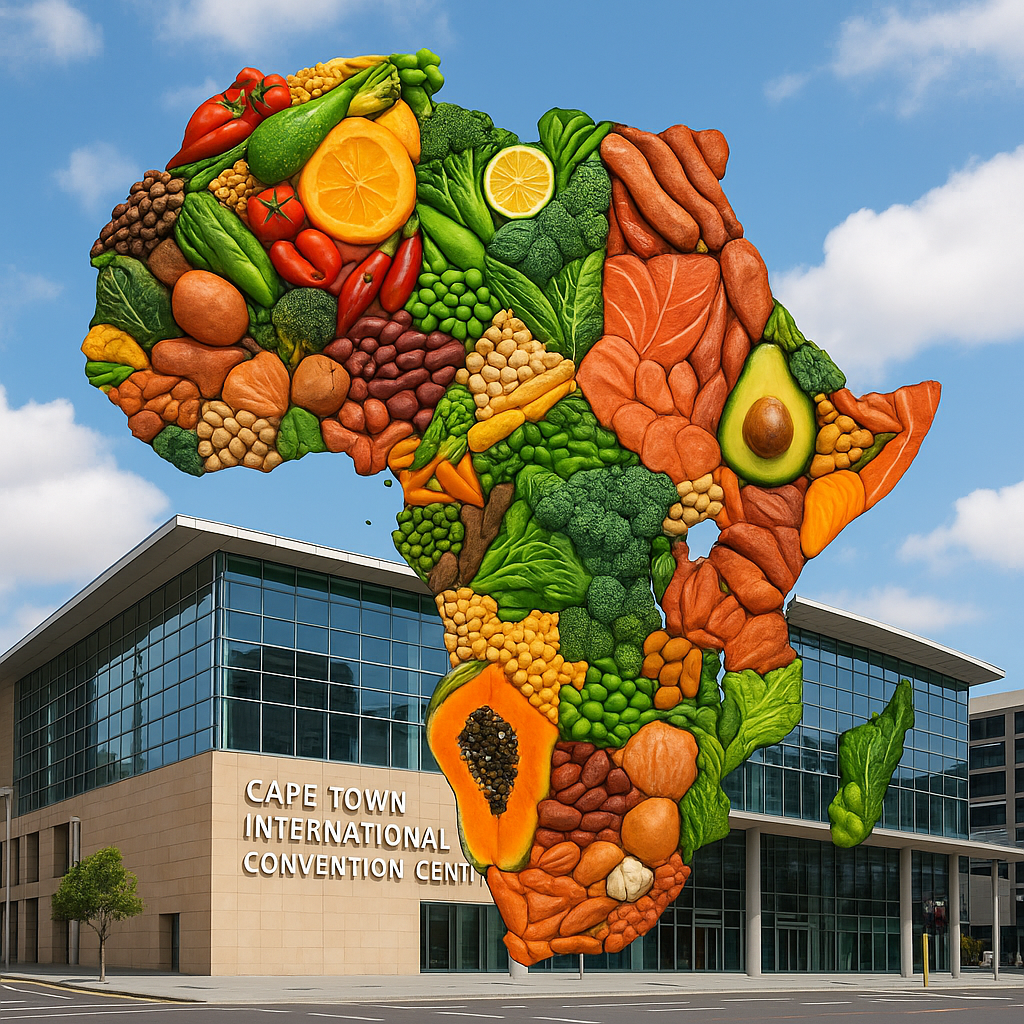
Africa Food Show 2026: Cape Town hosts the continent's gastronomic hub, connecting buyers with innovative food solutions and tech.
The Africa Food Show 2026 in Cape Town is like a giant, super-smart grocery store set up just for Africa. It brings together everyone who makes and sells food to solve big problems like hunger and waste. Imagine a huge market where you can find everything from new food tech to delicious new flavors, all designed to feed a growing continent better and smarter. It's a busy, colorful event where deals happen fast, new ideas pop up, and the future of food in Africa is being built, one tasty bite and smart solution at a time.
What is the Africa Food Show 2026?
The Africa Food Show 2026 is a major industry event in Cape Town, transforming the CTICC into a bustling marketplace. It connects food suppliers and buyers across Africa, aiming to meet the continent's growing food demands by showcasing innovative products, technologies, and supply chain solutions to drive food security and trade.
Get Cape Town news in your inbox
Stay updated with the latest stories from the Mother City.
1. The Pop-Up Trade-Port: Why Cape Town Becomes Africa’s Pantry for Six Days
On 10 June 2026 the Cape Town International Convention Centre stops being a conference hall and turns into the continent’s busiest supermarket.
The CTICC was picked because a three-hour flight connects it to every major southern-African distribution hub, Africa’s largest general-cargo harbour is next door, and the city’s nightly cold-chain already feeds 4 500 restaurants, 600 hotels and three national retailers.
dmg events has turned the front plaza into a temporary freight village: 2 000 m² of plug-and-play freezer, chiller and ambient containers.
Exhibitors can land frozen Namibian hake on Sunday night and be handing out samples at Monday’s sunrise - no double-handling, no extra drayage fees.
It is a life-size demo of the speed Africa’s food network still lacks everywhere else.
2. The Math That Built Eleven Colour-Coded Streets
Africa will welcome 24 million additional diners every year this decade - the equivalent of adding a brand-new Tokyo annually.
Yet only 62 % of what those diners swallow is sourced inside the continent.
The jump from today’s US $346 billion grocery bill to the forecast US $567 billion by 2032 is an open tender for whoever can grade, pack, fortify, brand and deliver faster, safer and cheaper than the next supplier.
That gap is carved into the floorplan: eleven vertical districts - Snacking & Baking, Oils & Fats, Dairy & Alternatives, Proteins 2.0, Beverage Tech, Ingredients 4.0, Halal Africa, Organic & Free-From, Packaging 360, Cold-Chain Solutions and Finance & Trade Services - each painted in its own colour.
A Rwandan coffee roaster can walk the colour lanes for twenty-two minutes and leave with a Ghanaian cocoa-butter replacer, a Moroccan glass packer with BRC-AA stamps and a Kenyan fintech ready to finance the order against a Mombasa bill of lading.
Buyers do not wander in by chance.
dmg’s data team scraped three years of port entries, retail launches and hospitality tenders, then ranked 38 000 decision-makers by how often they buy, how fast they rotate SKUs and how frequently they travel.
The top 8 000 - carrying an estimated US $11.4 billion in annual purchase intent - score golden lanyards: free flights, three nights above the CTICC forecourt and a concierge app that geolocates every stand, tasting and chef demo.
A Lagos supermarket boss can pre-book a 15-minute slot with a Namibian seaweed-biltong start-up, taste at 11:40, watch the live station at noon and sign an exclusivity memorandum before the lunch bell rings.
The app spits out a customs dossier on the spot so the shipment reaches Apapa port already coded, labelled and certificated.
3. The Machines, Flavours and Money Moving Across the Floor
Exhibitors are bringing heavy metal.
South Africa’s largest private dairy group will bolt together a €1.2 million micro freeze-dryer that fits inside two 40-ft containers and turns fermented maas into instant powder aimed at Nigeria’s roadside tea sellers.
A Milan flavour house will pour a baobab-yuzu reaction flavour that hides the grassy edge of high-protein plant milk, tuned for the tetra UHT lines common in Egypt and Côte d’Ivoire.
China’s biggest rice miller will run a mini polisher that squeezes shelf-ready 2 kg pillow packs at 18 % moisture - just inside ECOWAS tolerance - dodging the 30 % import duty slapped on bulk brown rice.
Even commodity traders go retail: a Geneva coffee house will hand out 250 g valve bags of Ethiopian single origin laser-etched with QR codes that trace the washing station, fermentation hours and truck temperature - data German roasters normally guard for €25/kg lots, now offered to African supermarkets at entry-level price.
Ingredient 4.0 operates like a live price board for shoppers.
Suppliers must post two numbers - “raw FOB” and “landed shelf-ready cost” - plus a traffic-light score for sugar, salt and saturated fat against WHO African targets.
A red badge drags in more traffic, because retailers want reformulation road maps.
KasiKefir, a fermentary from Tembisa, turns misshapen supermarket carrots into probiotic shots that carry 40 % of the sugar in mainstream juices.
Grain4Grain in Kumasi up-cycles brewers’ spent grain into high-fibre banku mix priced 8 % under pure maize.
Cold reality sits inside the 300 m² Cold-Block yard: three reefer trucks, two solar pre-coolers and a vacuum cooler that drops leafy-green core temperatures to 4 °C in twenty-eight minutes.
Kenya’s Twiga Foods and Egypt’s FrutPlanet rotate every 120 minutes to show how IoT sensors cut rejection rates by 1.8 % per 100 km.
Bolloré will debut a cardboard pallet shipper lined with phase-change gels that keeps 0–4 °C for five days without external power, letting blueberries fly from Morocco to Lagos sans active reefer.
The pack costs 14 % more than EPS foam, but Nigeria waives the US $2.50/kg solid-waste levy, flipping the economics green.
Downstairs, fintech moves at crypto speed.
Twenty-four kiosks let a Zambian honey co-op tokenise next season’s harvest, sell 40 % forward to a Dubai re-exporter and pocket 65 % of the value in stable-coin within ninety minutes.
Trade & Development Bank accepts the blockchain receipt as collateral for a 270-day invoice-discounting line at 7 % APR - half the local bank rate and six weeks faster than the 2025 benchmark.
The saved margin covers PET squeeze bottles instead of buckets, the single switch that doubled shelf life and secured Shoprite listings.
4. Cook-Offs, Carbon Labels and the Algorithm Masquerading as a Festival
Competitions are engineered for scale, not selfies.
The Africa Culinary Cup awards the winner a six-month ingredient sponsorship from Unilever Food Solutions and a guaranteed slot in 54 Marriott hotels across Africa.
Judges - among them the caterer for the 2026 FIFA World Cup - score taste, menu-engineering margin and local sourcing ratio.
The 2025 champ, a 22-year-old Tanzanian who turned banana blossom into pulled-pork analogue, saw in-flight demand leap 400 % when Kenyan Airways added the dish.
Trend forecaster WGSN runs live sentiment analysis on every plate; suppliers reformulate retail SKUs before the show closes.
Game of Chefs locks four-person hospitality teams into mystery baskets built solely from show ingredients while 200 buyers from Sun International, Accor, Radisson and Minor vote via the app, triggering instant RFQs.
A Moroccan preserved-lemon paste walked out with 38 t of orders in 2025 before the pans were washed.
This year the smart money is on fonio gnocchi and cascara-cola shrub, both designed for zero-waste brunch menus that satisfy the EU’s incoming Scope 3 rules African hotels must soon copy.
Even the National Pizza & Burger challenges double as stress tests: plant-based mozzarella must stretch at 300 °C and buns must survive forty-five minutes on Lagos potholes.
Victors gain automatic listings with Pizza Hut Africa and Burger King’s local-procurement portal.
The 2025 rooibos-smoked vegan mozzarella hit 1 200 outlets in five countries within ninety days, proving African shoppers will pay a 12 % premium for lactose-free if the story rings true.
Sustainability is baked into the booth price.
Exhibitors who show third-party-verified Scope 1-2 footprints pocket a 5 % space rebate; a bio-fuel reefer adds another 2 %.
The result is the continent’s largest gathering of carbon-labelled SKUs - 1 400 products from Namibian hake biltong to Ugandan chilli crisps - each QR code opening a dashboard that tracks farm power mix, vessel fuel and pack weight.
Tesco has booked its first “sustainability sourcing tour” outside Europe, hunting low-carbon avocado puree for plant-based sandwiches.
Co-location with Hotel & Hospitality Expo Africa turns the numbers volcanic.
A 577-hotel pipeline equals 104 000 new rooms, each demanding 1.2 t of food every month once stabilised.
Even at 60 % occupancy that is 75 000 t of fresh demand a year - Kenya’s entire green-bean export volume.
Flooring crews already leave 30 cm utility corridors for future blast chillers, and IHG’s procurement bible now lists “Africa Food Show approved” SKUs as baseline spec.
Registration opens 18 March 2026, yet the dating algorithm is already live.
Buyers who upload their top-five SKU gaps receive an AI-curated “shortlist in a box”: a personal floor map, 30-minute meeting slots and landed-cost forecasts refreshed daily against currency swings, freight indices and AU sanitary tweaks.
Suppliers get a mirror dashboard that ranks buyers by import record, listing probability and payment risk, colour-matched to the nutrition traffic lights upstairs.
dmg refuses to call the gathering a trade fair; the internal memo labels it “a physical algorithm for Africa’s calorie deficit disguised as a festival.”
Every handshake, every plate, every tokenised honey pallet is a line of code racing to solve hunger, waste, margin and sustainability before 2030 makes the answers a matter of survival.
[{"question": "
What is the Africa Food Show 2026?
\nThe Africa Food Show 2026 is a major industry event held in Cape Town, South Africa, specifically at the Cape Town International Convention Centre (CTICC), from June 10, 2026. It transforms the venue into a vibrant marketplace connecting food suppliers and buyers from across Africa and beyond. The primary goal is to address critical issues like hunger and food waste on the continent by showcasing innovative products, advanced technologies, and efficient supply chain solutions. It aims to drive food security, enhance trade, and foster new partnerships to meet Africa's rapidly growing food demands.
\n","answer": ""},{"question": "Why is Cape Town the chosen location for the Africa Food Show 2026?
\nCape Town was strategically selected due to its exceptional logistical advantages. The CTICC is within a three-hour flight of every major Southern African distribution hub. Additionally, Africa's largest general cargo harbor is conveniently located nearby, facilitating easy import and export. The city also boasts a robust existing cold-chain infrastructure that already supports 4,500 restaurants, 600 hotels, and three national retailers nightly. Furthermore, the event organizers, dmg events, have created a temporary freight village at the CTICC's front plaza, offering 2,000 m² of plug-and-play freezer, chiller, and ambient containers. This setup allows exhibitors to land perishable goods and have them ready for sampling almost immediately, demonstrating efficient cold chain logistics often lacking elsewhere on the continent.
\n","answer": ""},{"question": "How is the Africa Food Show organized to cater to diverse food industry needs?
\nThe show's floorplan is meticulously organized into eleven color-coded vertical districts, each dedicated to a specific category within the food industry. These include Snacking & Baking, Oils & Fats, Dairy & Alternatives, Proteins 2.0, Beverage Tech, Ingredients 4.0, Halal Africa, Organic & Free-From, Packaging 360, Cold-Chain Solutions, and Finance & Trade Services. This structured layout ensures that buyers can efficiently navigate and find specific products, ingredients, technologies, or services. For instance, a coffee roaster can quickly locate a cocoa-butter replacer, packaging solutions, or financial services all within a short walk, making networking and deal-making highly efficient.
\n","answer": ""},{"question": "What kind of cutting-edge innovations and technologies will be showcased?
\nThe Africa Food Show 2026 will feature a wide array of innovations across various sectors. Expect to see heavy machinery, such as a €1.2 million micro freeze-dryer from a South African dairy group, designed to convert fermented maas into instant powder for roadside tea sellers. A Milanese flavor house will present unique reaction flavors, like baobab-yuzu, to improve the taste of high-protein plant milk. China's largest rice miller will demonstrate a mini polisher producing shelf-ready rice packs that meet ECOWAS tolerance, helping bypass import duties. There will also be advanced cold-chain solutions, including solar pre-coolers and vacuum coolers, alongside innovative packaging like phase-change gel-lined cardboard pallets for extended temperature control. Fintech solutions will also be prominent, enabling rapid, blockchain-backed financing for agricultural products using stable-coins and offering collateralized invoice discounting.
\n","answer": ""},{"question": "How does the Africa Food Show promote sustainability and address food waste?
\nSustainability is a core component of the Africa Food Show, integrated into the event's structure. Exhibitors who can demonstrate third-party-verified Scope 1-2 carbon footprints receive a 5% space rebate, with an additional 2% for using bio-fuel reefers. This encourages the display of carbon-labeled SKUs, with 1,400 products from various African countries featuring QR codes that provide detailed dashboards on farm power mix, vessel fuel, and pack weight. The event also highlights initiatives like KasiKefir, which upcycles misshapen carrots into probiotic shots, and Grain4Grain, which transforms brewers' spent grain into high-fiber banku mix. Culinary competitions emphasize local sourcing ratios and menu engineering for sustainability. The show effectively acts as a platform for low-carbon sourcing tours, attracting major retailers like Tesco.
\n","answer": ""},{"question": "What unique features does the Africa Food Show offer to facilitate business and networking?
\nThe show employs sophisticated data analytics to enhance business interactions. The top 8,000 decision-makers, identified from port entries, retail launches, and hospitality tenders, receive 'golden lanyards' that include free flights, accommodation, and a concierge app. This app geolocates stands, tastings, and chef demos, allowing buyers to pre-book 15-minute slots with suppliers and even generate customs dossiers on the spot for efficient shipping. The event is co-located with the Hotel & Hospitality Expo Africa, exponentially increasing networking opportunities, especially with a significant hotel pipeline in Africa. Furthermore, buyers can upload their top-five SKU gaps to receive an AI-curated 'shortlist in a box,' including a personal floor map, meeting slots, and daily updated landed-cost forecasts, effectively turning the event into a 'physical algorithm' designed to address Africa's calorie deficit.
\n","answer": ""}]
Emma Botha is a Cape Town-based journalist who chronicles the city’s shifting social-justice landscape for the Mail & Guardian, tracing stories from Parliament floor to Khayelitsha kitchen tables. Born and raised on the slopes of Devil’s Peak, she still hikes Lion’s Head before deadline days to remind herself why the mountain and the Mother City will always be her compass.
View all articles →