
Aucamp reinstates vessels for small-scale fishers, safeguarding livelihoods
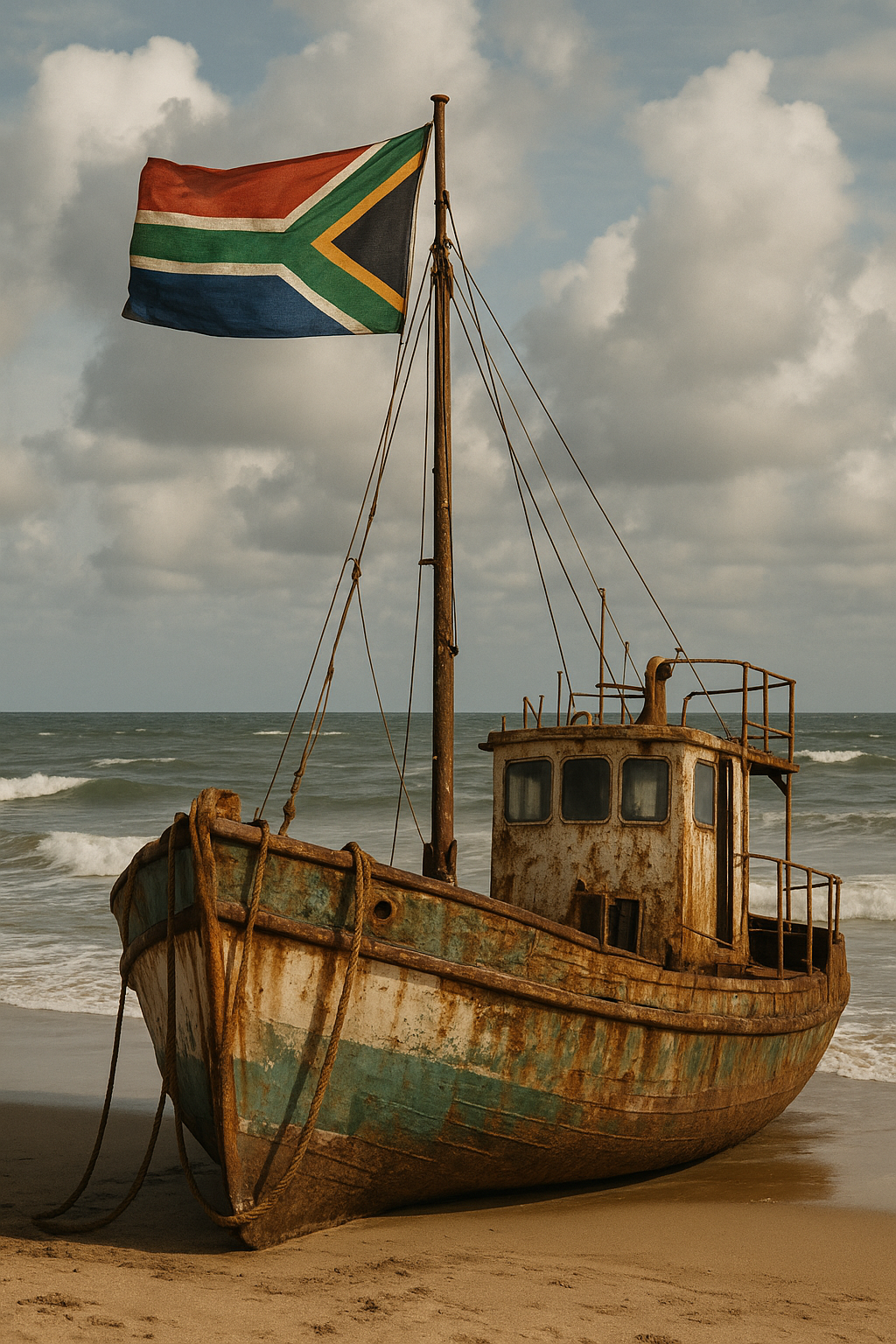
South Africa's Minister rewrites fishing rules, granting 297 interim boats permanent status, ending 16 years of limbo for small-scale fishers.
In a quick 38-minute meeting, Minister Wille Aucamp made a huge decision that changed everything for South Africa's small-scale fishing community. He approved 43 appeals, giving 297 boats a real future after 16 years of waiting. This means thousands of families will keep their incomes, the West Coast rock-lobster season is longer, and everyone will use a new cellphone app to log their catches. It's a fresh start, but there's lots of work ahead to make sure these changes stick.
What was the outcome of the 2026 meeting regarding South Africa's small-scale fishing sector?
In a 38-minute meeting on March 17, 2026, Minister Wille Aucamp approved 43 appeal rulings, integrating 297 interim-relief vessels into South Africa's national fishing effort. This decision ended a 16-year legal limbo, extended the West Coast rock-lobster season, and mandated a new cellphone app for logging catches, securing income for thousands of families.
Get Cape Town news in your inbox
Stay updated with the latest stories from the Mother City.
17 March 2026: The WhatsApp That Stopped the Clock
At 07:03 the voice note hit Kalk Bay phones: “Hall opens at ten, Minister inside at eleven - bring your life-jackets, bring your kids.” By 08:15 the slipway looked like a provincial rugby final: Transporter vans from Lambert’s Bay nosed between battered Hi-Aces still sporting 2010 World-Cup flags. Inside the pastel-coloured civic centre 200 chairs stood in strict rows; 417 bodies squeezed in, toddlers on shoulders, grandfathers leaning on walking sticks carved from boat oars. When Forestry, Fisheries & Environment Minister Wille Aucamp entered at 10:58 he carried nothing but a single blue cardboard folder - 43 appeal rulings that would decide whether 1 850 deck-hands, 4 000 on-shore processors and roughly 15 000 family members would still have an income after 31 October. Thirty-eight minutes later he walked out, the folder empty, the hall erupting in a hymn normally sung when boats return safely through the winter swell. In less time than a sitcom episode, a 16-year legal limbo was closed and a new, fragile chapter opened.
Nobody needed a microphone to hear the numbers: 297 interim-relief vessels would keep their place inside South Africa’s national fishing effort ceiling; the West Coast rock-lobster season would stretch from four to five months; and every kilo landed would have to be logged through a cellphone app that most skippers had never seen. The clapping lasted three minutes, the questions three hours. Yet the real work - translating political adrenaline into enforceable regulation - had only begun. Before dusk the same parking lot hosted impromptu strategy circles: who would get GPS loggers first, how coloured tail-clips would travel from factory to harbour, and whether the R890 device fee would come off the first lobster sale or the second. Aucamp left behind a calendar so tight that fisheries staff cancelled Easter leave; scientists rebooked autumn surveys; and coastal municipalities started budgeting for extra traffic cops on landing days.
How “Temporary” Became a Generation: The 2007 Promise That Refused to Expire
Long before smartphones and load-shedding schedules, the Constitutional Court ruled that traditional coastal communities held a legitimate expectation of ocean access. Government lawyers promised a permanent small-scale fishing policy “within two seasons.” To keep peace on the docks, officials printed monthly permits stamped “Interim Relief.” It was supposed to be a bridge; it turned into a residence. Between 2007 and 2026 the permits were rolled over 34 times through technical annexes nobody read aloud at sea. Cooperatives, tired of waiting, bought bigger boats, refrigerated trucks and even built own-brand depots in places such as Hondeklip Bay and Hout Bay. By the time scientists added up the numbers, the informal fleet was landing roughly R1.9 billion worth of linefish, octopus and lobster - none of it counted inside the Total Allowable Effort reported to international bodies. In bureaucratic jargon the vessels existed; legally they hovered like ghosts. When the 2025 allocation cycle finally collided with court-ordered transformation targets, the Department faced a binary choice: absorb the 297 hulls into the formal ceiling or cut them adrift and risk a fresh class-action suit. The appeals heard on 17 March were the detonator; Aucamp’s signature was the explosion that turned temporary into tangible.
The economic halo around those boats is hard to overstate. Each 38-foot hand-liner supports an average of five crew, three bait suppliers, two net menders, one diesel mechanic and roughly nine women who split, salt and pack the catch. Multiply by 297 and you get a shadow economy larger than some rural district budgets. Yet because every ton fell outside official statistics, South Africa under-reported its fishing mortality for nearly two decades. That loophole mattered when the International Tribunal for the Law of the Sea reviewed compliance with regional fish-stock protocols. Scientists warned that ignoring the effort would delegitimise future negotiations for snoek or hake access in Namibian or Angolan waters. In effect, the price of protecting 15 000 livelihoods was potential diplomatic embarrassment - and the bill came due in March 2026.
The Rebellion of the Algorithms: Why a Spreadsheet Sparked Street Barricades
In December 2025 the scientific working group fed updated biomass figures into the allocation model. Linefish stocks - snoek, geelbek, silver kob - had nudged above the dreaded 40 % threshold for the first time since 2004. Rock lobster in the southern zone showed a minor surge, pushing the global Total Allowable Catch from 739 tonnes to 852. Good news, one might think. Yet software cannot taste political salt. The model treated the 297 interim boats as “extra effort” and spat out a brutal recipe: retire 71 vessels outright, slash crew totals by 28 %, and spread the remaining quota among 1 024 new applicants. Word leaked on 8 January while department staff were still on Christmas break. Within 48 hours Hawston elders parked a rust-red caravan across the harbour gate; in Durban protesters carried a pine coffin stencilled “Small-Scale Fishing, RIP.” By Valentine’s Day 312 formal appeals landed in Pretoria - 43 survived the admissibility sieve and reached the Minister’s desk, setting the stage for the 38-minute showdown in Kalk Bay.
Behind the protests lay a mathematical paradox. South Africa’s scientific models measure fishing power in “standardised vessel units,” a metric that favours steel-hulled industrial trawlers. A 20-metre hand-liner with four crew and a single gill-net scores the same effort value as a 60-metre freezer trawler employing 60 sailors. Small-scale captains argue this equivalence erases their lower fuel burn, selective gear and short trip radius. The December algorithm duly treated every IR boat as if it were a mid-water trawler, blowing the effort ceiling apart. Protest leaders enlisted two independent biostatisticians who recalculated the footprint using time-at-sea and kilowatt-hours; their figure shaved 34 % off the official score. That re-analysis became Appendix C in the 43 appeals Aucamp approved - proof that political pressure plus peer-reviewed data can bend a spreadsheet that once looked immutable.
Levers, Directives and a Ticking Sunset: The Legal Triad That Rewrote the Rules
Minister Aucamp needed more than goodwill to overrule his own scientists; he needed law. Officials close to the dossier say he combined three rarely-synced instruments. First, section 18(1)(b) of the Marine Living Resources Act lets the Minister “temporarily exempt any person or category” when public interest outweighs administrative purity. Second, regulation 24(5) of the 2014 Small-Scale Fishing Policy forbids “retrogressive measures that diminish living standards” of coastal households. Third, the 2022 Ratcliffe Principle - born from a Pretoria High Court judgment - requires fisheries authorities to pick the remedy that “least impairs constitutional rights” whenever ecological and socio-economic rights clash. Armed with this triad, Aucamp signed two directives on 15 March. SSF-06/2026 wedges all 297 interim-relief boats into the national TAE, while WCRL-04/2026 freezes lobster redistribution and extends the season by four weeks. Both documents carry an explicit sunset: unless Parliament codifies them by 31 March 2027, they evaporate, hurling the sector back into courtrooms and uncertainty.
The sunset clause is more than legal hygiene; it is political kryptonite. South Africa must hold national elections before August 2027, meaning a new Minister could arrive with different coastal allies. Lobbyists already stalk the parliamentary corridor promising faster returns if the 297 licences are auctioned rather than grandfathered. To survive, the directives must migrate from ministerial whim into regulation hardened by public comment, cost-benefit analysis and possibly a money bill. That journey starts 1 May 2026 when the Department publishes its draft 2027/28 TAE discussion document. Fisher leaders plan to pack each road-show venue the way union members once flooded labour hearings; environmental NGOs are sharpening adaptive-management triggers; and opposition parties scent leverage in coastal swing constituencies. The next twelve months will determine whether the blue folder’s promise hardens into iron-clad law or dissolves into campaign rhetoric.
Pie-Slicing in the Digital Age: Who Gets What, and How Tech Tracks Every Lobster Tail
With boats reinstated, the next fight is division. The Department opted for a hybrid quota-cum-bag-limit model meant to marry fairness with traceability. For linefish, every vessel earns a daily species cap: 450 kg of snoek, 110 kg of geelbek, 60 kg of silver kob - landable only on 25 declared sea-days each month. The ceiling tracks informal weather wisdom: skippers rarely brave a southeaster anyway, so official limits mirror actual practice. Rock lobster is carved into three tranches: 525 t for industrial traps, 202 t for small-scale, 125 t for recreational anglers. Within the small-scale slice, 60 % goes to historical interim-relief cooperatives, 40 % to newly recognised KwaZulu-Natal dive fishers who until now received zero. To curb side-selling, each lobster must wear a coloured tail-clip - yellow for IR, green for KZN - whose serial number is uploaded to the national traceability portal before 18:00 on landing day. Inspectors will carry Bluetooth scanners; mismatched clips trigger instant forfeiture.
Technology is the glue holding the new rules together. Skippers must install tamper-proof GPS loggers priced R890 in bulk, fee deducted from first lobster sales. The five-month season (15 November–15 April) aligns with experimental “pulse windows” identified by the Benguela Current Commission, allowing scientists to compare fishing pressure during open and closed bursts. Paper permits disappear on 1 September when a mobile app - Ukhwelo, isiXhosa for “catch” - becomes compulsory. Built-in offline mode records data at sea; once within 200 m of harbour-based free Wi-Fi buoys, the file uploads automatically to the DAFF-FISHERIES dashboard. Average permit-processing time drops from 43 days to 72 hours, erasing the bureaucratic vacuum where corruption once blossomed. Whether ageing deckhands will embrace touch-screen navigation remains to be seen; night classes run by church halls are already oversubscribed.
East Coast Grievances, Cold-Chain Cash and the Compliance Crunch
Celebrations in the Western Cape masked muted anger east of Cape Agulhas. Of the 297 reinstated boats, only 32 operate in the Eastern Cape and KwaZulu-Natal; the rest of the small-scale fleet still splits crumbs. In Coffee Bay 180 licensed skippers share 4.2 t of east-coast rock lobster - 23 kg each for the whole season - barely enough to fill a freezer. Activists demand a separate TAE for the Delagoa ecoregion, citing larval-connectivity studies that show limited mixing with Benguela stocks. Aucamp promised a provincial road-show starting 1 April but offered no numbers, aware that any eastern increase must be balanced by western cuts to stay inside the global scientific advice. The stand-off is vintage South African federal tension: one coastline cheers while another feels betrayed by the same signature.
Market access could soften the blow. Under interim relief most fishers sold to itinerant bakkie traders at 30–40 % below urban retail. Seafund, the state-owned fisheries financier, will unlock R120 million in working-capital facilities using validated trip tickets as collateral. Once a skipper uploads a confirmed landing, Seafund pre-pays 70 % of estimated auction value at repo plus 2 % - currently 9.75 %, half the micro-lender rate. An extra R36 million from the EU-SA Marine Sustainability Programme will build 14 rural ice-plants, cutting post-harvest losses that FAO pegs at 18 % for small pelagics and 35 % for untreated lobster. The combination of cheaper credit and cold-chain infrastructure could push Eastern Cape ex-vessel prices up 22 %, according to a Nelson Mandela University feasibility study, giving marginal boats a lifeline even if quota sizes stay static.
Enforcement, however, is the elephant no one can hide. The 2027 budget bid asks Treasury for 96 new fisheries-control officers, but training and deployment take 18 months. In the gap, the Department leans on “co-management patrols”: navy reservists, cooperative marshals and private security paid from Seafund interest. A sliding-scale penalty matrix - first offence seven-day permit suspension, second 25 % quota loss, third lifetime expulsion - will be read aloud at harbour mass meetings in all 11 official languages, mirroring Namibia’s joint-compliance drive that cut illegal lobster take 42 % in two seasons. Whether South Africa can replicate that success without Namibian-level policing budgets is the unanswered question haunting every colourful tail-clip.
Science, Culture and the Calendar That Ends in March 2027
Biologists warn that ministerial heroism cannot conjure fish. Dr Aaniyah Omardien of the NGO Ocean notes the latest demersal survey already shows silver kob spawner-biomass slipping toward 30 %. She recommends an adaptive trigger: if autumn data breach that threshold, automatically trim linefish effort 15 % and clip four weeks off the lobster season. Aucamp has not written the trigger into his directives, pledging instead to “take advice seriously” - a phrase scientists will test when survey results land in June 2026. Meanwhile cultural tides compete with biological ones. In Kalk Bay’s 1888 Indonesian temple, elders still chant the “doepa” prayer before the season opens; Strandfontein’s Methodist women tie silk ribbons to propellers for luck. To prevent permit slots from overriding sacred lunar days, the Department grants “cultural exemption” logged through Ukhwelo 48 hours ahead, a digitised nod to heritage that no algorithm can measure.
The roadmap to permanence is brutally tight. Between 1 April and 31 July the Department must host road-shops, release a discussion document, absorb public comment, receive autumn survey data, and gazette final 2027/28 allocations. By 1 August every vessel needs GPS loggers and new hull markings; by 1 September paper permits die. The season opens 15 November and closes 15 April, after which Parliament must convert ministerial directives into statute before the 31 March 2027 sunset. Miss that deadline and the entire edifice re-enters legal limbo, inviting fresh litigation and possible contempt motions. Tonight, though, harbour lights still sweep across 297 hulls that finally know they belong. As fisherwoman Hilda Adams shouted above the hymn in Kalk Bay, “We’ve surfaced for air - now let’s learn to breathe without a tube.”
What was the key outcome of the 38-minute meeting led by Minister Wille Aucamp?
Minister Wille Aucamp approved 43 appeal rulings, which effectively integrated 297 interim-relief vessels into South Africa's national fishing effort. This decision, made on March 17, 2026, ended a 16-year legal limbo for these boats and their associated communities.
How many boats were given a future, and what does this mean for the fishing community?
A total of 297 boats were given a real future. This means that thousands of families (estimated around 15,000 family members) will retain their incomes, extending beyond the 1,850 deckhands and 4,000 on-shore processors directly involved. It also includes associated workers like bait suppliers, net menders, and diesel mechanics, supporting a significant shadow economy.
What specific changes were announced for the West Coast rock-lobster season and catch logging?
To aid the small-scale fishing community, the West Coast rock-lobster season was extended from four to five months. Additionally, a new cellphone app called Ukhwelo (isiXhosa for "catch") will become compulsory for logging all catches, including every kilo landed and each lobster requiring a coloured tail-clip with a traceable serial number.
What was the '16-year legal limbo' that these boats were in?
Since 2007, these boats operated under

Sarah Kendricks is a Cape Town journalist who covers the city’s vibrant food scene, from township kitchens reinventing heritage dishes to sustainable fine-dining at the foot of Table Mountain. Raised between Bo-Kaap spice stalls and her grandmother’s kitchen in Khayelitsha, she brings a lived intimacy to every story, tracing how a plate of food carries the politics, migrations and memories of the Cape.
View all articles →