
Autistic Barbie® joins Fashionistas to expand representation in play
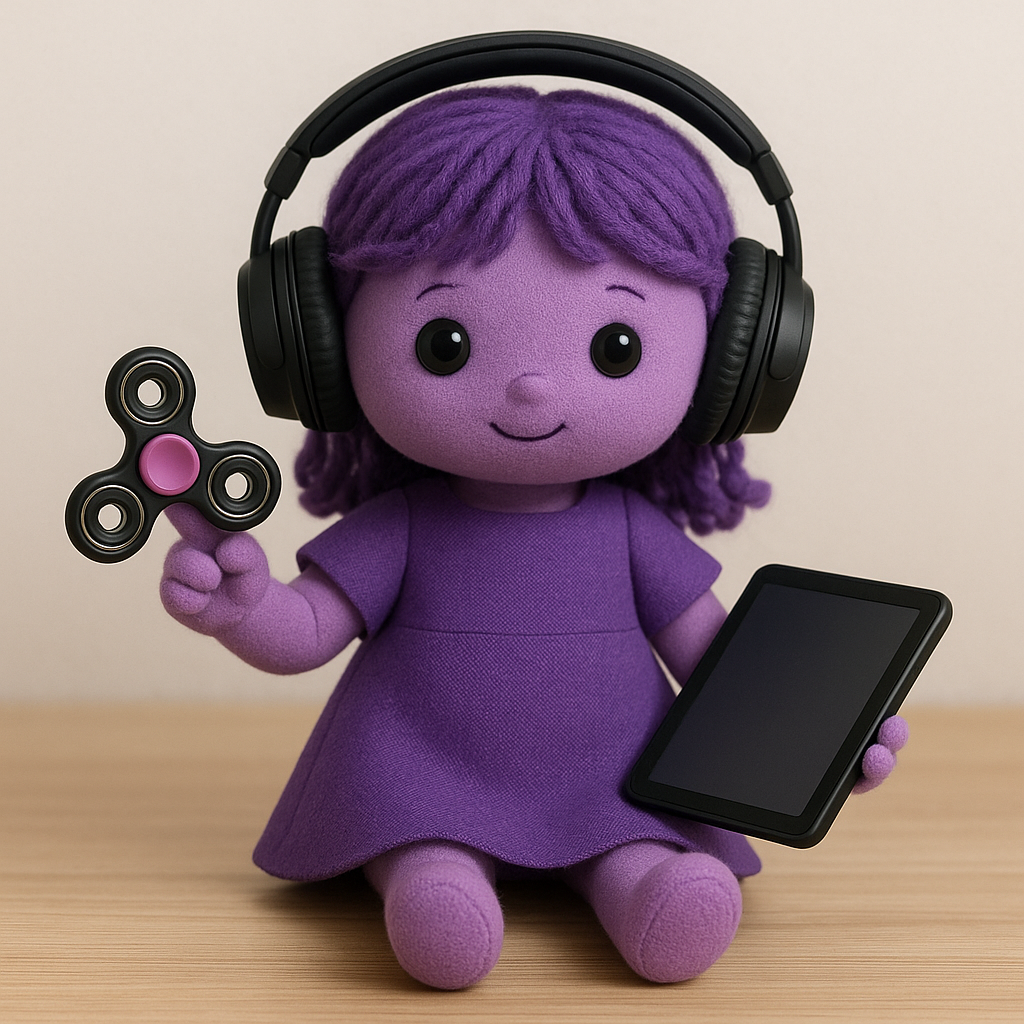
Barbie introduces an autistic doll with noise-cancelling headphones and a fidget toy, promoting neurodiversity and inclusion.
Barbie’s Quiet Revolution: How a Doll Learned to Flap, Type and Listen
Mattel has created a special Neurodiverse Barbie, designed with help from autistic adults, to truly represent autistic experiences. This unique doll has flexible joints for 'stimming' (self-soothing movements), a gentle, unfocused gaze, and cool accessories like noise-reducing headphones, a fidget spinner, and a communication tablet. It's all about making a doll that feels comfortable and real, showing that difference is just a part of everyday life.
What is the Neurodiverse Barbie doll?
The Neurodiverse Barbie is a doll designed by Mattel in collaboration with the Autistic Self Advocacy Network (ASAN) to reflect the autistic experience. It features unique articulation for stimming, a soft, unfocused gaze, and accessories like noise-reducing headphones, a fidget spinner, and a communication tablet. The doll's design prioritizes sensory comfort and authentic representation.
Get Cape Town news in your inbox
Stay updated with the latest stories from the Mother City.
From Swimwear to Spectrum: A 65-Year Mirror Realigns
On a March morning in 1959 an eleven-and-a-half-inch mannequin stepped out of her zebra-striped swimsuit and began reflecting the world’s moods in miniature. Every decade since, a fresh face, waistline or career outfit has captured who society deems visible, audible and worth applauding. January 12 2026 adds another refraction: a purple-clad figure wearing pastel headphones, eyes slightly divergent, a fingertip fidget spinner clipped to her hand. She arrived first in Johannesburg, then reached shelves across 150 countries within weeks. No astronaut helmet, no pink Corvette - just three pocket-size objects that whisper “neurodiversity” instead of shouting charity. Mattel’s calculus is simple: stay indispensable to kids and the adults who pay by letting the plastic speak to identities still rarely moulded in toy factories.
The project began with a query most manufacturers dodge: what would an autistic child greet as friendly, comforting and fun rather than hospital-like or pitiful? Late in 2023 designers cleared their California tables for the Autistic Self Advocacy Network, the only U.S. non-profit run solely by autistic adults. For eighteen months they vetted sketches, colour chips, fabric swatches and prototype limbs. Early drafts cradled the puzzle-piece logo; ASAN killed that idea, arguing the symbol frames autism as a riddle for outsiders to solve. They urged items kids actually reach for - chewable silicone, weighted blankets, picture schedules. The team translated those needs into three travel-size accessories: squashy lavender headphones, a pink finger-top spinner and a fixed-position tablet whose stickered screen copies the grid used in Proloquo2Go and similar AAC software.
Engineers then tackled articulation. Ordinary Fashionistas elbows flex ninety degrees; this torso gained an extra pin in each forearm so wrists can rotate inward and flap, the exuberant wave many kids make when joy spikes. Ball-jointed hands can twirl near the face or drum the temples. Promo shots catch her mid-bounce - arms uneven, one palm cupping an earpiece, the other flicking the spinner. The posture is energetic yet legible to anyone who calms themselves through rhythmic motion. Even the gaze required retooling. Mass-market dolls rely on perfect symmetry; here each iris sits two millimetres outward, mirroring the soft, unfocused look people sometimes adopt when listening to internal static. Reworking the tampo-print mask cost forty thousand dollars, a gamble justified only if forecasts topped a quarter-million units. Walmart and South Africa’s Takealot pledged those numbers, so the presses rolled.
Texture, Tone and Shelf Appeal: Designing for Sensory Truth
Colour polls moved through Facebook groups like Sensory Seekers and Instagram hubs such as @theautisticlife. Purple scored highest for “soothing yet grown-up.” The final Pantone 2592C carries a grey undertone so it does not buzz under fluorescent classroom tubes. An A-line dress with flat-fell seams removed scratchy zigzag stitches; the hem stops just above the knee so fabric does not bunch when the doll sits in a toy wheelchair or a shopping trolley. Ballet flats are moulded in one piece - no laces that could trip fingers with shaky fine-motor skills. Even the box surrendered its traditional blister shell. A magnet-sealed gatefold opens quietly; inside, a QR code leads to a two-minute ASAN cartoon on neurodiversity and downloadable communication boards ready for home lamination.
Johannesburg was chosen with anthropological precision. South Africa reports one of the steepest climbs in late-diagnosed autistic girls, a rise of 340 % since 2018 according to Autism South Africa. Cultural expectations of politeness long masked traits in this cohort, so a reveal timed alongside the African Autism Summit guaranteed reporters who file in isiZulu, Afrikaans and Sesotho. Within two days the bilingual hashtag #NeuroDiverseBarbie/# iBarbieYeAutism notched forty-two million impressions on X, no ads purchased. One month later sales vectors were clear: parents filming unboxing reels, therapists ordering class sets for role-play, and adult collectors treating the figure as a cultural time capsule comparable to 1967’s “Coloured Francie.” First-edition boxes carrying a misprint - “stemming” instead of “stimming” - already fetch triple retail on eBay, a typo error-hunters crave.
Rivals sprinted to keep pace. MGA Entertainment lodged a “Neuro-NaNa” trademark, while Playmobil briefed designers on a sensory-friendly school set sporting quiet corners and foam tiles. The scramble may monetise neurodiversity into a seasonal hue, yet it also drags accommodations out of special-ed catalogues and drops them into mainstream aisles. NPD Group analysts predict the “inclusion dolls and plush” slice will balloon 18 % annually through 2028, four times the wider toy market’s expected clip. Whether trend or turning point, the moment shows a plastic fashion model nudging retailers to treat noise-reduction headphones and chewable jewellery as ordinary playthings rather than medical oddities.
Playroom Politics, Scholarly Scrutiny and the Road Ahead
Critiques arrived from every corner of disability discourse. Some parents say the doll still spotlights a slim, white, moderate-support stereotype, bypassing kids who pass as neurotypical or speak with mouth words. Others warn of culture-mining minus material payback. ASAN responds with two revelations: an undisclosed royalty funnels into its Autistic Scholars Fund for university tuition in the U.S. and, as of 2027, South Africa; plus the contract grants ASAN veto power over any future “cure” rebranding or puzzle-piece apparel. Meanwhile autistic adults on TikTok reroot hair to mimic trichotillomania patches, 3-D-print weighted blankets that magnetise around plastic shoulders, and post tutorials titled “Making Barbie Look Like Me.” These hacks extend shelf life and prove the figure can be a platform for self-narration, not merely a corporate statement.
Academia is quantifying the ripple effect. Melbourne University researchers secured a 1.2 million-dollar grant to test whether four- to seven-year-old neurotypical kids score higher on Theory-of-Mind tasks after three weeks of autistic Barbie role play. Preliminary data, due 2028, could shape early-years inclusion standards worldwide. Netflix has ordered an animated short “Barbie & the Spectrum Squad,” penned by autistic show-runner Kayla Cromer, accompanied by working Bluetooth replicas of the doll’s lavender headphones. Cross-platform storytelling lets children rehearse accommodation concepts in doll form, then watch them scale to concert-festival logistics on screen.
Yet lasting impact hinges on who sits behind the designer bench. Mattel’s 2025 diversity tally lists just two autistic employees out of 32 000, both hired after the doll’s debut. Activists insist authentic representation starts with boardroom authority, not shelf symbolism, pointing to the 1997 wheelchair Barbie whose momentum froze once headlines faded. ASAN baked in a safeguard: a five-year review clause mandates autistic leadership rise in proportion to workforce benchmarks; fail and the licensing deal terminates publicly. For today’s kids, the reward is a figure that flaps, dresses, dreams and demands communication her way. They stand her beside dolls with vitiligo, prosthetic limbs or post-partum waistlines, scripting scenes where difference is neither tragedy nor superpower - simply part of the landscape. In those small plastic dialogues they rehearse classrooms, offices and friendships that know quiet hands are not the only way to speak, and that listening sometimes looks like spinning a tiny purple fidget while typing on a heart-shaped screen.
What is the Neurodiverse Barbie doll?
The Neurodiverse Barbie is a doll designed by Mattel in collaboration with the Autistic Self Advocacy Network (ASAN) to reflect the autistic experience. It features unique articulation for stimming (self-soothing movements), a soft, unfocused gaze, and accessories like noise-reducing headphones, a fidget spinner, and a communication tablet. The doll's design prioritizes sensory comfort and authentic representation, aiming to show that difference is just a part of everyday life.
How was the Neurodiverse Barbie developed?
The project began in late 2023 with Mattel designers collaborating closely with the Autistic Self Advocacy Network (ASAN), a non-profit run solely by autistic adults. ASAN vetted every aspect of the doll, from sketches and colors to fabric swatches and prototype limbs. They rejected the puzzle-piece logo, advocating for items autistic children actually use, leading to the inclusion of accessories like chewable silicone, weighted blankets (represented by the doll's accessories), and communication tools. Engineers specifically designed extra articulation for flexible joints to allow for stimming movements.
What unique features does the Neurodiverse Barbie have?
Key features include flexible joints with an extra pin in each forearm, allowing wrists to rotate inward and flap for stimming. The doll has ball-jointed hands that can twirl near the face or drum the temples. Its gaze is designed with each iris sitting two millimeters outward, mirroring an unfocused look. Accessories include squashy lavender noise-reducing headphones, a pink fingertip fidget spinner, and a fixed-position communication tablet with a screen mimicking AAC software like Proloquo2Go. The doll is also dressed in a purple A-line dress with flat-fell seams for sensory comfort and one-piece ballet flats without laces.
Why was Johannesburg chosen for the doll's launch?
Johannesburg, South Africa, was chosen for the initial launch due to its significant rise (340% since 2018) in late-diagnosed autistic girls, according to Autism South Africa. Cultural expectations of politeness in South Africa had historically masked autistic traits in this demographic. Launching alongside the African Autism Summit ensured broad media coverage in multiple languages, including isiZulu, Afrikaans, and Sesotho, and generated substantial social media impressions without paid advertising.
What impact has the Neurodiverse Barbie had, and what are some criticisms?
The doll has been met with significant commercial success and positive reception from parents, therapists, and collectors, with early sales exceeding expectations. Academia is studying its potential positive impact on neurotypical children's understanding of neurodiversity. However, some critics argue the doll still represents a slim, white, moderate-support stereotype and that Mattel could do more to ensure autistic representation within its workforce. ASAN has secured an undisclosed royalty for its Autistic Scholars Fund and veto power over future

Tumi Makgale is a Cape Town-based journalist whose crisp reportage on the city’s booming green-tech scene is regularly featured in the Mail & Guardian and Daily Maverick. Born and raised in Gugulethu, she still spends Saturdays bargaining for snoek at the harbour with her gogo, a ritual that keeps her rooted in the rhythms of the Cape while she tracks the continent’s next clean-energy breakthroughs.
View all articles →