
Bafana choose high-altitude base for World Cup charge
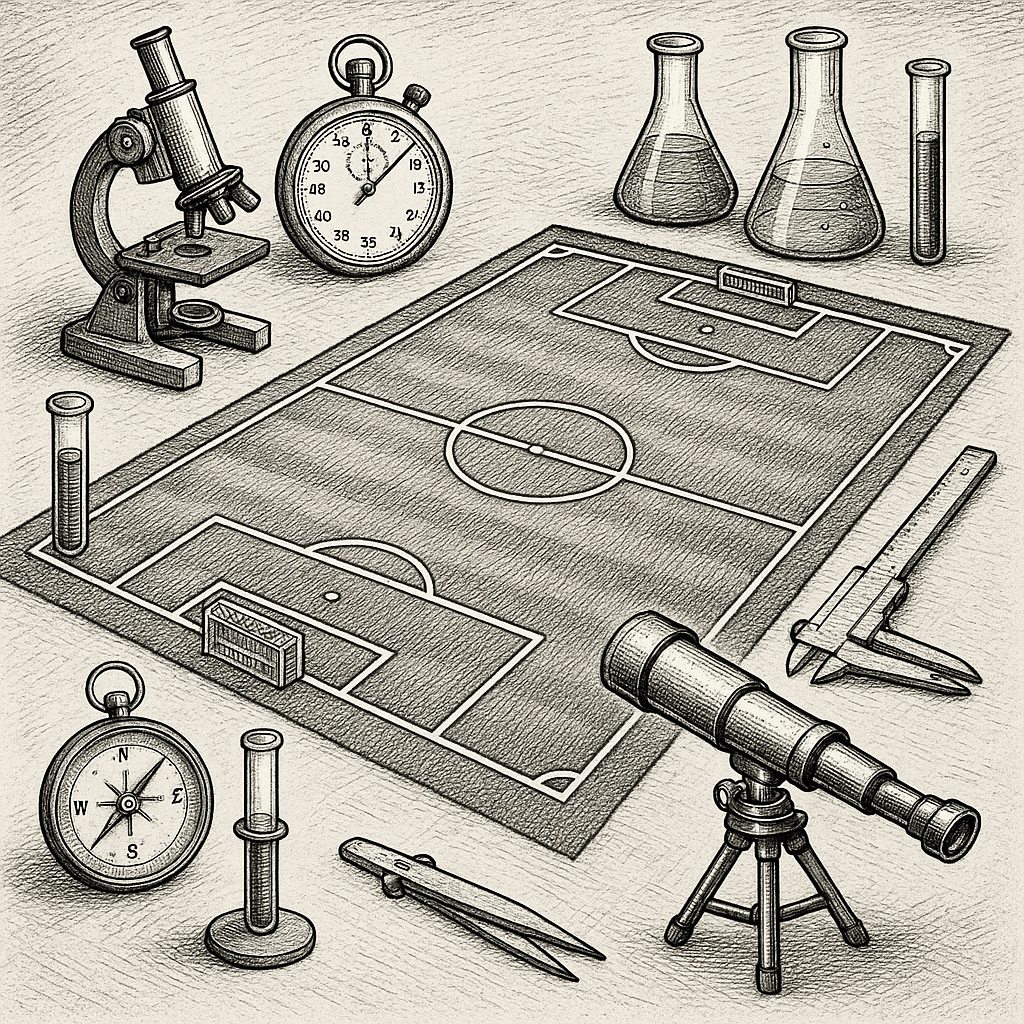
Bafana Bafana's 2026 World Cup HQ in Pachuca is a meticulously designed physiological and tactical training ground for success.
Bafana Bafana is training in Pachuca, Mexico, high up in the mountains, to get super fit for the World Cup. The thin air there makes their bodies stronger and even helps them think clearly. They're using super smart science and old football traditions to turn every moment into an advantage. This intense training will either make them champions or wear them out completely.
Why did Bafana Bafana choose Pachuca for their World Cup training?
Bafana Bafana chose Pachuca, Mexico, for their 2026 World Cup training camp primarily for its high altitude (2,432 m), which helps players acclimatize and increase red blood cell production. The facility also offers advanced sports science, precise training conditions mirroring game venues, and a rich football history, providing a competitive edge.
Get Cape Town news in your inbox
Stay updated with the latest stories from the Mother City.
Section 1 – Why Pachuca? Turning Thin Air Into a Weapon
South Africa’s home for the 2026 World Cup is not a plush resort but a purpose-built sports laboratory perched more than two kilometres above sea level. Team planners chose the Universidad del Fútbol in Pachuca because every metre of altitude, blade of grass and minute of sleep can be turned into an edge after sixteen years in the wilderness. The 42-page briefing that landed on SAFA high-performance chief Dr Lethlogonolo Mabena’s desk last March opened with a blunt warning: acclimatise early or spend the tournament chasing shadows.
The city itself is the smallest of the sixteen World Cup venues yet owns the richest football heritage on the continent. At 2 432 m the atmosphere carries a quarter less oxygen than at sea level, forcing red-blood-cell production to spike within four days. Night-time temperatures in June dip to two degrees, duplicating the late kick-off chill awaiting the squad at Guadalupe’s Estadio BBVA, while the 22 °C noon heat mirrors the greenhouse conditions of Atlanta’s glass-roofed arena. In short, players will inhabit a living stress test for three weeks, emerging either turbo-charged or burned out.
Pachuca’s micro-climate also offers a mental tutorial. Cornish miners brought the game here in 1900, turning a dusty outpost into Mexico’s cradle of professionalism. Bafana will train on the same patch of earth where the first national championship was staged in 1904, a history lesson designed to remind modern stars that reinvention is part of the sport’s fabric. The message from management is simple: adapt like the city did, or fly home early.
Section 2 – Campus Life: Data, Pitches and Honey-Bush Ales
The Universidad del Fútbol spreads across fifty-four hectares of measurable obsession. Eleven full-size natural-grass fields are aligned north-south so the sun never blinds a winger, each surface laser-levelled to within two millimetres of FIFA Pro tolerance. Underground vacuum pipes can cool the root zone by four degrees in eighteen minutes, a trick borrowed from Qatar 2022 heat studies. A biometric dome bristling with eighteen PoseNet cameras turns every movement into 3 200 data points per second; if midfielder Sphephelo Sithole’s fourth shuttle-run deceleration slips 0.08 s, the physios know his hamstring risk has jumped twelve per cent.
Recovery happens in a twenty-five-metre hypoxic pool set to the equivalent of 3 000 m. Waterproof heart-rate belts glow red when a swimmer’s stroke cadence edges above ninety-two per cent max, signalling the medical team to haul him out before lactate floods his system. Nearby, a mobile microbiome unit sequences stool swabs every seventy-two hours; South American sides saw a seventeen-per-cent collapse in good gut bacteria after ten days of foreign food, a slide linked to coughs and colds that ruin campaigns.
Even the town has bought in. Craft brewery Tr3s Corazones now pours “Amarillo y Verde”, a pale ale flavoured with South-African honeybush and Mexican citra hops, donating five per cent of sales to youth pitches in both nations. The gesture is small but telling: locals who once confused Pretoria with Puebla now debate whether Evidence Makgopa should start up front, proof that sport redraws emotional borders faster than any embassy.
Section 3 – Daily Choreography: From Sleep Pods to Scenario Drills
The Camino Real hotel handed Bafana an entire wing facing the Sierra de Pachuca. Portable altitude tents drop perceived elevation to 1 800 m while blackout curtains weighing nearly four hundred grams per square metre silence the dawn church bells. Pink-noise generators cancel the two-kilohertz clank of the corridor ice machine, ensuring the REM phase stays intact. Nutritionist Nandipha Mlombo cycles carbohydrates: three grams per kilo on double-session days, one gram on recovery days, tracked by RFID plates that beep if someone tries to sneak an off-plan muffin.
Training follows a script choreographed to the minute. On day minus-21 the squad play Club León’s Under-23s at 1 600 m, flown in by chopper to avoid losing the thin-air stimulus. Four days later they face a hybrid Pachuca–Olympic XI at 15:00, the exact slot scheduled for their group-stage meeting with South Korea, to recalibrate sweat-rate data. Between friendlies, Hugo Broos runs thirty-minute “scenario pods” on a seventy-by-fifty-metre pitch with an over-inflated ball that zips like the new 2026 FIFA match model. When collective distance drops below one hundred and ten metres per minute for ninety seconds, sports scientist Dr Phathokuhle Zondi kills the session - gegenpressing must work at altitude, not merely survive it.
Opponents are dissected through a three-layer lens. Analyst Sifiso Ngwenya clipped 1 200 examples of Mexico’s left-back shortening his stride inside the Azteca shade, a trigger for Makgopa to pounce on the half-turn. A homemade Python model fed eighteen months of Nations League data and spat out Denmark as the most likely European qualifier; consequently, Broos drills a back-five that morphs into 3-4-3 when wing-backs spot Scandinavian staggered runs. South Korea’s Asian Cup heat maps revealed Hwang Hee-chan drifting between centre-back and wing-back, so the midfield pivot practises a “trap line” twenty-two metres out, forcing the Wolves winger to beat two men instead of one.
Section 4 – Culture, Pressure and the Invisible Scaffolding
Football is only half the battle; the rest is mindset. On day minus-14 the squad will visit Pachuca’s Monumental Clock, a gift from Cornish miners in 1910, to absorb the lesson that migrants can build enduring legacies. They’ll also train on the dirt patch of Campo de San Dionisio, feeling the leather-ball era that preceded multi-layer synthetics. Local Otomí schoolkids will form a guard of honour wearing jerseys that blend Bafana colours with Tenango embroidery, anchoring a memory Broos hopes will resurface when 87 000 Mexicans roar inside Azteca.
Captain Ronwen Williams runs a “peer pod” chain: three players per unit police one another’s sleep, hydration and screen time. Miss the seven-hour sleep target and the whole pod plunges into an ice bath at dawn. Psychologist Dr Koketso Tlailane sharpens nerves with VR replays of past World Cup exits, projected on 220-degree headsets while players cycle at eighty-five per cent max heart rate. The aim is to make a one-hundred-and-eighty-beat spike feel routine, so when a knockout penalty shoot-out arrives, the amygdala tags the sensation as familiar, not fatal.
Logistics are synced to the heartbeat. A charter slot with TAG Airlines waits at Pachuca’s tiny airstrip, shaving ninety minutes off the road haul to Mexico City. In Atlanta, the team will train on Atlanta United’s Bermuda-grass fields because the blade density mirrors the Mercedes-Benz Stadium hybrid turf. A refrigerated truck will ferry two tonnes of biltong, Rooibos and mageu across the Laredo border, pre-cleared under USDA organic rules negotiated six months ago. Even the mascots fly with intent: each player may pack one twenty-centimetre acrylic box of personal meaning; Williams has slipped in the gloves he wore to stop four penalties against Cape Town City in 2022, a reminder that destinies hinge on millimetres.
And so the days tick down on Central Time, yet the camp lives forty-five minutes forward - an artificial time zone chosen to nudge circadian rhythms toward US East Coast clocks. Breakfast at 05:45 in Pachuca is 07:45 in Atlanta, 06:45 in Monterrey. By kick-off day the players’ gut peptides will have been marching to that beat for twenty nights. No supporter will notice, but an opponent might sense it when a South African midfielder closes the passing lane in the eighty-fourth minute, lungs scorched yet stride still true. Somewhere between the silent barometer reading of 761 hPa and the thunder of Azteca, a continent’s dream is being drafted - one heartbeat, one oxygen molecule, one training cone at a time.
[{"question": "
Why did Bafana Bafana choose Pachuca for their World Cup training?
", "answer": "Bafana Bafana chose Pachuca, Mexico, for their 2026 World Cup training camp primarily for its high altitude (2,432 m), which helps players acclimatize and increase red blood cell production. The facility also offers advanced sports science, precise training conditions mirroring game venues, and a rich football history, providing a competitive edge. The city's micro-climate allows for training in conditions similar to their match venues, with varying temperatures and less oxygen, preparing them for diverse game day scenarios."}, {"question": "What specific scientific and technological methods are Bafana Bafana employing in Pachuca?
", "answer": "Bafana Bafana is using cutting-edge science and technology, including FIFA Pro-tolerance natural-grass fields with an underground vacuum cooling system, a biometric dome with PoseNet cameras to track player movement and injury risk, and a twenty-five-meter hypoxic pool for recovery. They also conduct mobile microbiome sequencing of stool samples to monitor gut health and use portable altitude tents, blackout curtains, and pink-noise generators for optimal sleep and recovery. RFID plates track carbohydrate intake to ensure precise nutrition."}, {"question": "How does Pachuca's environment contribute to both physical and mental training?
", "answer": "Pachuca's high altitude significantly boosts red blood cell production, enhancing physical endurance. Mentally, the city's rich football heritage, dating back to 1900 with Cornish miners introducing the sport, provides a historical context for reinvention and adaptation. Training on historically significant grounds and engaging with the local community, like Otomí schoolchildren, helps foster a strong mindset and connection to the sport's roots, reinforcing the idea of adapting to succeed."}, {"question": "What is the daily routine like for Bafana Bafana players in Pachuca?
", "answer": "The daily routine is meticulously choreographed. Players stay in a dedicated hotel wing with portable altitude tents and sound-dampening features for optimal sleep. Nutrition is strictly managed with carbohydrate cycling tracked by RFID plates. Training sessions include playing against local teams like Club León's Under-23s and hybrid Pachuca-Olympic XIs at specific times and altitudes to mimic match conditions. Coaches also run \"scenario pods\" using an over-inflated ball to simulate the new FIFA match model, with sessions ended if collective distance drops below a certain threshold. Opponent analysis is also a key part of their daily preparation."}, {"question": "How are Bafana Bafana preparing for specific opponents and match scenarios?
", "answer": "The team employs a multi-layered approach to opponent analysis. Analysts clip thousands of examples of opponent behaviors, like a left-back's stride shortening, to identify weaknesses. A Python model analyzes past tournament data to predict potential European opponents, leading to specific tactical drills like a back-five morphing into a 3-4-3. They also use heat maps from previous tournaments to understand player movements and design \"trap lines\" to force key opponents into challenging situations. VR replays of past World Cup exits are used to psychologically prepare players for high-pressure moments like penalty shoot-outs."}, {"question": "Beyond training, how is Bafana Bafana ensuring overall well-being and logistics for the World Cup?
", "answer": "Beyond physical training, the team focuses on mental fortitude and seamless logistics. Captain Ronwen Williams leads a \"peer pod\" system where players monitor each other's sleep, hydration, and screen time, with consequences like ice baths for missed targets. Psychologists use VR to desensitize players to high-pressure scenarios. Logistically, a charter flight is arranged for efficient travel, and training fields in Atlanta match the stadium's turf. A refrigerated truck transports two tonnes of South African provisions like biltong and Rooibos, pre-cleared with USDA. Even personal items (one twenty-centimeter acrylic box) are allowed to maintain morale and a sense of home, with the camp operating on an artificial time zone to align with US East Coast clocks before departure."}]
Kagiso Petersen is a Cape Town journalist who reports on the city’s evolving food culture—tracking everything from township braai innovators to Sea Point bistros signed up to the Ocean Wise pledge. Raised in Bo-Kaap and now cycling daily along the Atlantic Seaboard, he brings a palpable love for the city’s layered flavours and even more layered stories to every assignment.
View all articles →