
Beer prices rising faster than spirits
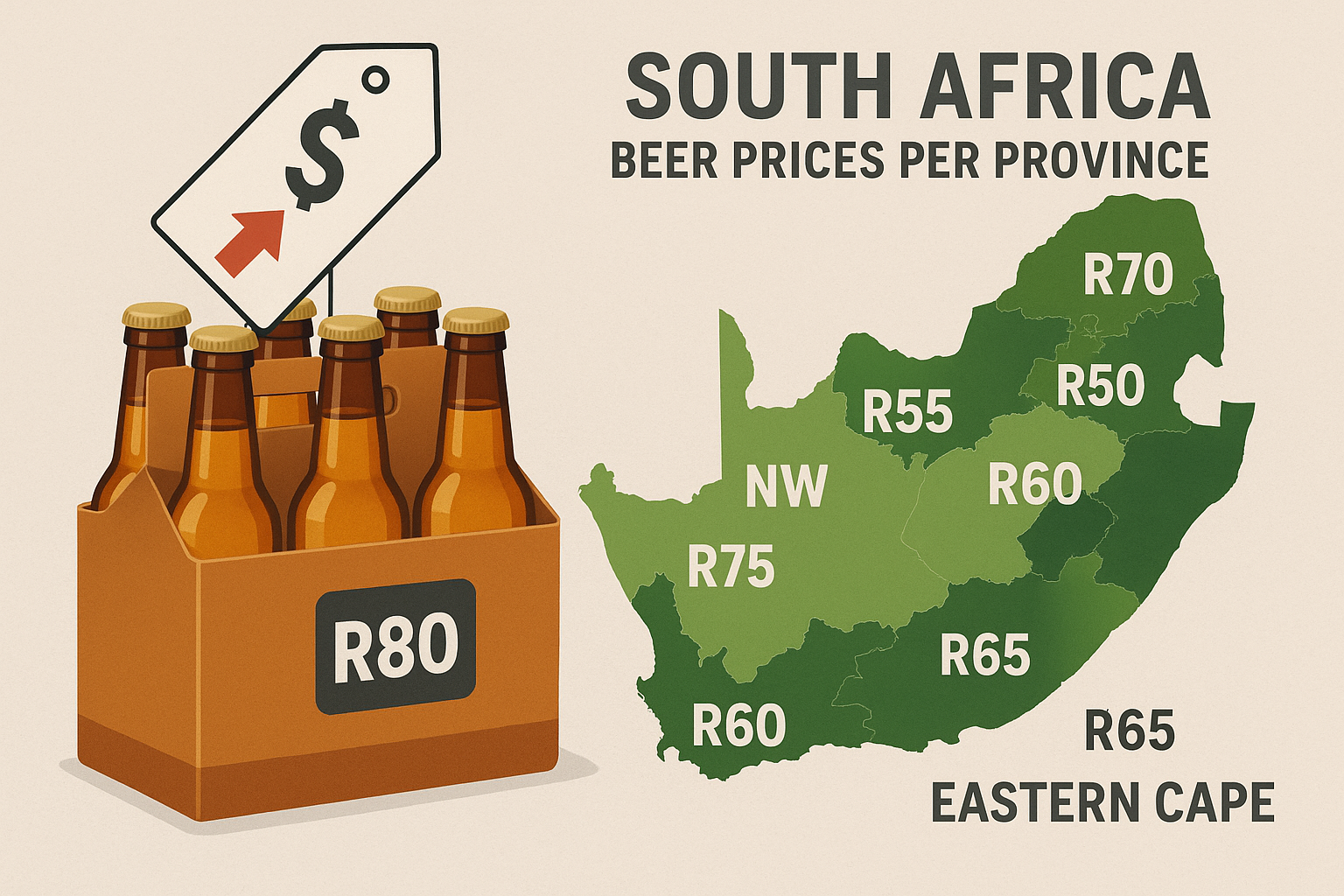
South Africa's beer prices have surged 56% in 5 years, outpacing salaries. Excise duties, currency, and marketing changes make beer a luxury.
Beer in South Africa is becoming super expensive, like a fancy treat instead of a normal drink. Prices have shot up way faster than what people earn, making it hard for many to afford. This is because of higher taxes, the weak rand making imported ingredients costly, and trouble with moving and packaging the beer. So, fewer people are buying beer, and those who do pay a lot, turning a favorite pastime into something only some can enjoy.
Why is beer becoming a luxury in South Africa?
Beer is becoming a luxury in South Africa due to a combination of factors: rising excise taxes, a fluctuating rand impacting import costs for malt and hops, and logistical inefficiencies increasing transport and packaging expenses. These elements have led to a 56% price surge in five years, outpacing wage growth and making beer unaffordable for many.
Get Cape Town news in your inbox
Stay updated with the latest stories from the Mother City.
The Price Shock: When a Six-Pack Costs More Than a Day’s Wage
A quiet crisis is unfolding in South Africa’s bottle stores and shebeens: the country’s most beloved social lubricant is slipping out of reach. While official inflation is reported at a modest 3.1 % for March 2026, beer prices are sprinting ahead. A standard 340 ml lager is now 4.9 % pricier than a year ago and 0.7 % up on last month alone. Those digits look harmless until you translate them into trolley shock: the same six-pack that set you back R115 in early 2022 now wears an R180 price tag, a 56 % surge in just five years. Over the same stretch, average take-home pay has crept up only 28 %. In plain language, beer affordability has been cut in half without a single tweak to alcohol strength or recipe.
The gap is widening fastest at the bottom of the economic pyramid. Entry-level workers who once bought a quart after overtime now compare price stickers like stockbrokers. A single 750 ml lager in a Soweto shebeen has jumped from R18 in 2020 to R32 today - outpacing the combined inflation of bread, milk and maize meal. Households have responded by relegating beer to the same mental basket as chocolate or takeaway chicken: an occasional treat, not a grocery staple. The psychological shift is enormous; a drink that defined weekends now competes with taxi fare and school shoes.
Government data may celebrate “subdued” consumer inflation, but the liquor aisle tells a different story. Retailers confirm that volume sales of mainstream lagers have fallen for eight consecutive quarters even as rand values ring higher. In short, fewer people are drinking beer, and those who still do are paying dearly for the privilege. The national pastime is quietly mutating into a minority indulgence.
Regional Ripples: Where You Live Decides What You Pay
Average numbers hide provincial dramas. In North West, retail prices have rocketed 62 % since 2021, turning beer into a scarce commodity. Bottle-store owners in Rustenburg say shoppers now pool coins for a one-litre soda rather than split a 330 ml beer. Free State charts a similar cliff: beer volumes in Bloemfontein have tumbled 40 %, yet cheap vodka sales are up a quarter. The pattern is clear - consumers “pre-load” on low-cost spirits before braving pub prices where a single draught costs more than a burger.
Conversely, the Eastern Cape offers the mildest ride. Structural luck plays a role: two giant SAB plants inside the province shave transport costs. Cultural competition also helps - traditional sorghum beer still flows in many villages, capping the price power of commercial brands. Gauteng and the Western Cape sit somewhere in the middle, but even here township outlets feel the pinch. A quart that sold for loose change three years ago now demands a carefully budgeted note, pushing patrons toward shared soft drinks or illicit home brews.
The divergence reshapes social geography. Cross-border trips to Botswana or Lesotho for “beer runs” are on the rise, while enterprising traders bulk-buy in Eastern-Cape border towns to resell in dearer provinces. A patchwork of unofficial trade routes is emerging, all driven by the same force: price pain that maps directly onto postal codes.
The Anatomy of Expensive: Tax, Rand and Raw Materials
Treasury’s annual budget speech is where the real price tag is stitched. Excise on beer has climbed at twice the consumer inflation rate for four years straight, justified as a public-health levy against alcohol harm. Yet the duty is calculated on pure-alcohol volume, not beverage volume. Because spirits pack more alcohol per litre, their effective tax per ready-to-drink litre ends up lower. A 750 ml beer at 5 % alcohol hands over R1.14 to the state; a 750 ml vodka bottle diluted to premix strength parts with only 89 cents. The unintentional message: switch to stronger stuff and beat the taxman.
Currency gyrations add another layer of hurt. South Africa imports about 18 % of its malt and a quarter of its hop requirements. When the rand sheds 10 %, hedging cushions the blow, but landed costs still rise roughly 7 %. The currency has seesawed between R14.20 and R19.80 to the dollar over the past two years, adding an estimated R1.2 billion to brewers’ input bills. Predictably, the tab is handed straight to drinkers.
Logistics snarls complete the trifecta. Rail inefficiencies force maltsters to road-freight grain from the Free State to Coega and back again, racking up diesel surcharges. Glass shortages - an aftershock of global energy shocks - have pushed bottle prices up 15 % in 18 months. Every shattered pallet in a warehouse is now a line-item in your six-pack cost. The result is a perfect cost storm that no brand, big or small, can absorb.
Reinvention or Retreat: How Drinkers and Brewers Fight Back
Faced with collapse, brewers are hacking the rulebook. SAB is piloting a 2.5 % ABV lemon beer in 300 ml cans priced at R6.50 - half the cost of a mainstream lager. Early numbers from Eastern-Cape townships show 18 % month-on-month growth, proving flavour can triumph over potency if the wallet is respected. Parallel experiments with 440 ml "price-packs" and shrink-flated 440 g cans aim to stay within psychological spending ceilings of R10 a unit.
At the other end of the spectrum, craft players are peddling beer concentrate - think syrup that home drinkers dilute like cordial. The concept slashes excise, transport and packaging in one stroke, and venture funds are circling, betting on export potential to inflation-bruised emerging markets. Whether the ritual of clinking bottles survives dilution-by-kettle remains to be seen, but necessity is a ruthless inventor.
Consumers, meanwhile, have become booze accountants. A back-of-envelope calculation does the rounds: a 340 ml lager delivers 17 ml of alcohol for R8.50 (50 c per ml), while a R159 bottle of vodka yields 322 ml at 49 c per ml. Wine sits in between at 62 c. The stark maths is recoding social events: school fund-raisers now host wine-tastings, church groups request vineyard donations for their braais, and National Braai Day promos feature swirling red glasses instead of frosty lagers. Even township shebeens reconfigure space: beer fridges shrink, glass spirit cabinets glow like jewellery counters, and background beats slow to match the languid sip-rate of brandy-and-Coke.
Policy debate is deadlocked. Industry lobbyists push for a beer excise rebate linked to alcohol content, mirroring the long-standing wine concession. Treasury argues any revenue gap would have to be clawed back from spirits - precisely the category drinkers are running toward. A compromise suggestion, indexing beer duty to CPI only, could trim inflation by 1.5 percentage points and salvage an estimated 8 000 barley, malting and logistics jobs. With unemployment already above 35 %, the political heat is rising, but for now the file gathers dust.
The long view is sobering. Marketers already wrap six-packs in R299 gift boxes complete with tasting glasses and food-pairing cards, aiming at an aspirational black middle class for whom craft beer signals status. In a neat inversion, the working-class staple is morphing into a middle-class trophy, while the working class itself migrates to bulk brandy or communal scud bowls. When a child learns long division by calculating cents per millilitre of alcohol, you know the story is no longer about refreshment - it is about survival in an economy where even bubbles carry a luxury tax.
Why is beer becoming a luxury in South Africa?
Beer is becoming a luxury in South Africa primarily due to a confluence of factors: consistently rising excise taxes, a weakened rand making imported ingredients more expensive, and logistical challenges that increase transport and packaging costs. These elements have collectively led to a significant price surge, outpacing wage growth and making beer less affordable for the general population.
How much have beer prices increased compared to wages?
Beer prices have seen a dramatic increase, surging by 56% in the last five years. In contrast, average take-home pay has only risen by 28% over the same period. This disparity means that beer affordability has effectively been cut in half, making it a less accessible purchase for many South Africans.
What are the main components contributing to the high cost of beer?
The high cost of beer is primarily driven by three factors: excessive excise taxes, which have climbed at twice the consumer inflation rate for four years; the fluctuating weak rand, which increases the cost of imported malt and hops; and logistical inefficiencies, including expensive road freight due to rail issues and rising glass bottle prices.
Are beer prices uniform across South Africa?
No, beer prices are not uniform across South Africa. Regional variations are significant, with provinces like North West experiencing a 62% price increase since 2021, while the Eastern Cape has seen milder price hikes. This difference is influenced by factors such as the proximity of breweries (reducing transport costs) and the presence of cultural alternatives like traditional sorghum beer.
How are consumers and brewers adapting to these rising prices?
Consumers are adapting by becoming "booze accountants," calculating the cost per milliliter of alcohol and often switching to cheaper, stronger spirits or illicit home brews. Brewers are experimenting with lower ABV (alcohol by volume) beers, smaller packaging, and even beer concentrates to offer more affordable options and stay within consumers' psychological spending limits.
What impact are these high beer prices having on the South African economy and society?
High beer prices are transforming a national pastime into a minority indulgence, leading to a decline in mainstream lager sales volumes. This shift also impacts related industries, potentially threatening jobs in barley farming, malting, and logistics. Socially, it's changing drinking habits, pushing consumers towards stronger, potentially more harmful, spirits to get more alcohol for their money, and even fostering cross-border "beer runs" and unofficial trade routes.

Isabella Schmidt is a Cape Town journalist who chronicles the city’s evolving food culture, from Bo-Kaap spice merchants to Khayelitsha microbreweries. Raised hiking the trails that link Table Mountain to the Cape Flats, she brings the flavours and voices of her hometown to global readers with equal parts rigour and heart.
View all articles →