
Brazil tourist arrivals in South Africa
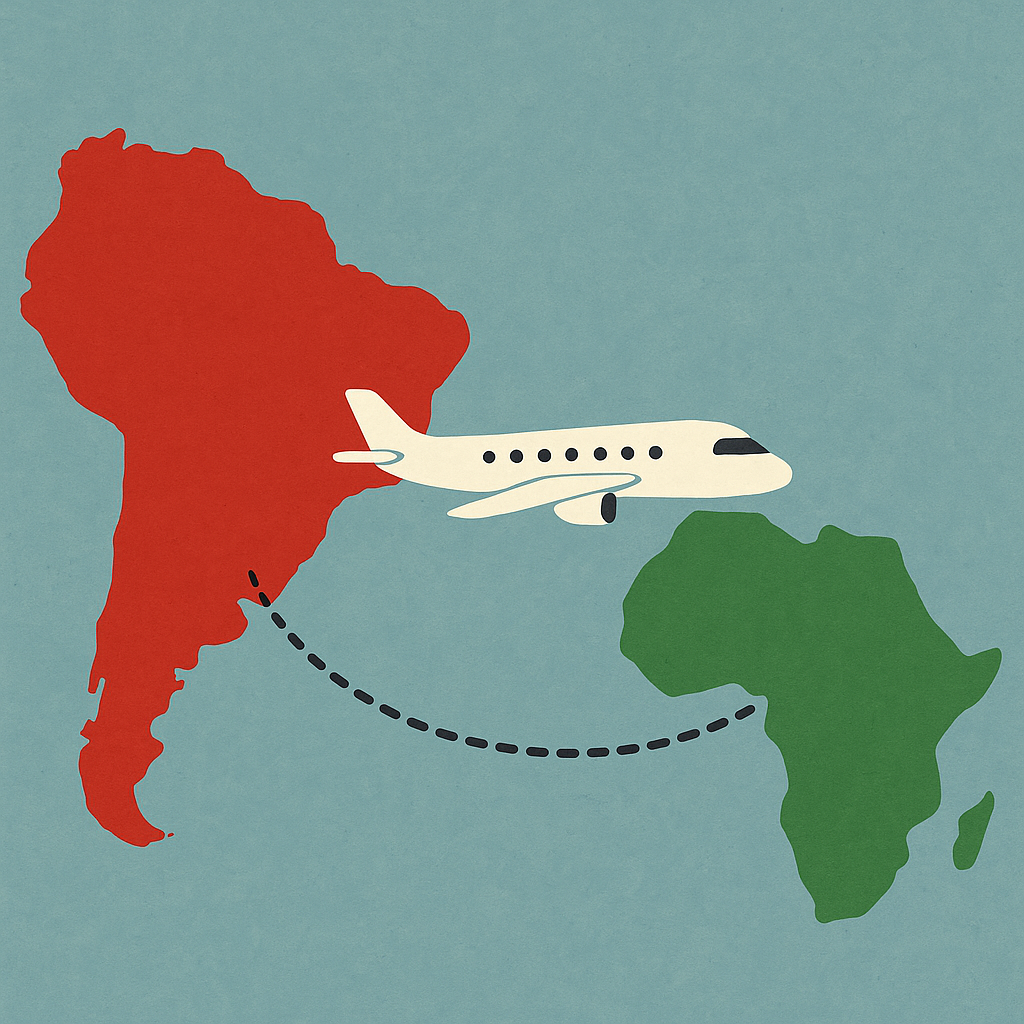
LATAM launches direct São Paulo-Cape Town flights, boosting SA tourism & economic ties with Brazil. Visitor numbers up 40.6%!
A new flight from São Paulo to Cape Town is a big deal for South Africa! It means more Brazilian visitors, which is great for jobs and businesses. People can now fly straight there, skipping long layovers. This new connection helps bring countries closer and makes South Africa a super fun place to visit, with more money coming in for local communities.
How will the direct São Paulo–Cape Town flight impact South African tourism?
The direct São Paulo–Cape Town flight is expected to significantly boost South African tourism by increasing Brazilian visitor numbers, which have already seen a 40.6% spike. This direct route offers a frictionless travel option, bypassing layovers, and is predicted to generate substantial job growth in the hospitality sector and stimulate local economies.
Get Cape Town news in your inbox
Stay updated with the latest stories from the Mother City.
Section 1 – The Atlantic Connection Takes Off
São Paulo’s late-evening sky lit up as LATAM’s first wide-body jet lifted off for Cape Town, etching a historic milestone into South Africa’s aviation map. The 3 700-kilometre hop across the South Atlantic now runs three times every week, shrinking what used to be a two-stop marathon into an eight-and-a-half-hour hop. By the time the aircraft taxied to a stop at Cape Town International, local ground crews had already coined it “the Carnival–Karoo Express,” a nod to the Brazilian festive spirit and the Karoo’s sweeping beauty awaiting visitors.
Tourism authorities had every reason to roll out the red carpet. Fresh Stats SA numbers reveal a 40.6 % spike in Brazilian visitors for May 2026 compared with the same month in 2025, lifting the five-month tally to 29 920 arrivals - a 32 % jump year-on-year. Those figures represent seats filled on connecting flights that zig-zagged through Europe or the Middle East. With a non-stop option now on the table, industry analysts expect the climb to steepen further, widening a market that until recently sat just outside South Africa’s top-ten source countries.
The maiden voyage did more than ferry 280 passengers; it landed with political fanfare. Tourism Minister Patricia de Lille greeted the aircraft, stressing that “every new route writes a fresh chapter of opportunity.” She framed the service as a catalyst for township tours, wine-route tastings and wildlife safaris, insisting that each seat sold “carries the hopes of a guide, a chef, a ranger or an artist.” Her message echoed across the tarmac: connectivity equals jobs, and jobs equal inclusive growth.
Section 2 – Diplomacy, Trade and the Presidential Push
Behind the seamless boarding process lies months of statecraft. President Cyril Ramaphosa shook hands with Brazil’s President Luiz Inácio Lula da Silva in Brasília earlier this year, sealing a string of accords that ranged from green-hydrogen research to tourism facilitation. Lula captured the mood when he told business leaders that “saltwater is not a wall; it’s a ribbon that ties our continents together.” The LATAM flight turns that rhetoric into aluminium and jet fuel, giving substance to every memorandum signed in the Planalto Palace.
Ramaphosa used the same stage to pitch South Africa as the entry hall for the broader African market. Roughly 1.4 billion consumers lie north of the Limpopo, and Brazilian firms - from meatpackers to fintech start-ups - want reliable, time-saving corridors. A direct airway lowers travel costs, accelerates face-to-face negotiations and sweetens return-on-investment calculations. Trade & Industry officials calculate that every additional percentage point of cargo capacity on the new route could translate into R180 million in annual two-way commerce.
Western Cape inward-investment agency Wesgro had already laid groundwork with Cape Town Air Access, a public–private team that spent four years courting LATAM. CEO Wrenelle Stander calls the new schedule “the crown jewel in a bouquet of routes we’ve chased since 2021.” She reels off the benefits: perishables such as blueberries and flowers reach São Paulo’s supermarkets within 36 hours; Brazilian executives can breakfast in Campinas and sit down for supper in the Winelands; leisure travellers gain a frictionless option that bypasses the usual layover fatigue.
Section 3 – Tourism’s New Engine Room
Numbers alone do not capture the mood on the ground. Hoteliers from the V&A Waterfront to the Cango Caves are retooling offerings to fit Brazilian tastes - think caipirinha stations at sunset decks, Portuguese-language spa menus and samba playlists drifting through lodge lounges. Cape Town Tourism has released a pocket-size phrase book blending Afrikaans, isiXhosa and Portuguese greetings, an effort to make every hawker, sommelier and ranger feel welcoming. Early surveys show Brazilians stay an average of 11 nights, 30 % longer than typical European tourists, and spend 18 % more per day.
The route unlocks new itineraries. Instead of a single-city stop, travellers combine Table Mountain views with Kruger lion spoor and finish in Victoria Falls, looping back via Johannesburg to São Paulo. LATAM’s baggage-through-checking agreements with local carriers smooth the transitions. Regional tourism bosses see this as a template for “South–South grand tours,” stitching together waterfalls, wine, wildlife and warm-water beaches across the continent.
Job creation follows footfall. A Western Cape government model predicts every 20 000 extra Brazilian visitors will generate 1 100 hospitality posts, from housekeeping to helicopter pilots. Many roles target youth in townships such as Langa and Khayelitsha, where tourism academies now train baristas, mixologists and adventure guides. The province has ring-fenced R75 million for small-business incubation, financing start-ups that supply craft beer, surf lessons and walking tours. “We refuse to let this opportunity leak offshore,” says Mireille Wenger, Provincial Finance MEC, “so we localise the supply chain.”
Section 4 – Cargo, Community and the Path Ahead
While passengers sip South African chenin blanc at 35 000 feet, the belly of the Airbus carries time-sensitive freight. Dragon-fruit, roses and abalone head north; automotive parts, e-commerce parcels and medical devices fly south. LATAM’s cargo chief expects 1 200 tonnes annually, a figure that could double if e-commerce giants press for faster fulfilment. Cool-chain facilities at Cape Town International already hold IATA’s CEIV Pharma certification, so vaccines and biotech samples ride in temperature-monitored crates.
Environmental questions hover over the new corridor. LATAM counters criticism by pointing to its youngest long-haul fleet, running on a 20 % sustainable aviation-fuel blend bought from a refinery in Rio that repurposes sugar-cane waste. South Africa’s Sasol and Transnet plan to supply green hydrogen-based jet fuel by 2028, a move that could trim the route’s carbon footprint by half. Offset programmes channel levies into renosterveld restoration near the Albertinia coast, binding conservation to every ticket sold.
The true test lies in sustaining momentum beyond the inaugural buzz. Tourism bodies have set a target of 100 000 Brazilian arrivals for 2027, a three-fold climb from current levels. To hit that, they will need relaxed visa waivers, joint marketing funds and packages that bundle flights, lodges and experiences at single click-through prices. LATAM hints at daily frequencies if load factors top 80 % for two straight years. Should that happen, the South Atlantic may soon rival the North Atlantic in passenger glamour, and Cape Town’s claim as Africa’s favourite long-haul playground will harden into statistical fact.
How will the new direct flight from São Paulo to Cape Town benefit South Africa?
The new direct flight is set to significantly boost South African tourism by increasing Brazilian visitor numbers. This influx of tourists is expected to create jobs in the hospitality sector, stimulate local economies, and bring more money into local communities. It also strengthens diplomatic and trade ties between South Africa and Brazil.
What makes this flight significant for travelers?
Previously, traveling from São Paulo to Cape Town involved a two-stop journey. This new direct flight reduces travel time to an eight-and-a-half-hour hop, eliminating long layovers and offering a much more convenient and frictionless travel option for passengers. It essentially transforms a marathon into a quick dash across the South Atlantic.
What has been the initial impact on Brazilian visitor numbers to South Africa?
Even before the direct flight, there was a noticeable increase in Brazilian visitors. Fresh statistics reveal a 40.6% spike in May 2026 compared to May 2025, bringing the five-month total to 29,920 arrivals, a 32% year-on-year jump. With the non-stop option now available, industry analysts anticipate an even steeper climb in these numbers.
Beyond tourism, how will this new route impact trade and diplomacy?
The direct flight is a tangible outcome of diplomatic efforts, including an agreement between President Cyril Ramaphosa and Brazil’s President Luiz Inácio Lula da Silva. It facilitates trade by lowering travel costs and accelerating face-to-face negotiations for Brazilian firms interested in the broader African market. Trade & Industry officials estimate that every additional percentage point of cargo capacity on this route could generate R180 million in annual two-way commerce, carrying goods like perishables and automotive parts.
How are South African businesses and tourism operators adapting to cater to Brazilian tourists?
Hoteliers and tourism operators are actively retooling their offerings to suit Brazilian tastes. This includes introducing amenities like caipirinha stations, Portuguese-language spa menus, and samba playlists. Cape Town Tourism has even released a multi-lingual phrasebook. Brazilians also tend to stay longer (an average of 11 nights, 30% longer than European tourists) and spend more (18% more per day), leading to new itineraries that combine various South African attractions.
What are the long-term goals and sustainability efforts associated with this new route?
Tourism bodies aim for 100,000 Brazilian arrivals by 2027, a three-fold increase from current levels. To achieve this, initiatives like relaxed visa waivers and joint marketing funds are crucial. On the sustainability front, LATAM utilizes its youngest long-haul fleet running on a 20% sustainable aviation-fuel blend. Furthermore, South Africa plans to supply green hydrogen-based jet fuel by 2028, potentially halving the route's carbon footprint, and offset programs are in place to support conservation efforts.

Kagiso Petersen is a Cape Town journalist who reports on the city’s evolving food culture—tracking everything from township braai innovators to Sea Point bistros signed up to the Ocean Wise pledge. Raised in Bo-Kaap and now cycling daily along the Atlantic Seaboard, he brings a palpable love for the city’s layered flavours and even more layered stories to every assignment.
View all articles →