
Bugatti Grand Tour roars into Cape Town
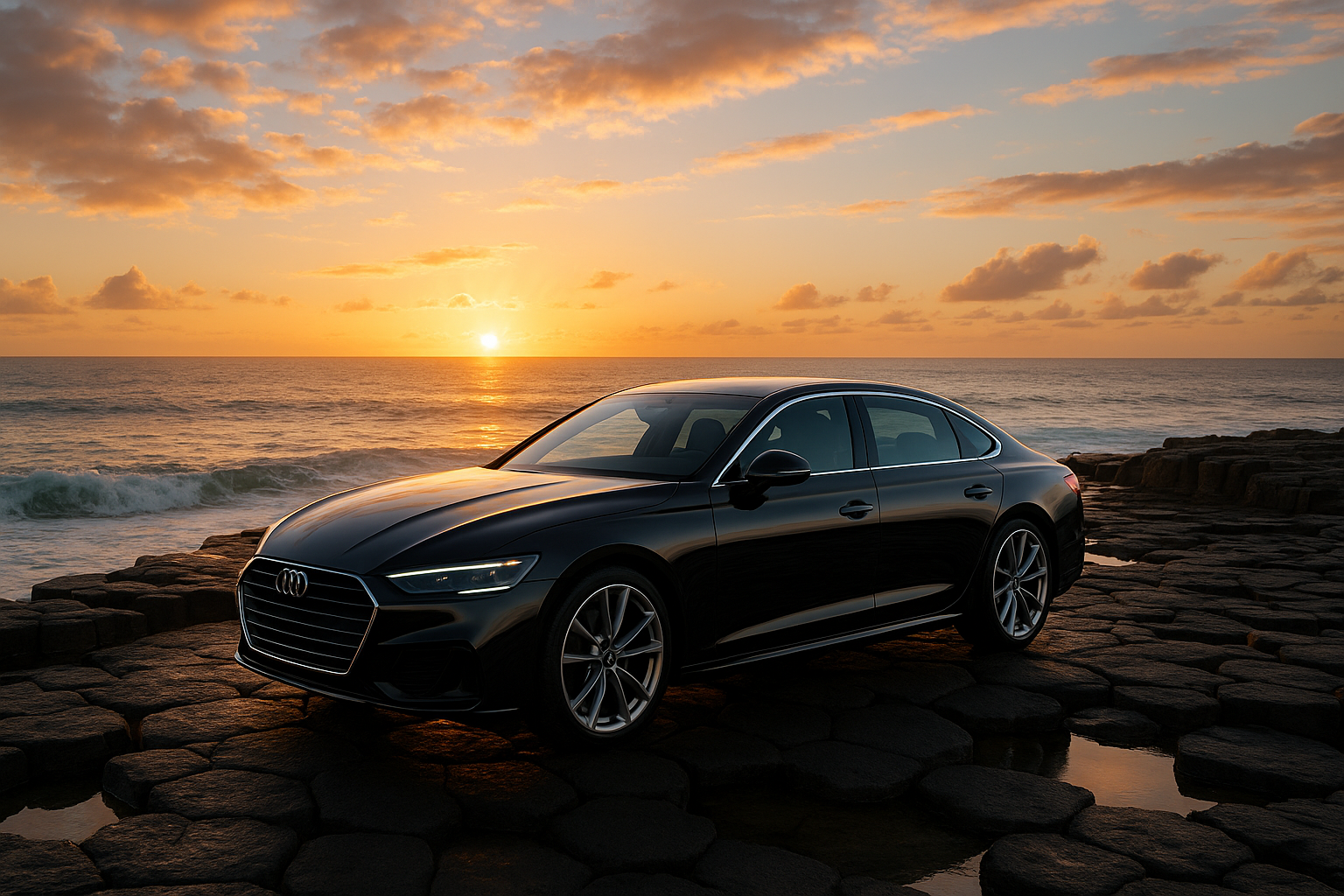
Bugatti's 2026 Grand Tour hits Cape Town, unleashing W16 beasts for an elite adventure through South Africa's stunning landscapes.
Bugatti held a super fancy road trip in South Africa with six amazing W16 cars. They drove on beautiful roads, like Chapman's Peak, with a special team making sure everything was perfect. This trip was a mix of luxury, amazing engineering, and cool experiences for the car owners, ending with a fancy dinner inside a museum.
What is the Bugatti Grand Tour?
The Bugatti Grand Tour is an exclusive road ritual where six W16 Bugatti vehicles journey through scenic routes, such as South Africa's Cape Point Nature Reserve and Chapman's Peak Drive. This event combines high luxury, meticulous engineering, and a unique experience for owners, supported by a dedicated team and bespoke services.
Get Cape Town news in your inbox
Stay updated with the latest stories from the Mother City.
I. Midnight Landing – When Carbon Meets the Cape
The Atlantic side of Cape Town has always flirted with drama - sunsets that torch the Twelve Apostles, dawn fog thick enough to feel like television snow. This week the pageant gained a mechanical chorus: the 2026 Bugatti Grand Tour rolled into the continent’s toe, replacing gulls and taxi hooters with the hollow jet-whistle of 8-litre W16s inhaling sea air.
Two privately-chartered 747-8 freighters touched down in the dark, bellies packed with six carbon-clad land jets. Climate-controlled aluminium cocoons kept cabin pressure steady at 900 hPa; ground staff signed NDAs while customs officers snapped on white cotton mitts. By 04:30 the whispering convoy - three Super-Sport 300+ record holders, a lone Veyron World Record car, the one-off Chiron Profilée still smelling like Qatari leather, and the roofless Mistral prototype - slipped onto the empty N2, flanked by innocuous Crafters stuffed with Snap-on tool trolleys and spare Michelin Cup 2R sets worth more than seaside villas.
First light found the armada at Buffels Bay tidal pool inside Cape Point Nature Reserve. SANParks issued an after-hours permit sealed with a 48-hour media gag. Engineers wanted the cars posed on basalt shelves whose charcoal grain mirrors the gloss carbon behind the Mistral’s horseshoe mouth. Shooting began at 05:47, the exact sunrise second, so Atlantic vapour could halo 1 000 horsepower in slow-motion gold. A Berlin drone crew captured 240-frames-per-second bursts; played back at cinematic 24 fps, each throttle stab becomes a four-second baritone growl you can almost taste.
II. Chapman’s Crawl – Slow Speed, High Theatre
At 07:30 the line filed onto Chapman’s Peak Drive, cruise-set to the posted 60 km/h. Average-speed cameras installed last year make hero runs impossible - and irrelevant. Engineers insist a twenty-minute, 2 000-rpm coast “re-seats piston rings” after twelve pressurised cargo hours. Joggers swear the procession generated less rumble than a flat-four Subaru convoy, yet every phone still swivelled; one Noordhoek surf-dad claims the tarmac throbbed even when the Mistral ghosted past in silent 800-volt creep.
Behind the glamour rolls a support circus that could launch satellites. Two Range Rover Sentinels ride shotgun, roof-mounted gyroscopes scanning for contractor trucks likely to flick quartz shrapnel; a cracked Chiron Pur-Sport splitter costs €78 k and six weeks of Molsheim 3-D printing. A Mercedes Sprinter lab-on-wheels distils 102-octane rocket juice - South African 98 can carry 15 % ethanol, so anhydrous additive drums flown in from Dubai keep knock at bay when boost peaks at 1.8 bar on Franschhoek’s long climb.
Human cargo matches the hardware. Twenty-one owners, two factory test pilots, three lifestyle concierges and a Copenhagen Michelin-star chef who normally feeds fourteen people at a counter the size of a Chiron sill. Guests unboxed carbon-fibre Rimowas containing goatskin-sleeved driving jackets (merino body, Rooibos-tinted lining) and Garmin MARQ Carbon watches cut from the same carbon batch as the Mistral tub. The bezel hides a breadcrumb route that unlocks only when the wearer’s pulse tops 120 bpm - an addictive nudge for “one more” launch-control hit.
III. Cathedral of Torque – Dining inside Zeitz MOCAA
Saturday night turned the Zeitz MOCAA grain elevator into a subterranean temple of combustion. Artist Atang Tshikare built a twelve-metre table from compressed fynbos and bio-resin; embedded phosphor strands echo the Chiron’s rear light blade, pulsing gently while six courses arrive. Each plate is paired with an engine note: amuse-bouche drops to a 5 500-rpm idle pumped through Bowers & Wilkins tweeters hidden in ostrich eggs, while dessert syncs with a Veyron wastegate hiss stretched 800 % until it feels like a dinosaur sigh.
While patrons slept, technicians inflated a positive-pressure cleanroom in the museum’s sub-cellar. A portable mass spectrometer sniffed combustion traces; any hint of silicon meant fynbos pollen had breached an air-filter seal - a 40-hp killer. Cape spring pollen measures roughly the width of the end-mill that bores a Chiron cylinder, so a single rogue grain earns a midnight filter swap to preserve the illusion of mechanical divinity.
Morning pointed the grille north-east along the whale-observatory ribbon of R44. Engineers adore the camber roulette between Betty’s Bay and Kleinmond: corners arrive every eighty metres, warming Michelin shoulders just enough to banish cargo-flight flat-spots. Pilgrims pause at Kogel Bay, site of the 2012 YouTube legend where a Veyron hit 340 km/h on sand - the only recorded production-car beach burnout. PR politely forbids reruns, yet the spot remains holy ground; photos are taken, GPS metadata promptly erased.
IV. Salt, Cedar & Silence – The Final Exam
By mid-week the herd snakes toward the Garden Route’s Tsitsikamma cliffs, where brine drifts across the N2 in atomised sheets. Here €62 000 paint layers - especially the Profilée’s naked-blue carbon fade - face a 48-hour salt-fog equivalent to ten Norwegian winters. Litmus swabs every three hours watch for pH drops below 5.5; should acidity spike, 400 litres of de-ionised water hosed from a stainless tanker wash the car before crystals can effervesce like Alka-Seltzer inside intercooler cores.
Owners hungry for still rarer air may book the 18 km cryogenic service road to SANAE IV’s satellite dish outside Grabouw. Built for liquid-helium trucks, the black-top is smooth enough for billiards; the only speed cap is the 4.5 km straight that disappears into thermal haze. Portable LIDAR clocks 0-400-0 numbers, but data is encrypted and e-mailed six months later when cars already sleep in Tokyo, Riyadh, London or Beverly Hills. The memory card is sealed inside a titanium capsule and buried beneath a newly planted endangered cedar, its GPS coordinates known solely to the driver and a single archivist in Molsheim.
Table Mountain finally looms as curtain-call, mesa rim glowing sodium-orange under city lights. Harbour cranes swing pallets into place; nitrogen shrouds billow like silk. In thirty-six hours the W16s will be gone, the pop-up cleanroom dismantled, the fynbos table composted, Rooibos-stitched jackets delivered to walk-in wardrobes already bloated with acquisition. Yet for one bar-synched heartbeat - rev-limited downshifts echoing off basalt, wastegate sighs cooled by Atlantic salt - the continent’s tip became Earth’s most exclusive dyno cell, a fleeting duet of geology, meteorology and mechanical excess that no fortune can permanently possess.
What is the Bugatti Grand Tour?
The Bugatti Grand Tour is an exclusive road ritual where six W16 Bugatti vehicles journey through scenic routes, such as South Africa's Cape Point Nature Reserve and Chapman's Peak Drive. This event combines high luxury, meticulous engineering, and a unique experience for owners, supported by a dedicated team and bespoke services.
Where did the 2026 Bugatti Grand Tour take place?
The 2026 Bugatti Grand Tour took place in South Africa, specifically starting in Cape Town and covering scenic routes like Chapman's Peak Drive, Cape Point Nature Reserve, and extending towards the Garden Route's Tsitsikamma cliffs, Betty's Bay, Kleinmond, and even including a special visit to the Zeitz MOCAA museum.
What types of Bugatti cars participated in the tour?
Six W16 Bugatti vehicles participated in the tour. These included three Super-Sport 300+ record holders, a Veyron World Record car, the one-off Chiron Profilée, and the roofless Mistral prototype.
What kind of support did the Bugatti owners receive during the tour?
The owners received extensive support, including a dedicated team managing logistics, maintenance, and bespoke services. This included two privately-chartered 747-8 freighters for transport, climate-controlled cocoons for the cars, a support circus with Range Rover Sentinels and a Mercedes Sprinter lab-on-wheels for fuel distillation, factory test pilots, lifestyle concierges, and even a Michelin-star chef. Specialized equipment for cleaning, maintenance, and data recording was also on hand.
What unique experiences were part of the Bugatti Grand Tour?
Unique experiences included sunrise photoshoots at Buffels Bay inside Cape Point Nature Reserve, a slow-speed cruise on Chapman's Peak Drive for engine re-seating, and a luxurious dinner inside the Zeitz MOCAA museum where engine notes were paired with courses. There was also an option for owners to experience high-speed runs on a cryogenic service road outside Grabouw with encrypted data recording.
How were the cars protected and maintained during the extreme conditions of the tour?
The cars were meticulously protected and maintained. They were transported in climate-controlled aluminum cocoons, ground staff signed NDAs, and customs officers wore white cotton mitts. During the tour, support vehicles included gyroscopes to scan for road debris, a mobile lab for distilling 102-octane fuel to prevent knock, and litmus swabs to monitor paint acidity in salt-fog areas, with de-ionized water rinses if needed. A positive-pressure cleanroom was even inflated in the museum's sub-cellar to prevent pollen contamination of air filters.

Aiden Abrahams is a Cape Town-based journalist who chronicles the city’s shifting political landscape for the Weekend Argus and Daily Maverick. Whether tracking parliamentary debates or tracing the legacy of District Six through his family’s own displacement, he roots every story in the voices that braid the Peninsula’s many cultures. Off deadline you’ll find him pacing the Sea Point promenade, debating Kaapse klopse rhythms with anyone who’ll listen.
View all articles →