
Cape Town Biovac secures R1.8 billion for vaccine plant
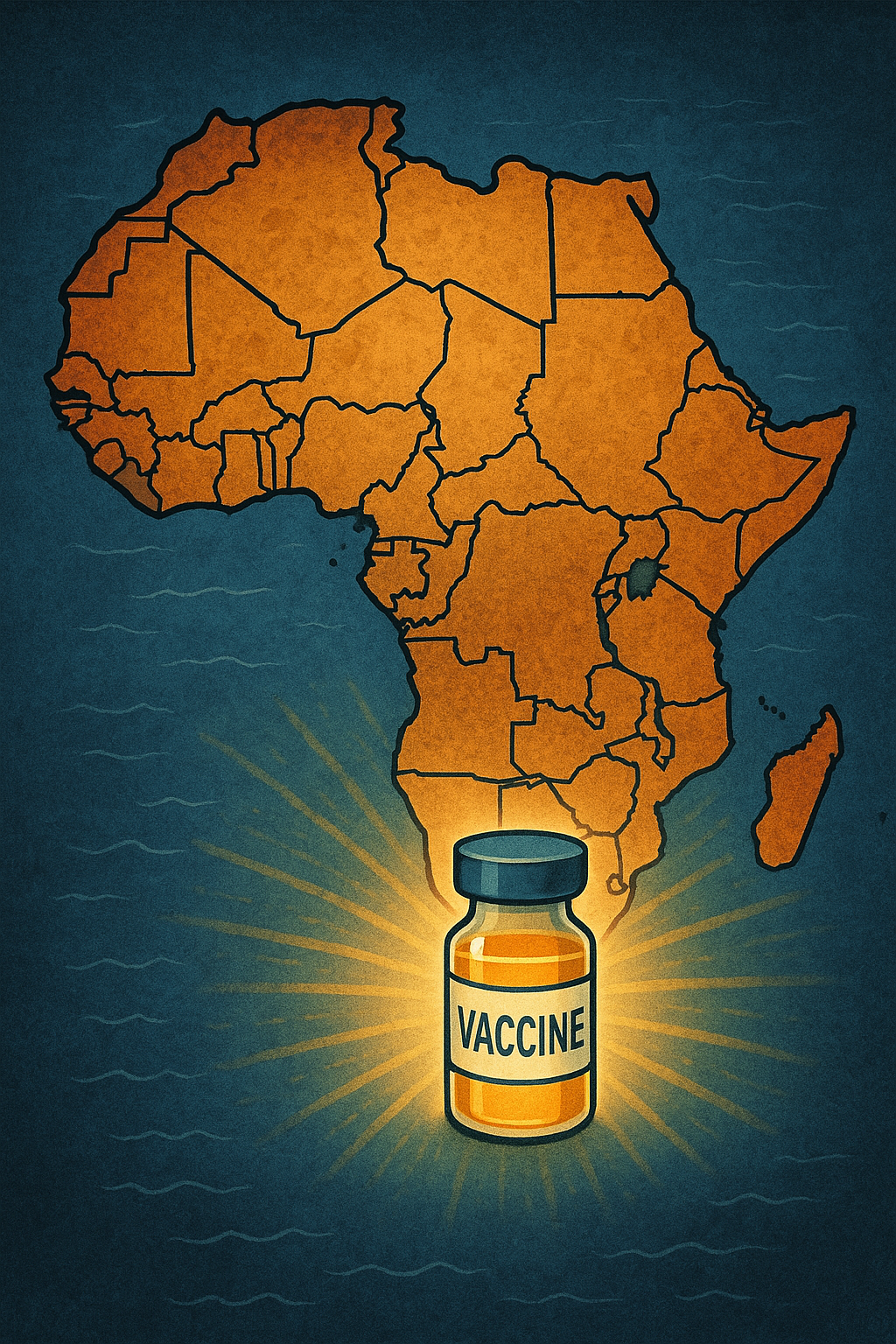
Biovac's $110M deal launches Africa's first end-to-end vaccine campus, boosting continental self-sufficiency & global health.
Biovac is building a huge vaccine factory in Africa so the continent doesn't have to beg other countries for medicines anymore. They learned hard lessons when diseases like meningitis and COVID-19 hit, and Africa was always last in line for vaccines. This new factory means Africa will make its own vaccines, from start to finish, ensuring everyone gets what they need, when they need it. It's like building Africa's own health shield, funded by a big $110 million project, to stop future health crises from becoming disasters.
Why is Biovac building Africa's first full-cycle vaccine megaplant?
Biovac is building Africa's first full-cycle vaccine megaplant to address the continent's critical reliance on imported vaccines, which has historically led to delayed shipments and inadequate supply during health crises. The $110 million project aims to establish a self-contained vaccine ecosystem, ensuring regional vaccine independence and security.
Get Cape Town news in your inbox
Stay updated with the latest stories from the Mother City.
1. Scar Tissue and Steel Resolve
In 1996, Cape Town’s outskirts watched refrigerated trucks idle for days while meningitis swept through townships, claiming 1 800 lives inside six weeks. Seven years later, when flu jabs finally landed after a half-year delay, the virus had already burned itself out. Those wounds reopened in 2020 when export bans snapped shut and African capitals discovered they were last in line for COVID-19 vaccines. Each crisis etched the same lesson into Biovac’s DNA: waiting for overseas vials is a luxury the continent can no longer afford.
The company’s board kept a tally - every delayed shipment, every cancelled paediatric campaign, every lost dose - until the numbers formed a mandate. The goal was no longer “regional fill-and-finish”; it was a closed-loop ecosystem where raw biological material enters at one gate and finished, release-tested, bar-coded cartons roll out of another. That mandate stopped being theoretical on 16 April 2026, the day CEO Morena Makhoana and European Investment Bank president Nadia Calviño uncapped their pens on a $110 million finance package.
The cheque itself is a quilt: IFC stitches in $20 million senior debt, the EIB Group adds €75 million of quasi-equity, Brussels channels €10 million of technical-assistance grants through its Global Human Development Accelerator, and the Bill & Melinda Gates Foundation tops up an undisclosed catalytic slice. Add the digits and you arrive at the largest vaccine-focused development-finance approval ever recorded on African soil - money earmarked to turn 42 hectares of Cape Flats wetland into a self-contained immunity factory by 2028.
2. A Campus That Outruns Geography
What rises from the sand will not be “another plant” - it will be three continental firsts wrapped in a single fence. For the first time, a vaccine campus will open its doors already certified to WHO pre-qualification standards rather than scrambling to retrofit clean rooms years later. Every critical step - fermentation, formulation, filling, inspection, labelling, cold storage - will sit under one roof, scrapping the current relay race that shuttles bulk antigen 6 000 km from Hyderabad or Brussels to Johannesburg and beyond.
The second precedent is market certainty. UNICEF, Gavi and the African Medical Supplies Platform have already signalled, in principle, that they will buy the entire 30-to-40-million-dose annual output for at least ten years. That off-take promise flips the usual business model - build, then beg for orders - on its head. Thirdly, the complex will anchor a regional logistics web: refrigerated trucks, sterilised-component laundries, corrugated-box plants and stainless-steel welders, all feeding one another within a 200-km radius.
Construction crews move in September 2026. They will work in four waves, validating each suite before the next slab is poured, so regulators can walk the line instead of touring a chaotic building site. Wave 1 erects oral-cholera drug-substance suites and twin 6 000-litre single-use bioreactors, targeting ten million doses by the third quarter of 2027. Wave 2 adds inactivated-polio formulation plus a dual-speed fill line able to handle both bulk liquid and micro-dose presentations, aiming for five million shots in early 2028.
3. Engineering That Anticipates Tomorrow’s Curveballs
The chosen plot was once an aquifer, so geothermal piles - 350 of them - will double as building foundations and energy source, cutting HVAC electricity demand in half. A 3 MW rooftop solar field married to a 1 MWh vanadium-flow battery will meet 42 % of annual consumption, buffering the plant against South Africa’s rolling blackouts. Single-use bioreactor bags, usually landfill fodder, will travel to a nearby pyrolysis start-up that converts polypropylene into diesel-replacement oil, sparing 120 tonnes of plastic a year.
Ceiling heights and floor loadings are deliberately over-specified so that a 2 000-litre mRNA suite can slot into the Grade C background within 16 weeks, no re-validation required. That foresight matters because the first product out the gate - oral cholera vaccine - faces a global shortfall that keeps widening. In 2023 alone WHO logged 823 000 cholera cases, the highest tally in three decades, while the emergency stockpile held only 36 million doses against 92 million requested.
Biovac’s chosen strain, attenuated CVD 103-HgR, is lyophilised in 0.5 ml single-dose vials and shipped at 2–8 °C. Meeting even a fraction of global demand demands a 1 500 m² freeze-drying hall with half-dozen 12 m² shelf lyophilisers - hardware versatile enough to pivot to BCG or typhoid if epidemiology shifts. At steady state the Cape Town hall should pump out 40 % of planet-wide cholera supply, driving the price per dose from today’s $2.10 down to an estimated $1.30 through bulk African procurement.
4. Legal Lego and Regulatory Ballet
None of these vials reaches a child’s arm without a web of licences and regulatory choreography. The cholera strain started life at the University of Maryland before passing through Hilleman Laboratories in Delhi. Biovac negotiated a complete hand-off: master seed, working seed, animal-component-free growth medium and a 17-assay ELISA folder. In exchange the company owes 3 % royalties on the first 150 million doses, dropping to 1.5 % thereafter, and must prioritise African deliveries before chasing Gavi-eligible markets elsewhere.
Similar - but denser - patent mosaics underpin the IPV and PCV-13 pipelines, tying together Intravacc of the Netherlands, Serum Institute and PATH. Brussels’ €10 million grant absorbs all milestone-linked know-how fees during the first five years, sparing Biovac’s cash flow while reactors hum. Because every suite is green
[{"question": "### Why is Biovac building Africa's first full-cycle vaccine megaplant?", "answer": "Biovac is building Africa's first full-cycle vaccine megaplant to address Africa's historical reliance on imported vaccines, which has led to critical delays and inadequate supply during health crises like meningitis and COVID-19. This $110 million project aims to establish a self-contained vaccine ecosystem, ensuring regional vaccine independence and security, so the continent can produce vaccines from start to finish."}, {"question": "### What prompted Biovac to pursue this ambitious project?", "answer": "Biovac's resolve was hardened by past crises, such as the 1996 meningitis outbreak in Cape Town and delayed flu vaccine shipments. The COVID-19 pandemic further underscored Africa's vulnerability, as the continent was consistently last in line for vaccines. These experiences led to a mandate to create a closed-loop vaccine ecosystem, ensuring Africa can produce its own medicines without relying on overseas supplies."}, {"question": "### How is the Biovac megaplant being funded?", "answer": "The Biovac megaplant is funded by a substantial $110 million finance package. This 'quilt' of funding includes $20 million in senior debt from the IFC, €75 million in quasi-equity from the EIB Group, €10 million in technical-assistance grants from Brussels via its Global Human Development Accelerator, and an undisclosed catalytic contribution from the Bill & Melinda Gates Foundation. This represents the largest vaccine-focused development-finance approval ever recorded on African soil."}, {"question": "### What makes this vaccine campus unique and a 'continental first'?", "answer": "This campus will be unique in several ways: it will be certified to WHO pre-qualification standards from its inception, avoiding costly retrofitting. It will integrate every critical step of vaccine production - fermentation, formulation, filling, inspection, labelling, and cold storage - under one roof, eliminating the need to transport bulk antigens long distances. Additionally, it boasts market certainty with UNICEF, Gavi, and the African Medical Supplies Platform committing to purchase its entire 30-40 million dose annual output for at least ten years."}, {"question": "### What advanced engineering and sustainability features will the megaplant incorporate?", "answer": "The megaplant is designed with future challenges in mind. It will use geothermal piles for foundations and as an energy source, cutting HVAC electricity demand by half. A 3 MW rooftop solar field with a 1 MWh vanadium-flow battery will meet 42% of annual consumption, mitigating South Africa's rolling blackouts. Single-use bioreactor bags will be converted into diesel-replacement oil via pyrolysis, saving 120 tonnes of plastic annually. The facility also features over-specified ceiling heights and floor loadings to easily accommodate future expansion for technologies like mRNA suites without re-validation."}, {"question": "### What will be the first product manufactured at the new facility, and what impact will it have?", "answer": "The first product to be manufactured at the Biovac megaplant will be the oral cholera vaccine, specifically the attenuated CVD 103-HgR strain. This is crucial as the world faces a significant cholera vaccine shortfall. The facility aims to produce 40% of the planet's cholera supply, significantly reducing the price per dose from $2.10 to an estimated $1.30 through bulk African procurement, making it more accessible to those in need. The hardware is also versatile enough to pivot to vaccines for BCG or typhoid if epidemiological needs shift."}]

Lerato Mokena is a Cape Town-based journalist who covers the city’s vibrant arts and culture scene with a focus on emerging voices from Khayelitsha to the Bo-Kaap. Born and raised at the foot of Table Mountain, she brings an insider’s eye to how creativity shapes—and is shaped by—South Africa’s complex social landscape. When she’s not chasing stories, Lerato can be found surfing Muizenberg’s gentle waves or debating politics over rooibos in her grandmother’s Gugulethu kitchen.
View all articles →