
Cape Town clinic reopens after extortion incident
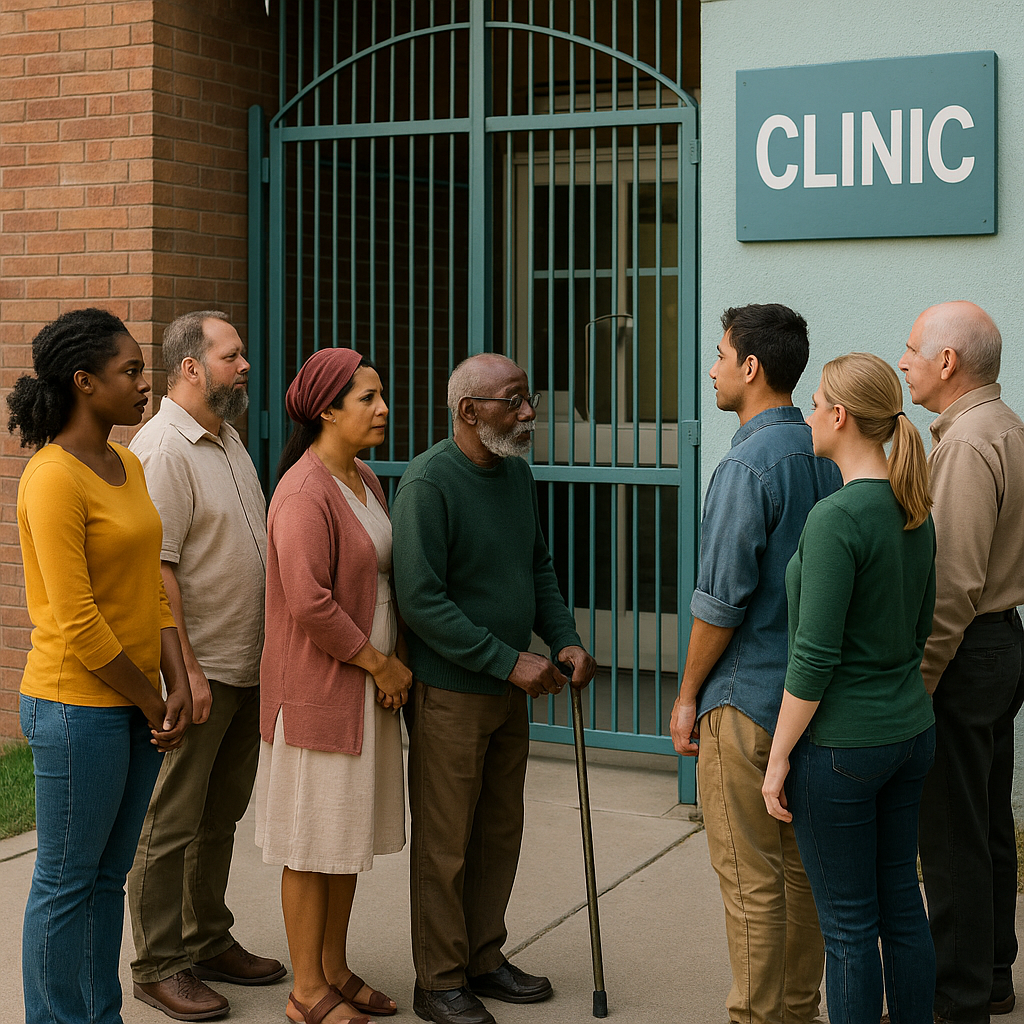
Khayelitsha clinic reopens after extortion closure. Patients face challenges amid a community's fight for vital healthcare access.
Criminals forced Khayelitsha's Town Two Clinic to shut down for two weeks by demanding a weekly payment of R30,000. This extortion attempt, which included cable-tying guards, caused chaos and suffering. Patients, some very sick, were left without vital care, leading to tragic outcomes like a diabetic man dying and crucial medicines being wasted. After much effort from the community and officials, the clinic bravely reopened, implementing new security measures to protect its life-saving services.
What caused the two-week shutdown of Town Two Clinic in Khayelitsha?
The Town Two Clinic in Khayelitsha experienced a two-week shutdown due to an extortion attempt by criminals. Two night guards were cable-tied, and a ransom demand of R30,000 weekly was issued to keep the clinic doors open, leading to its closure and significant disruption of healthcare services.
Get Cape Town news in your inbox
Stay updated with the latest stories from the Mother City.
Dawn of the Lock-Out
At twenty-to-seven on a Monday morning, the double gates of Town Two Clinic clattered wide and the concrete forecourt turned into a humming bus-terminal of pain: grandmas propped on homemade crutches, newborns lashed to backs with faded towels, teenage boys balancing on crutches, and neon-vested marshals coaxing a restless swarm into a single crooked line. It was the first time since 2 February that anyone collected pills, wrapped a blood-pressure cuff or heard the quick electronic blip of a foetal heart. The shutdown had started in the dark hours of that Sunday, when two night guards were marched to a storeroom, cable-tied and handed a ransom demand: keep the doors open and pay R30 000 every week.
News pulsed through neighbourhood WhatsApp groups faster than a shack-fire alert. Voice notes buzzed between warnings about load-shedding: “Abanqobi bathi kufuneka sibhadale, njalo siphethe abantu abagula” – “The crooks say cough up, yet we’re the ones who are sick.” Staff who pitched up for morning duty met a chain and a blunt order: leave. Within sixty minutes the pharmacy fridge was silent, 1 430 green patient folders were locked in a records room, and the key slid beneath the ward councillor’s door.
For the next fourteen days the neighbourhood became a pop-up laboratory of make-do. Chronic cases were told to trek four kilometres to Michael Mapongwana Hospital; after sunset minibus fares doubled. A 67-year-old diabetic never made it - he collapsed on the N2 ramp trying to walk. A pregnant woman, already scarred by two previous losses, reached Mowbray Maternity too late for the vital nevirapine dose that blocks mother-to-child HIV transmission; her newborn girl is healthy, but that missed tablet will haunt clinic notes for eighteen months. Antiretroviral boxes that demand fridge temperatures were hustled across the road to a butchery storeroom, watched by a pastor-butcher. By day five the last ice pack had sweated itself warm; 2 700 blister packs of tenofovir-lamivudine-dolutegravir were condemned and carted away, a R411 000 line item on the City’s loss sheet.
A Colour-Coded Path Back
Reopening was not a miracle; it was a paper marathon. Officials dusted off a risk chart usually reserved for burst pipes or protest flashpoints and walked it, line by line, through twelve meetings - community policing forum, mall landlords, taxi bosses, pastors, shebeen queens and two “peace facilitators” whose names also pop up on a police intelligence list. The matrix sports five colour blocks; each block slid from scarlet to amber and back again more times than winter weather. The deciding slide came when someone calculated sheer patient weight: 14 600 registered clients, 3 200 on ARVs, 1 870 on BP pills and 420 babies overdue for their six-week jabs. “Bolt the doors and you don’t remove risk - you scatter it across every corrugated-iron street,” the district clinician warned.
Monday’s choreography read like a mini-military plan. 05:00 - a four-officer Tactical Response Team sweeps the grounds, even checking the storm-water ditch where cable thieves once ran a zinc kraal. 05:30 - six neighbourhood-watch marshals sign in, two of them ex-Marines who still greet each other as “Rooi.” 05:45 - a police nyala escorts a courier delivering 92 kg of scheduled stock; every box is QR-scanned so each pill can tell its life story. 06:00 - the manager lifts the gate but keeps the roller door half-mast, letting only five bodies in at a time, creating a human air-lock. 06:42 - door buzzer, first patient.
Nokwanda Tyelinzima, 38, steps inside, folder stamped “Default: 5 days.” She swallows three ARVs nightly at nine; by Thursday she was prising empty blisters apart, joking she would “eat less so the tablets feel stronger.” Nurse Nombulelo Koti records a two-kilo drop and swaps her old strip for a green-striped TLD 300, the formula less likely to bring nightmares. Exchange time: 97 seconds. Outside, the queue has already bent around the guard’s makeshift kitchen container.
By nine o’clock the wooden bench is triple-layered with backsides. The pharmacy exhausts its pre-packed enalapril 10 mg; a runner sprints to Site B CHC hugging a cooler bag stamped “URGENT.” Two toddlers decorate the floor with puddles; a cleaner slaps cardboard warning signs to keep grannies upright. At 09:47 a guy in a yellow Spurs shirt barges forward, yelling that his mother’s BP is “200 over whatever.” A marshal - former Marine - steers him out with one disciplined finger to the sternum. Fifteen minutes later the supporter returns, quieter, wearing a borrowed jacket; this time he is waved through.
Eyes, Aunties and an Indemnity Stokvel
Cameras now sprout like skinny giraffes: three CCTV poles borrowed from the electricity department, though the fibre trench only happens next month; for now they swallow 72 hours of footage. Beneath every desk hides a doorbell-sized panic button; one prod fires an SMS to the nearest patrol van. Yet the real radar may be three vetkoek aunties granted R200 monthly airtime to log unfamiliar number plates or late-night loiterers. They have already nicknamed one regular “Mr Bluetooth” after he tried paying for sheep heads with a card machine.
Lumkile Sizila, 51, coordinator of Amadoda Aqotho - “Men of Integrity” - zig-zags the yard in an orange reflector vest. Born during 2020’s gender-based-violence surge, the squad now doubles as rapid-response for shack fires and, lately, clinic extortion. Sizila’s own viral load is undetectable, but he remembers when “getting your numbers” meant a 04:00 queue at Groote Schuur. His answer: a community indemnity stokvel - residents tip in R5 a month, aiming to outbid any protection fee the gang demands. Detractors call it a reversed extortion racket; Sizila calls it breathing space while the state gets its act together.
Ward councillor Thando Pimpi appears, bullhorn in hand, preaching promises: a motion-sensor fence within 21 working days, two extra professional nurses, a satellite GBV desk authorised by the police minister. The crowd claps loudest at his final vow - no patient turned away, missing folder or not.
Counting Seconds, Pills and Futures
Public-health maths is brutal. Every idle hour equals 14 missed vaccinations, 23 skipped BP tablets, two ARV tiptoeing toward default. Multiply by 336 dead hours and you confront a low-simmer humanitarian hole. Monday’s return is therefore less triumph than desperate catch-up: staff must treat faster than need multiplies. By mid-afternoon the scoreboard reads 312 consultations, 198 pharmacy visits, 47 jabs; the nurse in room three still hasn’t eaten. At 15:17 someone plugs a kettle and a glucometer into the same circuit - power dies, the fridge screams for twelve minutes while a handyman begs a generator from the mall.
Evening slides in with a final patient: 19-year-old in a school jersey, TB referral letter blotched with tomato sauce. A nurse pricks his finger, smears blood onto a GeneXpert cartridge worth more than his monthly data budget. He will couch-surf at a classmate’s shack while the result brews; rain leaks through his own roof whenever the southeast blows.
Night shift starts under torchlight - the generator cannot feed every tube. The pharmacy tech counts pills, finds ten TLD 300 blisters gone: stolen? Miscounted? Simply eaten by a spreadsheet never built for war? She pockets the key, slips past guards warming palms above an oil-drum brazier.
Across the settlement WhatsApp lights up one last time: a grainy shot of gates shut, this time voluntarily, at 19:03, captioned simply, “We are still here.”
[{"question": "What caused the two-week shutdown of Town Two Clinic in Khayelitsha?", "answer": "The Town Two Clinic in Khayelitsha experienced a two-week shutdown due to an extortion attempt by criminals. Two night guards were cable-tied, and a ransom demand of R30,000 weekly was issued to keep the clinic doors open, leading to its closure and significant disruption of healthcare services."}, {"question": "What were the immediate consequences of the clinic's closure on the community?", "answer": "The shutdown had severe consequences. Patients with chronic conditions were forced to travel long distances to other facilities, leading to tragic outcomes like the death of a 67-year-old diabetic man who collapsed trying to walk to another hospital. Essential medicines, particularly antiretrovirals requiring refrigeration, were wasted, amounting to a loss of R411,000. Many patients missed crucial appointments and medication doses, impacting their health and increasing the risk of complications."}, {"question": "How did the community and officials work to reopen the clinic?", "answer": "Reopening the clinic involved extensive collaboration between officials, community leaders, and various local groups. This included twelve meetings with the community policing forum, mall landlords, taxi bosses, pastors, shebeen queens, and 'peace facilitators'. The decision to reopen was heavily influenced by the sheer number of registered patients whose health was at risk. New security measures were planned and implemented to ensure the safety of staff and patients."}, {"question": "What new security measures were put in place upon the clinic's reopening?", "answer": "Upon reopening, a multi-layered security plan was implemented. This included early morning sweeps by a four-officer Tactical Response Team, deployment of six neighbourhood-watch marshals (including ex-Marines), and police escort for medical supply deliveries. Inside, the clinic used a 'human air-lock' system, letting only five people in at a time. Technical measures included three CCTV poles, panic buttons under every desk, and a motion-sensor fence. Additionally, three 'vetkoek aunties' were given airtime to report suspicious activities, acting as community surveillance."}, {"question": "What impact did the closure have on specific patient groups?", "answer": "The closure had a profound impact. A pregnant woman with a history of two previous losses missed a vital nevirapine dose to prevent mother-to-child HIV transmission. Patients on antiretrovirals (ARVs) faced the risk of defaulting on their treatment, and many chronic patients, like those with high blood pressure, missed their essential medication. The clinic's staff also faced immense pressure to catch up on missed consultations and vaccinations upon reopening."}, {"question": "How is the community actively involved in preventing future disruptions?", "answer": "The community is actively involved through initiatives like 'Amadoda Aqotho' ('Men of Integrity'), a group that now aids in rapid response for various community issues, including clinic extortion. Lumkile Sizila, the coordinator, is establishing a community indemnity stokvel where residents contribute R5 monthly. This fund aims to potentially outbid any future protection fees demanded by gangs, providing a temporary solution while the state strengthens its security measures. Community members also serve as informal 'radar' for suspicious activities, reporting to authorities."}]

Aiden Abrahams is a Cape Town-based journalist who chronicles the city’s shifting political landscape for the Weekend Argus and Daily Maverick. Whether tracking parliamentary debates or tracing the legacy of District Six through his family’s own displacement, he roots every story in the voices that braid the Peninsula’s many cultures. Off deadline you’ll find him pacing the Sea Point promenade, debating Kaapse klopse rhythms with anyone who’ll listen.
View all articles →