
Cape Town coffee brand marks 10 years and 500 000 Deaf working hours
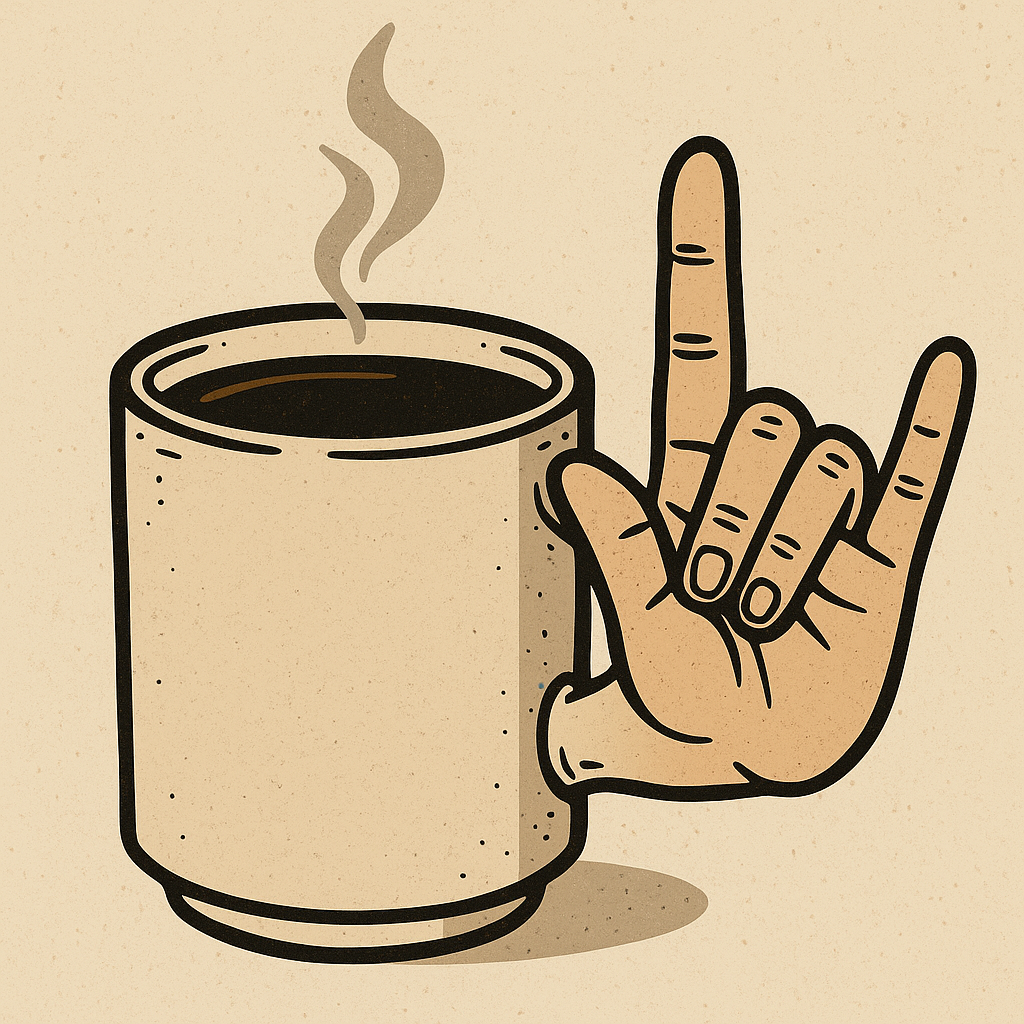
Discover I Love Coffee, a venture transforming coffee culture and empowering Deaf individuals through innovative, inclusive employment.
In 2016, 'I Love Coffee' started a quiet revolution in Cape Town, training and employing Deaf individuals as baristas. This social enterprise, born from a makeshift kiosk, uses the love of coffee to challenge unemployment within the Deaf community and promote sign language. Through clever innovations like vibrating wristbands and QR-code sign language lessons, they've built inclusive spaces where communication thrives beyond words. From a small hut to global recognition, 'I Love Coffee' proves that passion, purpose, and a perfectly brewed cup can truly change lives, one silent symphony at a time.
What is the 'I Love Coffee' revolution?
"I Love Coffee" is a social enterprise founded in 2016 by Gary Kretchmer and Jurgen Rabe in Cape Town. It trains and employs Deaf individuals as baristas and across its supply chain, aiming to address high unemployment rates within the Deaf community. The initiative uses coffee's appeal to promote sign language and create inclusive work environments.
Get Cape Town news in your inbox
Stay updated with the latest stories from the Mother City.
Planting the Seed in a 12-m² Hut
On a crisp spring morning in 2016, two engineering graduates lugged a battered espresso machine into a makeshift kiosk wedged between Cape Town’s station taxi rank and the jostle of morning commuters. Gary Kretchmer and Jurgen Rabe never planned to become roasters; their obsession was sign language and the grim statistic that kept them awake: four million South Africans live with little or no hearing, yet three out of four who can work are jobless. Instead of launching another brochure-heavy NGO campaign, the friends borrowed coffee’s most seductive qualities - speed, colour, theatre - to sneak a new conversation into the public square.
The first day’s roster listed eight freshly recruited Deaf baristas, all paid the legal minimum wage, none with prior café experience. Vida e Caffè supplied crash-course trainers for a frantic weekend, The Department of Coffee donated fifty kilograms of green beans for practice, and a sympathetic local roaster leased two gleaming La Marzocco Lineas. A hand-scrawled sign pointed queueing commuters to a pastel menu where colour blocks replaced words and pointing replaced speech. Thirty-seven cups left the hatch on opening morning; three months later the line curled around the block and a neighbour moaned about the buzz of vibrating wrist alarms announcing ready orders. Time to move.
The pop-up forced quick lessons. Eighteen thousand rand of under-roasted beans hit the bin after Kretchmer mis-set drum temperature. Palate training arrived in Deaf-friendly form: a laminated wheel scored flavour from 1 to 10 in South African Sign Language; green stickers flagged suspect batches, red stickers screamed disaster. When the notice board glowed mostly gold, a Seattle roaster ordered a hundred kilograms up-front via PayPal. Foreign cash sat in the bank before the company owned a single web page.
Silent Symphonies Inside Four Walls
Once the kiosk stabilised, those first eight baristas drafted the Deaf-Friendly Service Standard, a single-page manifesto still framed in every shop. Rule one - “voice off, eyes on” - kicked each shift off with a ten-second collective inhale, palms pressed over hearts. LED strips on shot timers flare red for a peripheral countdown; milk pitchers wear colour lids - green for full-cream, blue for oat, red for almond. Staff summon one another with a discreet foot pedal that vibrates a wristband instead of shouting across steam wands.
Customers step to the counter and receive a “sign of the day” card whose QR code unlocks a looping fifteen-second GIF. Deaf baristas etched flavour descriptors on the chalkboard in both English gloss and SASL symbols. The tip jar is split evenly every shift, and any supervisor who forgets and speaks aloud drops five rand into the swear jar. Sticky-note feedback migrates from a sunflower-yellow wall to the “seed column” once resolved. Turnover hovers at six percent - a whisper in an industry notorious for shrugged resignations.
Within two years the tally read four cafés, forty-nine employees, and 1.8 tonnes roasted monthly for Woolworths and Discovery. A self-imposed rule - each new branch must be bank-rolled from retained profit, never grants - kept margins razor-sharp. An Ikawa sample roaster enabled micro-lots from Ethiopia’s Guji Zone, and a five-year off-take contract guaranteed thirty percent above Fairtrade price. When Deaf staff hours crossed one hundred thousand in December 2019, the Salt River roastery threw a silent disco. Forty-eight hours later, borders slammed shut.
Lockdown and the Sunflower Seed Campaign
Covid-19 emptied tables overnight, but the team leaned on Rule #9 of their own bible: resolved notes move to the sunflower-seed column. They printed tiny seed stickers and mailed them to five thousand loyalty members: “Plant us at home.” Each envelope enclosed thirty grams of roasted coffee and stovetop brewing instructions using a twenty-rand mesh filter. Social feeds flooded with grandmothers signing “strong” and “sweet”; online sales jumped to eighty percent and the Shopify site crashed twice. Hearing staff were furloughed first because Deaf baristas were deemed mission-essential.
By October every one of the sixty original employees walked back through the gate, plus fifteen new faces recruited from rural Matatiele. Two London bankers who had backpacked Cape Town years earlier traced I Love Coffee stickers on Shoreditch laptops and offered an equity-free £150 000 loan, repayable only if EBITDA turned positive by Year 3. February 2022 saw the first UK site launch inside WeWork South Bank, staffed by Deaf South African mentors training British counterparts in BSL. Within a year the UK bars snatched third and seventh place at the 2023 London Coffee Masters - judged blind.
From Farm to Tablet and Beyond
In 2023 I Love Coffee bought twelve hectares next to long-time Ethiopian supplier Biru Bekele and leased the plot to five Deaf farming families from Addis Ababa. Solar dryers, agronomy classes, and picture-only manuals replaced begging on city corners. The maiden fourteen-bag Gesha crop hit Cape Town docks in July 2024 at one hundred and twenty rand per 250 g - premium yet twenty-three percent cheaper than peer lots because zero middlemen stood in the chain. Each bag reads: “Grown by Deaf Hands, Roasted by Deaf Hands, Brewed by Deaf Hands.”
Tech keeps widening the doorway. A Stellenbosch-built AI tablet recognises South African Sign Language with ninety-four percent accuracy, queues orders, and flashes confirmation text. Deaf baristas still craft the drink; the screen simply greases the first-time customer’s nerves. All captured data is open-sourced to accelerate sign-language datasets across Africa.
The formal apprenticeship, launched in 2021, accepts Deaf learners aged eighteen to thirty with grade nine schooling. Twelve months of theory (botany, sensory science, roast physics) and practical shifts culminate in Q-grader prep and SCA Barista Level-2 certificates. Old Mutual tops the course off with personal budgeting classes. Tuition is free; graduates commit to eighteen months of fair-wage employment. The latest cohort: forty-two graduates, sixty-two percent women, from seven provinces.
An internal dashboard obsessively tracks what spreadsheets miss: fifty-eight of sixty staff now hold bank accounts, rural remittances average R1 850 per employee each month, seven employees study part-time degrees, and 12 417 customers can now fingerspell their own names. The supply chain protects 221 hectares from glyphosate. Deaf labour hours crossed the half-million mark in 2024.
On 8 June the roastery will mark ten years with a ten-metre Polaroid timeline and enamel pins shaped like a cup whose handle is a tiny hand signing “LOVE.” Worcester Deaf school pupils manufactured the pins - one thousand at thirty rand apiece - to bankroll their matric farewell. August brings the team to Taipei for the first Deaf-led African showing at the Taiwan International Coffee Show. No interpreter budget is required; language will travel via International Sign, whiteboard sketches, and tasting spoons clinked in universal agreement. One more city, one more silent counter where a smile, a gesture and a perfectly steamed flat-white say everything that needs to be said.
[{"question": "What is 'I Love Coffee'?", "answer": "'I Love Coffee' is a pioneering social enterprise launched in Cape Town in 2016. Its core mission is to train and employ Deaf individuals as baristas and across various roles in the coffee supply chain. It leverages the universal appeal of coffee to combat unemployment within the Deaf community, promote sign language, and foster truly inclusive environments."}, {"question": "How did 'I Love Coffee' start?", "answer": "'I Love Coffee' began in 2016 with founders Gary Kretchmer and Jurgen Rabe setting up a makeshift kiosk in Cape Town. Despite having no prior café experience, their passion for sign language and concern for high Deaf unemployment drove them. With borrowed equipment and quick training, they started with eight Deaf baristas, quickly gaining popularity and proving the concept's viability."}, {"question": "What innovative communication methods does 'I Love Coffee' use?", "answer": "'I Love Coffee' employs several clever innovations to ensure seamless communication and an inclusive experience. These include vibrating wristbands for staff alerts, QR codes on 'sign of the day' cards for customers to learn basic sign language, LED strips for shot timers, color-coded milk pitcher lids, and foot pedals to discreetly summon colleagues. They also use AI tablets that recognize South African Sign Language for order taking, making the experience comfortable for first-time customers."}, {"question": "What is the 'Deaf-Friendly Service Standard'?", "answer": "The 'Deaf-Friendly Service Standard' is a single-page manifesto drafted by 'I Love Coffee's' first baristas, which is proudly displayed in every shop. It outlines principles like 'voice off, eyes on' to ensure a focus on visual communication and respect for the Deaf experience. This standard guides their inclusive customer service and workplace culture."}, {"question": "How has 'I Love Coffee' grown and expanded internationally?", "answer": "Starting from a 12-m² kiosk, 'I Love Coffee' quickly expanded to four cafés within two years, roasting 1.8 tonnes of coffee monthly for major retailers. Even during the COVID-19 pandemic, they innovated with a 'Sunflower Seed Campaign' for online sales. By 2022, they launched their first UK site inside WeWork South Bank in London, employing Deaf South African mentors to train British counterparts in British Sign Language (BSL), and achieving recognition in coffee competitions."}, {"question": "What impact has 'I Love Coffee' had beyond coffee sales?", "answer": "'I Love Coffee's' impact extends significantly beyond coffee. They've created formal apprenticeship programs for Deaf learners, ensuring free tuition and fair-wage employment. They've fostered financial independence, with many staff opening bank accounts and sending remittances to rural families. In 2023, they invested in a coffee farm in Ethiopia, leased to Deaf farming families, ensuring ethical sourcing and direct economic benefit. They've also open-sourced their AI data to accelerate sign-language datasets across Africa, promoting wider inclusion and accessibility."}]

Liam Fortuin is a Cape Town journalist whose reporting on the city’s evolving food culture—from township kitchens to wine-land farms—captures the flavours and stories of South Africa’s many kitchens. Raised in Bo-Kaap, he still starts Saturday mornings hunting koesisters at family stalls on Wale Street, a ritual that feeds both his palate and his notebook.
View all articles →