
Cape Town International Airport’s R21.7bn upgrade takes off
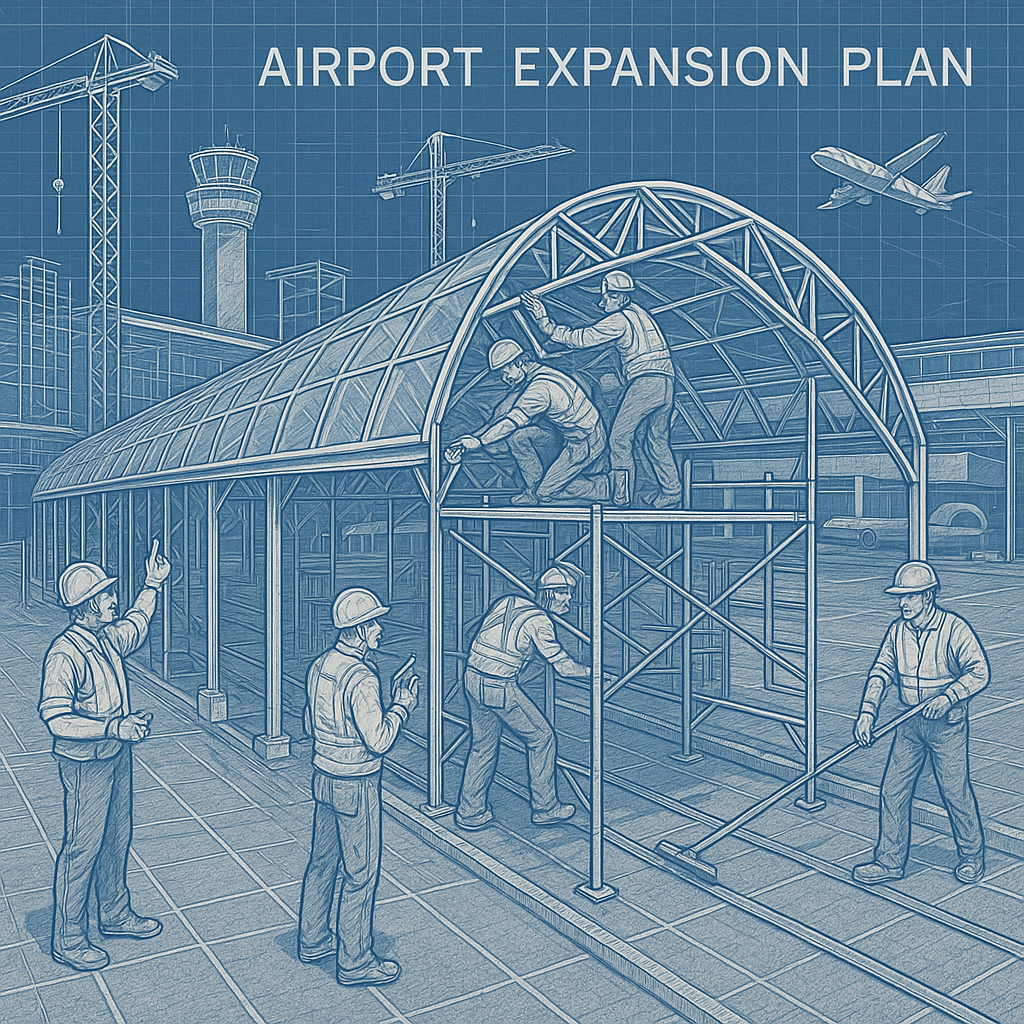
Cape Town International Airport's R21.7bn modernization begins in March, transforming it into a logistics hub with new runways, terminals & tech.
Cape Town International Airport is getting a massive R21.7-billion facelift, making it a super modern travel hub. They are building new runways, huge parking garages, and fancy security gates. This big change will help more planes land and take off, bringing in more visitors and boosting the economy. It's not just for people, but also for getting fresh goods out to the world faster. This makeover will make Cape Town a top-notch airport for African travel.
What is the Cape Town International Airport overhaul?
Cape Town International Airport is undergoing a R21.7-billion overhaul, including a second 3.9 km Code-F runway, expanded aprons, a 600-meter glass-roof "connector spine," multi-storey parking, and biometric security lanes. This aims to increase capacity, accommodate more flights, and enhance the passenger and cargo experience.
Get Cape Town news in your inbox
Stay updated with the latest stories from the Mother City.
1. Runways, Planes & Passengers: Why the Upgrade Starts Now
Cape Town International will turn into Africa’s busiest building zone this March when jack-hammers bite into the domestic-arrivals floor, kicking off a R21.7-billion overhaul that leaves no corner untouched.
A second 3.9 km Code-F runway, extra-wide aircraft aprons, a 600-metre glass-roof “connector spine”, multi-storey parking, biometric security lanes and a baggage hall that can sling 9,000 bags an hour are all on the drawing board.
Planners chose 2025 on purpose: last year the hub processed 10.3 million travellers - its second-best figure ever - while air-freight tonnage jumped 56% in only twelve months on the back of perishables, abalone and lightning-fast e-commerce that must reach Johannesburg or Lagos within four hours.
Runway occupancy already hits 82% during December peaks; without new concrete, managers say flight caps will begin in 2027.
Tourism maths makes the deadline even tighter.
Wesgro reckons every fresh long-haul flight injects about R260 million of direct visitor spend into the Western Cape; the existing 31 intercontinental routes delivered R24.3 billion in 2022 and kept 10,000 people employed from hotel housekeepers to wine-route drivers.
KLM is adding three extra weekly frequencies this winter, while two Gulf carriers, a South-East Asian airline and a North-American operator are in advanced talks - capacity the current terminal simply cannot absorb.
The upgrade therefore works as both magnet and pressure-release valve, luring new routes and giving the system room to breathe.
2. Inside the Terminal: Food, Retail & Instagram Gold
Once past security, travellers will step into a three-level “fusion hall” that knits domestic and international check-in into one giant space.
The mezzanine will host Africa’s biggest airport food market - 1,200 seats, 36 stalls curated by the Zeitz MOCAA rooftop team and a menu built around Cape Malay curry, Swartland tapas and zero-waste coffee.
One floor down, a 3,500-m² digital retail zone lets passengers pre-order duty-free and collect it in ninety seconds from temperature-controlled smart lockers.
Above it all, electro-chromic glass wraps a 270-degree viewing deck that darkens automatically at sunset, framing both Table Mountain and the Hottentots-Holland peaks for plane-spotters and influencers alike.
Accessibility gets baked in, not bolted on.
Induction loops at every gate, height-adjustable adult changing tables in eighteen restrooms and a sensory-low “quiet route” painted in anxiety-calming Pantone 4483 guide passengers who need a gentler journey.
Visually-impaired guests can order 3-D printed tactile tiles that snap onto the floor and lead, ridge by ridge, from curb to seat; wheelchairs come with chunky off-road casters ready for the city’s cobbled heritage streets.
Even the art is useful: Danish-Icelandic artist Olafur Eliasson is designing wind-activated light towers that glow only when the Cape Doctor exceeds 35 km/h, turning weather data into public theatre.
3. Cargo, Cold-Chain & the Race for Shelf-Life
Freight, long the airport’s poor cousin, finally gets star treatment.
A 55,000-m² perishables centre chilled to 2 °C will connect via 1.2 km of underground conveyor beneath the taxiway to a twelve-stand freighter apron big enough to park three Boeing 747-8F nose-to-tail.
Roses from Nairobi or blueberries from Witzenberg can be palletised, inspected by state vets and swallowed by an Emirates SkyCargo 777F in ninety minutes - half today’s dwell time - adding two precious shelf-days in European supermarkets and roughly USD 0.12 profit per punnet.
High-speed runway exits every 450 metres shrink occupancy to 48 seconds, while the new “Whiskey” taxiway lets arriving wide-bodies glide straight to the northern apron and erases the current twelve-minute back-track that irks crew schedulers during morning rushes.
Green credentials cushion the concrete.
A 22-hectare patch of critically endangered Swartland Shale Renosterveld will be replanted inside Bracken Nature Reserve under a ten-year city-monitored contract; 8,000 indigenous plants, including rare red-blue Lachenalia and geometric aloe, will be guarded like living treasures.
Seven hectares of living roof planted with coastal succulents will sip 40% less water than traditional turf, and reed-framed storm ponds double as public art spaces.
A 3 MW rooftop solar array - Africa’s largest airport installation - will feed 30% of the terminal’s baseload, buffered by Tesla Megapack batteries that keep lights and computers alive for 45 minutes when Eskion’s load-shedding strikes.
4. Cash, Politics & the Digital Future: Who Pays, Who Gains
Paying the R21.7-billion bill without raiding the taxpayer took a three-tier money mosaic.
Airports Company South Africa will pour in R12.4 billion of internal cash salted away during the post-COVID rebound; Standard Bank and Barclays Africa closed a R4.9-billion syndicated loan in February at only 185 basis points above government bonds; the final R4.4 billion arrives through a green-bond certified under ICMA principles, oversubscribed in London, Boston and Singapore.
Tech giants want in: Amazon Web Services is rolling out 1,200 edge-computing cameras that predict security-lane bottlenecks twelve minutes early, while Siemens tests three-minute hydrogen fuel-cell baggage tugs fuelled by green H₂ from a nearby waste-water plant, cutting 280,000 litres of diesel a year.
Politics and people matter just as much as bytes and bonds.
A public “construction war-room” will track queue times, stand occupancy and even concrete-pour decibels on a live dashboard; a Frankfurt-style “silent night” shift bans jack-hammers between 11 p.m. and 5 a.m. to protect Bellville South residents.
Airlines want a 45-minute slot-flexibility trial so Cape Town can act as a “recovery hub” when Heathrow or Schiphol sneeze; IATA’s Worldwide Slot Board must still sign off, a process that could take eighteen months.
Community benefits are locked in: 42% of the 9,400 construction person-years go to workers living within 30 km, 5% of capital value is ring-fenced for black-women-owned suppliers, and the first female-run asphalt plant has already opened in Kuils River to meet demand.
When the dust settles, the digital revolution takes over.
From 2026 Cape Town aims to be the first African airport to trial ICAO’s “One ID” biometric token stored on the passenger’s phone, replacing boarding passes, passports and COVID certificates.
Face-match gates open in 0.3 seconds, cutting the minimum connection time between international and domestic flights to 55 minutes - on par with Dubai.
The wider economy should gain 23,000 direct, indirect and induced jobs, from aircraft cleaners to craft-beer brewers serving the new retail wing.
Control-tower tech is equally slick: a ring of 28 Wide Area Multilateration stations will squeeze four extra arrivals per hour into fog-blanketed mornings, keeping delays rare even when the Cape Doctor howls at 65 knots.
In short, the mountain-framed gateway at Africa’s southern tip is no longer content with postcard views; it is pouring concrete, code and compassion into a 24-hour logistics powerhouse ready to funnel people, produce and data between sub-Saharan Africa and the rest of the planet.
[{"question": "What is the main purpose of the Cape Town International Airport overhaul?", "answer": "The primary goal of the R21.7-billion overhaul at Cape Town International Airport is to transform it into a super modern travel hub. This includes increasing its capacity to handle more flights and passengers, boosting the local economy through increased tourism and trade, and enhancing the overall passenger and cargo experience. The upgrade is designed to make Cape Town a top-notch airport for African travel, accommodating current growth and preparing for future demands, especially in air freight and international travel."}, {"question": "What are some of the key new features being added to the airport?", "answer": "The extensive overhaul includes a range of significant additions and upgrades. Key features include a second 3.9 km Code-F runway, expanded aircraft aprons, a 600-meter glass-roof \"connector spine\" linking domestic and international areas, multi-storey parking facilities, and advanced biometric security lanes. Inside the terminal, there will be a three-level \"fusion hall,\" Africa's largest airport food market, a 3,500-m² digital retail zone with smart lockers, and an electro-chromic glass viewing deck with panoramic views. For cargo, a 55,000-m² perishables centre with underground conveyors and a twelve-stand freighter apron will significantly speed up operations."}, {"question": "Why is this upgrade happening now, and what are the benefits for the local economy?", "answer": "The upgrade is commencing now due to the airport's rapidly increasing passenger and cargo volumes, with runway occupancy already hitting 82% during peak times. Without the expansion, flight caps would be necessary by 2027. The project aims to act as both a 'magnet' for new international routes and a 'pressure-release valve' for existing capacity. Economically, Wesgro estimates each new long-haul flight injects R260 million into the Western Cape. The entire project is expected to create 23,000 direct, indirect, and induced jobs, supporting various sectors from hospitality to craft brewing. It will also significantly boost the export of fresh goods, adding precious shelf-days for perishables in European markets."}, {"question": "How is the airport incorporating sustainability and accessibility into the new design?", "answer": "Sustainability and accessibility are integral to the design. Environmentally, the project includes replanting 22 hectares of critically endangered Renosterveld, installing seven hectares of living roofs, and incorporating reed-framed storm ponds. A 3 MW rooftop solar array, Africa's largest airport installation, will provide 30% of the terminal's baseload, buffered by Tesla Megapack batteries. For accessibility, features include induction loops at every gate, height-adjustable adult changing tables, a sensory-low \"quiet route,\" 3-D printed tactile tiles for visually impaired guests, and wheelchairs with off-road casters. Even the art, like Olafur Eliasson's wind-activated light towers, serves a functional and aesthetic purpose."}, {"question": "Who is funding this R21.7-billion project, and what role does technology play?", "answer": "The R21.7-billion bill is being funded through a three-tier model: R12.4 billion from Airports Company South Africa's internal cash, a R4.9-billion syndicated loan from Standard Bank and Barclays Africa, and a R4.4 billion green-bond oversubscribed in international markets. Technology is a critical component, with Amazon Web Services deploying 1,200 edge-computing cameras for security bottleneck prediction and Siemens testing hydrogen fuel-cell baggage tugs to reduce diesel consumption. From 2026, Cape Town aims to be the first African airport to trial ICAO’s \"One ID\" biometric token for seamless passenger flow, and advanced Wide Area Multilateration stations will improve air traffic control in adverse weather conditions."}, {"question": "What are the expected long-term impacts of the Cape Town Airport expansion?", "answer": "In the long term, the expansion will firmly establish Cape Town International Airport as a major African aviation hub, capable of handling significantly increased passenger and cargo traffic. It will streamline international and domestic connections, potentially reducing minimum connection times to as little as 55 minutes, comparable to major global hubs like Dubai. The project is set to generate substantial economic growth for the Western Cape and South Africa, creating thousands of jobs and enhancing trade capabilities, especially for high-value perishable goods. The integration of advanced technology and sustainable practices will also position the airport as a leader in innovation and environmental responsibility on the continent, making it a 24-hour logistics powerhouse."}]

Michael Jameson is a Cape Town-born journalist whose reporting on food culture traces the city’s flavours from Bo-Kaap kitchens to township braai spots. When he isn’t tracing spice routes for his weekly column, you’ll find him surfing the chilly Atlantic off Muizenberg with the same ease he navigates parliamentary press briefings.
View all articles →