
Cape Town Mayor demands Nersa to scrap Eskom’s potential tariff hike
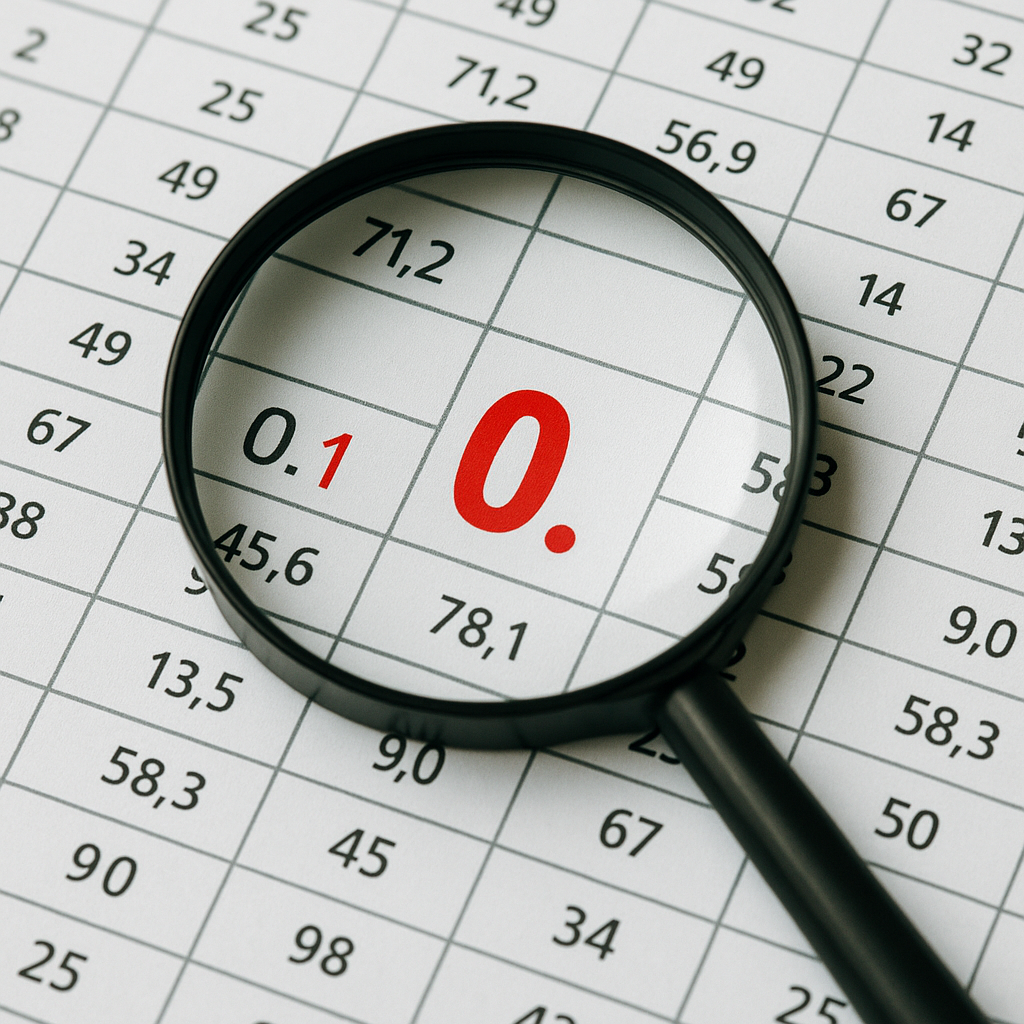
A misplaced decimal point in Eskom's calculations could cost South Africans R100 billion. Cape Town fights back.
A tiny typo in Eskom's numbers could make electricity bills skyrocket by R100 billion! They mixed up "old money" with "new money" and messed up a math rule, making a small mistake look huge. Cape Town's mayor found the error and is fighting back, showing that even small mistakes can cost a lot. Now, everyone is watching closely to make sure they don't pay extra because of a simple error.
How did a typo in Eskom's calculations lead to a potential R100 billion increase in electricity tariffs?
Eskom's miscalculation involved confusing nominal rands with 2021 real money and incorrectly applying a regulatory lag factor, inflating a R39 billion gap to R73 billion. This error, compounded by a settlement that accepted the overstated sum, could lead to successive tariff hikes of 10.5% in 2026 and 2027, costing citizens approximately R100 billion.
Get Cape Town news in your inbox
Stay updated with the latest stories from the Mother City.
1. A Quiet January Bomb That Nobody Heard Tick
While the country moaned about load-shedding timetables on 20 January 2026, a deadlier fuse burned inside a beige Pretoria office. On an innocuous worksheet, lodged the previous October, Eskom had embedded a “re-opener” plea for R54 billion. The utility’s own arithmetic had confused nominal rands with 2021 real money, silently inflating the revenue line by almost double.
By the time Cape Town’s in-house tariff detectives opened the correct hidden tab, the legally prescribed comment period was already half spent. Eskom’s lobby machine was talking up a “harmless” 5,4 % cost-of-living nudge for the year ahead. In truth, the botched formula legitimised successive hikes of 10,5 % in both 2026 and 2027, enough to lift the national power bill by roughly R100 billion in twenty-four months.
The glitch stayed invisible to anyone who lacked both password access and forensic curiosity. Municipalities, already budgeting for modest rises, suddenly faced a budget crater big enough to swallow basic-service subsidies, pothole crews and library hours in one gulp.
2. How R54 Billion Appeared Overnight
Eskom’s right to claw back cash sits inside the 2023-2026 pricing rulebook, officially tagged MYPD6. If coal costs overrun or turbines break, the utility may ask consumers to refund the “prudently spent” shortfall. Last October it declared it had under-collected R73,2 billion during 2024/25 and that 74 % of that should be patched in 2026/27.
City-hired CPAs discovered two howlers. First, the claimed figure was never discounted from nominal to 2021 value, magically turning a R39 billion real gap into a R73 billion headline. Second, a “regulatory lag factor” of 1,04 was typed in where 0,96 belonged, gifting Eskom another R9 billion. Copy-paste capitalism at its finest.
In early December the regulator initialled a settlement that accepted the overstated sum. No press release, no public hearing. The entire windfall now rests on a spreadsheet that confused yesterday’s rands with today’s.
3. Mayor with a Colour-Printed Spreadsheet
Geordin Hill-Lewis loves a social-media barb, but he also flew to Nersa’s hearing on 21 January armed with rainbow-highlighted tables and a 42-page affidavit from a former United States federal-energy economist. “We don’t fight honest tariffs,” he said, “we fight Excel-induced poverty.” The jab trended for two days, spawning TikTok spoofs where teenagers create billion-rand budgets with random formulae.
Behind the memes lies brutal maths. Power tariffs have climbed 450 % since 2007, four times headline inflation. A fresh 21 % stacked rise would shove the average domestic price beyond 230 c/kWh, the ceiling at which households earning under R7 000 a month slip into official “energy insolvency.”
The mayor’s stunt forced the regulator to reopen a file it thought was closed. Commissioners now confront a 4-3 internal split over whether to hire outside auditors or simply tweak later “phase-in” percentages and hope no one sues.
4. A Utility That Claims Distress Yet Declares Profit
Strangely, Eskom’s own books are blooming. Its September 2025 interim statement shows R9,7 billion after tax, the first half-year surplus since Jacob Zuma’s second term. Three things helped:
- Sales volumes bounced 6 % once stage-6 blackouts eased.
- Finishing Koeberg unit 2 early saved R5 billion in diesel for open-cycle turbines.
- A stronger rand shaved R12 billion off the utility’s dollar-denominated debt.
None of this upside reached the October tariff submission, which still sang the old “fiscal distress” hymn. Hill-Lewis contends the profit should cancel the emergency top-up; worse, taking both would breach Section 15(1)(e) of the Electricity Regulation Act that bars “excessive” returns. If the R54 billion sticks, Eskom’s authorised return will hit 11,2 %, double Nersa’s normal 5,5 % cap.
5. The Regulator’s Calendar from Hell
Nersa is now trapped between three immovable dates:
- 1 April 2026: court-ordered deadline to publish the final MYPD6 add-on.
- 15 May 2026: cut-off for lodging 2027/28 price plans with the Energy Minister.
- 30 June 2026: expiry of the current five-year revenue deal, opening the door for an entirely new determination.
Reverse the December pact and Eskom will almost certainly sue, brandishing the legal doctrine of “legitimate expectation.” Leave it intact and 36 councils, 14 NGOs and a Soweto residents’ group - already lawyered up - will head to court alleging state-endorsed arithmetic fraud. Leaked minutes show commissioners arguing over whether to “fix the percentages later,” an idea the City’s counsel calls “regulatory Russian roulette.”
6. Cape Town’s Quiet Solar Revolution
While lawyers trade affidavits, Cape Town is rolling out Africa’s biggest municipal embedded-power tender: 1 500 MW of rooftop PV and batteries on clinics, warehouses and N2- corridor homes. Winning developers will sell electrons to the city for 89 c/kWh - less than half the Eskom price now frozen into the draft 2026 schedule.
The World Bank’s Clean Technology Fund has pre-approved R14 billion in concessional loans, contingent on Nersa proving that Eskom’s tariffs sit “above long-run marginal cost.” A 10,5 % hike therefore does not hurt Cape Town; it fortifies the business case for cutting the cord. Eskom’s own transmission blueprint predicts 8 000 MW of small-scale generation in the Western Cape by 2028, equal to 14 % of regional peak demand and a classic ingredient in the dreaded utility death spiral.
7. International Proof That Regulators Can Say No
Other countries have torn up similar money grabs. In 2017 the Philippine commission rejected a R18 billion claw-back after finding that fuel-price indices had been double-counted. The utility survived by unloading surplus land and retiring antique oil plants, and average tariffs dropped 4 %.
Namibia’s regulator approved only 60 % of Nampower’s requested 2023 increase, citing flimsy exchange-rate guesswork, and told the company to monetise future power exports instead. Both cases show that when outside auditors examine the spreadsheets, multi-billion claims can disappear faster than a corrupted cell reference.
8. Hairdressers, Preachers and the New Energy Literates
Nomfundo Mthethwa runs a one-room salon in Gugulethu. She has already unscrewed three neon rings because December’s meter reading topped R1 200. If her per-unit charge moves from 243 c to 270 c, she will lose clients who can’t afford a blow-dry that costs more than bread. Multiply her dilemma across 1,4 million metered households and the knock-on damage is stark: school fees, insurance premiums, even municipal rates all enter the red zone.
UCT researchers calculate that every 10 % tariff jump shoves 65 000 metro homes into energy poverty - defined as spending at least a tenth of disposable income on electricity. The numbers convert spreadsheet rows into skipped meals and colder lounges.
Parliamentary hearings, set for March, will therefore play out against a backdrop of prepaid-meter queues instead of boardroom whiteboards. Eskom’s CFO, the mayor and trade-union bosses must all testify while WhatsApp groups dissect the “Network Demand Charge” in real time.
9. Countdown to 1 April – and the Courtroom After-Party
Three simultaneous sprints will decide the outcome:
- Nersa’s technicians must re-audit 47 spreadsheet tabs with 1,8 million data cells.
- Eskom’s board must choose between acknowledging the typo or gambling on a pyrrhic litigation win.
- Parliament’s portfolio committee will host two televised hearings where public anger is guaranteed front-row seats.
Should the regulator dig in, Cape Town has a 104-page founding affidavit waiting at the North Gauteng High Court. The case asks a judge to junk the December deal on grounds of procedural unfairness and material arithmetic error. It shares the same docket number as the 2022 free-electricity ruling that declared consumers “should not bankroll inefficiency masked by regulatory fog.”
10. South Africa Learns to Read the Fine Print Before Paying the Bill
Whatever the April verdict, the country will never again stare blankly at an electricity statement. Churches host Sunday spreadsheet classes, stokvels compare time-of-use screenshots, and #CheckYourSpreadsheet trends every time Nersa uploads a document.
The mayor’s crusade, born from a single misaligned decimal, has morphed into nationwide spreadsheet literacy. Citizens have discovered that auditors wield more immediate power than manifestos, that a formula can cost more than a corrupt tender, and that the real watchdog is an electorate that finally opens the attachment before it opens its wallet.
What is the core issue that could lead to a R100 billion increase in electricity tariffs?
Eskom made a significant error in their calculations, confusing "nominal rands" with "2021 real money" and misapplying a regulatory lag factor. This inflated a R39 billion real gap in their finances to R73 billion. This mistake, combined with a settlement that accepted the overstated sum, could result in successive tariff increases of 10.5% in both 2026 and 2027, potentially costing South African citizens approximately R100 billion.
How was this error discovered, and by whom?
The error was discovered by Cape Town's in-house tariff detectives. They found that Eskom had embedded a "re-opener" plea for R54 billion in an innocuous worksheet, silently inflating the revenue line by almost double due to the confusion between nominal and real money. Cape Town's mayor, Geordin Hill-Lewis, then brought this to light and is actively fighting against the proposed tariff hikes.
What specific mathematical errors did Eskom make?
Eskom made two key errors. Firstly, the claimed R73.2 billion shortfall was never discounted from nominal to 2021 real value, effectively turning a R39 billion real gap into a R73 billion headline figure. Secondly, a "regulatory lag factor" of 1.04 was incorrectly applied where 0.96 should have been used, gifting Eskom an additional R9 billion. These "howlers" significantly inflated the amount Eskom sought to claw back.
How has the City of Cape Town responded to Eskom's calculations?
Cape Town's mayor, Geordin Hill-Lewis, has vigorously challenged Eskom's calculations. He presented rainbow-highlighted tables and a 42-page affidavit from a former United States federal-energy economist at a Nersa hearing, arguing against what he termed "Excel-induced poverty." The mayor's actions forced the regulator to reopen a file it considered closed, and the City is prepared to go to court if the December settlement is not reversed.
What is Nersa's (the energy regulator's) current predicament?
Nersa is in a difficult position, caught between several deadlines. They must publish the final MYPD6 add-on by April 1, 2026, and lodge 2027/28 price plans by May 15, 2026. If they reverse the December pact that accepted Eskom's overstated sum, Eskom will likely sue. If they leave it intact, 36 councils, 14 NGOs, and a Soweto residents' group are prepared to take them to court, alleging arithmetic fraud. This has led to an internal split within Nersa commissioners.
How is Cape Town addressing its energy needs independently of Eskom's tariff issues?
While the tariff dispute unfolds, Cape Town is proactively working towards energy independence. The city is rolling out Africa's biggest municipal embedded-power tender, aiming to install 1,500 MW of rooftop PV and batteries on various city buildings and homes. Winning developers will sell electricity to the city for significantly less than Eskom's current prices. This initiative, supported by R14 billion in concessional loans from the World Bank, aims to fortify the business case for cutting reliance on Eskom and is a key step towards reducing the city's vulnerability to Eskom's tariff hikes and operational challenges.

Tumi Makgale is a Cape Town-based journalist whose crisp reportage on the city’s booming green-tech scene is regularly featured in the Mail & Guardian and Daily Maverick. Born and raised in Gugulethu, she still spends Saturdays bargaining for snoek at the harbour with her gogo, a ritual that keeps her rooted in the rhythms of the Cape while she tracks the continent’s next clean-energy breakthroughs.
View all articles →