
Cape Town neighbourhood watch app sees surge in usage
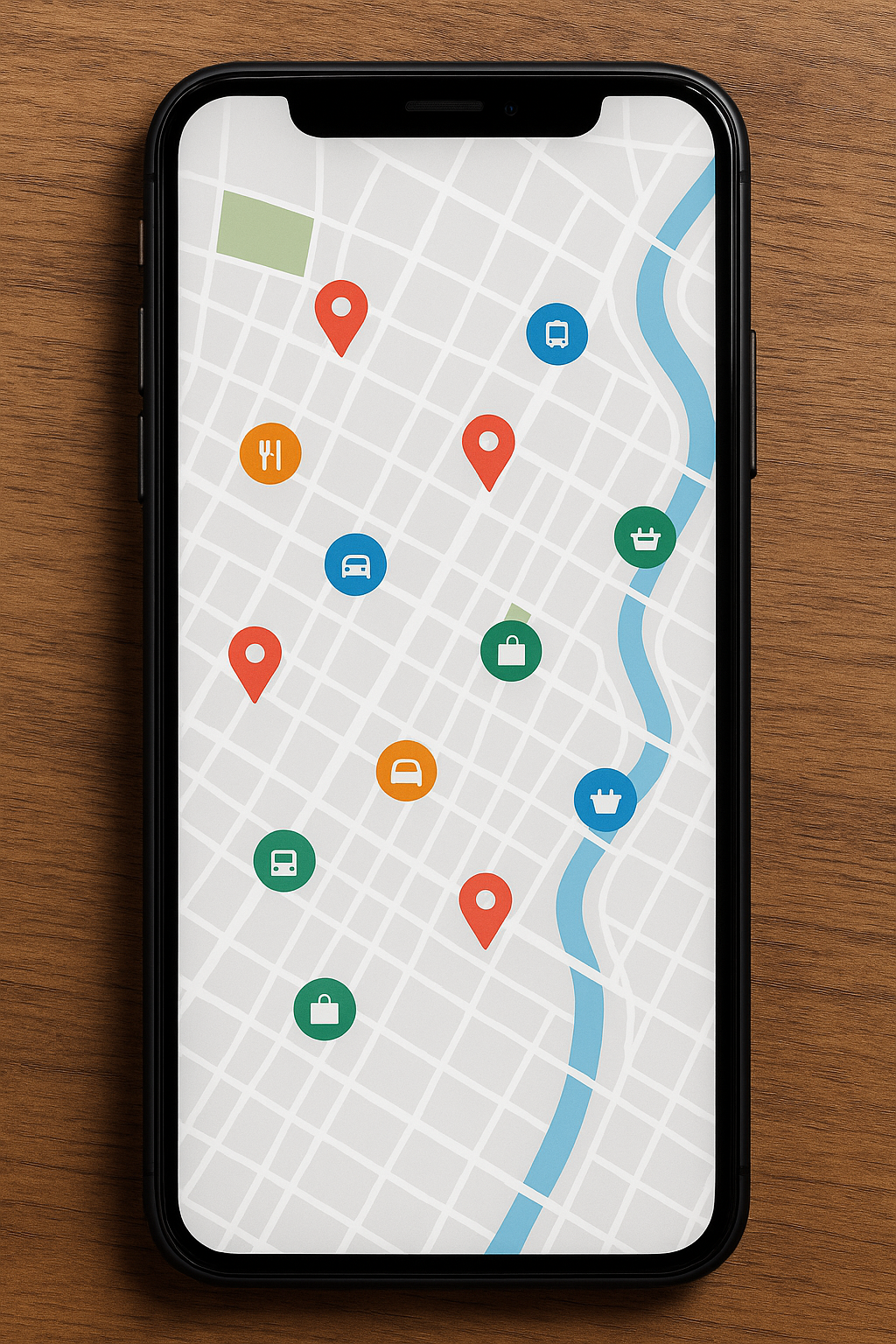
Cape Town's neighbourhood watches revolutionize community policing with a new app, blending tech with volunteer efforts for safety.
Cape Town's neighborhood watches are now super-powered by a cool new app called Khuseleka. This app lets people quickly report problems like broken streetlights or crimes with just a few taps on their phone. It helps police and city workers respond much faster, turning ordinary citizens into real-time safety heroes. This smart tool is changing how communities keep an eye out for each other, making everyone safer and more connected.
What is Khuseleka and how does it help Cape Town's neighborhood watches?
Khuseleka is a mobile application, developed with volunteer input, that re-engineers community policing in Cape Town. It allows neighborhood watch members to report incidents like infrastructure faults or crimes quickly and efficiently. The app streamlines reporting, automates data analysis for risk prediction, and provides tools for patrol management and evidence collection, effectively shrinking the gap between observation and official action.
Get Cape Town news in your inbox
Stay updated with the latest stories from the Mother City.
The Whistle Grows Silent – A Digital First Response
On a quiet Tuesday in Edgemead, a resident notices a street-light strobing like a broken disco ball. A decade and a half ago she would have hunted for pen and paper, waited for the next hall gathering, and pressed the note into a coordinator’s hand. Tonight she opens a teal-coloured app, taps three on-screen buttons, drops a pin on the exact pole, and clicks “submit”. Eighty seconds later she owns a City Electricity reference number and a promise that a technician will attend before sunrise.
This vignette is no longer remarkable. Across the metro, 270 registered neighbourhood-watch (NHW) teams – 1 400 volunteers in total – treat the phone as an extra pair of patrol boots. Where whistles once pierced the night air, push-notifications now ripple in pockets. The transformation empowers citizens to act while the kettle still boils, shrinking the gap between observation and official acknowledgement from days to seconds.
The new rhythm is simple: see, tap, forget. Residents trust the unseen machinery behind the icon. That trust is the quiet revolution – a cultural shift from waiting on institutions to steering them in real time.
Khuseleka – A Pocket Toolkit Designed by Its Own Users
Designing for Friction-Free Use
Volunteers helped sketch every screen of the app they nicknamed “Khuseleka”, isiXhosa for “protect”. Three limits shaped every line of code:
- Skinny data plans – most members survive on 100 MB WhatsApp bundles.
- Mixed tech literacy – team captains range from 19-year-old students to 70-year-old retirees.
- Scattered paperwork – SAPS CAS numbers, City service logs and ward-councillor dockets never spoke the same language.
To obey the first rule, developers trimmed the install file to 12 MB, cached citywide map tiles and added an SMS fallback that fires when signal drops to 2G. The second rule pushed the team to dump text menus in favour of bold colour icons: a red exclamation for crimes in motion, an orange cone for infrastructure faults, a purple whistle for noise, and a blue spanner for municipal repairs. After one 45-minute session even first-time smartphone owners log an incident in half a minute.
The third rule disappeared when the platform auto-mints a single composite reference. CTT-26-03-2026-NHW-EDG-00137 packs suburb identity, time stamp and guaranteed uniqueness into one human-readable string.
From Handset to Heat-Map
Once a report leaves the handset it is time-stamped, AES-256 encrypted and mirrored to two secure nodes – Bellville and a Johannesburg disaster-recovery site. An automated pipeline then layers census shapes, weather feeds and historic SAPS stats over each incident. Five minutes later the entry glows on a living city map consulted by SAPS cluster commanders, LEAP tactical teams, City departments and ward councillors.
A machine-learning model, nourished on fourteen months of Cape Town data, now forecasts “next-day risk probability” for every 250 m² grid. If a square slides past the 85th percentile, the dashboard pings the nearest LEAP platoon and the local watch coordinator in one breath.
Patrols Reloaded – Schedules, Evidence and On-the-Go Logs
One-Tap Rosters
Coordinators who once copied patrol rosters onto A4 sheets now drag a polygon over satellite imagery, tick required skills (certified driver, medic, SAPS liaison) and wait while the module auto-populates the shift from Google Calendar availability. One more tap pushes the roster to members; SMS confirmations chase anyone offline.
a Live Diary in Your Pocket
While walking the beat, the phone becomes a running log. GPS breadcrumbs drop every fifteen seconds. A voice-note button lets volunteers narrate events hands-free. A panic “shield” streams live location to SAPS and the private NHW channel at once. Pictures and 15-second clips are hashed on a Hyperledger Fabric ledger, creating tamper-proof chains of evidence ready for court submission.
Suburbs Speak – Edgemead and Heideveld Tell Different Stories
Edgemead – The Lit-Corridor Experiment
Edgemead’s 147 registered patrollers harness the service-request module like a surgical instrument. Street-light outages that idled for 21 days in 2024 now close in 4.3 days. Because darkness often precedes smash-and-grabs, LEAP teams respond to predictive risk surges, cutting incidents along Monte Vista Drive by 27 % in twelve months. Once a quarter the suburb hosts “data dives” where grandmothers link SAPS dockets to specific lamp-post IDs, turning repair into deterrence in a virtuous circle.
Heideveld – From Gunfire to Gridlock
Heideveld’s 68 Khuseleka patrollers operate under a formal MOU with the local station commander. Any firearm discharge triggers an “Urgent Red” tag. The app simultaneously sounds a siren in the watch-room and launches a thermal drone from Rylands Sports Complex. In the past eight months this closed loop produced eleven on-the-spot arrests before suspects could scatter, and the community’s 14 ShotSpotter sensors logged a 19 % drop in decibel-hours of gunfire.
Behind the Glass – Numbers, Ethics and the Road Ahead
Analytics That Think Ahead
A Postgres + PostGIS cluster chews through 3.2 million NHW rows nightly. Four analytic lenses refresh automatically:
- *Temporal * – Fridays 19:00-23:00 spike in domestic-violence calls across Gugulethu.
- *Spatial * – Kernel density exposes vandalism clusters around Delft taxi ranks.
- *Network * – Social graphs identify the fastest WhatsApp rumour-busters for City comms.
- Resource Efficiency – Regression lines link extra LEAP officers to marginal deterrence, feeding budget bids.
Privacy Carved into Code
Every six months volunteers must re-opt-in. Facial recognition is permanently disabled. Image EXIF data is scrubbed before upload. A multi-stakeholder board – SAPS, NHW chairs, a UCT ethicist and a youth rep – must unanimously approve any data export beyond metro borders.
Training the Next Wave
Functional onboarding requires three steps: two scenario quizzes, one live supervised patrol and an uploaded SAPS clearance certificate. Libraries double as micro-academies: free Wi-Fi, donated tablets and retired teachers coach seniors through their first shift.
Features Waiting in the Wings
- e-Panic Watch – a LoRaWAN wristband for elders without smartphones.
- “Speak-to-Report” voice bot in isiXhosa and Afrikaans.
- AR patrol overlays for glasses, piloted at Stellenbosch.
- Auto-trigger floodlights that talk to the City’s smart lamppost mesh.
Funding Flow – From Grants to Micro-Gigs
Phase-1 cost R14 million via KfW. Phase-2 adopts freemium: core reporting stays free; premium bolt-ons (panic-medical drone links) fetch R39 per household monthly. Break-even is pencilled for Q2 2027 at 12 % uptake. Meanwhile “App Rangers”, tech-savvy teenagers with Starlink dishes, earn R100 a pop updating firmware for neighbours – 21 already thrive in Bishop Lavis.
Beyond the City – Lessons Circle the Globe
The Khuseleka codebase, scrubbed of Cape Town specifics, has been forked by NGOs in Nairobi, Bogotá and Medellín under an Apache 2.0 licence. Nairobi swaps “graffiti removal” for “boda-boda hotspot”; Bogotá adds “illegal vending cart”; Medellín flags “school-zone motorcycle noise”. Weekly Zoom clinics pair Cape Town engineers with global peers, birthing a South–South safety network.
Perhaps the deepest change is cultural. The luminous bib and torch have yielded to the digital orange tick. WhatsApp titles evolve – “Diep River Crime Watch” becomes “Diep River Data Guardians”. At cafés, scanning the QR badge earns the Pepper-Spray Latte discount; in classrooms, Grade-4 pupils sketch patrol routes on tablets. Street by street, dataset by dataset, Cape Town is weaving vigilance and machine intelligence into a single, living safety net.
What is Khuseleka and how does it help Cape Town's neighborhood watches?
Khuseleka is a mobile application developed with volunteer input, designed to re-engineer community policing in Cape Town. It allows neighborhood watch members to quickly and efficiently report incidents such as infrastructure faults (like broken streetlights) or crimes. The app streamlines reporting, automates data analysis for risk prediction, provides tools for patrol management, and facilitates evidence collection, effectively bridging the gap between observation and official action. It allows citizens to become "real-time safety heroes" by enabling faster response from police and city workers.
How does Khuseleka make reporting incidents easy and accessible for all users?
Khuseleka is designed with user-friendliness in mind, accommodating users with skinny data plans, mixed tech literacy, and previously scattered paperwork. The install file is small (12 MB), and it caches citywide map tiles to save data. For those with limited tech literacy, it uses bold color icons instead of text menus (e.g., a red exclamation for crimes, an orange cone for infrastructure faults). It also includes an SMS fallback for areas with poor signal and auto-generates a single, composite reference number for all reports, integrating information that previously existed in disparate systems.
How does Khuseleka utilize data and technology to enhance safety and predict risks?
Once a report is submitted, it's time-stamped, encrypted, and mirrored to secure nodes. An automated pipeline then layers census data, weather feeds, and historic SAPS statistics over each incident. This data feeds a machine-learning model that forecasts "next-day risk probability" for every 250 m² grid in the city. If a high-risk area is identified, the system automatically pings the nearest LEAP platoon and local watch coordinator. The app also analyzes data to identify temporal spikes in crime, spatial clusters of vandalism, and other patterns to inform policing strategies.
Beyond reporting, what other functionalities does Khuseleka offer for neighborhood watch operations?
Khuseleka offers comprehensive tools for patrol management. Coordinators can easily create patrol rosters by dragging polygons over satellite imagery, specifying required skills, and auto-populating shifts based on volunteer availability. During patrols, the phone acts as a live log, recording GPS breadcrumbs, allowing voice notes, and featuring a panic "shield" that streams live location to SAPS. It also enables the secure upload of pictures and 15-second video clips, which are hashed on a Hyperledger Fabric ledger to create tamper-proof evidence chains for court submissions.
Can you provide examples of how Khuseleka has positively impacted different Cape Town communities?
In Edgemead, Khuseleka has dramatically reduced street-light outage closure times from 21 days to 4.3 days, which has contributed to a 27% reduction in incidents along Monte Vista Drive by enabling predictive LEAP responses. In Heideveld, the app is integrated with local police via an MOU; an "Urgent Red" tag for firearm discharges simultaneously sounds a siren and launches a thermal drone, leading to 11 on-the-spot arrests and a 19% drop in gunfire decibel-hours in eight months. These examples showcase how the app adapts to diverse community needs and challenges.
How is Khuseleka funded, and what are its future development plans?
Phase 1 of Khuseleka was funded by a R14 million grant from KfW. For Phase 2, it is adopting a freemium model: core reporting remains free, while premium bolt-ons (like panic-medical drone links) will cost R39 per household monthly, with break-even projected for Q2 2027. Future features include an e-Panic Watch LoRaWAN wristband for elders, a "Speak-to-Report" voice bot in isiXhosa and Afrikaans, AR patrol overlays for smart glasses, and auto-trigger floodlights integrated with smart lampposts. The project also supports local employment, with "App Rangers" (tech-savvy teenagers) earning income by updating firmware for neighbours.

Hannah Kriel is a Cape Town-born journalist who chronicles the city’s evolving food scene—from Bo-Kaap spice routes to Constantia vineyards—for local and international outlets. When she’s not interviewing chefs or tracking the harvest on her grandparents’ Stellenbosch farm, you’ll find her surfing the Atlantic breaks she first rode as a schoolgirl.
View all articles →