
Cape Town port grapples with surge in diverted vessels due to Middle East conflict
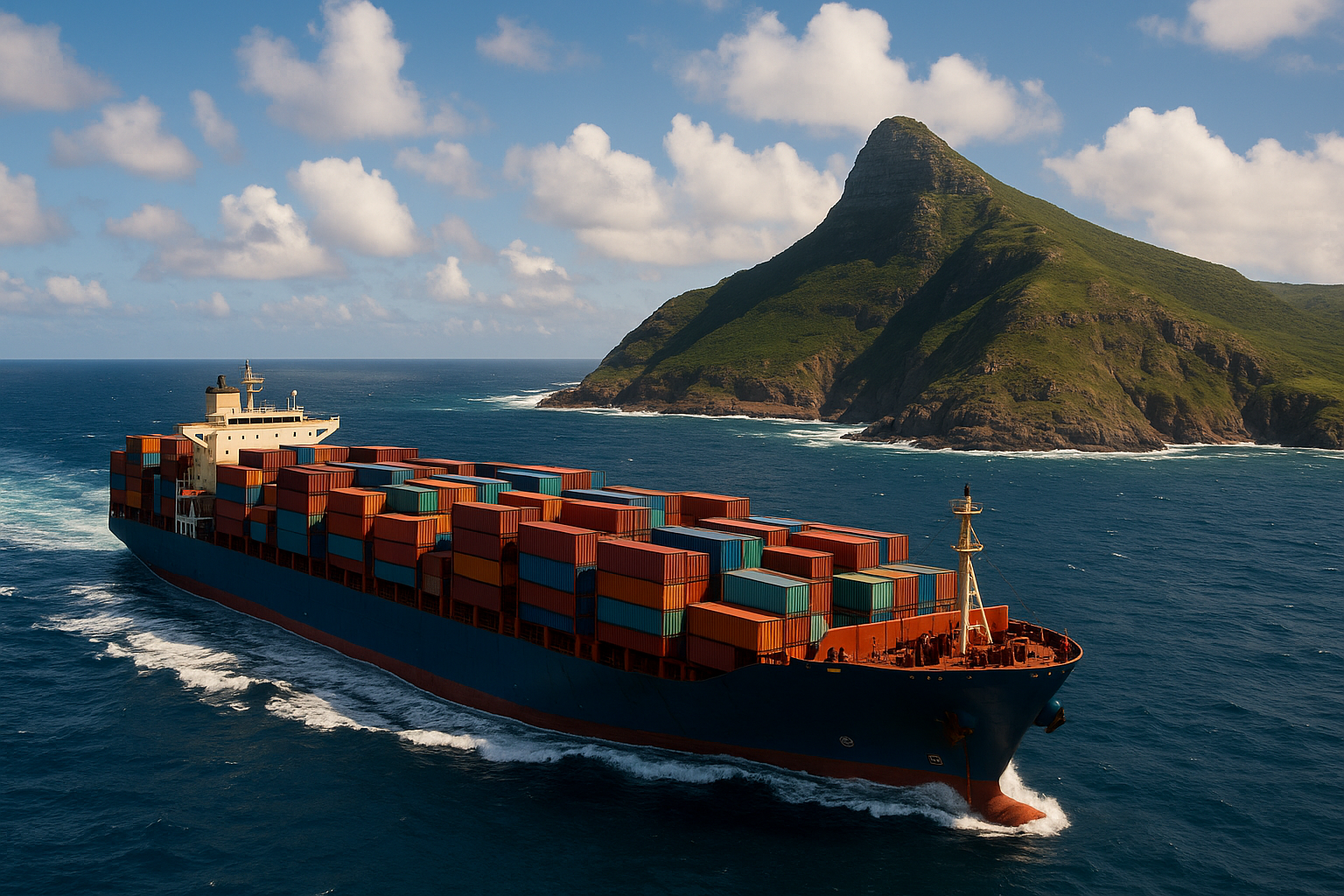
Cape Town's port is now a stage for the Middle Eastern crisis, causing shipping backlogs, soaring costs, and supply chain chaos for various industries.
The Middle East conflict has thrown Cape Town's port into chaos, creating huge backlogs and driving up costs. Ships are avoiding the Suez Canal, forcing them to sail around Africa, which delays goods and increases shipping fees. This disruption hurts South African farms, mines, and even luxury boat builders, as their products get stuck, become too expensive to ship, or miss crucial deadlines. Businesses are facing massive financial strain, showing how global conflicts can have unexpected and far-reaching impacts on local economies.
How is the Middle East conflict impacting Cape Town's port and South African industries?
The Middle East conflict has severely disrupted Cape Town's port operations, leading to container backlogs and increased costs, as ships reroute around the Cape of Good Hope. This ripple effect impacts South African agriculture, mining, and luxury goods, increasing expenses for farmers, causing delays for exporters, and threatening financial viability across various sectors.
Get Cape Town news in your inbox
Stay updated with the latest stories from the Mother City.
The Yard That Ran Out of Room
Cape Town’s container terminal used to move like clockwork: cranes gliding, reefers humming, stacks never higher than four. Ten days ago the clock stopped. Yard occupancy leapt from a comfortable 78 % to a suffocating 94 %, forcing Transnet to unlock an old fruit shed in Epping and turn it into a makeshift depot. Inside the fence, 1,800 import boxes sit orphaned: centrifuge shafts meant for Tehran, insulin for Beirut and, in a neat ironic stack, 400 t of Rooibos tea that will not reach Jeddah before Ramadan ends. Every box burns US $135 a day in detention; once the fourteen free days expire the bill ricochets back to the farm or factory that loaded it. In Stellenbosch and Caledon, invoices already topping R 60,000 are sliding into mailboxes like ransom notes.
The overflow yard was never designed for containers. It was built for December table-grapes, so the power grid offers only reefer plugs, not the heavy cables needed for generators or hazardous cargo. Transnet had to hire mobile gensets just to keep high-cube reefers at –18 °C, a cost the port authority quietly absorbs for now but will later try to claw back from lines that abandoned the cargo. Security is another improvisation: the Epping shed last stored citrus, so the perimeter fence is waist-high diamond mesh. Private guards patrol in pairs, logging every container number by hand because the optical scanners used at the main gate cannot read rust-stacked ISO codes through the dust.
For exporters the pain is immediate and double: they pay for boxes that cannot leave and for empty ones that cannot return. Shipping agents are so desperate to restore balance that they now offer a US $300 “empties bonus” to any trucker willing to shuttle bare containers back to the terminal, a reversal of the normal R 200 collection fee. Even so, truck queues snake 3 km along Marine Drive, drivers napping in cabs while dispatchers refresh the port community system, praying for a slot that will not arrive today.
When the Soil and the Sea Lock Horns
Between 25 April and 10 May the Overberg’s wheat farmers intended to drill 65,000 ha; the calendar is carved in stone because every week of delay shaves 0.4 t off the final yield. Then the Middle-East conflict detonated the fertiliser market. Dollar-denominated urea leapt 18 % in seven days; by the time the rand slipped past R 19.30 the swing in local currency hit 27 %. A single 30 t artic that left Durban on Friday collected R 2.04 million for a mixed load of LAN and urea - R 440,000 more than the March forward contract. Before a seed touches soil the producer is already underwater.
Diesel tells the same story. The inland record of R 24.71 a litre would be bad enough, but the usual rail siding at Caledon is dry, forcing trucks to haul fuel an extra 180 km from Worcester. That detour adds 3 c to every kilogram of wheat that will eventually reach the mill, enough to erase the thin margin that crop insurance still leaves exposed. Grain analysts now estimate that 12 % of the intended wheat area will pivot to canola or bare fallow, a decision that will ripple through the domestic bread price nine months from now.
Stone-fruit and table-grape growers cannot pivot; the trees are already in leaf and the first Flame Seedless berries were scheduled to reach Dubai’s Al-Aweer market on 5 May. With Emirates and Qatar suspending belly cargo, forwarders proposed a Rube Goldberg route: truck to Johannesburg, air to Liège, road to Antwerp, then feeder to Jebel Ali - 22 days instead of 5, freight cost exploding from R 11 to R 38 per kilogram. At that price the fruit becomes animal feed before it clears customs, so pallets sit at –0.5 °C while bankers recalculate covenants and growers weigh the cost of dumping a season’s work.
War-Rooms, Whiteboards and Force-Majeure
The Cape Chamber of Commerce has turned a forgotten boardroom into a 24-hour crisis hub. One screen tracks 42 box ships queuing at the Suez; another flashes the Baltic Exchange Cape surcharge that jumped overnight from zero to US $700 per TEU. A whiteboard lists 1,273 “problem” containers tagged by bill of lading: red for reefer, amber for hazmat, black for diplomatic pouches. Every four hours the spreadsheet pings Pretoria’s Department of Trade, where officials promise rebate cheques - once exporters produce the original bill of lading currently locked inside the very boxes they cannot open.
Among the red tags: 42 containers of copper concentrate from Okiep mine. The route was supposed to be truck–rail–ship via Durban to Bandar Abbas, then rail to an Armenian smelter. With the Strait of Hormuz off-limits, the only path is 12,000 km the other way - around the Cape, up the Atlantic, through Rotterdam and across Europe by rail. The detour costs US $90 per tonne, vaporising the mine’s quarterly profit and triggering force-majeure clauses that shove liability onto the miner. Two shifts have already vanished and 160 contractors were sent home without pay, a human tailings dam at the end of the logistics chain.
Even luxury yacht builders feel the after-shock. A Somerset West catamaran yard had booked a heavy-lift vessel for 20 April to load two 60-foot hulls bound for the Miami Boat Show. The carrier rerouted around the Cape to protect schedule, forfeiting its private-quay slot in Ben Schoeman Dock. The next heavy-lift berth is 28 May - three weeks after the show closes. Storage runs R 45,000 a day and the U.S. dealer is threatening a R 2 million penalty for non-delivery, enough to wipe out the profit on both hulls and stain the builder’s reputation in the slipway.
Detours, Diversions and Desperate Work-Arounds
Airspace closures have kneecapped high-value perishables but also birthed a strange opportunity. Dubai’s hub status normally funnels 34 % of Western Cape’s Asian and Eastern European tourists; October forward bookings are already down 19 %. Yet Europe-based charter brokers report a 300 % surge in “safe-destination” queries that bypass Gulf hubs. ExecuJet handled 38 private-jet arrivals in the last week of April, up from 11 the previous year, including a 19-seat Legacy evacuating Lebanese diamond dealers who left Beirut at midnight and landed in Cape Town before sunrise.
Insurance underwriters now tag the Red Sea a Listed Area, slapping 0.125 % war-risk premiums on every Asia-Europe shipment. Because policy wording treats the Cape of Good Hope as an “alternative vulnerable passage,” the same surcharge hits Cape Town exports to the United States. A single 40-foot container of Pinotage valued at R 2.5 million therefore ships with an extra R 3,125 premium; multiplied across 9,000 weekly containers, the Western Cape wine industry pays an involuntary R 28 million monthly tax on volatility.
Cold-chain operators gamble with every sailing. A 180-ton consignment of hake fillets left St Helena Bay on 28 April, bound for Gulf supermarkets via Jebel Ali. With that hub closed the fish will now trans-ship in Colombo and await a feeder to Bahrain, adding 18 days to an already tight shelf-life budget. The exporter keeps thermometers at –22 °C and hopes the ethylene scrubbers hold; one compressor failure will divert US $400,000 of prime fillet to a fish-meal plant at 12 c a kilogram, a 70 % write-down that no insurance policy fully covers.
Payment risk completes the circle. Saudi and UAE banks now demand Western-bank confirmation on letters of credit, adding US $350 per bill and freezing exporters’ working capital. A Stellenbosch firm that builds citrus-packing machines has been told its existing LCs will be cancelled if the vessel reroutes - an impossible clause when carriers themselves cannot promise which canal will be open in three weeks. The managing director now asks Riyadh buyers to deposit 50 % upfront into a Luxembourg escrow, a request that already cost him one long-standing client but may save the firm from forfeiting 14 tractors.
From mine to marina, vineyard to vineyard, the lesson is the same: logistics is no longer a back-office spreadsheet. It is the single brittle arch that locks energy, agriculture, manufacturing and tourism together - and the keystone is wobbling somewhere south of the Suez.
How has the Middle East conflict affected Cape Town's port operations?
The Middle East conflict has caused significant disruption to Cape Town's port. Ships are avoiding the Suez Canal and rerouting around Africa, leading to massive backlogs, increased shipping costs, and a substantial rise in yard occupancy (from 78% to 94%). This has forced the port authority, Transnet, to use an old fruit shed as a makeshift depot for orphaned import boxes, incurring additional costs for storage and security.
What are the financial consequences for South African businesses due to these disruptions?
South African businesses are facing severe financial strain. Exporters are paying for containers that cannot leave and for empty ones that cannot return. Detention fees for stuck cargo can reach US $135 per day per box, with invoices topping R 60,000 for some. Farmers are experiencing increased costs for vital inputs like fertilizer (up 27% in local currency) and diesel. Luxury yacht builders face significant storage fees (R 45,000 a day) and potential penalties for missed deadlines, while the copper mining industry is seeing quarterly profits vanish due to extended and more expensive shipping routes.
How are agricultural sectors like wheat and fruit farming being impacted?
Wheat farmers are facing a compressed planting window, with delays potentially reducing yields by 0.4 tons per week. The cost of fertilizer has surged by 27% locally, and higher diesel prices, exacerbated by rerouted fuel deliveries, add to transportation costs. This could lead to a 12% reduction in intended wheat area, impacting future bread prices. Stone-fruit and table-grape growers are particularly vulnerable; their produce, intended for markets like Dubai, cannot endure the extended transit times and massively inflated freight costs (from R 11 to R 38 per kilogram) resulting from convoluted rerouting, often leading to the dumping of entire harvests.
What measures are being taken to manage the crisis at the port?
The Cape Chamber of Commerce has established a 24-hour crisis hub to monitor shipping queues and surcharges. Transnet has improvised solutions like converting a fruit shed into a container depot and hiring mobile generators and private security. Shipping agents are offering incentives (US $300 "empties bonus") to truckers to return empty containers. However, these are often temporary fixes, highlighting the unexpected challenges and the struggle to maintain normal operations.
How are international shipping and financial mechanisms adapting to the Red Sea situation?
Insurance underwriters have declared the Red Sea a 'Listed Area,' imposing a 0.125% war-risk premium on Asia-Europe shipments. Due to policy wording, this surcharge also applies to Cape Town exports to the United States. Furthermore, Saudi and UAE banks now demand Western-bank confirmation on letters of credit, adding costs (US $350 per bill) and freezing exporters' working capital. Some exporters are resorting to demanding 50% upfront deposits into escrow accounts, even at the risk of losing clients.
What are the broader, unexpected impacts of this conflict on other sectors, such as tourism and high-value goods?
Beyond direct shipping, the conflict has had surprising effects. Airspace closures have hindered high-value perishable logistics, but concurrently, Dubai's reduced status as a hub has led to a surge in 'safe-destination' queries for Southern Africa, boosting private jet arrivals and potentially tourism. High-value goods like hake fillets are facing extended transit times and trans-shipment risks, increasing the likelihood of spoilage and significant financial write-offs if cold-chain integrity fails. The luxury yacht building industry is also suffering, with missed international boat shows leading to reputational damage and financial penalties.

Aiden Abrahams is a Cape Town-based journalist who chronicles the city’s shifting political landscape for the Weekend Argus and Daily Maverick. Whether tracking parliamentary debates or tracing the legacy of District Six through his family’s own displacement, he roots every story in the voices that braid the Peninsula’s many cultures. Off deadline you’ll find him pacing the Sea Point promenade, debating Kaapse klopse rhythms with anyone who’ll listen.
View all articles →