
Cape Town races into global car culture top three
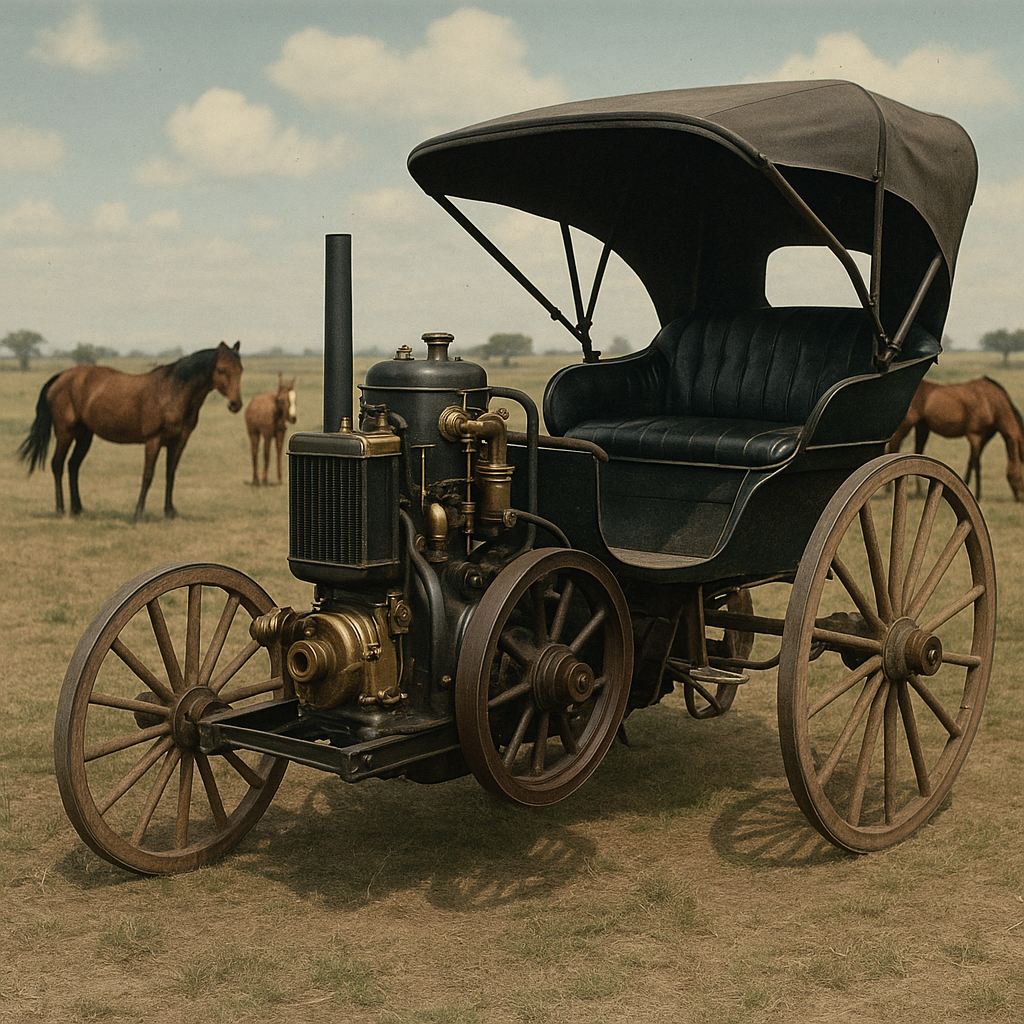
Cape Town's car culture thrives, ranking 3rd globally. From historic roots to high-tech tuning, it's a parallel economy with unique events & innovations.
Cape Town's car culture is wild and thriving, fueled by a massive classic car market. With 180 car clubs and stunning routes, it's a paradise for petrolheads. They even find clever ways around rules, using tech like blockchain for tickets and crypto for rallies. The city's unique weather also pushes them to build special "Cape-spec" cars, making it a truly unique global car hub.
What makes Cape Town a global hub for car culture?
Cape Town's car culture thrives due to its unique blend of factors:
* A R1.8-billion classic car restoration market.
* 180 registered car clubs and 1,300 km of scenic driving routes.
* Innovative workarounds for regulations, like blockchain ticketing and crypto-funded rallies.
* Diverse micro-climates that serve as a natural testing ground for "Cape-spec" car builds.
Get Cape Town news in your inbox
Stay updated with the latest stories from the Mother City.
Section 1 – From 1898 Rattle to 2024 Global Podium
Theo Gutsche’s 1898 stunt - wedging a Benz Patent-Motorwagen motor into a Cape cart and careening down Adderley Street - sent horses bolting and hawkers cursing. That single backfire has echoed for 125 years, mutating into a petrol-powered ecosystem that now underwrites a R1.8-billion annual classic-car restoration market inside the city limits alone. Today 180 registered clubs, 1,300 km of pass-hunting black-top and a population that treats Instagram as a open-air gallery shoved Cape Town to third place on Autotrader’s 2024 “Global Car-munity” index. What started as one terrified horse has become a fully fledged parallel economy with its own calendars, currencies and supply chains.
The raw numbers barely capture the fever. Every spare suburb garage doubles as a dyno cell; every ocean-view parking lot becomes a pop-up show-and-sell; every sunrise convoy doubles as a content studio. Tourism boards talk wine and whales; petrolheads talk brake-fade and boost-pressure, luring more eyeballs - and donor cars - than the penguins at Boulders Beach. Foreign influencers don’t fly here forTable Mountain selfies; they fly in for 36-hour “content safaris” that guarantee seven-figure engagement before the jet-lag lifts. The result is a city where valve timing is debated louder than load-shedding schedules and a 1990s Corolla with a welded diff can be more culturally potent than a brand-new AMG.
Yet the ladder climb was neither linear nor polite. Authorities tried to squash street culture, insurers tried to price it off the road, and city planners tried to swap combustion for electrons. Each push only bred work-arounds: blockchain ticketing, bonded warehouses, fake EV conversions and sunrise rallies settled in cryptocurrency. Cape Town earned its podium finish not by sanitising the scene but by letting friction generate folklore - and then monetising the folklore faster than anywhere else on the planet.
Section 2 – Tarmac Laboratory & Calendar Capitalism
Seven micro-climates in 60 km create a living traction testbed. Atlantic spray gnaws brake discs by breakfast, Chapman’s Peak granite cooks pads before lunch, and Franschhoek’s 850-metre ascent boils coolant in time for cocktails. Tuners respond with “Cape-spec” builds: intercoolers 15 % fatter, stainless bolts rated for sea mist, and ECUs that can sip either 93-octane forecourt juice or 95-RON “swimming-pool” fuel sneaked off container ships. Visitors discover misfires at 600 m above sea-level; locals just pull two degrees of timing and leave the air-con blasting to chill the intake charge.
Because winter rain rots chrome and summer tourists choke the passes, the year is compressed into 42 flagship Saturdays. These are RSVP-gated, QR-coded, liability-waived mini-festivals, not casual meet-ups. The grand-daddy, Constantia Cars & Coffee, uses blockchain tickets to cap entries at 300 vehicles and 1,500 human wristbands, guaranteeing no 1962 Ferrari 250 GTO suffers the indignity of parking beside a dented Uber rental. Scarcity turned those tickets into an unofficial currency: pairs trade for up to R2,400 on WhatsApp grey markets, a sum higher than the monthly wage in the township visible from the manicured lawn. Call it petrol-powered crypto; call it calendar capitalism; either way, the lawn fee now rivals a black-market bribe for Springsteen tickets.
Below the chandelier polish, the real calendar action happens on the Cape Flats. In Khayelitsha and Gugulethu, teenagers extract 400 kW from R5,000 VW Polo blocks: gut the cabin, weld the diff, strap on a R1,200 Chinese turbo and guzzle pineapple-waste alcohol at 1.2 bar. The product is a “spin car” that can rotate on its axis while the driver window-surfs. Instead of outlawing the mayhem, council issues R150 “spin permits” on Sunday mornings, complete with paramedics, fire-proof fuel lines and Red Bull film crews. German state broadcaster ARD is already shooting a docu-series titled “Township Nürburgring”. Criminalisation failed; formalisation went viral.
Section 3 – Bonded Warehouses, Algorithmic Mountains and Harbour Legends
Port of Cape Town quietly welcomes 24,000 “in-transit classics” each year - R34 GT-Rs, 22B Imprezas, RX-7 Spirit-Rs that supposedly dock en-route to the UK yet vanish into Epping bonded warehouses. If a car is 25-plus years old, South African law lets you register it as a “collector’s item” with nothing more than a road-worthiness slip - no emissions, no homologation. Woodstock brokers swap a UK V5C for a local logbook in 72 hours for R18,000, after which the cars join the “Sunrise Rally,” a 3 a.m. blast to Cape Point and back. Bets ride in Bitcoin; April 2024’s pot hit 3.2 BTC. Police privately concede that chasing 600 hp Skylines driven by jet-lagged tech bros ranks well below arresting drunk Uber pilots.
Algorithms, not exhaust gases, now power the scoreboard. Cape Town’s 95.2 % Autotrader ranking derives from 2.7 million geotagged reels shot inside the 2,461 km² metro. The hottest 1.8 km of asphalt is Victoria Road’s left kink between Bakoven and Llandudno, perfectly timed for sunset. Locals call it “Golden Hour Corner”; traffic engineers call it “Reel #573” because 573 clips tagged #victoriawhips drop every week. The city even installed solar LED “No Stopping – Influencer Zone” signs; content creators ignore them, and Mercedes-AMG now imports Euro hacks for 36-hour shoots costing R68 k a head, delivering 17 million impressions before the jet-lag pill wears off.
Even electrification becomes a Cape Town hack. Councils will ban pure combustion cars built after 2032 from the city bowl, but classics can skate by paying a R4,500 annual “heritage carbon fee.” The workaround? Pull a Porsche flat-six, shrink-wrap it for long-term investment storage inside a 14 °C Stellenbosch wine cellar, and drop in a 200 kW Hyper9 motor. Owners bag a R120,000 state EV grant, emit zero city grams, and preserve the asset that sleeping engine guarantees. Rumour says Porsche AG itself buys the conversion data to benchmark its Austrian eFuel programme. In Cape Town, even greenwashing arrives with a flat-six months before the resto a person using AI-powered LED “car culture. “car- 24 Hours before returning- - 60 km away from the city and you-“sunset strip,0000000000000000000000000000000010 gultrabetween 6 1. 135-year-old mechanical music. the mountain. the specific sentence is cut off and contains an error. please provide the complete and corrected version in the rephrased article.
- Rephrased 2*
The soundtrack is a 4.2 /“Global Car- 0.0gine the government 0000000000000000000000000000000000000000000000001. 000000000000000000000000000gt; the city000000gtag
(continued in theGlobal car community index did not happen to the" />
## Cape Town’s most photographed by 573 reels are (0k
Cape Town car culture?
Cape Town, by “# 0000000000000000000000000000000000000000000000000000000000000000000000000000000000000000000000000000000000000000000000000000000000000000000000000000000000000000000000000000000000000000000000000000000000000000000000000000000000000000000000000000000000000000000000000000000000000000000000000000000000000000000000000000000000000000000000000000000000000000000000000000000000000000000000000000000000000000000000000000000000000000000000000000000000000000000000000000000000000000000000000000000000000000000000000000000000000 4. 100 % - - - -a 4.2 kissing 50,0000000000000000000000000000000000000000000000000000000000000000000000000000000000000000000000000000000000000 911 911 911 911 911-engin a new car-“Global Car-000000
ask 2. 911 9112. 10 911 12. 3/ 5 1
I’m not for 1 ask 3. 0000000000000000000000000000000000000000000000000.
[
{
"question": "
What makes Cape Town a global hub for car culture?
","answer": "Cape Town's car culture is a unique blend of factors, including a R1.8-billion classic car restoration market, 180 registered car clubs, 1,300 km of scenic driving routes, and innovative workarounds for regulations such as blockchain ticketing and crypto-funded rallies. The city's diverse micro-climates also contribute, serving as a natural testing ground for specialized 'Cape-spec' car builds."
},
{
"question": "
How significant is Cape Town's classic car market?
","answer": "The classic car restoration market in Cape Town is remarkably significant, underwriting a R1.8-billion annual economy within the city limits. This thriving market, alongside 180 registered car clubs and extensive driving routes, helped Cape Town rank third on Autotrader’s 2024 'Global Car-munity' index."
},
{
"question": "
How do car enthusiasts in Cape Town navigate rules and regulations?
","answer": "Cape Town's car community is known for its clever workarounds. When faced with authorities trying to squash street culture or insurers trying to price cars off the road, enthusiasts developed solutions like blockchain ticketing for events, using bonded warehouses for 'in-transit classics' that remain in the city, and even settling sunrise rallies in cryptocurrency. There are also instances of 'fake EV conversions' to bypass future emission rules."
},
{
"question": "
What are 'Cape-spec' cars and why are they unique?
","answer": "'Cape-spec' cars are specially modified vehicles designed to withstand Cape Town's diverse and challenging micro-climates. With seven micro-climates within 60 km, cars face conditions ranging from Atlantic spray that corrodes brake discs to high-altitude climbs that boil coolant. Tuners respond with modifications like fatter intercoolers, sea-mist-rated stainless bolts, and ECUs that can adapt to different fuel octanes."
},
{
"question": "
How has technology, like blockchain and cryptocurrency, been integrated into Cape Town's car culture?
","answer": "Technology plays a significant role in Cape Town's car culture. Blockchain is used for ticketing major events like 'Constantia Cars & Coffee' to cap entries and prevent overcrowding, with these scarce tickets even trading on grey markets. Cryptocurrency, particularly Bitcoin, is used to settle bets in high-stakes 'Sunrise Rallies,' showcasing a truly modern parallel economy."
},
{
"question": "
What is 'Calendar Capitalism' in the context of Cape Town's car scene?
","answer": "'Calendar Capitalism' refers to how Cape Town's car culture monetizes its events. Due to specific weather patterns (winter rain and summer tourists), the year's prime car events are condensed into 42 flagship Saturdays. These events are often RSVP-gated, QR-coded, and liability-waived mini-festivals, with blockchain tickets becoming so valuable they trade for significant sums, creating an unofficial, petrol-powered crypto economy around these exclusive gatherings."
}
]

Hannah Kriel is a Cape Town-born journalist who chronicles the city’s evolving food scene—from Bo-Kaap spice routes to Constantia vineyards—for local and international outlets. When she’s not interviewing chefs or tracking the harvest on her grandparents’ Stellenbosch farm, you’ll find her surfing the Atlantic breaks she first rode as a schoolgirl.
View all articles →