
Cape Town wins $1 million Bloomberg Mayor’s Challenge Prize
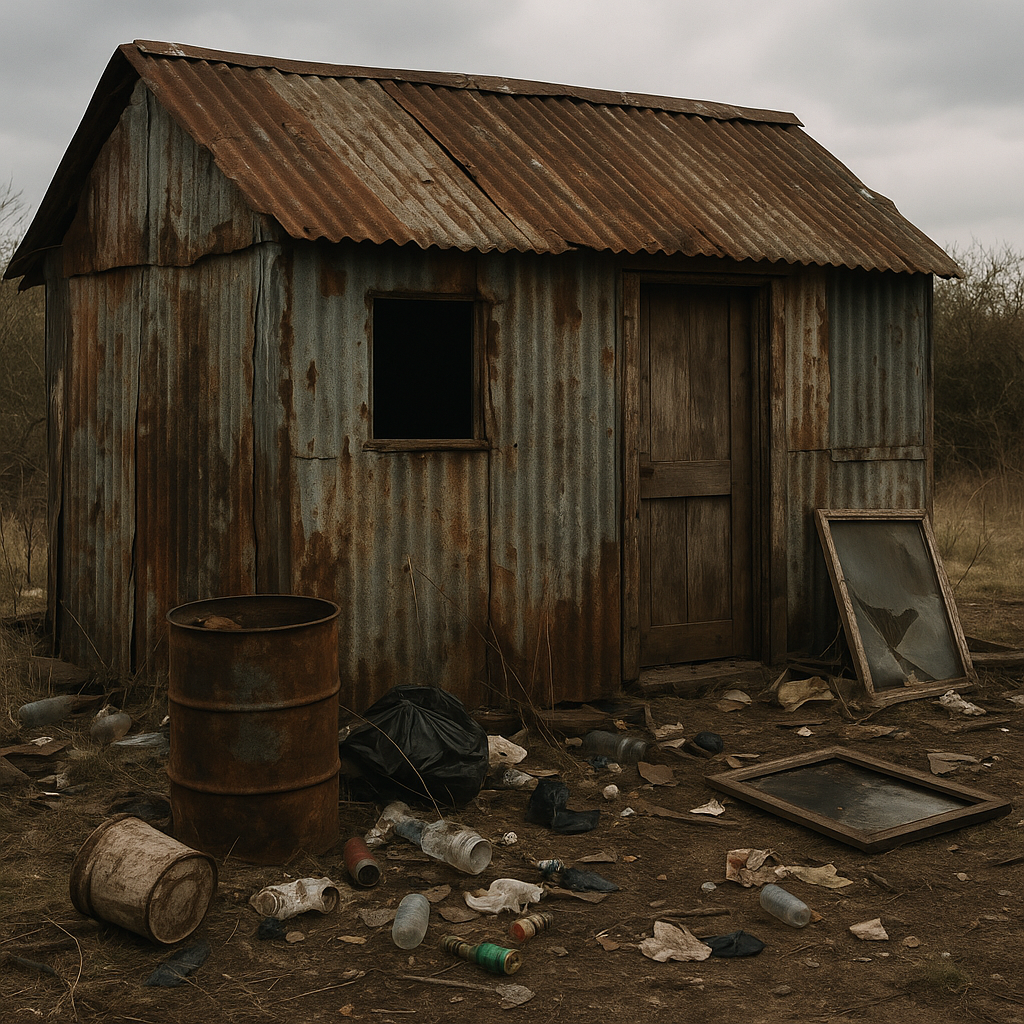
Cape Town innovates waste management in informal settlements with community-led recycling, greywater systems, and micro-enterprises.
Cape Town's forgotten neighborhoods, once drowning in trash, are now sparkling! Locals, called 'waste stewards,' are turning the tide with simple handcarts and clever ideas. They're recycling tons of waste, creating jobs, and proving that even without fancy maps or big trucks, a community can clean up its act and reclaim its pride.
How is Cape Town tackling waste management in its informal settlements?
Cape Town is implementing innovative, community-led waste management in informal settlements by empowering local residents as waste stewards. They use simple, muscle-powered methods like handcarts and tricycles for collection, supported by digital tools for tracking. This initiative has significantly increased recycling rates and fostered local economic opportunities, redefining waste management beyond traditional municipal services.
Get Cape Town news in your inbox
Stay updated with the latest stories from the Mother City.
1. Dawn on the Unplanned Hillside
Kosovo, Europe, Sweet Home – the names sound like jokes cartographers never meant to print, yet they appear on no map the city ever approved.
Night after night, families haul sheets of rusted corrugate up shale slopes and anchor them with washing-line wire; by morning another lane exists, already humming.
Children in bottle-green sweaters tight-rope along paths that double as storm run-off, dodging grey rivulets carrying yesterday’s dishwater and chicken bones.
Tiny shops open before the sun finishes clearing Devil’s Peak, stacking paraffin crates next to yesterday’s chip packets that the southeaster lifts like pink snow.
Here, trash is less an object than a climate: it blows, soaks, drifts and settles, ignoring every municipal line drawn in a planner’s CAD file.
Plastic lands on rooftops, diapers wedge between rocks, and every few weeks a dump site ignites, painting the N7 with a chemical smudge you can taste for kilometres.
To the Solid Waste headquarters, these zones are simply “unserviced,” a polite way of saying trucks do not enter, invoices still arrive, and kerbs do not exist.
Conventional 240-litre wheelie bins cannot tilt across gradients steeper than one in three or squeeze through passages narrower than a truck’s heart.
Ownership is murky: yesterday’s resident may be tomorrow’s evictee, so which shack owns which bin?
The vacuum is filled by illegal nodes: an abandoned quarry in Site B, a Philippi wetland fringe, the dead zone beneath humming pylons.
Each becomes an anti-monument of rubber gloves, abattoir sludge and Sprite shards that glint like comic-book kryptonite, waiting for a barefoot child.
2. Counting What Was Never Meant to Be Counted
In 2022 the mayor quietly asked for an inventory no one had ever attempted: how much garbage actually litters the places we pretend aren’t there?
Drone pilots spent weeks stitching bird’s-eye mosaics over twenty-eight settlements; GIS wizards layered the photos with census grids and temperature charts.
They located 1,430 active dumps holding an estimated 7,800 tonnes, the approximate mass of a nuclear-powered aircraft carrier, only sprinkled across nineteen square kilometres of sand and reed.
Micro-grids followed: one hundred-metre “spokes” of fifteen households, each anchored by a resident waste steward, usually the woman already feeding fifty toddlers in her corrugated crèche or doubling as the corner spaza queen.
For her trouble she receives a stipend of R1,800 and a neon-aqua bib that declares, “Your Street, Your Pride,” a slogan coined by the stewards themselves during a Saturday karaoke break.
The bet is straightforward: separate at the doorstep and the rest of the chain - handcart, tricycle, baler - can stay light, cheap and muscle-powered, no R3-million compactor required.
3. Dunoon as Living Laboratory
Dunoon, population 28,000, sits like a shallow bowl between a decommissioned World War II airstrip and a thundering freight corridor; gravity is both enemy and ally.
Engineers from the University of Cape Town sketched a grey-water hack on the back of a beer mat: half-bury a 200-litre “sacrificial drum” uphill, catch sink and shower runoff, force it through charcoal and wood-chip, then let vetiver grass drink whatever leaks out.
After twelve weeks the drum is capped, left to pickle anaerobically, and swapped for a fresh one; the sludge that comes out is phosphate candy for backyard spinach beds that feed the morning taxi-rank trade.
Lab tests clock a 68 % drop in E. coli within five metres of the trench and a 40 % fall in residents flinging dirty water into the street, simply because a better downhill path now exists.
While water found a new channel, garbage negotiated its own colour scheme.
No technocrat dictated red-for-plastic, yellow-for-juice-box; the palette emerged during dusk “tjo-tjo” meetings where kettles of chicory coffee never cool and toddlers sleep under tables.
Red supermarket crates, rescued from chain-store bins, were rebranded with hand-painted flamingos; kids discovered a crate of bottles equals eighty cents, enough for a hot vetkoek on the walk home.
Six months later, Dunoon’s recycling diversion had jumped from 3 % to 29 %, beating several jacaranda-lined suburbs still addicted to single-stream curbside black bags.
4. Coins, Contracts and the Cloud
Diverting bottles is only half the chessboard; the knottier half is legality - how does a metro delegate its statutory duty to people who possess neither tax numbers nor public liability cover?
Lawyers dusted off a forgotten clause in the Municipal Systems Act that allows “deemed service providers” if social targets are met; stewards formed a cooperative - ISWaste - that signs quarterly performance deals packed with Key Cleanliness Indicators borrowed from New York’s CompStat crime-scorecards.
Score below 75 and the contract pauses; rise above 90 and grocery vouchers worth 15 % of the stipend appear, a currency trusted by the unbanked who queue at the spaza counter every Friday.
Data travels by WhatsApp, the cheapest wire in town.
Each steward snaps her street at 07:00 and 17:00, uploads a geotagged thumbnail, and within seconds an algorithm spits out a heat-map: green equals clean, orange means send reinforcements.
Bandwidth cost per phone: R2.40 a day, less than the price of one municipal black bag.
Then came the million-dollar gift: Bloomberg Mayor’s Challenge cash released in two fat tranches.
Forty-five modular tricycles are being welded in a Langa backyard shop - balloon tyres for goat-track slopes, 250 kg payload, solar panel trickle-charging LED headlights and a Bluetooth beacon that whispers to passing phones, “Recycling is dignity - sort today.”
Some cans will bypass scrap merchants entirely; they will be melted into geometric tiles in a foundry run with the Michaelis School of Fine Art and sold to hotels retooling lobby floors - one square metre eats 420 cans and fetches R650, an order of magnitude above scrap value.
A R10-million zero-interest micro-loan pool, seeded by Bloomberg and matched by an ethical local bank, will finance anything from a R2,000 handcart to an R80,000 baler; collateral is peer pressure - five stewards must co-sign, turning debt into social glue.
5. Storms, Sceptics and the New Math of Hope
Critics wave the banner of “green apartheid,” arguing that boutique recycling hubs should not camouflage the city’s permission for a 600,000-tonne landfill on the Cape Flats whose breath drifts across coloured townships every time the northwest wind wakes.
They insist that until multinationals face binding Extended Producer Responsibility for glossy sachets, grassroots schemes merely launder an unjust status quo.
Officials reply that community cleanup and upstream policy are parallel rails; Dunoon’s 29 % diversion statistic is already ammunition in Treasury submissions for a plastic-tax rebate that could price problem packaging out of existence.
Nature keeps auditing the experiment.
Winter 2024 sent an atmospheric river that dumped 150 mm in twenty-four hours, turning vetiver trenches into geysers and red crates into confetti.
Yet within forty-eight hours post-flood, stewards had gumboot brigades running; streets rebounded faster than many tarred suburbs where ratepayers pay for services that actually exist.
Resilience researchers call the phenomenon “adaptive capacity,” the art of converting everyday survival habits into infrastructure that sets faster than concrete.
Scale the Dunoon metrics across all twenty-eight settlements and you confront audacious arithmetic: 190,000 households could divert 38,000 tonnes a year, the carbon equivalent of parking 7,200 cars while pumping R22 million in cash-to-households through bottles, stipends and art-foundry sales.
Those numbers live nowhere in the city’s official Integrated Development Plan because they sprawl across environmental, economic and social silos - the kind of hybrid currency global prizes like Bloomberg increasingly crave.
The greatest dividend may not be the tonnes diverted but the redefinition of citizenship in zones long catalogued only by absence: of tenure, of services, of hope.
How is Cape Town tackling waste management in its informal settlements?
Cape Town is implementing innovative, community-led waste management in informal settlements by empowering local residents as waste stewards. They use simple, muscle-powered methods like handcarts and tricycles for collection, supported by digital tools for tracking. This initiative has significantly increased recycling rates and fostered local economic opportunities, redefining waste management beyond traditional municipal services.
What challenges does waste management face in Cape Town's informal settlements?
Informal settlements in Cape Town, often built without official blueprints, present unique challenges for traditional waste collection. These areas lack conventional infrastructure like paved roads and official addresses, making them inaccessible for municipal waste trucks. Additionally, unclear property ownership further complicates waste collection, leading to widespread illegal dumping, which poses significant environmental and health risks.
Who are the 'waste stewards' and what role do they play?
'Waste stewards' are local residents, often community leaders, who are empowered to manage waste collection within their micro-grids of about fifteen households. They receive a stipend and are equipped with neon-aqua bibs to identify them. Their role involves collecting separated waste using handcarts or tricycles, fostering doorstep separation, and tracking their progress using WhatsApp to report on cleanliness. They are crucial to the community-led waste management model, transforming local environmental conditions and creating livelihoods.
How does technology support this community-led waste management?
Technology plays a vital, yet simple, role in the waste management initiative. Waste stewards use WhatsApp to send geotagged photos of their streets at different times, which an algorithm processes to create real-time cleanliness heat-maps. Additionally, custom-designed tricycles are equipped with solar-powered LED headlights and Bluetooth beacons to promote recycling. This low-cost, accessible technology helps track performance, identify problem areas, and engage the community effectively.
What economic and social benefits has this initiative generated?
The initiative provides significant economic and social benefits. Waste stewards receive stipends, and performance-based grocery vouchers incentivize higher cleanliness scores. The collection of recyclables generates income through sales to scrap merchants, and a new art foundry converts aluminum cans into valuable art tiles, offering a higher return. A micro-loan pool also supports local entrepreneurs in acquiring waste management equipment, fostering economic independence and community pride.
What are the future aspirations and broader impact of this model?
The model aims for significant expansion, with projections suggesting that scaling it across 190,000 households in 28 settlements could divert 38,000 tonnes of waste annually. This not only has a substantial positive environmental impact (equivalent to removing 7,200 cars from the road) but also injects R22 million in cash directly into households. Beyond waste diversion, the initiative redefines citizenship and hope in areas traditionally overlooked by formal planning, demonstrating a resilient, community-driven approach to urban development.

Sizwe Dlamini is a Cape Town-based journalist who chronicles the city’s evolving food scene, from boeka picnics in the Bo-Kaap to seafood braais in Khayelitsha. Raised on the slopes of Table Mountain, he still starts every morning with a walk to the kramat in Constantia before heading out to discover whose grandmother is dishing up the best smoorsnoek that day.
View all articles →