
Cape Town’s luxury property market gains momentum
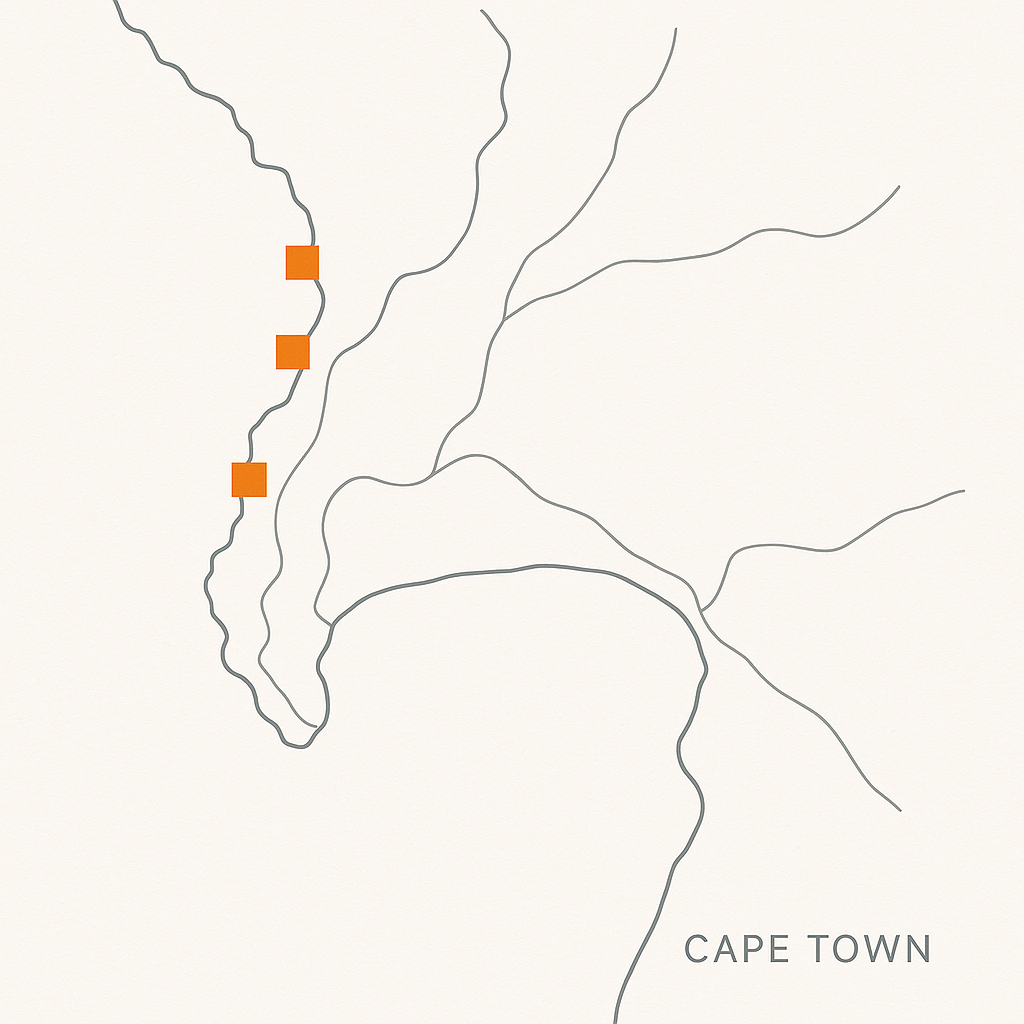
Cape Town's luxury housing market is booming, driven by foreign investment, limited supply, and urban regeneration.
Cape Town's luxury property market is on fire! Homes along its beautiful coast are selling incredibly fast, often in a matter of days. Rich international buyers, especially from Europe and America, are snatching up properties thanks to good exchange rates and Cape Town's safe, vibrant lifestyle. New buildings offer fancy features, and even without cheap loans, the demand is huge because there's not much land left. This boom is making Cape Town a top spot for luxury living, with prices constantly climbing.
Why is Cape Town's luxury property market booming?
Cape Town's luxury property market is booming due to a unique combination of factors: scarce land, a diverse international buyer base exploiting favorable exchange rates, strong urban management ensuring safety, and a sophisticated lifestyle. The market also benefits from high rental yields, strategic new developments, and a limited supply of properties.
Get Cape Town news in your inbox
Stay updated with the latest stories from the Mother City.
From Listed to Locked: The Velocity Numbers Nobody Can Ignore
Cape Town’s postcard coastline - wedged between the V&A Waterfront and the granite shoulder of Signal Hill - is trading apartments the way bull markets trade shares. Contracts are signed within days, not seasons; boards reading “Sold” appear before the paint dries on “On Show” posters; and the rand value that has already changed hands since January 2023 eclipses the annual GDP of more than one island state.
Sectional-title units - think high-rise glass or 12-unit boutique blocks - made up almost three-quarters of every deed lodged in the Atlantic Seaboard and City Bowl during the first four months of 2024. In calendar 2023 alone, R6.1 billion worth of flats moved; by the end of April this year another R1.5 billion was already on the Registrar’s desk. The average apartment now spends 26 days between listing and transfer, a full 40 % quicker than the five-year, pre-Covid norm. More than half of those sellers accepted offers within five percent of the asking price, while in Clifton the typical discount has withered to 1.8 % - once transfer duty is added the buyer is effectively paying list price.
The punch bowl is not cheap debt - South African repo rates are still at a 14-year ceiling. Instead, a perfect collision of scarce dirt and a buyer register that now stretches far beyond the old Johannesburg-to-Cape-Town migration story keeps lighting the fuse. Roughly every third deal north of R20 million is funded from abroad, with Britons, Germans and Swiss in pole position and a fresh platoon of Americans exploiting a dollar that has strengthened one-fifth against the rand since 2022. Europeans especially like the 90-day visa-free window trialled last year between the EU and SADC; it lets them shuttle in and out for repeated mini-stays without the red tape that killed Spanish or Portuguese golden-visa schemes.
Why They’re Buying: Safe Streets, Hard Currency and a 24-Hour Lifestyle
Exchange-rate arithmetic is only half the magnet. Since 2018 the City has quietly widened its “urban management zone” to blanket the CBD and Green Point. Streets are swept around the clock, high-definition CCTV meshes cover every block, and the result feels closer to downtown Singapore than to Sandton’s suburban sprawl. Private capital has raced to keep pace: the V&A Waterfront has pledged another R4 billion before 2026, including a 7 500-bay underground parkade, a 3 500-seat convention centre topping the Time Square tower, and Makers Landing, a 9 000 m² food market that keeps the cruise terminal busy seven days a week. Apartments in the Waterfront’s Silo precinct have compounded at 14 % a year since 2019 - no other city pocket comes close.
Supply-side handcuffs tighten the further you drive from the harbour. A protected “security belt” stretches from Bantry Bay through Clifton to Camps Bay; four out of five buildings here are either full-title blocks with round-the-clock guards or sectional schemes protected by biometric gates. New height lines slam most sites below 60 m and coastal setback rules now reference 1-in-20-year storm surges. Release a unit and the feeding frenzy starts: Seeff counted four or more competing offers on 38 % of Bantry Bay sales last quarter, and a Victoria Road penthouse just changed hands at R87 000 per square metre - the highest price ever paid for a strata apartment on a normal erf.
Across the ridge, inside the City Bowl, the buyer profile skews younger - median age 44 versus 57 on the Seaboard - and earns its money from tech, design or advertising. These shoppers swap 900 m² mansions in Pretoria or Durban for 130 m²–180 m² lock-up-and-go flats that keep every café, gallery and mountain trail inside a 90-minute walking loop. Supply here is freer than on the coast, yet stock moves even faster: flats in Mouille Point and Green Point averaged 19 days to sell in early 2024. The engine is rental yield. Corporate tenants evicted from tired office blocks will sign three-year, dollar-pegged leases at 6 %–7 % net, a miracle in a world where prime-city gross yields scrape 2 %. That cash-flow cushion lets investors carry today’s double-digit mortgage rates and still punt 8 %–10 % capital growth.
Cash, Crypto and Condé-Nast Finishes: Inside the New Builds
Bankers are spectators at this party. Barely 27 % of the bonds registered above R10 million in 2023 covered the full price; everyone else arrived with briefcases of cash or a 30 %–40 % deposit. Leaked SARS figures show that 62 % of non-residents parked their money through Dubai International Financial Centre companies or Luxembourg SOPARFI vehicles - proof that estate-duty privacy still ranks high on the wish list. Transfer-duty collected from foreign wallets is now the City’s second biggest own-source revenue line, bankrolling subsidies for indigent households without touching rates on homes below R5 million - an accidental Robin Hood effect carved out of luxury churn.
Developers have stopped chasing height and started chasing finesse. Fresh launches - The Rubik in Sea Point, The Fynbos in Fresnaye, The Sentinel on Bree Street - all stay under 45 units, with flagship prices deliberately parked between R18 million and R35 million to dodge the 18 % transfer-duty cliff that strikes above R30 million. Inside, buyers get Gaggenau kitchens, VRF air-conditioning, 100 kW diesel backups and dual fibre lines that guarantee three-millisecond latency to the ZAIX exchange in Newlands - catnip for crypto desks. Floorplates have shrunk from an average 230 m² in 2015 to 165 m² today, but rooftop cinemas, co-working pods and whisky lounges keep claustrophobia at bay.
Off-plan is suddenly sexy again. The Oceans in Three Anchor Bay shifted 70 % of its 52 flats in six weeks this February even though shovels only hit soil in September. Early birds paid 30 % deposits at 2024 price tables, locking in an effective 10 %–12 % discount to forecast 2026 spot values. The developer - Old Mutual’s African Infrastructure arm plus local boutique firm Blok - secured construction finance on the strength of those presales, a privilege banks once reserved for office towers or hotels. In short, luxury housing is now underwritten like commercial real estate: the forward book is the asset.
Rentals, Brokers and Lightning-Fast Bids: What Happens Next
Letting dynamics have split in two. Airbnb nights in Clifton and Camps Bay are 21 % below their 2019 peak after the Council capped absentee owners to 30 rental nights a year. Long-term, unfurnished leases in the CBD and Green Point, on the other hand, are 34 % above pre-Covid tallies. Multinationals have quietly shifted African headquarters from Lagos and Nairobi to take advantage of embedded solar - Stage 6 blackouts have not touched the CBD grid since the 180 MW Roggebaai plant fired up in late 2023 - and a judiciary rated the continent’s most independent. Three-year, dollar-indexed leases give landlords a built-in currency hedge, so they greet Eskom news with a shrug.
The people who broker these deals are themselves consolidating. Seeff, Lew Geffen Sotheby’s and Pam Golding handled 71 % of Atlantic Seaboard dollar turnover in 2023, up from 54 % five years earlier. Survivors in the long tail survive by micro-specialisation: kosher-compliant flats inside the Sea Point eruv, or pet-friendly blocks with private beach gates for the booming French-bulldog export crowd. Drone videos and 3-D Matterport tours are now table stakes; the sharpest weapon is data science. Agencies plug into Lightstone’s “buyer propensity” feed, which scores every consumer on the likelihood of spending more than R5 million on a home within 90 days. Agents then dispatch WhatsApp voice notes in the target’s mother tongue, lifting conversion rates 2.3 times above cold email.
Three policy grenades could still derail - or detonate - the market. City Hall’s 2025 zoning draft offers developers a 30 % bulk bonus if they carve out 20 % of floor space for subsidised rentals; pension funds could swarm in, replacing 1970s walk-ups with 15-storey mixed-income towers and flooding the bracket below R5 million. National Treasury, meanwhile, is flirting with a 2 % annual wealth levy on global assets of South African residents. If passed, it could trigger a firesale - unless primary-residence exemptions are widened, in which case the upper end would tighten even more. Finally, the mooted privatisation of Eskom’s transmission grid may let Cape Town wheel cheap solar from the Northern Cape. Kill load-shedding outright and the last risk premium baked into coastal bricks disappears; euro or dollar capital could re-price the Seaboard at Lisbon or even Barcelona multiples.
Until the dice land, Friday-night flash sales remain the norm. One Clifton triplex - 400 m² of glass, 200 m² of wrap-around terrace, sunset views from Lion’s Head to Robben Island - was shown to exactly six pre-qualified buyers. Offers closed at noon on Sunday; by dinner the seller had accepted a bid R3.2 million over guide, wired in tether (USDT) from a Geneva family who never set foot on the property. Repeat that story at any sundowner gathering and you seed the next wave of FOMO money. In a planet starved of seafront land, political sanity and currency optionality, Cape Town has morphed into a long-dated call option on liveability - only the strike price keeps ratcheting higher.
What is driving the rapid sales in Cape Town's luxury property market?
Cape Town's luxury properties, particularly sectional-title units along the Atlantic Seaboard and City Bowl, are selling at an unprecedented pace. This velocity is driven by a combination of factors including scarce land, strong international buyer interest due to favorable exchange rates (especially from European and American buyers), effective urban management providing safety and a high quality of life, and robust rental yields. Properties often receive multiple offers and sell within days or weeks of listing, with minimal discounts from asking prices.
Who are the primary international buyers, and why are they attracted to Cape Town?
International buyers, predominantly from Britain, Germany, Switzerland, and increasingly the United States, are significant players in Cape Town's luxury market. They are attracted by the strong appreciation of their currencies against the South African rand, making properties relatively more affordable. Additionally, Cape Town offers a safe, vibrant, and sophisticated lifestyle, excellent urban management (including 24/7 street cleaning and high-definition CCTV), and a 90-day visa-free window for EU and SADC citizens, simplifying repeated visits.
How does Cape Town's urban environment contribute to its appeal?
Cape Town's appeal is significantly bolstered by its well-managed urban environment. The city has expanded its urban management zone, ensuring clean streets, extensive CCTV coverage, and a secure atmosphere. Major private investments, such as the V&A Waterfront's R4 billion development plan, further enhance the lifestyle with new attractions like a large underground parkade, a convention center, and a bustling food market. These improvements contribute to a feeling of safety and a high quality of life, comparable to major global cities.
What are the characteristics of new luxury property developments in Cape Town?
New luxury developments in Cape Town are characterized by their focus on finesse rather than sheer height, typically featuring under 45 units. Developers often price flagship units between R18 million and R35 million to optimize transfer duty. These properties boast high-end finishes and amenities, including Gaggenau kitchens, VRF air-conditioning, robust backup power (100 kW diesel generators), and dual fiber lines for high-speed internet. While floorplates have shrunk, communal amenities like rooftop cinemas, co-working pods, and whisky lounges compensate, offering a modern, integrated lifestyle.
How are transactions being funded given high interest rates in South Africa?
Despite South Africa's high repo rates, luxury property transactions are largely funded without relying on cheap debt. A significant portion of buyers, especially those purchasing properties above R10 million, are using cash or making substantial deposits (30-40%). Leaked SARS figures indicate that a considerable number of non-residents funnel funds through entities like Dubai International Financial Centre companies or Luxembourg SOPARFI vehicles, often for estate-duty privacy. The prevalence of cash buyers and large deposits indicates a strong financial capacity among purchasers, insulating the market from high local interest rates.
What potential future policy changes could impact Cape Town's luxury property market?
Several policy changes could significantly influence Cape Town's luxury property market. The City Hall's 2025 zoning draft proposes a 30% bulk bonus for developers who allocate 20% of floor space to subsidized rentals, potentially increasing housing supply below R5 million. National Treasury is considering a 2% annual wealth levy on global assets for South African residents, which could lead to a firesale if primary residence exemptions are not broadened. Lastly, the potential privatization of Eskom's transmission grid and the integration of cheap solar power could eliminate load-shedding, removing a key risk premium and potentially re-pricing the Seaboard at even higher multiples, akin to Lisbon or Barcelona.

Oliver Daniels is a Cape Town journalist who chronicles the intersection of food, migration and identity in South Africa's kitchens—from wood-fired Gugulethu braai spots to Constantia vineyards. Born and raised on the slopes of Devil’s Peak, he still starts each week with a dawn walk across Table Mountain to catch the first Atlantic light before filing copy.
View all articles →