
Carmién Tea launches rooibos cooking teabags for easy flavourful meals
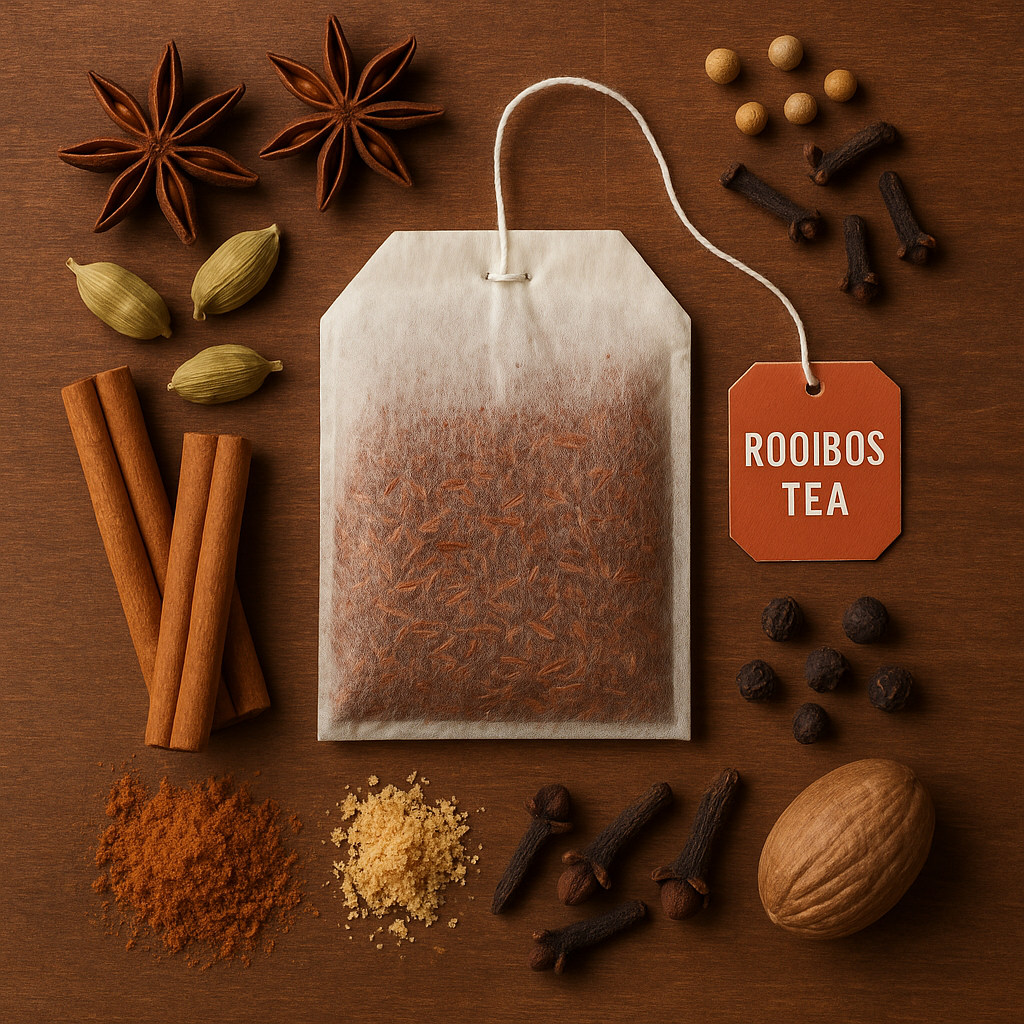
Discover Carmién Tea's innovative Cooking Teabags: rooibos blends in cotton pouches for culinary use. Elevate dishes from curries to desserts with red or green rooibos, offering unique flavors and health benefits. A versatile kitchen essential.
Carmién Tea's "Cooking Teabags" are a super cool new way to cook with rooibos tea! These little cotton bags are filled with special rooibos and other yummy plants. Just drop them into your food, like curries or desserts, and they'll quickly share their flavor and healthy stuff. It's an easy, no-mess trick to make your meals taste amazing and bring an old South African secret right into your kitchen.
What are Carmién Tea's "Cooking Teabags"?
Carmién Tea's "Cooking Teabags" are innovative cotton sachets containing micro-milled rooibos (oxidised red or unoxidised green) blended with cold-dried botanicals. Designed for culinary use, they release flavour into dishes like curries, stocks, and desserts within minutes, offering a convenient, mess-free way to infuse rooibos's unique tastes and antioxidants into cooking.
Get Cape Town news in your inbox
Stay updated with the latest stories from the Mother City.
From Cederberg Valleys to City Kitchens: The Journey Begins
Long before coffee shops and supermarkets, the KhoiSan roamed the Western Cape’s rugged terrain, gathering slender rooibos leaves. They bruised the needles, left them to sun-oxidise, and watched the pile turn mahogany while aromas of honey and cedar drifted across the valley. What they created was more than a drink: it tamed the wildness of venison, mellowed biltong’s salt, and, once dried, survived months inside leather pouches. That same wanderlust - rooibos’s knack for travel - has now been stitched into unbleached cotton sachets that look like pot-pourri rather than teabags. Welcome to Carmién Tea’s “Cooking Teabag” line, a venture born not in a glossy boardroom but at a family table where twin sisters Mientjie Mouton and Carmen Niehaus traded spoons and childhood taste memories before they could even see over the stove.
The idea is disarmingly straightforward. Each pocket cradles micro-milled rooibos - either the familiar rust-red oxidised form or the lighter, unoxidised green - blended with companion botanicals that are cold-dried to lock in volatile oils. The cotton mesh is calibrated wide enough to release flavour within five minutes, yet tight enough to stop gritty particles from clouding a clear consommé. A ten-second hot-water “wake-up” rinse wakes the polyphenols; afterwards the tag dangles in coconut milk destined for Cape Malay curry, in beef stock for potjiekos, or in molten 70 % chocolate for a ganache that whispers of fynbos and gentle bitterness. When the brew hits the desired strength, lift, tap once on the rim, toss - no sieves, no stained fingers, no peppercorns between your teeth.
Red or green is the cook’s opening move. Red carries more aspalathin, the antioxidant that gifts the cup its copper glow and a dried-apricot sweetness. Leave it to simmer with oxtail or mushroom ragù and those sugars join the Maillard chorus, deepening colour without refined sweeteners. Green rooibos, flash-arrested while still chlorophyll-rich, behaves like a polite verjuice: bright, grassy, perfect for quinoa salads, ceviche baths, or the court-bouillon that greets a line-caught kingklip. At home Niehaus keeps two stockpots: “red” bubbling with beef bones, orange peel and a lone cinnamon quill; “green” swirling with lemongrass scraps, lime leaf and ginger coins. Both are topped up daily, the culinary equivalent of sour-dough starter, then frozen into ice-cube flavour bombs.
Spice Routes and Sweet Tracks: Rooibos in Action
The Spicy Rooibos Masala Chai sachet is where the sisters’ mischief surfaces. Cardamom pods are cracked, not pulverised, so they pop mid-simmer like happy mustard seeds. Turmeric stays on a short leash - just enough to paint, not to bully. Black pepper sneaks in its piperine, boosting curcumin uptake for the nutrient-curious. Niehaus learned to bloom the dry sachet in a hot pan for forty seconds before any liquid joins; the brief toast coaxes buttery husk notes and the citrusy snap of dried ginger, a trick borrowed from Indian tarka. From there the chai pocket can dive into butternut soup, a yoghurt marinade for spatchcock chicken, or the custard base of malva pudding. A test-kitchen cult favourite is the “chai bounce”: two bags swim overnight in condensed milk, then spin into no-churn ice-cream that tastes like the Cape’s spice-route memory compressed into a single cold spoonful.
Bakers have embraced the bags to solve an old headache. Commercial rooibos essences rely on propylene glycol, leaving a metallic echo in meringues. Jason Bakery in Cape Town chucked two red rooibos sachets into the brown-butter bath for their Friday financier and gained six extra hours of shelf life; plant phenols slowed the butterfat’s oxidation. Up the coast, a Durban vegan doughnut shop steeps green rooibos and lime zest into oat milk, shaving back citrus oils that once split sugary glazes. Spent sachets are reclaimed, dried, flaked and cold-smoked into a dust that flavours aubergine “bacon”, completing a zero-waste loop that Instagram can’t stop filming.
Cost-conscious cooks are also in on the act. A Gugulethu caterer stirring a township “seven-colours” lunch now drops two red bags into her beetroot water; the leaf’s natural sugars let her halve the usual white-sugar spoonful, a quiet victory in households tracking every rand. In the brack-water Karoo, farm wives slip a green sachet into the kettle before brewing expensive coffee beans, softening the salty edge that once ruined delicate pour-overs. After service, compostable cotton and plant-based ink head straight to veggie beds where mild antimicrobial compounds appear to deter cut-worm on tomato seedlings - an observation Stellenbosch horticulturists are now quantifying in field trials.
Tech, Trade and Turmeric: What Makes the Bags Tick
Behind the homely façade lies serious engineering. Carmién’s Citrusdal plant already flushed teabags with nitrogen for microbe-wary EU shelves; adapting that line meant re-calibrating grinders to 0.8 mm so extraction lands inside the three-to-seven-minute stock window, yet coarse enough to avoid slimy pulp. A collaboration with the University of the Western Cape produced a humidity-proof cotton that survives 98 °C without fraying, sparing chefs the horror of busted bags in velouté. Shelf-life audits show aspalathin losses of barely four percent after a year below sixty-five percent relative humidity - conditions met by most kitchen drawers, no laboratory required.
International chefs moved fast. A Copenhagen restaurant swapped caraway aquavit for red rooibos in a forty-eight-hour gravlax; the coral hue and honeyed base now ship to the brand’s Brooklyn outpost. Korean oat-milk baristas steep the masala chai variant for a crimson “red cappuccino”, dodging import duties on Indian syrup concentrates. In Dubai’s alcohol-free dining scene, hotel mixologists trap a green rooibos sachet inside a spherical ice bomb that bleeds colour and aroma into sparkling date juice, a theatrical tribute to ancient spice roads. QR codes on every carton invite feedback; the open-source flavour map already hints at upcoming releases - buchu-honeybush for seafood and cold-smoked rooibos for braai marinades are top contenders.
Domestically, the range is rejuvenating small plots. Carmién already bought leaf from forty-eight independent growers in the Heiveld and Nietvlei co-operatives, yet cooking bags tolerate higher stem fractions that carry lignin-smoke nuances. Fields once deemed overgrown are suddenly lucrative: seventy-five-year-old Oom Klaas Pieterse replanted twelve hectares his kids had abandoned and earned an eighteen-percent premium because stems, once penalised, now command top tier. Satellite tags on every case let Saturday-market shoppers scan and see the exact GPS patch that fed their sauce, turning pesto fans into micro-patrons of biodiversity conservation.
Classrooms, Clinics and Community: Rooibos Beyond the Plate
Education is riding the wave. Grade-8 Natural Science worksheets turn the sachets into a hands-on lab: learners chart osmosis, pH drift and colour change every thirty seconds, plot extraction curves, then devour the resulting rooibos-poached pear. In the Winelands, 4-H “flavour labs” host teen cook-offs for the best rooibos bao; champions see their recipe blasted as bilingual voice notes to twenty-two thousand WhatsApp subscribers the following morning. Even retirement homes join in - Somerset West residents bond over monthly “tea-and-tagine” nights, swapping Border War anecdotes while lamb shoulder burbles with green rooibos, apricot and saffron, occupational therapy disguised as supper.
Quiet health stories surface daily. Khayelitsha home-care workers tuck a red sachet into the maize porridge of convalescing patients; mild anti-inflammatory polyphenols soothe oral thrush, a common ARV side-effect. An eighty-two-year-old former diplomat now ends evenings with rooibos and dried orange peel instead of brandy; he swears gout attacks have halved, though peer-reviewed proof awaits. What matters is that the boundary between drink and ingredient - already breached by sake, wine, coffee and yerba mate - has been redrawn on South African terms.
Carmién’s cotton pockets are no gimmick; they are a round-trip ticket, returning rooibos to the cooking fire where KhoiSan hands first crushed it. In doing so they remind every cook that flavour can be simultaneously portable, precise and deeply local - an everyday act of edible archaeology that starts smaller than a matchbox yet stretches all the way across the pot.
What are Carmién Tea's "Cooking Teabags"?
Carmién Tea's "Cooking Teabags" are innovative cotton sachets filled with micro-milled rooibos (either oxidised red or unoxidised green) and cold-dried botanicals. They are designed to infuse flavor and healthy properties into various dishes, from savory curries and stocks to sweet desserts, providing a convenient and mess-free cooking solution.
How do "Cooking Teabags" work?
Simply drop a teabag into your dish while it's cooking. The cotton mesh is designed to release flavor within five minutes, thanks to the micro-milled rooibos and botanicals. For optimal flavor release, a ten-second hot-water "wake-up" rinse is recommended before adding the sachet to your food. Once the desired flavor strength is achieved, simply remove and discard the sachet – no straining or mess.
What are the differences between red and green rooibos in cooking?
Red rooibos, which is oxidized, offers a copper color and a dried-apricot sweetness, rich in the antioxidant aspalathin. It's ideal for dishes like oxtail, mushroom ragù, or anything where you want to deepen color and add natural sweetness without refined sugars. Green rooibos, on the other hand, is unoxidized and chlorophyll-rich, providing a brighter, grassy, and slightly tart flavor, much like verjuice. It's perfect for quinoa salads, ceviche, or court-bouillon for fish.
Can Carmién Tea's "Cooking Teabags" be used in baking and desserts?
Absolutely! Bakers have found clever uses for these teabags. Red rooibos sachets can be added to brown-butter preparations to extend shelf life due to plant phenols slowing oxidation. Green rooibos and lime zest can be steeped in oat milk for vegan glazes, reducing the need for citrus oils. The Spicy Rooibos Masala Chai sachet is also a popular choice for infusing flavor into custards, malva puddings, or even no-churn ice cream.
What makes the "Cooking Teabags" so effective and durable?
Behind their simple appearance lies advanced engineering. The rooibos is micro-milled to 0.8 mm for optimal extraction within a three-to-seven-minute window, without creating pulp. The cotton material is humidity-proof and can withstand temperatures up to 98°C without fraying, preventing any mess in your dishes. Additionally, a nitrogen-flushing process during packaging helps maintain the freshness and antioxidant properties of the rooibos for at least a year.
Are there any unexpected or innovative uses for the "Cooking Teabags"?
Beyond traditional culinary applications, chefs internationally are experimenting with these teabags in exciting ways. A Copenhagen restaurant uses red rooibos in gravlax, while Korean oat-milk baristas create crimson "red cappuccinos" with the masala chai variant. In Dubai, mixologists use green rooibos sachets inside spherical ice bombs for theatrical drink infusions. Domestically, they're used to naturally sweeten dishes, soften brackish water for coffee, and even the spent sachets are composted and used in gardens to deter pests on seedlings, showcasing a commitment to zero-waste.

Chloe de Kock is a Cape Town-born journalist who chronicles the city’s evolving food culture, from township braai joints to Constantia vineyards, for the Mail & Guardian and Eat Out. When she’s not interviewing grandmothers about secret bobotie recipes or tracking the impact of drought on winemakers, you’ll find her surfing the mellow breaks at Muizenberg—wetsuit zipped, notebook tucked into her backpack in case the next story floats by.
View all articles →