
Celebrate Youth Day with exclusive tours at SA’s premier observatory
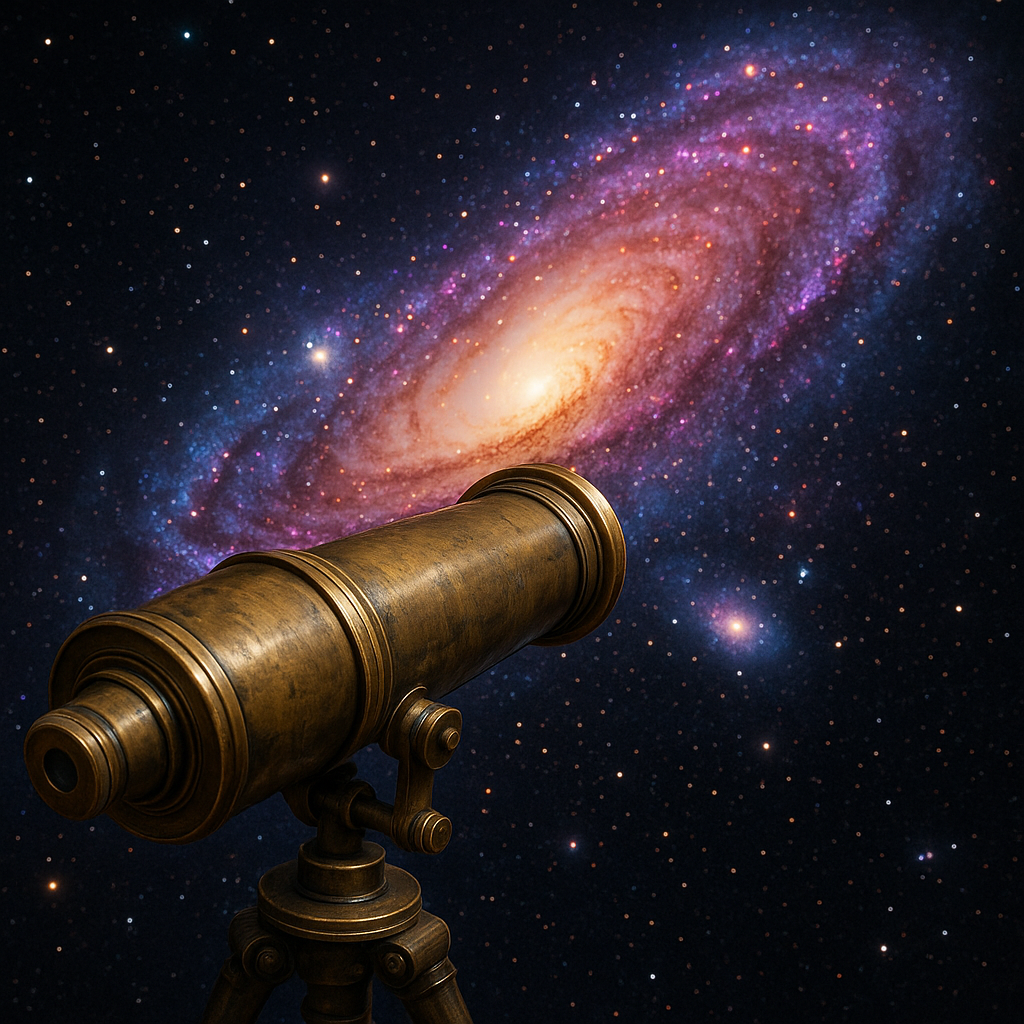
Explore SAAO's Stargate Cape Town! Dive into history, cutting-edge science, and cosmic wonders on June 16 Open Days. Book your ticket!
Step into a three-century time machine at Stargate Cape Town's Open Days! Explore history and future tech with an amazing 8K show and old instruments. You can even drop the Time Ball and see the sun up close. Get ready for a day of wonder and maybe even some stargazing!
What can visitors expect at the SAAO June 16 Open Days?
Visitors to the SAAO June 16 Open Days can expect a journey through history and cutting-edge astronomy. Highlights include an 8K fulldome show, interacting with historical instruments like the 1820 Fraunhofer transit, opportunities to drop the Time Ball, live solar observations, and access to unique astronomical artifacts, culminating in potential twilight stargazing.
Get Cape Town news in your inbox
Stay updated with the latest stories from the Mother City.
Where Victorian Stone Meets Silicon: A Crash-Course in Living History
Halfway up Devil’s Peak the plateau sleeps for 364 days, but on 16 June it wakes as a three-century time machine. Between 10 a.m. and 1 p.m. the South African Astronomical Observatory (SAAO) drops the barrier and lets 120 outsiders walk the same corridors where tomorrow’s exoplanet spectra are being decoded. What follows is a three-part handbook - arrival hacks, walking route intelligence and after-hours stargazing tricks - so you can squeeze every photon of value out of the two sessions.
Arrival Hacks: Security Cameras, Baboons and the Golden Thirty Minutes
Gates swing thirty minutes early; treat the half-hour as reconnaissance. Winter sunlight skims the 1897 façade at the perfect angle - stand on the opposite knoll for a postcard-wide frame. The car park is a steep, tiny rectangle; leave extra bumper room and close every window; troops of Chacma baboons patrol for visible snacks. Check-in is lightning-fast if your QR code is pre-loaded on your phone; staff wave you through in seconds. Arrive caffeinated - the on-site espresso bar run by Truth Coffee opens at gate-release so you can sip a “Red Dwarf” (flat white crowned with rooibos foam) before the briefing.
Inside the fresh-look Visitor Centre the 1990s dusty dioramas have vanished. A six-minute 8 K fulldome show - narrated in English, Afrikaans and isiXhosa - follows a gas cloud from the Large Magellanic Cloud to supernova remnant. Touch the MeerKAT mirror blank that failed optical inspection yet still became part of South Africa’s 64-dish triumph. The only fragment of the 1820 Fraunhofer transit instrument on the continent hides under an AR overlay; point your phone and Fearon Fallows’s pencilled constellation outlines hover above the glass.
The 1.3 km Loop: Closed Shoes, Whale Oil and a Chance to Fire the Time Ball
The gravel/tar mix totals 1.3 km; closed shoes protect ankles and keep red-disas pollen off your laces. Gradient gains only 12 m, but strollers can pre-reserve an electric shuttle when they book tickets, not on arrival. June’s berg wind can flip shade temperatures from 8 °C to 24 °C in minutes - staff live in jeans, hoodie and down vest for good reason.
Originally five successive British Astronomers Royal lived upstairs; today downstairs engineers steer the Lesedi 1 m robot in Sutherland via fibre link. At noon the roof Time Ball still drops, now triggered by a rubidium clock accurate to the micro-second; visitors may pull the brass lever and see city watches snap to exact SAST. In the control corridor telemetry screens show live dome temperature, wind speed, mirror seeing - ask politely and you will catch the instant the telescope slews.
The 1896 McClean dome shelters a 61 cm Grubb doublet that has never been re-figured - cleaned with petroleum ether every two decades. The seven-ton equatorial mount still glides on copper bearings dressed with the same batch of whale oil topped up in 1952; the sweet beeswax/old-book scent surprises every newcomer. Staff thread a Baader Herschel wedge plus 0.7 Å DayStar Quark for live solar work - if AR-3723 is active the group spots light bridges and penumbral grains in real time. Tripods are forbidden, but a sub-60 cm monopod is winked at; rangers suggest a low-angle shot with the dome slit framing Table Mountain - Africa’s most-liked astronomy selfie.
After-Dark Add-Ons: Dark-Sky Shortcut, Citizen-Science Portals and What Else to Do Before Moonrise
A 200-step spur behind the McClean dome reaches a stone circle where local imagers set up under Bortle 4 skies; if you linger till twilight Jupiter and Saturn ride high for phone-through-any-scope planetary imaging. Download the free SAAO app and magnetometer-calibrate five sky sightings inside a 10 km radius - your uploads refine the southern hemisphere’s only open-source star map. The all-sky camera behind the dome hunts meteorites; dash-cam footage you capture on the drive home can be triangulated for impact prediction.
Rhodes Memorial is a five-minute downhill hop; climb the staircase for sunset alignment with the Hottentots Holland peaks. Mostert’s Mill - a working 1796 windmill - grinds flour on Saturdays; pair the visit with a warm loaf from the Saturday Neighbourgoods market. Groote Schuur Estate opens 10–1 on Saturdays and tours leave on the hour. Calendar check: June 16 sunset occurs at 17:46 SAST, first-quarter Moon culminates at 21:02; Lagoon Nebula sets at 20:30. If you are obsessive, hit the N1 for Sutherland (four hours) and you can log M8 under one of the planet’s darkest skies the very same night.
[{"question": "What can visitors expect at the SAAO June 16 Open Days?", "answer": "Visitors can expect a 'three-century time machine' experience, blending historical instruments with future technology. Highlights include an 8K fulldome show, interacting with historical instruments like the 1820 Fraunhofer transit, opportunities to drop the Time Ball, live solar observations, and access to unique astronomical artifacts, culminating in potential twilight stargazing. It's an opportunity to explore the corridors where exoplanet spectra are being decoded and witness the blend of Victorian engineering and silicon technology."}, {"question": "What are the 'Arrival Hacks' for a smooth visit?", "answer": "To ensure a smooth arrival, it's recommended to arrive 30 minutes early. The gates swing open then, allowing time for reconnaissance and capturing postcard-wide photos of the 1897 façade in the winter sunlight. The car park is small, so allow extra room and close all windows due to baboon activity. Have your QR code pre-loaded for fast check-in. An on-site espresso bar run by Truth Coffee opens at gate-release for pre-briefing refreshments, offering unique drinks like a \"Red Dwarf.\""}, {"question": "What kind of exhibits and shows are available in the Visitor Centre?", "answer": "The fresh-look Visitor Centre features a six-minute 8K fulldome show, narrated in English, Afrikaans, and isiXhosa, which follows a gas cloud from the Large Magellanic Cloud to a supernova remnant. Visitors can also touch a MeerKAT mirror blank that, despite failing optical inspection, became part of South Africa's 64-dish triumph. A fragment of the 1820 Fraunhofer transit instrument is displayed with an AR overlay, revealing Fearon Fallows's penciled constellation outlines when viewed through a phone."}, {"question": "What is the '1.3 km Loop' and what should visitors know about it?", "answer": "The '1.3 km Loop' is a gravel/tar path with a gentle 12m gradient. Visitors are advised to wear closed shoes for comfort and to protect against red-disa pollen. Electric shuttles can be pre-reserved for strollers. The weather can be unpredictable, with berg winds causing temperature swings from 8 °C to 24 °C in minutes, so dressing in layers is recommended. Along the loop, you can witness the roof Time Ball being dropped at noon, triggered by a rubidium clock, and potentially pull the brass lever yourself. You might also catch a glimpse of the Lesedi 1m robot being steered remotely and observe live solar work through specialized equipment in the 1896 McClean dome."}, {"question": "Can visitors engage in stargazing or astronomical observations during the Open Days?", "answer": "Yes, visitors can engage in live solar observations during the day using a Baader Herschel wedge and a 0.7 Å DayStar Quark, potentially spotting light bridges and penumbral grains if AR-3723 is active. For after-dark activities, if you linger until twilight, Jupiter and Saturn ride high, offering opportunities for planetary imaging with a phone-through-scope setup in a stone circle behind the McClean dome, under Bortle 4 skies. Tripods are forbidden, but monopods under 60 cm are permitted for photography."}, {"question": "What other activities or sights are nearby for visitors to explore?", "answer": "Nearby attractions include Rhodes Memorial, a five-minute downhill hop, offering stunning sunset views aligned with the Hottentots Holland peaks. Mostert's Mill, a working 1796 windmill, grinds flour on Saturdays, which can be paired with a visit to the Saturday Neighbourgoods market. Groote Schuur Estate also opens 10-1 on Saturdays with hourly tours. For the truly dedicated, the SAAO app allows for citizen science by calibrating five sky sightings within a 10 km radius to refine the southern hemisphere's open-source star map. And for the ultimate stargazing experience, Sutherland, home to some of the planet's darkest skies, is a four-hour drive away for those wanting to log M8 the same night."}]

Chloe de Kock is a Cape Town-born journalist who chronicles the city’s evolving food culture, from township braai joints to Constantia vineyards, for the Mail & Guardian and Eat Out. When she’s not interviewing grandmothers about secret bobotie recipes or tracking the impact of drought on winemakers, you’ll find her surfing the mellow breaks at Muizenberg—wetsuit zipped, notebook tucked into her backpack in case the next story floats by.
View all articles →