
Charlize Theron calls out Timothée Chalamet for his comments on ballet and opera
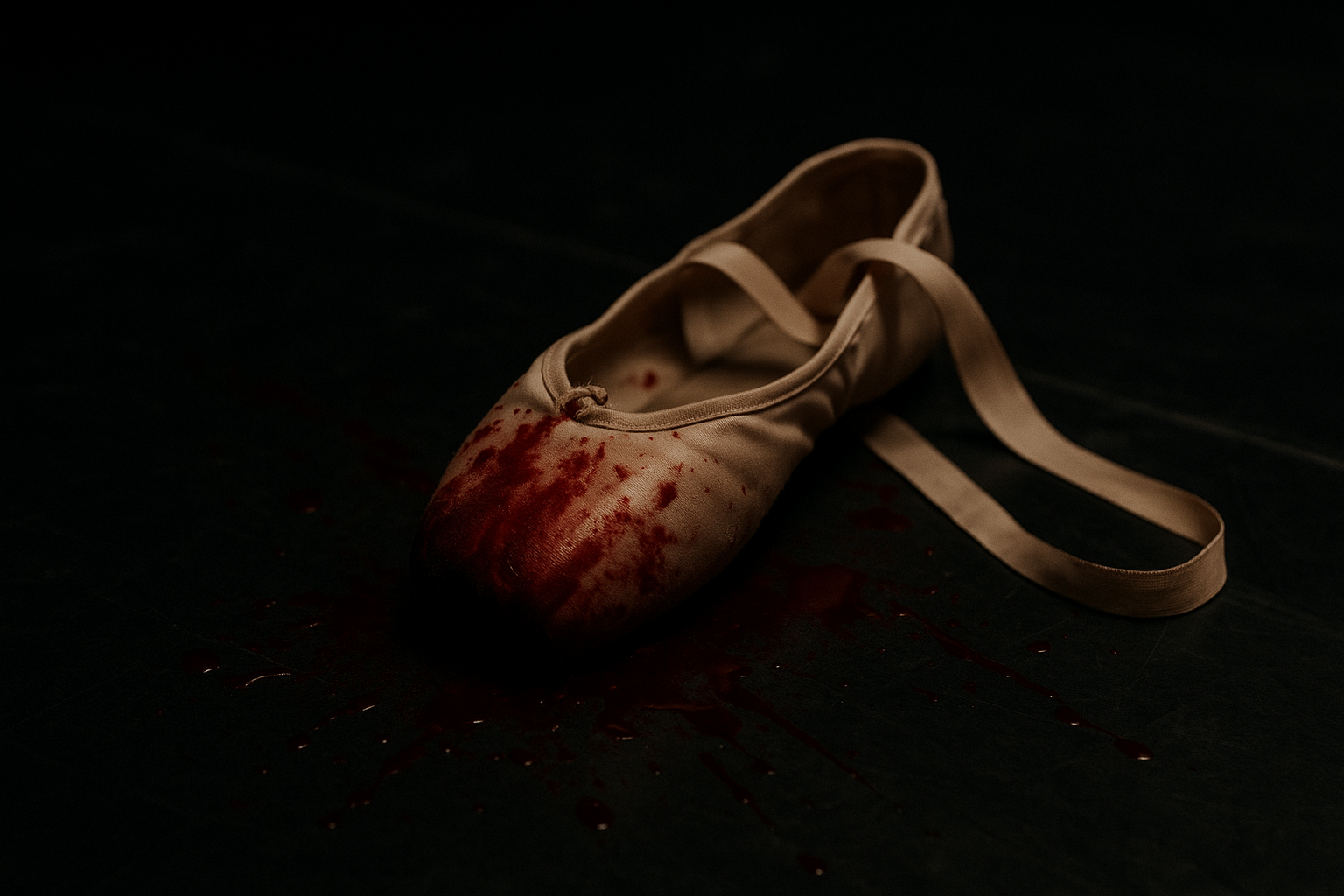
Charlize Theron and Timothée Chalamet's culture clash over ballet sparks a debate about art, AI, and the value of live performance.
Charlize Theron believes no AI can truly copy a live performer. She says AI can't make fake sweat, show real tiredness, or take the same risks a dancer faces every night. Theron feels the stage is special because real-life dangers can't be taken out, unlike in movies. She thinks AI might copy actors like Timothée Chalamet, but it will never have the true human touch.
What is the main argument Charlize Theron makes against AI in performance?
Charlize Theron argues that while AI might imitate actors like Timothée Chalamet in the future, no software can replicate the authentic human elements of sweat, fatigue, and the inherent risk a dancer or live performer courts every night. She emphasizes that the stage remains a space where risk cannot be edited out, unlike film.
Get Cape Town news in your inbox
Stay updated with the latest stories from the Mother City.
The Line That Lit the Fuse
Thursday in Los Angeles was warm enough to blur the edges of the city. Inside the old CNN studio - now a bare-bones town-hall set - Timothée Chalamet settled into a folding chair, boots laced, collar open. Matthew McConaughey lobbed soft questions while an audience of drama students leaned in. A Juilliard junior asked whether Chalamet might ever headline a ballet- or opera-centered project. The actor’s reply arrived without hesitation: “Honestly? Those genres feel done. I’m not in the business of propping up the past.”
Within thirty minutes the clip traveled from Instagram to TikTok, stitched against dying swans and cracked high Cs. By dawn the tag #NoOneCares had clocked forty-two million views. Dancers flooded the feed: - bloody toes and all - turning a throwaway aside into a referendum on whose labor counts. Hollywood gossip sites shrugged at first; then the algorithm kicked in, and the conversation grew teeth.
The timing felt choreographed: the same week, venture-capital blogs were hyping “artistic automation,” promising digital replicas that never sprain an ankle and never miss a cue. Chalamet’s words, accidental or not, sounded like gospel from the future: flesh-and-blood performance relegated to curiosity status.
From Johannesburg Jets to Maltese Armor
Half a world away, on a Malta sound-stage, Charlize Theron was wading through knee-deep surf in thirty kilos of bronze. Christopher Nolan’s Odyssey demands that Calypso seduce through motion, not monologue, so Theron’s morning had been spent trading sword work for pliés. Between setups she scrolled her phone, earbuds in, needle in hand as she stitched the ribbons on a brand-new pair of Freeds.
The clip arrived mid-stitch. Theron’s first career was ballet: scholarship kid at Johannesburg School of the Arts, summer intensive at Joffrey, sidelined at eighteen when a knee fracture rerouted her toward modeling and, later, film. She still slips into open classes at BalletMet Columbus or Cape Town City Ballet, paying cash so no one posts the sighting. When the audio of Chalamet’s comment rolled, she actually jabbed the needle into her own finger. The blood on the slipper, she told the New York Times later, was “alarmingly authentic.”
She requested ten extra minutes with the reporter, leaned in, and delivered a single sentence - no notes, no handlers: “Ten years from now a bot can imitate Timothée, but no software can replicate sweat, fatigue, and the risk a dancer courts every night.” Within an hour the quote floated over Roberto Bolle’s forty-two fouettés, over Marianela Núñez holding an arabesque until the orchestra’s tuning note faded to silence, over AI-generated “Chalamet” reading Dune dialogue in clipped 1940s radio diction.
Ledger Lines and Balance Sheets
A full Ring cycle at Bayreuth devours €5.4 million in production costs, €1.2 million in singers’ fees, and €600,000 in costumes. Tickets top out at €350 yet still leave a gaping hole, filled by German taxpayers who treat Wagner like infrastructure - equal to concrete, asphalt, and cathedrals. Across the Atlantic the numbers shrivel: the Met’s endowment slid from $308 million pre-pandemic to $182 million last year, and American Ballet Theatre sliced touring budgets in half.
Every economic-impact study rings the same bell: for every dollar dropped on live orchestra music, three sprout in nearby restaurants, parking garages, and hotels. Theron, who grew up under South African sanctions, knows the math better than most. “My mom laid asphalt so I could afford pointe shoes,” she reminded a 2008 interviewer. “Culture spends and culture gives back - if we decide it’s worth the down payment.”
Meanwhile, venture money has decided the payout lies elsewhere. A Korean start-up spent the same week dropping a deepfake of Chalamet nailing thirty-two flawless fouettés while reciting Hamlet. The caption sneered: “Who needs live?”
Ghost Code, Breathing Bodies
Disney already let generative AI handle the title sequence of Secret Invasion. Netflix is piloting synthetic dubbing that clones actors’ voices without residual checks. Meta’s Make-A-Video can conjure a 128-frame clip of “Timmy jousting on Olympus” from one sentence. The brand-new SAG-AFTRA contract demands explicit consent for digital replicas, but background scans labeled “incidental” still slip through.
Choreographers have discovered entire rehearsal streams scraped from YouTube and funneled into products sold as “Instant Balanchine.” The Joyce Theatre canceled a commission when it learned fourteen hours of copyrighted rehearsal footage had become training data. The specter haunting the opera house is not nostalgia; it’s venture capital praying that flesh will soon be optional.
Yet the body is stubborn. Natalia Osipova’s diagonal of grand jetés in Don Quixote loses four centimeters of elevation by the last leap - audiences lean in at the microscopic wobble that whispers mortality. Jonas Kaufmann’s top B-flat in Celeste Aida carries the hush of every cigarette he did or didn’t smoke that day. Film acting, by contrast, is already half algorithm: editors harvest one take’s glinting tear duct, graft it onto another take’s smile. Theron herself has been laser-scanned for stunt doubles in Fast X. Her warning is pragmatic, not sentimental: the stage may be the last place where risk cannot be edited out.
Hashtags, Barricades, and Popcorn
Forty-eight hours after the viral clip, institutions stormed in. AGMA dared Chalamet to take a free company class “in pointe shoes or forty pounds of armor - dealer’s choice.” Vienna State Opera offered him a silent box for Parsifal - “Duration: four hours fifty-five, no bathroom breaks.” Mock playbills circulated for a ballet titled No One Cares in which the curtain stubbornly refused to rise.
More concretely, dancers crowdfunded $180,000 in three days to broadcast a globe-spanning Giselle marathon, proceeds earmarked for retired performers’ health care. The stream will live on Twitch - the same platform where gamers once laughed at ballet’s “ease.”
Christopher Nolan, who bankrolls 35 mm restorations of Kenneth MacMillan works and sits on the Los Angeles Philharmonic board, reportedly cheered Theron on. Odyssey will field six hundred stunt performers, two hundred musicians, and precisely zero de-aging filters. Theron’s Calypso will dance a five-minute solo, choreographed by Sidi Larbi Cherkaoui, captured at dusk in a single take on Gozo’s cliffs. Her call sheet still reads, in bold: Dance, not double.
A Cycle as Old as Spotlights
This flare-up is recycled drama. In 1951 Marlon Brando dismissed ballet as “cheerleading in tights.” Maria Tallchief dragged him to class - he lasted twelve sweat-soaked minutes. Clint Eastwood mocked “all that hopping” in 1978; Rudolf Nureyev planted a kiss on his cheek at Cannes two years later, shutting him up mid-sentence. Gwyneth Paltrow labeled opera “slow-motion screaming” in 1999, then spent 2011 learning Fledermaus for a role that hit the cutting-room floor.
The script never changes: joke, outrage, apology class, collective amnesia. The 2024 twist is the AI accelerant - deepfakes that can turn any star into a flawless danseur overnight.
Numbers underscore the gulf: corps dancers at ABT earn $1,250 a week for a 42-week season; Chalamet’s reported haul for Dune: Messiah is $7.5 million plus five percent of first-dollar gross. A Royal Opera House principal clears £110,000 a year; the Met’s general manager pockets $1.7 million. Theron, worth north of $170 million, is an improbable class champion, yet she pledged a 1:1 match up to half a million for the Giselle marathon - if Chalamet shows for the finale. “I’ll even spring for popcorn,” she added, posting a photo of her Cape Town slippers still dusted with 1992 rosin.
The Physics the Chip Can’t Crack
MIT researchers recently fed a neural net 3,000 hours of ballet footage. The AI can now generate a thirty-second adagio - provided the dancer never turns away, never partners, never lands on raked flooring. Add partnering and the failure rate leaps to 68 percent; counter-balance still misfires under every GPU.
Sony’s attempt to synthesize Renée Fleming succeeded on sustained notes but mangled consonants, producing what critics dubbed “a mermaid gargling helium.” Audiences reject 94 percent of synthetic arias in blind tests. The uncanny valley for voice is narrower than for face; the algorithm has not solved breath, fatigue, or risk.
Chalamet has not yet accepted the ballet dare, though paps caught him leaving a physio clinic clutching brand-new Capezio yoga socks. His team hints at a conciliatory donation to the National Endowment for the Arts or a cameo in Damien Chazelle’s next musical. Paris Opera Ballet upped the ante with a one-night-only Nutcracker Prince slot - no dialogue, just dancing, live on television. The box office imploded within minutes, proving, at minimum, that someone still cares.
Silent Bows in Cape Town
Two nights after the uproar, Theron crept into the back row of Artscape Opera House for Cape Town City Ballet’s triple bill. The troupe survives on frayed shoestrings - dancers stitch their own pointe shoes; flats are repainted relics from 1980s musicals - yet every seat was taken. During curtain call the director thanked “Mevrou Theron” in Afrikaans; the crowd rose in sustained applause. She ducked out before the houselights fired, pausing only to slide an envelope into the donation box. Inside: a check covering the company’s entire 2025 tour to rural provinces where most children have never heard a live orchestra, let alone seen tulle in motion. No cameras, no press release. Just culture, quietly defended against extinction.
What is Charlize Theron's core argument against AI in live performance?
Charlize Theron believes that AI cannot truly replicate the essence of a live performer. She emphasizes that AI cannot produce authentic human elements like sweat, fatigue, or the inherent risks that dancers and other live performers face nightly. She argues that unlike film, the stage is a unique space where real-life dangers and unpredictability cannot be edited out.
What sparked this debate involving Theron and Chalamet?
The controversy began when Timothée Chalamet, during a town-hall style interview, stated that ballet and opera genres "feel done" and that he's "not in the business of propping up the past." This comment quickly went viral, especially among dancers and live performers, leading to widespread outrage and the hashtag #NoOneCares trending with millions of views. Charlize Theron, a former ballet dancer herself, responded sharply to Chalamet's remarks, defending the value of live performance.
How did Charlize Theron react to Timothée Chalamet's comments?
Charlize Theron, who had a background in ballet before her acting career, was deeply affected by Chalamet's comments. She was on a soundstage in Malta filming when she saw the clip. Her immediate, visceral reaction involved accidentally jabbing herself with a needle while stitching pointe shoe ribbons. She later provided a direct quote to a reporter, stating that a bot might imitate Timothée in the future, but it would never replicate the human elements and risks inherent in live dance.
What is the financial state of live performing arts being discussed?
The article highlights the significant financial challenges faced by live performing arts institutions. For example, a full Ring cycle at Bayreuth costs millions in production. While some countries, like Germany, treat arts funding as infrastructure, American institutions struggle, with the Met's endowment significantly decreasing. This contrasts with the rapid investment in "artistic automation" by venture capitalists, who see potential in digital replicas that eliminate human costs and risks.
How does AI currently impact and threaten the performing arts?
AI is already making inroads into the performing arts, posing a threat to human artists. Examples include Disney using generative AI for title sequences, Netflix piloting synthetic dubbing that clones actors' voices without residuals, and Meta's ability to conjure short video clips. Choreographers have found their rehearsal footage scraped for AI training, and copyrighted material is being used to create automated artistic products, leading to canceled commissions and concerns about intellectual property and job security.
What initiatives have emerged in response to the controversy?
In the wake of Chalamet's comments and Theron's defense, various initiatives have arisen. Performing arts organizations like AGMA and the Vienna State Opera publicly challenged Chalamet. Dancers crowdfunded $180,000 for a global Giselle marathon to benefit retired performers. Christopher Nolan, known for his support of traditional filmmaking, reportedly backed Theron. Charlize Theron herself pledged a 1:1 match up to half a million dollars for the Giselle marathon if Chalamet attended, further emphasizing the value and community of live performance.

Chloe de Kock is a Cape Town-born journalist who chronicles the city’s evolving food culture, from township braai joints to Constantia vineyards, for the Mail & Guardian and Eat Out. When she’s not interviewing grandmothers about secret bobotie recipes or tracking the impact of drought on winemakers, you’ll find her surfing the mellow breaks at Muizenberg—wetsuit zipped, notebook tucked into her backpack in case the next story floats by.
View all articles →