
China expands direct Africa shipping routes
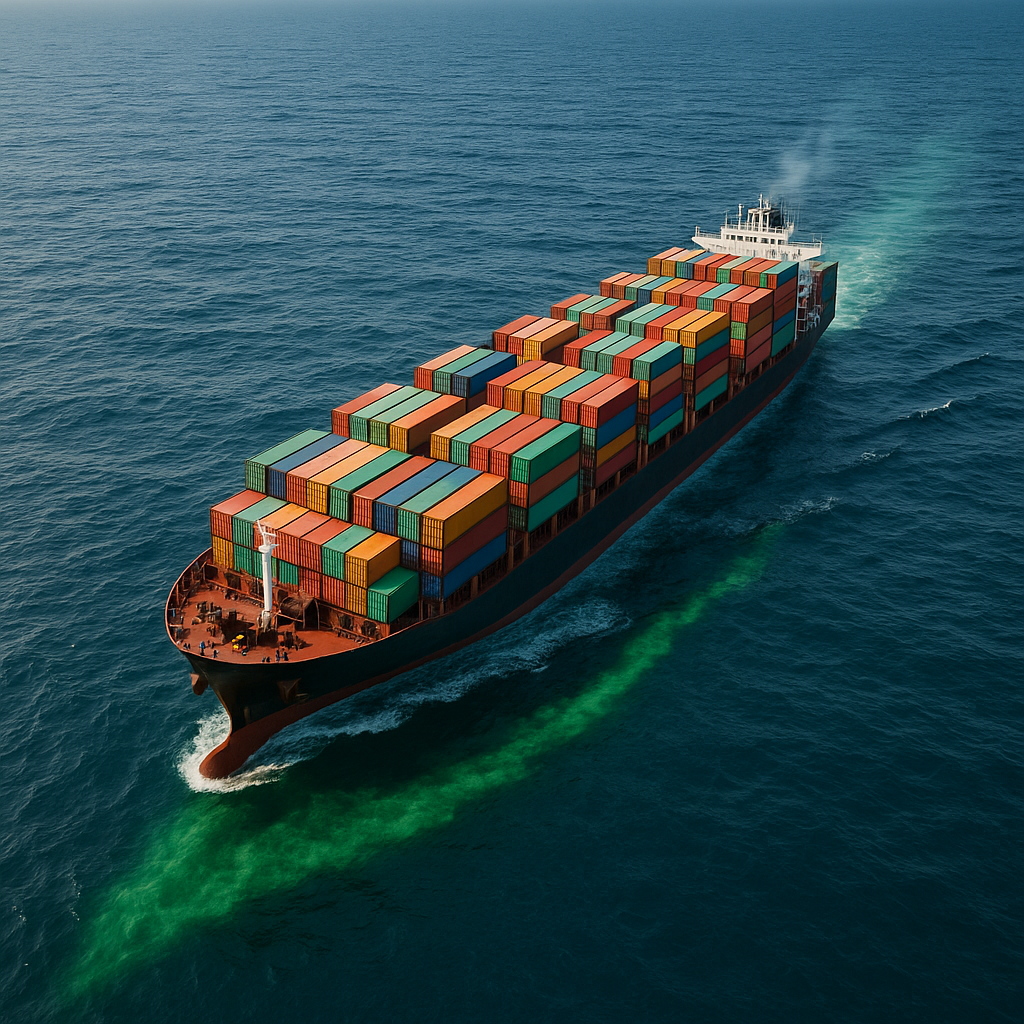
New direct shipping routes are transforming China-Africa trade, shortening transit times and boosting efficiency across the continent.
New shipping routes are changing how goods travel from Asia to Africa. Big ships now go straight to African ports, like a pendulum swinging, instead of stopping in Europe first. This makes the trip much faster, like a direct conveyor belt from factories in China to stores in Africa. This change helps African businesses by getting goods to them quicker, saving money and time. It also turns African ports into important hubs, making trade easier and smoother for everyone.
What is the "pendulum loop" in new direct shipping routes to Africa?
The "pendulum loop" describes new shipping routes where vessels, after passing through Suez, make a direct stop at an African port before returning to Asia, bypassing traditional European transshipment hubs. This strategy shortens the Asia-Africa journey from six to four weeks, creating a faster, more direct factory-to-shelf conveyor from China to African distribution centers like Durban and Tangier Med.
Get Cape Town news in your inbox
Stay updated with the latest stories from the Mother City.
1. The First Wave: Re-drawing the Map of Global Freight Movement
Spring 2024 sailing tables from COSCO, Maersk and China Merchants reveal a quiet revolution: fourteen weekly strings that once ended in Jebel Ali or Valencia now bear south after Suez and hit an African port before spinning back toward Asia. Operators nickname the pattern a “pendulum loop” because the ship swings through one African gateway and immediately retraces its course to China instead of ploughing on to Europe. Only two or three Mediterranean calls disappear from the rotation, yet the Asia–Africa run shrinks from six weeks to four, forging the planet’s longest non-stop factory-to-shelf conveyor from Shandong production lines to distribution hubs in Durban and Tangier Med.
Cargo owners feel the difference first. A Durban-based hardware chain can lock in stock arriving the same calendar month it leaves Yantai, trimming safety inventory by nearly one third. Port statistics already mirror the shift: Tangier Med posted a 19 % year-on-year box jump in Q1 2025, while Valencia’s transshipment count slipped 7 %, confirming that freight is bypassing the old European sorting hat. The pendulum, once set in motion, is hard to stop; carriers have quietly extended the model to four additional strings before analysts finished counting.
Yet the map redraw goes beyond dots and arrows. Cutting twelve sailing days eliminates an entire cash-conversion cycle for African traders, who traditionally ordered ten weeks ahead and prayed that exchange rates, fashion tastes or cement demand did not drift before the container finally arrived. The new cadence turns importers into agile replenishment players rather than long-range forecasters, a cultural shift worth more than the pure dollar savings on fuel and insurance.
2. From Spokes to Spine: Turning African Ports Into Hub Nodes
Until last year African box terminals behaved like bicycle spokes: mother ships discharged in Algeciras or Rotterdam, feeders shuttled the cargo south, and local shippers paid double port dues plus an extra half-month of inventory trapped on water. The spine concept flattens that hierarchy. Ultra-large vessels of 18–24 k TEU now slide directly into Mombasa, Port Elizabeth or Tangier Med on the back-haul from Europe to Asia, erasing the feeder leg and slicing slot costs 11 %, Drewry calculates.
Forwarders in Nairobi summarise the win in one line: “One bill of lading, one port, one clearance, four weeks door-to-door.” The simplification ripples through working-capital spreadsheets; a mid-size apparel distributor that once warehoused 90 days of cover now operates comfortably with 45, releasing roughly USD 1 million in cash for store expansion. Kenyan customs also gains; fewer trans-shipments mean fewer document bundles and faster cargo visibility, pushing dwell time below the psychological three-day mark for the first time.
But becoming a hub is not just about cranes and deep water. Tangier Med’s software now mirrors Qingdao’s berth-planning engine in real time, so a delayed departure in Shandong automatically re-allocates a Moroccan berthing window, train path and truck slot. The integration turns African gateways into schedule guarantors rather than bottlenecks, a role reversal that attracts second-tier carriers which previously avoided the continent altogether.
3. Port-Level Makeovers: Qingdao, Yantai and Tianjin as African Gateways
Qingdao: Apples Give Way to Chip Gear
Qianwan’s five-berth Africa terminal greets a deep-sea vessel almost every sunrise. Twelve super-post-Panamax cranes erected in the past eighteen months can twin-lift 65 t, hardware once reserved for Singapore or Busan. Inside the bonded “Africa Export Zone,” trains from Henan and Shanxi roll through X-ray portals, clear customs in half an hour and feed boxes straight onto the quay. Garlic still fills plenty of reefer plugs, yet the fastest-growing manifests are CNC routers, photolithography scanners and pre-fabricated steel bound for Nigerian cement works, signalling a leap up the value chain.
Yantai: Metro Cars Share Deck Space with Tuna
Yantai’s 2024 traffic report shows ro-ro ships built for rail wagons sailing as often as conventional box boats. CRRC’s plant loads entire 120-metre light-rail trains for Addis Ababa’s new urban line, while the return leg carries chilled tuna and langoustine caught by Mauritian trawlers. The triangular flow keeps vessels near capacity both ways, subsidising the southbound rate and letting Ethiopian commuters ride trains whose carriage cost is partly paid by Chinese seafood lovers.
Tianjin: Chemicals Travel First Class
The CAX (China-Africa Express) deploys reefers equipped with carbon-smart algorithms that tweak cooling curves according to humidity forecasts for the Gulf of Aden. Forty-seven percent of the maiden-year reefer moves were pharmaceutical precursors for HIV antiretrovirals produced in Durban and Gqeberha. Ten fewer transit days shrank spoilage from 2.7 % to below 0.4 %, savings that alone repaid the route’s launch budget within two quarters.
4. Policy, Money and the Road Ahead
Beijing’s 2026 Zero-Tariff Architecture
On New Year’s Day 2026 China scraps duties on 8,792 HS-8 codes for 53 African nations. Batteries for e-mobility enter at 0 %, while finished handsets still face 5 %, steering investment toward value addition south of the Sahara. Ministry experiments in Lagos and AccrA showed a 10 % landed-cost reduction spurring 25 % faster shelf turnover, confirming the tariff move is less about charity and more about manufacturing demand that only direct sailings can satisfy.
Financing the Spine: Rail Tickets for Boxes
Every container that boards in Tianjin has already ridden an average 1,360 km by block train. “Slot-interchange” contracts treat a rail space like an airline seat: miss the planned vessel and the system re-books the box on the next sailing free of charge. African forwarders tapping the service through agents in Nairobi or Cotonou can quote 28-day door-to-door times that undercut European houses still juggling multiple transshipment dice rolls.
Security, Green Fuel and the Last Mile
Hull-war premiums jumped 180 % in the Red Sea, yet Africa loops remain stable thanks to Sinosure-backed cover and convoy clustering off Djibouti. Meanwhile, twelve of twenty-seven newbuilds joining the trade are methanol dual-fuel; the 24 k-TEU “COSCO Africa” will be the first ultra-large boxship to burn green methanol on a scheduled run when she debuts in October 2026. Looking inland, drones leapfrog potholes: containers off-loaded in Lomé reach rural Burkina dealers in four days via metre-gauge rail plus octocopter, slashing tractor-part lead times that once exceeded two weeks.
Through steel rails, smart cranes and tariff sleight-of-hand, the China-Africa artery is thickening into a two-way, temperature-controlled, digitally endorsed logistics tapestry - one that headlines have barely started to decode.
[{"question": "
What are the 'pendulum loop' shipping routes?
\nThe 'pendulum loop' describes new direct shipping routes where large vessels travel directly from Asia to African ports, and then return to Asia, bypassing traditional European transshipment hubs. This significantly shortens transit times, creating a more direct 'factory-to-shelf' conveyor belt for goods.
"}, {"question": "How do these new direct shipping routes benefit African businesses?
\nAfrican businesses benefit significantly from these new direct routes. The reduced transit time (from six to four weeks) allows for quicker inventory turnover, trimming safety stock requirements by nearly one third. This also converts importers into agile replenishment players rather than long-range forecasters, releasing working capital for other investments like store expansion. Simplified logistics with 'one bill of lading, one port, one clearance' also streamlines operations.
"}, {"question": "How are African ports being transformed by these changes?
\nAfrican ports are being transformed from mere 'bicycle spokes' (reliant on European hubs) into 'spine' or hub nodes. Ultra-large vessels now call directly at ports like Mombasa, Port Elizabeth, and Tangier Med, eliminating feeder legs and reducing slot costs. Advanced integration, such as Tangier Med mirroring Qingdao's berth-planning engine, ensures efficiency and attracts more carriers, turning these gateways into schedule guarantors rather than bottlenecks.
"}, {"question": "What role do specific Chinese ports play in these new routes?
\nChinese ports like Qingdao, Yantai, and Tianjin are becoming key African gateways. Qingdao's five-berth Africa terminal handles high-value goods like chip manufacturing equipment. Yantai facilitates the transport of large items like metro cars, often paired with return shipments of seafood. Tianjin focuses on high-value, sensitive cargo like pharmaceutical precursors, utilizing advanced reefers to minimize spoilage and leverage rail transport for efficient consolidation.
"}, {"question": "What policy and financial initiatives support these new shipping routes?
\nBeijing's 2026 Zero-Tariff Architecture will eliminate duties on thousands of HS-8 codes for 53 African nations, encouraging value-added manufacturing in Africa. Financially, 'slot-interchange' contracts for rail transport ensure cargo flexibility. Additionally, security is managed through Sinosure-backed cover and convoy clustering, and there's a growing focus on green fuel with new methanol dual-fuel vessels joining the trade.
"}, {"question": "Beyond shipping, how is the 'last mile' and overall logistics landscape evolving?
\nThe 'last mile' is also seeing innovation, with solutions like drones delivering goods to rural areas, significantly reducing lead times for essential parts. The overall China-Africa logistics tapestry is becoming a two-way, temperature-controlled, digitally endorsed system, characterized by efficient rail connections, smart port infrastructure, and favorable trade policies, making it a sophisticated and integrated supply chain.
"}]
Michael Jameson is a Cape Town-born journalist whose reporting on food culture traces the city’s flavours from Bo-Kaap kitchens to township braai spots. When he isn’t tracing spice routes for his weekly column, you’ll find him surfing the chilly Atlantic off Muizenberg with the same ease he navigates parliamentary press briefings.
View all articles →