
Coca-Cola bets big on South Africa
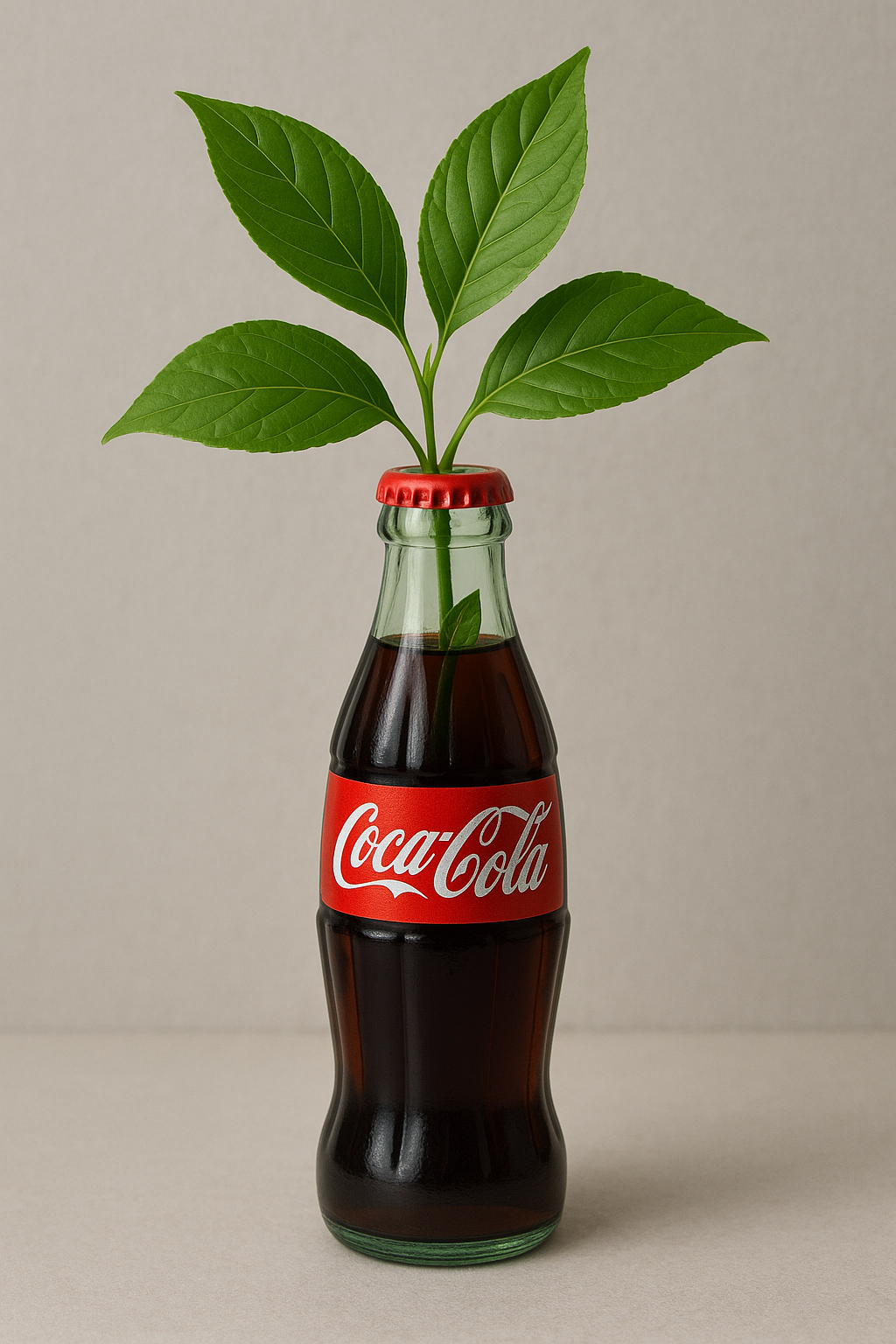
Coca-Cola pledges R17.6bn investment in South Africa for plant modernization, green packaging, logistics, and digital route-to-market.
Coca-Cola is investing R17.6 billion in South Africa for its future. This huge investment will make factories better, create eco-friendly packaging, and improve how products get to stores. It also aims to create 15,000 new jobs and help the environment. Every rand spent will be watched closely to make sure it helps South Africa's economy and people.
What is Coca-Cola's R17.6 billion investment in South Africa?
Coca-Cola is investing R17.6 billion in South Africa from 2026-2030 across four key areas: factory upgrades, sustainable packaging, improved logistics, and digital sales. This aims to boost local manufacturing, create 15,000 new jobs, enhance environmental sustainability, and drive economic growth within the country.
Get Cape Town news in your inbox
Stay updated with the latest stories from the Mother City.
1. The Pledge, The Rules, The Ripple Effect
Coca-Cola’s latest promise to South Africa is not a ceremonial cheque-handover. Between 2026 and 2030 the company will drip-feed R17.6 billion into four tightly-monitored work-streams: smarter factories, planet-friendlier packaging, slicker logistics and digital-first sales. Every quarter the Treasury and the Department of Trade, Industry and Competition will publish open-data dashboards hosted by the Special Economic Zones Unit, showing exactly how much was spent, how much was local and how many jobs appeared. At least 75 cents of every capital rand must stay inside the country; vendors have been warned and auditors have been hired.
The programme arrives while local manufacturing is gasping for fresh capital and credible road maps. By ring-fencing timelines, KPIs and local-content ratios, Coca-Cola effectively turns its own balance sheet into a public benchmark: if a global giant can localise, audit and deliver on schedule, domestic suppliers can price risk more confidently and banks can write longer-tenor loans. The ripple starts inside the plants, then moves to trucking routes, township spaza coolers and, ultimately, orchard irrigation schedules in Limpopo.
2. Factories Get a Gen-Z Make-Over
Just under half of the money – R7.4 billion – targets physical upgrades. The star performer is the 42-year-old Nigel concentrate facility in Ekurhuleni. Engineers will graft two new mezzanine mixing levels inside the existing building, doubling output without extending the fence line. Aseptic valves, dry-decontamination tunnels and AI-controlled fillers will trim water use by 30 % and electricity by 22 %. Once the retrofit is complete, the plant will ship double the syrup to the same 36 African markets it already supplies.
Further south, the Port Elizabeth pre-form factory will receive R1.9 billion worth of injection-moulding presses engineered to swallow 100 % recycled PET flakes. The line satisfies the 2021 Extended Producer Responsibility regulations that order 50 % recycled content by 2030, but it does so five years early, giving Coca-Cola room to sell excess compliance credits to slower rivals. Meanwhile, Phoenix in KwaZulu-Natal gets R1.1 billion for a new aseptic juice line that can pump out iced teas, flavoured waters and energy shots at carbonation-free speeds, signalling a strategic pivot beyond fizzy colas.
3. Packaging Without a Hangover for the Planet
R4.8 billion is earmarked to keep bottles – and their caps – inside the circular economy. Tethered caps, already legislated in Europe for 2030, will appear on all 500 ml and 1-litre local bottles by 2027. Coca-Cola will underwrite a R1.2 billion chemical-recycling joint venture with UK firm Mura inside the Atlantis Special Economic Zone; super-critical water will convert PET back to PTA and MEG monomers in 30 minutes, feeding a 60 000-tonne closed loop that substitutes imports and feeds the Port Elizabeth pre-form plant just 30 km away.
Scientists at the newly-acquired Johannesburg R&D hub are fermenting a Plan C: a bottle made from sugar-cane bagasse, the fibrous residue that Tongaat-Hulett currently burns. Lab yields look promising; commercial trials could place a fully plant-based 500 ml bottle on shelves by late 2029, making South Africa the test kitchen for Coca-Cola’s next-generation bioplastic.
4. Trucks, Tech and Township Trade
R5.1 billion tackles logistics headaches. City Deep container depot will double stacking height and add RFID-tagged pallets, turning the inland hub into a “dry port” that pre-clears customs 36–48 hours before ships reach Durban. Forty percent of the rigid-body delivery fleet will switch from Euro-3 diesel to compressed natural gas mined at Mossel Bay; each Iveco S-Way CNG truck coughs out 17 % less CO₂ and 95 % less NOx, while predictable fuel demand unlocks an extra R3.2 billion in upstream gas-field development.
On the last mile, R4.5 billion builds a cloud-based Distribution Management System that merges SAP, Salesforce and Vodacom’s M-Pesa rails. Spaza owners with only a feature phone can now order stock via WhatsApp and pay with mobile money. Two thousand solar-direct-drive coolers, assembled at an Atlantis incubator, will keep drinks cold in Eskom-free zones; IoT sensors stream temperature, GPS and door-swing data to a control tower that dispatches repair teams before a breakdown costs a sale.
5. Jobs, Skills and the Quiet Revolution in Agriculture
Beyond the headline 87 000 existing ecosystem jobs, the programme will add 15 000 more by 2030, 60 % reserved for women and 25 % for 18- to 25-year-olds. MERSETA has designed a three-year learnership: 18 months at Ekurhuleni TVET colleges, 18 months of paid plant rotations, ending with an NQF-6 mechatronics diploma and an AWS machine-learning badge. Chief People Officer Lindiwe Maleka says the curriculum will refresh annually “so that no skill is obsolete before the graduate clocks in”.
Upstream, R1.3 billion nudges 3 600 small-scale citrus growers in Limpopo and Mpumalanga toward regenerative farming. Interest-free pre-harvest loans, channelled through WWF-SA and the Development Bank, reward cover-cropping, mulch and biological pest control. The target is 25 000 ha converted by 2029, cutting irrigation demand by a fifth and locking 160 000 tonnes of CO₂ equivalent into the soil. Higher Brix levels earn premium prices, proving that sustainability can taste sweet on the tongue and in the pocket.
6. Carbon, Coins and Community Data
A 60 MW solar-plus-battery micro-grid will rise alongside the Nigel plant. Tesla-supplied LFP storage and 100 MW embedded-generation licences allow surplus power to be wheeled into Ekurhuleni’s grid at 80 c/kWh, almost double Eskom’s off-peak Megaflex rate. Virtual power-plant software will trade midday peaks, turning the factory into a mini-utility that could earn back its capital before the tenth year.
Every new solar cooler plugs into Maziv’s concurrent R9 billion fibre build; telemetry packets reach the cloud in under 300 milliseconds, giving Coca-Cola cheaper data and Maziv a captive anchor tenant. Treasury’s expanded Section 12B/12BA allowances let the company write off 125 % of renewable assets, while uncapped carbon-tax offsets convert each avoided tonne of CO₂ into a tradable asset worth R144. Modellers predict a secondary revenue stream of R60–80 million a year – enough to fund the community-investment clause that diverts 1 % of modernised-plant EBITDA to water-stressed municipalities.
The International Finance Corporation is circling with a maiden USD 250 million senior loan, its first local beverage cheque since 2012. IFC cash triggers gender-based supply-chain audits and a human-rights lens across 697 independent distributors, proving that development finance can be as fizzy as the product it finances.
[{"question": "
What is Coca-Cola's R17.6 billion investment in South Africa about?
", "answer": "Coca-Cola is investing R17.6 billion in South Africa between 2026 and 2030. This significant investment is focused on four key areas: upgrading factories, developing eco-friendly packaging, improving logistics and distribution, and enhancing digital sales capabilities. The overarching goals are to boost local manufacturing, create 15,000 new jobs, promote environmental sustainability, and contribute to South Africa's economic growth."}, {"question": "How will this investment benefit South Africa's economy and job market?
", "answer": "The investment is designed to have a substantial ripple effect. It aims to create 15,000 new jobs by 2030, with 60% reserved for women and 25% for 18- to 25-year-olds. The program includes a three-year learnership with TVET colleges and paid plant rotations, leading to NQF-6 mechatronics diplomas. Furthermore, by requiring 75 cents of every capital rand to stay within the country and monitoring local content, the investment will strengthen local manufacturing and provide more confident pricing for domestic suppliers and longer-term loans from banks. It will also support upstream agricultural development and improve infrastructure."}, {"question": "What specific factory upgrades are planned?
", "answer": "Approximately R7.4 billion is allocated for physical upgrades. Key projects include doubling the output of the Nigel concentrate facility with new mezzanine mixing levels, aseptic valves, and AI-controlled fillers to reduce water use by 30% and electricity by 22%. The Port Elizabeth pre-form factory will receive R1.9 billion for injection-moulding presses capable of using 100% recycled PET flakes, exceeding 2021 Extended Producer Responsibility regulations. Additionally, Phoenix in KwaZulu-Natal will get R1.1 billion for a new aseptic juice line, signaling a diversification beyond carbonated drinks."}, {"question": "How is Coca-Cola addressing environmental sustainability and packaging?
", "answer": "R4.8 billion is dedicated to circular economy initiatives for packaging. This includes implementing tethered caps on all 500 ml and 1-litre local bottles by 2027, ahead of European legislation. Coca-Cola is also underwriting a R1.2 billion chemical-recycling joint venture with Mura in the Atlantis Special Economic Zone, which will convert PET back into monomers. In a pioneering effort, its Johannesburg R&D hub is developing a fully plant-based bottle made from sugar-cane bagasse, with commercial trials expected by late 2029, potentially making South Africa a global testbed for bioplastics."}, {"question": "What improvements are being made to logistics and distribution?
", "answer": "R5.1 billion will tackle logistics challenges. The City Deep container depot will become a 'dry port' with double stacking height and RFID-tagged pallets to pre-clear customs. Forty percent of the delivery fleet will switch to compressed natural gas (CNG) trucks, reducing CO2 emissions by 17% and NOx by 95%, and stimulating R3.2 billion in upstream gas-field development. For the 'last mile,' R4.5 billion is building a cloud-based Distribution Management System that integrates with mobile money platforms, allowing spaza owners to order stock via WhatsApp. Two thousand solar-direct-drive coolers will also be deployed in off-grid areas, equipped with IoT sensors for efficient monitoring."}, {"question": "How will this investment impact local communities and agriculture?
", "answer": "Beyond job creation, R1.3 billion will support 3,600 small-scale citrus growers in Limpopo and Mpumalanga. Through interest-free pre-harvest loans via WWF-SA and the Development Bank, these growers will be encouraged to adopt regenerative farming practices, aiming to convert 25,000 hectares by 2029. This will cut irrigation demand by a fifth and sequester 160,000 tonnes of CO2. The investment also includes a 60 MW solar-plus-battery micro-grid at the Nigel plant, which will feed surplus power into the grid, potentially generating a secondary revenue stream of R60-R80 million annually, with 1% of modernised-plant EBITDA directed to water-stressed municipalities as a community investment."}]
Hannah Kriel is a Cape Town-born journalist who chronicles the city’s evolving food scene—from Bo-Kaap spice routes to Constantia vineyards—for local and international outlets. When she’s not interviewing chefs or tracking the harvest on her grandparents’ Stellenbosch farm, you’ll find her surfing the Atlantic breaks she first rode as a schoolgirl.
View all articles →