
Demand for luxury retirement properties surges in Cape Town’s Newlands
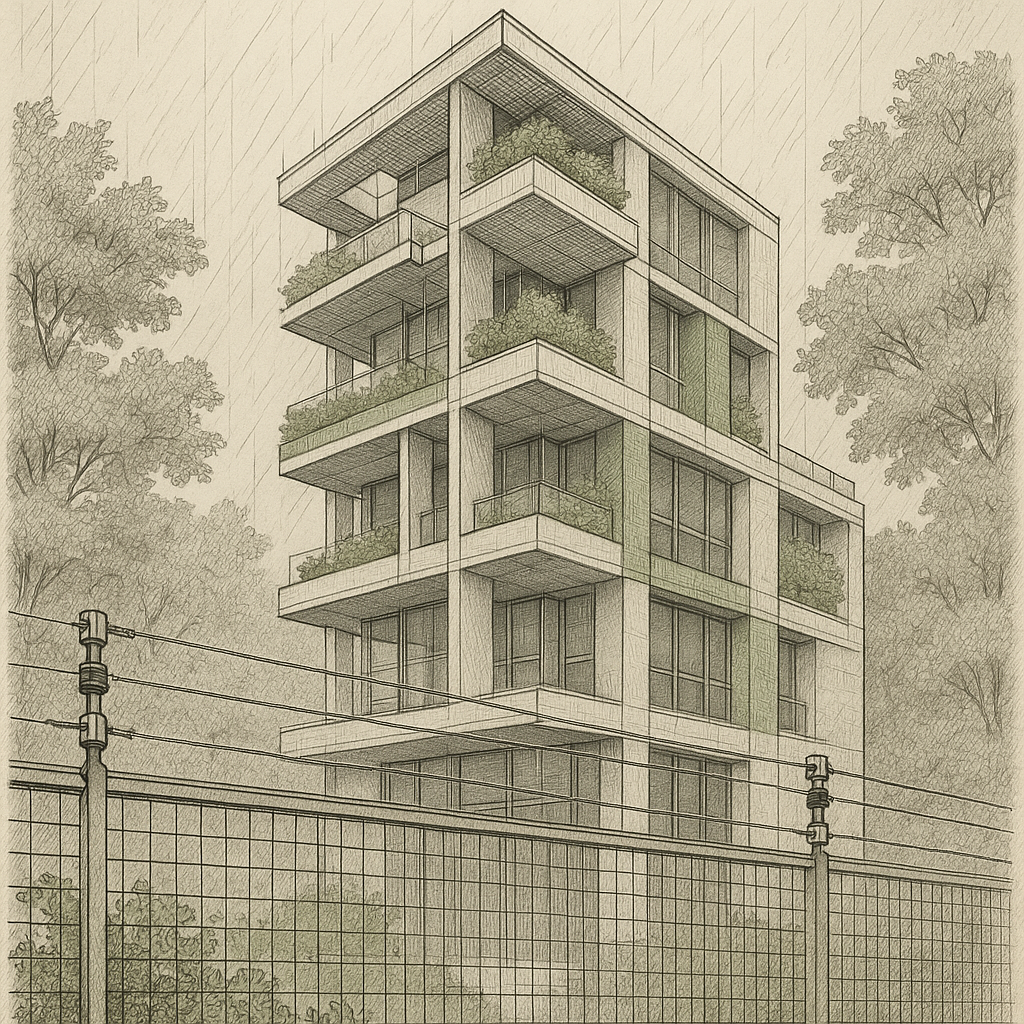
Newlands is transforming. Cape Town's wealth converges on this suburb, driving rapid development, luxury housing, and a new senior living model.
Newlands in Cape Town is undergoing a huge change, becoming a top spot for wealthy seniors. This transformation, worth R4.5 billion, is thanks to its amazing location near schools, hospitals, and shops. Older buyers, aged 55-72, are snapping up fancy, easy-to-maintain homes, not old-fashioned retirement places. They want lock-up-and-leave living, and new projects like the Cannon Life-Right precinct are popping up to meet this demand, even turning an old brewery into modern senior apartments.
What is driving Newlands' transformation into a senior-living magnet?
Newlands, Cape Town, is transforming due to its prime geographical location, offering quick access to top schools, hospitals, and amenities within 15 minutes. This, combined with a significant influx of 55-72-year-old buyers seeking upscale, lock-up-and-leave senior living options rather than traditional retirement homes, fuels the area's R4.5 billion redevelopment, including the innovative Cannon Life-Right precinct.
Get Cape Town news in your inbox
Stay updated with the latest stories from the Mother City.
1. Where Victorian Gables Meet Tile-Cutters: The Suburb That Refuses to Freeze
Oak branches still shed winter drips onto slate roofs, and a ghost-whiff of hops occasionally sneaks out of long-silent brick towers, but Newlands is no mausoleum. Since early-2022 the morning peace has been sliced by angle-grinders and Afro-house beats from job-site radios; Tudor facades are yanked off to expose 1930s brick, skips gulp down terracotta tiles. The catalyst is geographical: a 3 km² wedge pinned by the M3, the Liesbeek River and Table Mountain’s eastern buttress has become a gravitational pocket for Cape Town money.
Estate agents brand the phenomenon the “quarter-hour halo”. In fifteen flat minutes you can drop kids at one of four national-top-ten schools, pick up prescriptions at any of three private hospitals, buy groceries at five rival chains, sip wine at two estates and still catch the first ball at an international cricket ground. Re-create that polygon anywhere between Sandton and the Atlantic Seaboard and you need a minimum R50 million key. Newlands’ door still opens at just under R10 million - pocket-change for a family repatriating Dubai, Toronto or Surrey proceeds.
Propstats data underline the rush: 112 freehold sales in the year to March 2024 versus a 78-average since 2016. Time-on-market has plunged from six weeks to fourteen days; median discount to asking is 3.2 %, a number normally whispered about in gated estates with guard dogs, not an open suburb where one property still boards horses. The luxury spike is wilder: 24 homes breached R10 million, three sailed past R20 million and a hillside manor closed at R28.5 million - the highest non-estate price recorded south of Bo-Kaap.
2. Meet the New Buyers: Zoom-Board Grandparents Who Won’t Do “Frail-Care”
A decade ago seven in ten buyers had school-goers; today 45 % are 55- to 72-year-olds with empty nests, quarterly air miles and 6 a.m. flat-white habits. They are not shopping for “retirement” as previous cohorts understood it - no linoleum corridors or communal hymnals - rather a base where they can lock the door, board a long-haul flight, then fly back and roast grandkids’ birthday sirloins in a restaurant-grade oven. Local stock did not exist, so 1980s duplexes of 150 m² have doubled in price since 2021 as owners ram elevators into stairwells and trade lawns for plunge pools.
The supply gap explains why a derelict 2.4 ha brewery between Main Road and the Liesbeek has become the most watched dirt in the Southern Suburbs. SABMiller hauled the final vats to Paarl in 2001; heritage purists circled the 1825 malt tower, tech dreamers lobbied for mini-Silicon-Valley offices, traffic warriors warned against 2 000 extra cars. After two decades of stalemate a R1.8 billion hybrid answer emerged - South Africa’s first inner-city, upscale senior precinct that borrows no golf course, hotel lobby or sea view.
Manor Life, the team that converted a Kenilworth convent into the sold-out Wytham Estate, treated the brewery like archaeologists. They will encase the malt tower in glass and turn it into a library wallpapered with digitised 1890s hop ledgers. The soot-blackened boiler house will host a 120-seat brasserie whose micro-brewery pipes a once-off Cannon Ale reserved for residents and dinner guests. Cobblestones from the Swartland barley siding are being lifted, cleaned and relaid as a pedestrian spine book-ended by two-storey mews cottages for couples who swear off lawns but still want basil within arm’s reach.
3. Inside the Cannon Life-Right: Elevators for Scooters, Balconies for Vertigo Futures
Floorplates run from 55 m² one-bed-plus-study to 180 m² three-bed penthouses wrapping 270° of mountain. Every threshold is flush - no rebated door lip to snag a walker - ceilings soar to 2.8 m so hoist rails can be bolted on later without calling a structural engineer. Balustrades arrive with a 100 mm kick-plate ready to receive add-on glass should ageing vestibular systems demand it. Even the Schindler lift is three stops wide enough for a mobility scooter U-turn, a detail that makes German engineers blink twice.
Price tags open at R7.5 million for a north-facing one-bed and crest at R17 million for a penthouse whose 45 m² terrace stares straight at Devil’s Peak. That sticker is roughly one-fifth below equivalent Sandton skyboxes, yet the Life-Right structure erases the usual ten-percent friction of transfer duty, VAT and bond fees. Buyers purchase occupation for life; the developer keeps title, insures the structure and replaces lifts or generators without begging owners for special levies. On exit, the estate resells the unit and pays the departing owner 80 % of the upside in the first five years, scaling to 92 % after year ten - the balance feeds a sinking fund that keeps décor and plant perennially young.
Wealth managers are pitching the product as part-property, part-annuity. A 65-year-old who cashes out of a R12 million Constantia villa, sinks R9 million into a two-bed Cannon pad and pockets R3 million in cash pays zero transaction tax yet still rides the market curve. Actuaries model 5.5 % compound growth; even at half that, the exit payout beats inflation-linked retail bonds by year six. Add zero exterior upkeep and the maths becomes catnip for family offices that need liquid, predictable, rand-denominated alpha.
4. Ripple Effects and a 2028 Move-In: How a Brewery Becomes a City-Within-a-City
Demand is scalding. Soft-launch day was 1 March 2024; by mid-May 110 of 186 units carried red “reserved” stickers, 70 % snapped by homeowners within a 5 km orbit. The median buyer is 63, consults twice a week on Zoom, stores adult kids in London or Sydney and lists “second fibre line” as the most requested upgrade - redundant connectivity so spouses can chair separate board meetings without fighting bandwidth. Single women comprise 30 % of purchasers; they cite security and the freedom to leave herbs unattended while chasing summer in Greece.
Shovels hit soil in January 2025 once the heritage impact plan is inked. A German slip-form paver has been booked to pour a new concrete core inside the malt tower without touching 200-year-old brick. Practical completion is set for December 2027, occupation from March 2028. Payment schedule is gentle: 10 % on signature, 20 % at roof height, balance when the Life Right is registered - an instalment formula that trims developer finance and, by extension, the price printed on the front page.
The neighbourhood is already pre-loading. Two neighbouring 1970s rental blocks have sold to syndicates planning “Cannon-lite” retrofits - compact lifts, rooftop clubs, rentable guest suites - for seniors who want in once the last grandchild matriculates. City planners predict the 4 500 m² retail component will command the highest non-Waterfront rentals in the metro; a marquee Stellenbosch wine estate has signed a 15-year lease for its first Cape Town tasting room. Add a new MyCiTi express station on the k-94 bus lane (2026) and a mooted 180-bed private hospital across Main Road and the precinct could inject R4.5 billion in rateable value without consuming a single hectare of virgin land.
For retirees fleeing Johannesburg humidity or Durban summers the draw is climatic - mild winters equal fewer arthritic flare-ups - but also cultural. Book clubs, church choirs and trail-running circles have met here since the 1950s; newcomers plug into living tissue instead of seeding a fresh social graph. Mosques, synagogues and churches sit within 600 m, letting inter-faith couples walk to separate services and reconvene for cappuccino at the Village Hub. The Contour Path begins 800 m above the brewery gate; SANParks will install a senior-friendly swing gate so residents with trekking poles can tap in on a green pensioner card.
WHO research shows over-65s living within 500 m of a café, pharmacy and bus stop suffer 30 % fewer depressive episodes than peers in gated greenfield clusters, even when the latter boast heated pools and golf carts. By repurposing industrial heritage instead of bulldozing it, Manor Life is wagering that authenticity beats fairways - and early adopters are wiring seven-figure deposits to prove the point.
Back on the oak-lined streets, For-Sale signs vanish before agents finish driving in the last nail. A couple who bought their four-bedroom home in 1978 listed at 9 a.m.; by mid-afternoon they entertained four written offers, two without conditions. Their plan is to stay within the same postcode for another decade - downsizing two roads away for the garden, and adding a one-bed Cannon apartment for the lock-up-and-leave seasons. Same postcode, new walls, while Newlands keeps redrafting its own story around them.
What is driving Newlands' transformation into a senior-living magnet?
Newlands, Cape Town, is transforming into a senior-living magnet due to its prime geographical location, offering quick access to top schools, hospitals, and amenities within 15 minutes. This, combined with a significant influx of 55-72-year-old buyers seeking upscale, lock-up-and-leave senior living options rather than traditional retirement homes, fuels the area's R4.5 billion redevelopment. New projects like the Cannon Life-Right precinct, which is converting an old brewery into modern senior apartments, are emerging to meet this demand.
Who are the new buyers in Newlands, and what are they looking for?
The new buyers in Newlands are predominantly 55- to 72-year-olds with empty nests, often referred to as "Zoom-Board Grandparents." They are not seeking traditional retirement homes with linoleum corridors but rather upscale, easy-to-maintain, lock-up-and-leave properties that serve as a convenient base for travel and family visits. They prioritize amenities like restaurant-grade kitchens, security, and redundant connectivity for remote work, and are willing to invest in modern developments that cater to their active lifestyles.
What is the Cannon Life-Right precinct, and what makes it unique?
The Cannon Life-Right precinct is a R1.8 billion pioneering upscale senior living development in Newlands, built on the site of a derelict 2.4-hectare brewery. What makes it unique is its innovative use of the Life-Right ownership model, where buyers purchase occupation for life while the developer retains title. This structure eliminates transfer duty, VAT, and bond fees. The developers are also meticulously preserving the brewery's heritage, encasing the 1825 malt tower in glass for a library and converting the boiler house into a brasserie, offering a blend of modern luxury and historical charm without relying on golf courses or sea views.
What are the key features and financial benefits of the Life-Right model at Cannon?
The Cannon Life-Right units offer features tailored for senior living, including flush thresholds, high ceilings for potential hoist rails, and balconies designed for future accessibility. Financially, the Life-Right model offers significant advantages: buyers pay zero transaction tax, ride the market curve with projected compound growth, and benefit from the developer covering structural insurance and major maintenance costs without special levies. Upon exit, owners receive a substantial percentage of the unit's appreciation (starting at 80% in the first five years, scaling to 92% after ten years), making it an attractive option for wealth management.
How is the Cannon Life-Right precinct impacting the surrounding Newlands area?
The Cannon Life-Right precinct is creating significant ripple effects in Newlands. Demand has been exceptionally high, with 110 of 186 units reserved shortly after launch, largely by homeowners within a 5 km radius. The development is catalyzing further investment, with neighboring rental blocks being retrofitted for senior living. City planners anticipate the 4,500 m² retail component will command high rentals, attracting new businesses like a marquee Stellenbosch wine estate. Additionally, planned infrastructure upgrades, including a new MyCiTi express station and a mooted private hospital, are set to transform Newlands into a city-within-a-city, injecting substantial rateable value into the metro.
Beyond financial and practical benefits, what social and lifestyle advantages does Newlands offer to seniors?
Newlands offers seniors a rich social and lifestyle environment. Its mild winters are climatically appealing, potentially reducing arthritic flare-ups. Culturally, the area boasts established book clubs, church choirs, and trail-running circles, allowing newcomers to integrate into existing social networks. With mosques, synagogues, and churches within 600m, and the Contour Path starting nearby, residents have diverse options for spiritual and recreational activities. Research suggests that living within 500m of essential amenities like cafés, pharmacies, and bus stops can reduce depressive episodes, an advantage Newlands provides by repurposing industrial heritage instead of creating isolated greenfield developments.

Liam Fortuin is a Cape Town journalist whose reporting on the city’s evolving food culture—from township kitchens to wine-land farms—captures the flavours and stories of South Africa’s many kitchens. Raised in Bo-Kaap, he still starts Saturday mornings hunting koesisters at family stalls on Wale Street, a ritual that feeds both his palate and his notebook.
View all articles →