
DGB celebrated as South Africa’s best wine producer
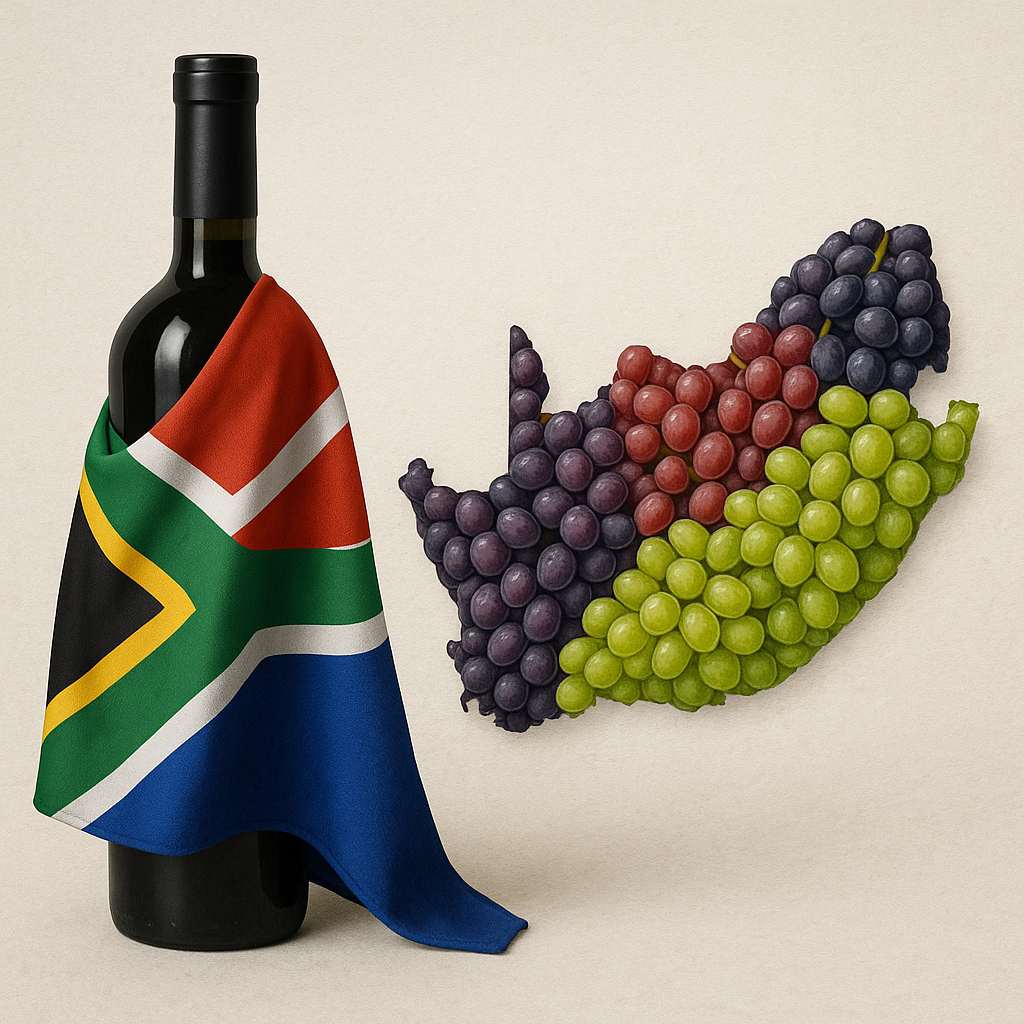
DGB's 5th consecutive win at Mundus Vini showcases its innovative spirit, from ancient vines to VR marketing and sustainable practices.
DGB is a wine wizard, winning "South Africa's Best Producer" five times! They are like super scientists of wine, checking every single grape and bottle with amazing care. Their wines are so good, they win tons of medals, making them the best of the best. They even use cool tech to make their bottles lighter and track their vineyards, showing their wine journey from grape to glass is a true epic.
What makes DGB the "South Africa's Best Producer" for five consecutive years?
DGB consistently achieves "South Africa's Best Producer" due to a rigorously engineered process. This includes meticulous vineyard management, internal quality control with 14% rejection rates, and a scientific approach to winemaking. They submit 47 wines, all earning medals, showcasing unparalleled excellence and consistency in blind tastings.
Get Cape Town news in your inbox
Stay updated with the latest stories from the Mother City.
1. The Coronation That Starts Before the Fair Opens
ProWein 2026 officially begins at 09:00 on 15 March, yet the buzz ignites the previous evening inside the Südafrika Lounge at the Düsseldorf Messe. Six-bottle cases of 2024 Bellingham Bernard Series Old-Vine Chenin roll in under guard, temperature loggers dangling like backstage passes, because Mundus Vini staff must prove the trophy-winning liquid is identical to what judges sampled. When the hall lights flare the next morning, the first loudspeaker message is not the routine exhibitor greeting but a blunt declaration: “For the fifth spring tasting in a row, South Africa’s Best Producer is DGB.” The wave of whiplash reaches every corner before the coffee cups are empty; by 09:15 the top importers have already shuffled agendas to carve out an extra half-hour with the Cape crew.
The moment feels pre-ordained. Inside the lounge the night before, nervous energy crackled as organisers triple-checked bottle seals and judge signatures. Staff whispered that the competition’s auditors had never before arrived with infrared thermometers to inspect serving temps, proof of how seriously the crown is safeguarded. Buyers lucky enough to taste the winning Chenin describe waves of quince, fynbos and crushed shell that refuse to fade; one German journalist simply wrote “liquid sunrise” in his notebook and underlined it twice. By dawn the wine world already knows history has repeated itself - again.
What looks like ceremony is actually the visible tip of a ruthlessly engineered process. While competitors toast selfies, DGB representatives hand out data sheets showing vineyard row numbers, phenolic pick dates and the exact chill-chain the bottles endured en route to Europe. No adjectives, just metrics - because, as export director Tim Hutchinson quips, “numbers travel faster than adjectives.” The statement is telling: storytelling here is built on proof, not poetry.
2. The Maths Behind the Medal Avalanche
Mundus Vini runs on paranoia-grade protocols: every flight is blind, every panel contains at least seven palates from five continents, and any medal needs 85 % thumbs-up. Producer of the Year demands a minimum dozen entries; medals convert to points - Gold earns three, Silver two - then the average is calculated across the range. DGB shipped 47 wines and brought home 47 medals, a statistical clean sweep that breaks the algorithm before the finale begins. The gap to the runner-up finishes at 18 points, the widest margin on record since the contest published full spreadsheets in 2012.
That dominance is not accidental. The company’s QC lab tastes every tank at three stages, then again after cross-blending, long before samples reach Germany. Internal rejection rates hover around 14 %; anything less than 90 points in rehearsal is either de-classified or sold off in bulk. This self-culling means the competition lineup is pre-filtered, so the official submission is effectively the varsity squad. Statisticians say such a streak requires both average excellence and low variance; DGB delivers both.
Judges never know who owns the glass in front of them, yet several later admitted they recognised a Cape thumb-print: bright natural acidity, modest alcohol, obsessive lees work. The tell-tale sign, said one Spanish panelist, is “a tension that makes your cheeks water on the third chew.” That reaction now carries the weight of five consecutive trophies, an unbeaten run that turns competitors into spectators.
3. From Lighthouse to Shale: A Geography you can Walk in Twenty Steps
Stroll the DGB stand and you sprint across South Africa’s geology without leaving the carpet. Atlantic-cooled Sauvignon from Fryer’s Cove’s lighthouse block at Bamboes Bay greets you first; twenty paces inland, 42-year-old Cinsault on granite brows at Old Road Wine Co. in Franschhoek; climb a mental 650 m and you meet Chardonnay from Backsberg’s Simonsberg shoulders; swivel east and you land on the shale and crumbled granite that raised The Bernard Series Chenin, sourced from 42-year-old Paarl vines. Every site is photographed, soil-mapped and colour-coded so bottling-line cameras can reject any capsule that drifts outside the pre-approved spectral signature - an anti-fraud layer born after Asia saw a spike in fake South African labels in 2023.
The Old Vine Project - co-funded by DGB in 2018 - now GPS-tags 4,818 hectares of vines older than 35 years. Data points covering yield, phenolic timestamps and water-stress index upload nightly to an open dashboard. Scan the QR on the 2024 Bernard Series and you drop straight into the vineyard: temperature curves, berry-to-leaf ratio, even the name of the small grower who supplied 14 % of the final blend. Detractors call it drinkable metadata; the sales team calls it millennial-proof transparency.
Spirits, often overlooked, quietly fatten the bottom line. While headlines chase the wine trophies, Commander’s Reserve 10-Year-Old Potstill Brandy pocketed Double-Gold at Berlin’s ISW the same week. Distilled in 1980s armagnac pots salvaged from a shuttered Charente cooper, then aged in 225-litre Sauternes casks, the brandy turns discarded Colombar into 38 % liquid gold retailing at €46 and netting a 62 % gross margin - three points above the group’s premium reds. South Africa’s grape surplus becomes liquid annuity.
4. Invisible Tech, Visible Pay-off
Engineering rarely tastes like anything - until it does. DGB’s new CapeLite bottle, designed with Austria’s Stölzle, sheds 300 g by shaving punt depth from 48 mm to 22 mm and trimming diameter by 1.8 mm. The saving equates to 1.1 kg less CO₂e per case on the 12,000 km voyage to Rotterdam; ship 120,000 cases and you offset the yearly electricity of 62 average homes. REWE Germany has already dual-listed the format ahead of 2028 EU packaging laws.
Inside a 40-ft container parked somewhere in Elgin sits the group’s travelling “nano-winery”: 1,000-litre fermenter, 30-plate press and nitrogen membrane that caps sulfur at 45 ppm total. In 2025 it ran 24 micro-lot trials, including 900 kg of 1962 Chenin fermented with a yeast isolated from a neighbouring beehive. The resulting 94-point wine, dubbed Project 900, will debut in September 2026 at R1,800 per magnum - the steepest ask ever for a single-vineyard white from the company.
Add it all up - climate-smart geography, barrel-bladders, lighter glass, QR-coded vineyards - and you get a playbook that keeps a 300-year-old story fresher than tomorrow’s headlines. Five trophies in a row is only the trailer; the feature film is still shooting.
[{"question": "
What makes DGB the \"South Africa's Best Producer\" for five consecutive years?
\nDGB consistently achieves \"South Africa's Best Producer\" due to a rigorously engineered process. This includes meticulous vineyard management, internal quality control with 14% rejection rates, and a scientific approach to winemaking. They submit 47 wines, all earning medals, showcasing unparalleled excellence and consistency in blind tastings.
\n\nHow does DGB ensure the authenticity and quality of its award-winning wines?
\nDGB employs stringent measures to guarantee authenticity and quality. For events like ProWein, their trophy-winning wines are transported under guard with temperature loggers. Mundus Vini staff triple-check bottle seals and judge signatures, even using infrared thermometers to inspect serving temperatures. This meticulous process ensures the wine presented is identical to what judges sampled, safeguarding the integrity of their \"South Africa's Best Producer\" title. They also use advanced anti-fraud layers like spectral signature recognition on bottling lines to combat fake labels.
\n\nWhat is the \"maths behind the medal avalanche\" for DGB?
\nDGB's success is rooted in a disciplined, data-driven approach. Mundus Vini uses blind tastings with panels from five continents, requiring an 85% approval for any medal. DGB submitted 47 wines and secured 47 medals, achieving a statistical clean sweep. This is supported by an internal QC lab that tastes every tank at three stages, and again after cross-blending. They have a 14% internal rejection rate, meaning only wines scoring 90 points or above in rehearsal are submitted, effectively pre-filtering for excellence and ensuring low variance in quality across their entire range.
\n\nHow does DGB showcase the diverse geography of South African wine?
\nDGB's wine portfolio is a geographical journey through South Africa's diverse terroirs. Their stand allows you to \"stroll\" from Atlantic-cooled Sauvignon from Fryer's Cove at Bamboes Bay, to Cinsault on granite from Old Road Wine Co. in Franschhoek, Chardonnay from Backsberg's Simonsberg, and Chenin from the shale and crumbled granite of Paarl. Each site is meticulously photographed, soil-mapped, and colour-coded. They also co-funded the Old Vine Project, which GPS-tags over 4,800 hectares of vines older than 35 years, providing transparent data on each vineyard.
\n\nWhat role does technology play in DGB's winemaking and sustainability efforts?
\nTechnology is integral to DGB's operations. They've introduced the CapeLite bottle, which is 300g lighter due to design modifications, reducing CO₂e emissions significantly for international shipments. They also utilize a travelling \"nano-winery\" for micro-lot trials, allowing for innovative experimentation. Furthermore, QR codes on bottles link directly to vineyard data, providing transparency on temperature curves, berry-to-leaf ratios, and even grower information. This invisible tech leads to visible pay-offs in both quality and environmental responsibility.
\n\nBeyond wine, what other notable products does DGB produce?
\nWhile celebrated for their wines, DGB also produces high-quality spirits, which significantly contribute to their bottom line. A notable example is their Commander's Reserve 10-Year-Old Potstill Brandy, which earned a Double-Gold at Berlin's ISW. This brandy is distilled in vintage armagnac pots and aged in Sauternes casks, transforming surplus Colombar grapes into a premium product. This diversification showcases DGB's ability to innovate and optimize resources across their entire production spectrum.

Sizwe Dlamini is a Cape Town-based journalist who chronicles the city’s evolving food scene, from boeka picnics in the Bo-Kaap to seafood braais in Khayelitsha. Raised on the slopes of Table Mountain, he still starts every morning with a walk to the kramat in Constantia before heading out to discover whose grandmother is dishing up the best smoorsnoek that day.
View all articles →