
Discovering the hidden smashburger trend in Cape Town
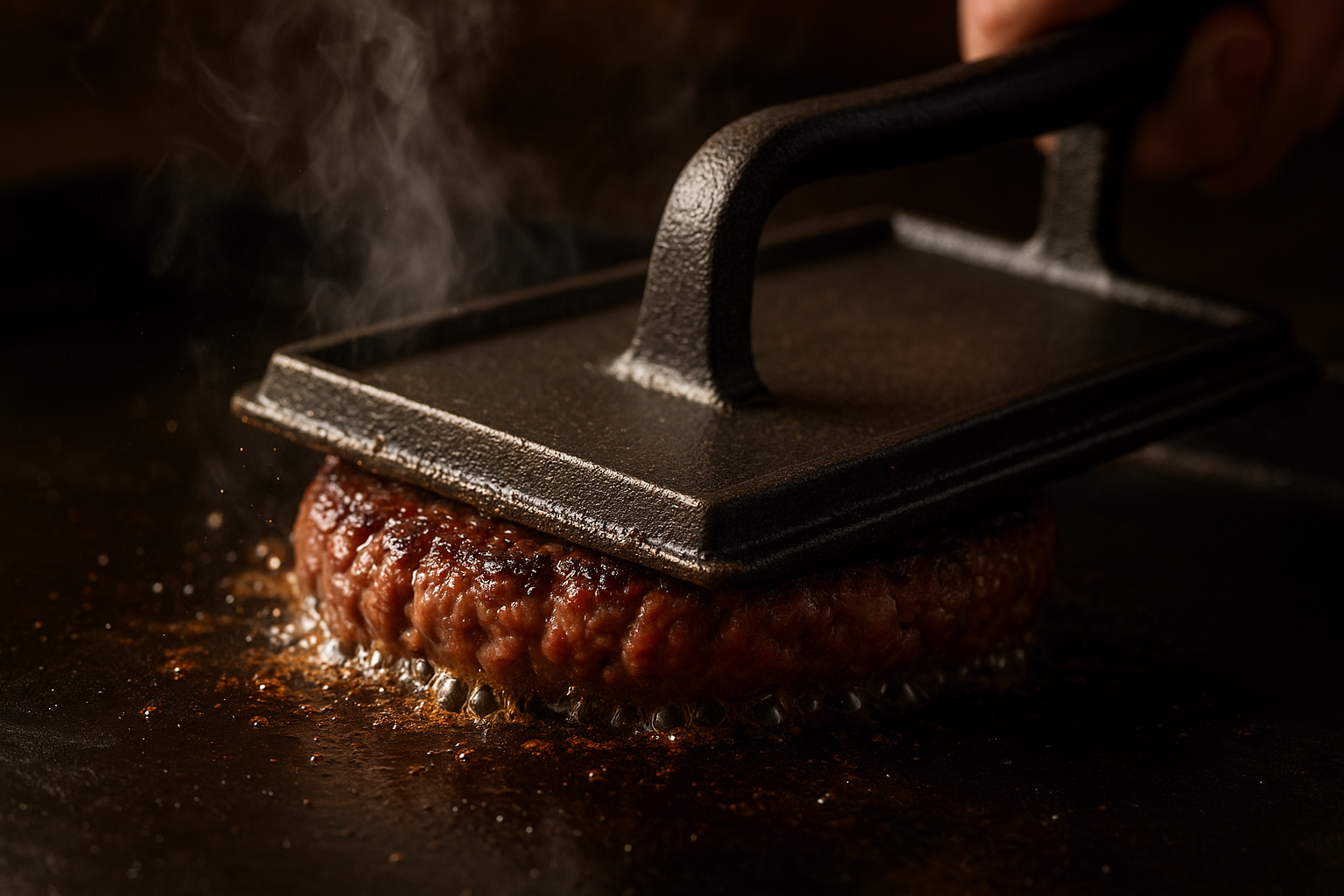
Cape Town's smashburger scene is a thin-patty underground, rewriting burger physics with obsessive detail, from fynbos-fed beef to precise cook times.
Cape Town's night-time burger scene is wild! They're making these amazing smash burgers using super secret science. Farmers feed cows special plants, and cooks use fancy tools to get the heat and timing just right. These burger geniuses work in garages and shipping containers, always trying new things. They even use clever tricks for buns and sauces, making every bite perfect. It's not just food; it's a flavour adventure that keeps the city buzzing all night long!
What makes Cape Town's late-night smash burgers unique?
Cape Town's late-night smash burgers are unique due to their scientific approach to every element, from fynbos-finished beef and precise salt application to infrared-policed cooking temperatures and exact timings. These breakthroughs often emerge from unconventional settings like garage labs and shipping containers, pushing culinary boundaries with innovative techniques and local ingredients.
Get Cape Town news in your inbox
Stay updated with the latest stories from the Mother City.
The Science of the Sizzle: 97 Seconds That Rewrite Burger Physics
At 02:13 the traffic lights on Buitengracht wink red, and a stainless blade kisses a 200 °C plancha. The slap rings like a cracked bell, then comes the hiss - angry enough to etch steel. A cold 90 g sphere - one-fifth fat, seasoned with 2 % salt, zero swagger - flattens into a lace-rimmed wafer thinner than a 45 rpm single. With a 15° flick, the cook drives 2 mm-thick onion slivers - sliced at five that afternoon - into the blushing surface. Thirty-seven ticks later the Maillard lattice has turned to glass-candy, the alliums are black confetti, and the disc glides onto a toasted Martin’s potato roll. No clapping; the line is already eight bodies long.
This is the thin-patty underground, a scattered guild that treats the smash as thermodynamics homework, not drunk food. They chat in ratios - 80/20 chuck to brisket, 60/40 heat to pressure, 3:1 crust to core - and score victories in milliseconds. In eighteen months their R&D outposts have budded from one Old Biscuit Mill truck to alley hatches, shipping crates, night markets and a 1979 Kombi that only idles beneath sodium lamps because the driver swears the wavelength “keeps the cheddar photogenic”.
The recipe looks stupidly simple: beef, salt, heat, seconds. Yet every element has been water-boarded until it gave up family secrets.
Pasture crews in the Overberg now finish cattle on fynbos for the final sixty days; the botanical snack inserts coastal sage and wild rosemary into the marbling. A UCT MSc student first mapped the flavour by gas-chromatographing tallow from eight neighbourhoods. One Caledon farm even stuffs roasted cacao nibs into rumen 48 h before slaughter; the whisper of mole shows up at Le Pickle as “single-origin cacao smash” and vanishes in 22 minutes every Friday.
Salt
Kosher crystals are black-listed; 0.7 mm West-Coast flakes are sieved through a 400-micron mesh so they cling electrostatically, forming a micro-brine in the minute-and-a-half between smash and flip. An Observatory cook keeps his stash in a cedar humidor; if the hygrometer creeps past 62 % he shuts the hatch, insisting the crust will “weep instead of singe”.
Heat
Infrared guns robbed from road-works crews police the plancha: 220 °C deck, 280 °C lid bounce from a low hood that recycles onion fog. Hotter and the rim carbonises before the centre sees 57 °C; cooler and the fond glues like gossip, tearing off when the blade lifts.
Time
Total cycle: 97 seconds - 45 crust-side, 22 onion-side, 15 beneath a cheese dome, 15 to stack. Metronome apps tick at 92 bpm, the cadence that keeps wrists calm but deadly. A Woodstock ex-tattooist wears the sequence inked in dot-matrix on his forearm; patrons call it the “stopwatch sleeve”.
Garage Labs & Shipping-Can Universities: Where the Real Testing Happens
While star-chef palaces on Bree chase luxury - 45-day Wagyu, bone-marrow laminated brioche - the breakthroughs pop in zones Michelin will never map.
Rondebosch after midnight
Smasht squats in a 2.4 m wide ex-panel-beater bay; primer ghosts mingle with scorched onion. Owner-athlete Yazeed Damon laid out the galley in AutoCAD so two cooks clear 1.1 m passes at 01:30. His “Oklahoma” keeps onions beneath the patty; steam drives sugar upward. A covert fourth step - “the tuck” - slides a 5 mm cheese skirt onto the plate for four seconds, frills it into crisp origami, then folds the lace inside.
Khayelitsha sunrise
Saturdays, a crimson container rocks up at Lookout Hill market. The sign - “uSmash waseKapa” - glows in neon isiXhosa. Aviwe Mqokomiso sources from a Mankazana co-op; cattle stroll the final three kilometres so glycogen never acidifies. Buns are township-steamed for a glassy skin that crackles against cool lettuce. Lone condiment: house-fermented pineapple-jalapeño atchar, its lacto snap slicing fat like a rapier.
Sea Point 05:45
Before promenade joggers hit kilometre one, Brash is on batch two. The generator hums at 52 Hz - quiet enough for sleeping neighbours, gutsy enough for burner pressure. Kelly Redelinghuys smashes inside a ring lined with fish-shop parchment; the paper drinks the first millimetre of tallow so the crust stays razor-thin. A retired chemist sends her citric-acid dust for pickles that deliver “electric tang” to palates still crusted with sleep.
DIY fringe
On Discord, “CPT Smash Syndicate” counts 1 300 members who traffic thermodynamics memes and swap 50 g baggies of experimental fat at red lights. @MaillardMaverick spectrographed Stud Burger’s bin foil at 03:40 and reverse-engineered their midnight mass blend. Another tinkerer built a Raspberry-Pi smash rig: a 2 kg weight drops via pulley, landing 1.4 kN of force to crack 0.8 mm micro-fissures that hike surface area 17 % and shave six seconds. He’s now coding an ultrasonic “crust ear” that lifts the spatula when sizzle frequency jumps to crackle.
Condiments, Buns & Black-Market Data: The Arms Race You Can’t See
Ketchup is treason; mayo is surrender. Weekly arrivals bring ferments, reductions, fat-washed emulsions.
Top of the leaderboard:
- Black-garlic & rooibos hoisin, six months in Stellenbosch-buried clay; glutamate 1 780 mg/100 g.
- Smoked-snoek fondue, grape-cutting cold smoke, torched tableside into a bronzed tarp.
- Buchu-brown-butter hollandaise, vac-clarified at 55 °C to save menthol-shortbread terpenes.
- Amarula–pink-peppercorn aioli, liquid-nitrogen emulsified to <1 micron globules for mirror shine.
Buns suffer equal torture. The current crown is a charcoal-bamboo shell glazed with reduced leche de tigre from a nearby Nikkei bar; acid tightens crumb so the base stays crisp for 11 minutes - long enough for the final Instagram story.
Pop-ups double as data farms. Every second Thursday the “Orphanage Night Market” occupies a disused Roeland-Street parking deck; vendors tithe 10 % to foster care, but the real loot is metrics. UCT spin-off wires each stall with thermal cams and footfall lidar, then sells the scrubbed feed to cooks who need to know when dopamine fatigue hits (answer: 6 min 42 s). Failures - turmeric-latte buns that gild fingertips - die quietly; victors graduate to brick-and-mortar.
Symbiosis with brewers is tighter still. At Drifter’s Waterfront containers, “Supersonic Smash” rotates three patties engineered for specific pints: magnesium-sulfate seasoned “Low-Altitude” mirrors the gose’s salinity; freeze-concentrated stock “High-Altitude” muscles up to 12 % imperial stout. PA announcements voiced by the city’s top ASMR artist boost refills 38 %.
Price spans R35 - Delft roadside, single patty, white bread, no cheese - to R290 - Camps Bay dinner club, single-Miyazaki A5, Parmigiano tuile, quarterly-imported Italian baker. Ironically both ends buy planchas from the same Parow Industria welder, proof that smash scripture ignores tax brackets.
Patents Pending & the 31° Bite: Tomorrow’s Burger, Today
Nobody has trademarked the graphene-coated spatula that spreads heat sideways, keeping an even 220 °C though the burner flame favours the left. A neighbouring start-up beta-tests edible RFID stickers; scan your bun and the cloud spits out the cow’s birthplace, the abattoir humidity, the Spotify track spinning when your patty hit steel. Discord chatter even floats a “zero-gravity” rig for private jets - centrifugal force replaces the weighted press, browning beef at 2 g, 41 000 ft above copyright lawyers.
Mechanical engineers at CPUT high-filmed 200 eaters and declared 31° the perfect incisor angle; steeper and the bun shears, shallower and toppings avalanche. They also clocked that a double patty drips 3.4 ml of molten fat at 0.7 s - exactly when palate focus flips from crust to umami - so cheese must hit full melt by 0.65 s to sponge the flood. A palm-sized “bite card” summarising the maths is handed out at stalls like sacred scripture.
When the last tray is scraped at 02:55, fat is decanted into 20 L drums and driven to an Epping filter. Activated charcoal scrubs the tallow, the biodiesel co-op trucks it back to food vans, and on Friday a Brash-branded rig idles on the Atlantic seaboard running on yesterday’s crusts - an ouroboros of flavour and torque that keeps the city’s arteries, culinary and vehicular, pulsing toward the next predawn crackle.
[{"question": "
What makes Cape Town's late-night smash burgers so special?
", "answer": "Cape Town's late-night smash burgers are a unique culinary phenomenon, distinguished by their scientific precision and innovative techniques. Farmers feed cattle special plants like fynbos, imparting unique flavors. Cooks meticulously control heat, timing, and even the type of salt used. These culinary breakthroughs often originate from unconventional locations like garages and shipping containers, pushing the boundaries of traditional burger making."}, {"question": "What is the 'science of the sizzle' in Cape Town's smash burger scene?
", "answer": "The 'science of the sizzle' refers to the highly technical and precise methodology employed in creating these smash burgers. This includes using a specific 90g meat disc with a 2% salt content, smashing it onto a 200°C plancha, and cooking it for exactly 97 seconds (45 seconds crust-side, 22 seconds onion-side, 15 seconds under a cheese dome, and 15 seconds for stacking). Even the 2mm thick onion slivers are precisely placed to caramelize perfectly. This isn't just cooking; it's thermodynamics homework, resulting in a thin, crispy, and flavorful patty."}, {"question": "How do ingredients contribute to the unique flavor of these burgers?
", "answer": "Ingredients are meticulously selected and prepared. Cattle are finished on fynbos (like coastal sage and wild rosemary) for 60 days, infusing the meat with unique botanical notes. Some farms even feed cacao nibs to cattle for a subtle mole flavor. Kosher salt is blacklisted in favor of 0.7mm West-Coast flakes, sieved to 400 microns for electrostatic cling and micro-brine formation. Even the buns are innovatively developed, with some using charcoal-bamboo or being township-steamed for a specific texture."}, {"question": "Where do these burger innovations and testing take place?
T", "answer": "The real innovation happens in unconventional 'garage labs' and 'shipping-can universities' across Cape Town. These include ex-panel-beater bays, crimson shipping containers at markets, and even setups within fish-shop parchment-lined rings. These informal R&D outposts, often operating after midnight, allow for rapid experimentation and the development of new techniques and recipes without the constraints of traditional restaurant settings."}, {"question": "What are some of the unusual condiments and buns found in Cape Town's smash burger scene?
", "answer": "Ketchup and traditional mayo are often eschewed in favor of highly innovative condiments. Examples include black-garlic & rooibos hoisin, smoked-snoek fondue, buchu-brown-butter hollandaise, and Amarula–pink-peppercorn aioli, often prepared with advanced culinary techniques like liquid-nitrogen emulsification. Buns are equally experimental, with charcoal-bamboo shells glazed with reduced leche de tigre being a current favorite, designed to maintain crispness for an extended period."}, {"question": "How does technology and data influence the smash burger creation and market?
", "answer": "Technology plays a significant role, from infrared guns used to police plancha temperatures (220°C deck, 280°C lid) to metronome apps setting the 97-second cooking rhythm. Pop-ups double as 'data farms,' using thermal cameras and footfall lidar to analyze customer behavior and optimize service. There's even a 'CPT Smash Syndicate' on Discord, where members share thermodynamics memes and discuss experimental fat blends. Future innovations include graphene-coated spatulas, edible RFID stickers for ingredient tracking, and even 'zero-gravity' rigs for private jets.", "category": "Food"}]
Hannah Kriel is a Cape Town-born journalist who chronicles the city’s evolving food scene—from Bo-Kaap spice routes to Constantia vineyards—for local and international outlets. When she’s not interviewing chefs or tracking the harvest on her grandparents’ Stellenbosch farm, you’ll find her surfing the Atlantic breaks she first rode as a schoolgirl.
View all articles →