
Donald Trump is the ‘T-Rex’ in the room
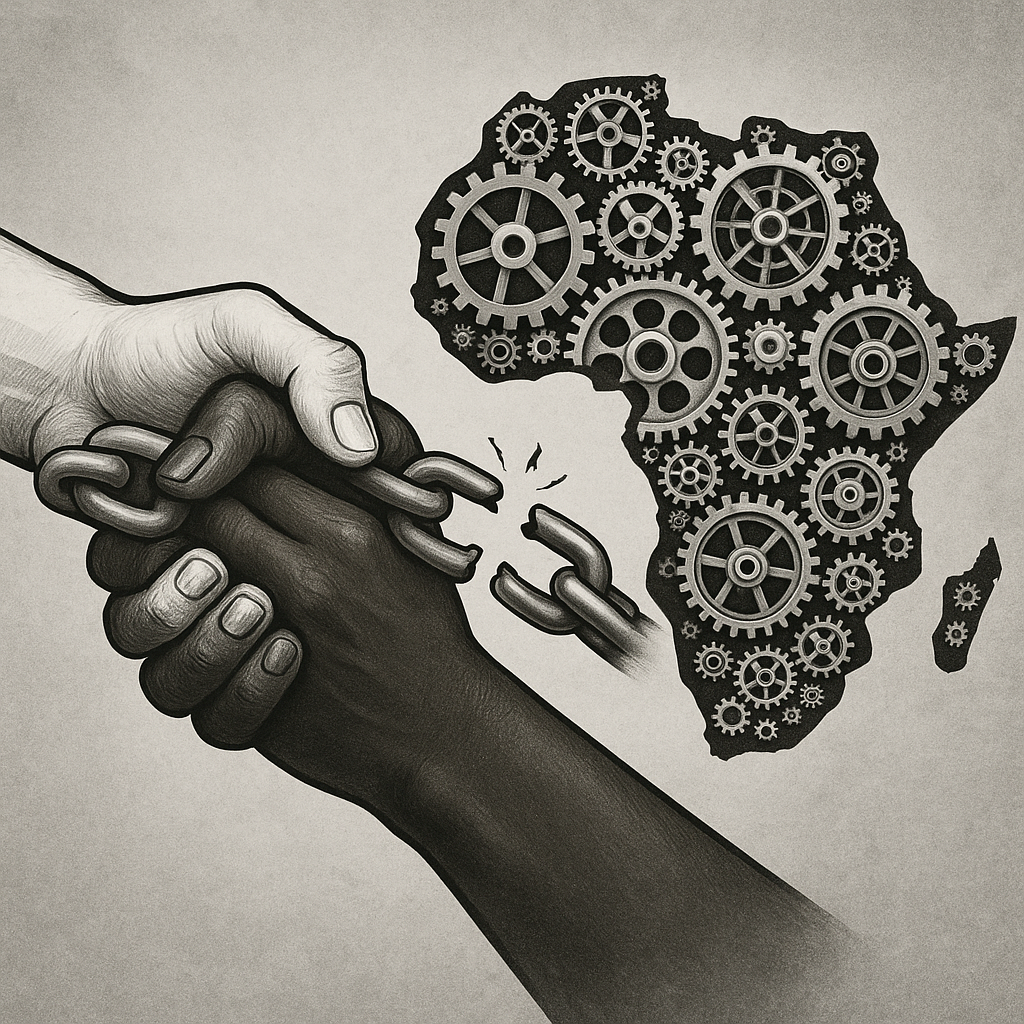
When a superpower ignores the rules, mid-size nations scramble for new defenses. Explore how South Africa, Europe, and corporations adapt to weaponized uncertainty.
This article explores how middle-income nations can fight back against economic bullying from superpowers. It shows that countries like South Africa can use clever tactics, such as controlling important metals like platinum, using new ways to handle money, and even making funny internet videos. These smart moves help them gain time and power against bigger nations, proving that even smaller countries have surprising ways to push back and make their own rules.
How can a middle-income nation counter a superpower's economic pressure?
Middle-income nations can counter superpower economic pressure using asymmetric tools like leveraging control over strategic resources (e.g., platinum, rare-earth phosphors), utilizing alternative financial systems (e.g., BRICS+ clearing cards), and even employing soft power through cultural influence and legal challenges. These diverse strategies aim to buy time and create leverage.
Get Cape Town news in your inbox
Stay updated with the latest stories from the Mother City.
The Hour the Tariff Became a Tank
Just after midnight on 29 December 2025, while most of America nursed post-holiday drowsiness, Executive Order 13988 detonated inside every customs-clearance server on the planet. Duties no longer climb by polite percentage points; they now double every three calendar days until a “letter of contrition” lands on the Resolute desk. Cargo already bouncing across oceans becomes a retroactive minefield: a container of Western-Cape lemons that left Durban on 20 December was slapped with a 126 % surcharge by the time it docked at Long Beach on 3 January.
South Africa’s citrus, wine and catalytic-converter sectors were the first petri-dish. Within ten trading sessions the rand bled 11 %, compelling the Reserve Bank to torch US $2.3 billion of hard-currency reserves - more than it spent during the entire 2020 pandemic panic. Lloyd’s underwriters, caught pricing sovereign tantrums instead of storms, rushed “Trump clauses” into every new policy, shoving the risk back onto exporters who never asked to become geopolitical poker chips.
The genius lies in speed: a WTO dispute panel needs thirteen months to reach a first ruling, while the cascading levy maxes out in less than two weeks. Pretoria therefore faces a choice - kneel, or invent a faster screwdriver than the tariff ratchet.
Pretoria’s Platinum Spanner and Other Asymmetric Tools
Clayson Monyela’s viral tweet - “We are not guests at the G20 table; we built the table” - wasn’t diplomatic sass; it was the unveiling of a three-legged contingency stool sketched during the quiet months of 2020 when COVID kept planes on the ground.
-
First leg:* the Mandela Platinum Clause. South Africa still refines 73 % of the world’s platinum-group metals, and the 1988 minerals agreement with Washington was never formally buried. DTIC lawyers argue Pretoria can relabel PGMs as “strategic” and require export licences. A 120-day pause would idle Ford’s Kentucky Truck Plant inside six weeks, sending tremors through congressional districts that have never bothered to locate the Rustenburg smelters on a map.
-
Second leg:* the Table Mountain IP lever. Every Snapdragon chip since late-2022 uses rare-earth phosphors patented by Stellenbosch University. The 1978 Patents Act lets the trade minister revoke protection if the rights-holder resides in a country inflicting “discriminatory measures.” Qualcomm’s market value wobbled by US $8 billion the day the rumour hit Bloomberg’s terminal; the threat alone is cheaper than an actual embargo.
-
Third leg:* the BRICS+ clearing card. The New Development Bank’s yuan-rand swap line - RMB 50 billion - covers 38 % of South Africa’s oil and pharmaceutical bills, enough to keep hospitals humming even if SWIFT doors slam shut. It is not a full dollar parachute, but it buys months, and months are all a small power needs to out-wait a headline-driven superpower.
Europe’s Gold-Backed Firewall and Corporate Escape Tunnels
Emmanuel Macron’s lament about a “world without rules” masks a Parisian laboratory cooking up a very specific rulebook. The proposed European Monetary Fund-style vehicle would issue short-dated euro bills collateralised by the ECB’s 3 400-tonne shadow gold pile, refinancing any emerging-market treasury throttled by an American sanctions choke-chain. Rome, meanwhile, has brushed off a forgotten 1996 Helms-Burton clause that empowers EU firms to sue for triple damages in European courts if Washington’s extraterritorial fines bite their profits. ENI’s South-African gas arm is first in line: a €400 million claim against Exxon’s forced exit would carve a trans-Atlantic legal trench where US secondary sanctions drown under European counter-damages.
Corporate boardrooms are not waiting for judges to pick a winner. Apple shifted Siri’s IP holding company from Delaware to the Cayman Islands and onward to Singapore - an extra 0.3 % tax hit, but the code nestles safely beyond OFAC’s grasp. BMW’s Rosslyn assembly hall now colour-codes forklifts: red-label parts come from the United States and can be blacklisted overnight; blue-label components originate in ASEAN or Brazil and sail through. De Beers invoices diamonds in a cocktail of dirham, yuan and Swiss francs, trimming dollar exposure by nearly two-thirds while the stones travel through Dubai’s Multi-Commodities Centre. Each manoeuvre is microscopic, yet together they weave a mesh that catches the bulk of any future dollar earthquake.
From Fluorspar to TikTok Memes - The Battlefields Nobody Forecast
While headline writers obsess over platinum, a quieter choke point sits in South Africa’s North-West province: Buffalo Fluorspar Mine feeds 17 % of US acid-grade demand, vital for etching the next generation of Pentagon micro-chips. There is no strategic stockpile - last purchase was 2008 - so a routine 90-day export moratorium would triple domestic American prices and idle Intel’s Chandler foundry within a quarter. National Security Council war-games, insiders whisper, never imagined sandboxing a mineral most planners can’t pronounce.
Above the clouds, Starlink needs ICASA’s 27.5–28.35 GHz licence to blanket the sub-Saharan cone. Without it, the constellation must beam around the Cape, shedding 40 % signal strength. ICASA’s chair has publicly “paused” approval pending non-interruption guarantees, turning rural broadband leverage into satellite-age deterrence.
Down on human terrain, 8 000 South African nurses keep Texan and Floridian hospitals alive under the Conrad 30 waiver, 1 400 software engineers maintain fintech stacks in Jacksonville, and 38 Springboks power America’s fledgling rugby league. H1-B renewals can be deferred, ethical-repatriation campaigns can be tweeted, and suddenly deep-red districts confront staffing vacancies they cannot fill at any wage.
Soft power joins the fray through 60-second TikTok cartoons: #T-RexTyrant - a tiny-handed dinosaur in a crimson cap - racked up 430 million views across Nigeria, Kenya and India within ten days. The White House protested; Pretoria shrugged and cited “artistic licence.” The metric is not laughs but longevity - shaving gloss off the Trump brand among the consumers who will shape African markets for the next three decades.
Finally, South Africa’s US $8.5 billion Just Energy Transition Partnership contains a force-majeure trapdoor triggered by “politically motivated financial restrictions.” Freeze the disbursement, and Pretoria can lawfully redirect the undrawn US $1.3 billion tranche toward Chinese solar arrays, gifting Beijing a climate-propelled PR victory while Washington wrestles to keep the Global South inside its green tent.
Lawyers at The Hague are already prepping an advisory-opinion request under the 1971 Namibia precedent, arguing that extraterritorial sanctions rooted in racially charged disinformation run afoul of the UN Charter. A non-binding ruling would still hand sanctioned states a recyclable stack of diplomatic ammunition.
So when Gavin Newsom mutters about kneepads he is tasting only the surface humiliation. Far below the waterline, attorneys, coders, nurses, central-bank technologists and even comedians are rewriting the operating manual for sovereignty - patent by patent, swap line by swap line, meme by meme - testing whether a middle-income nation can still bend the trajectory of a superpower’s appetite.
[{"question": "
How can middle-income nations like South Africa defend themselves against economic bullying from superpowers?
\nMiddle-income nations can leverage asymmetric tools. This includes controlling strategic resources like platinum-group metals (PGMs), utilizing alternative financial systems such as BRICS+ clearing cards, employing soft power through cultural influence (like viral internet videos), and even initiating legal challenges through international bodies or local laws. These tactics buy time and create leverage against larger powers.
\n", "answer": ""}, {"question": "What are some specific examples of South Africa's 'asymmetric tools'?
\nSouth Africa has several key strategies: the 'Mandela Platinum Clause' allows them to declare PGMs as strategic, requiring export licenses and potentially disrupting industries like Ford's Kentucky Truck Plant. The 'Table Mountain IP lever' threatens to revoke patents (like those for rare-earth phosphors used in Snapdragon chips) if countries inflict discriminatory measures. Additionally, the BRICS+ clearing card provides an alternative financial pathway, reducing reliance on the US dollar and SWIFT.
\n", "answer": ""}, {"question": "How do 'Trump clauses' and WTO dispute timelines impact smaller nations?
\n'Trump clauses' are new additions by underwriters to shift the risk of sovereign tantrums back onto exporters, reflecting the instability caused by sudden tariff changes. The speed of these tariffs is crucial; a cascading levy can max out in less than two weeks, while a WTO dispute panel takes approximately thirteen months for a first ruling. This disparity forces smaller nations to find faster solutions than traditional legal avenues.
\n", "answer": ""}, {"question": "Beyond traditional economic levers, what unconventional battlefields are emerging?
\nUnconventional battlefields include control over less-obvious but critical resources like fluorspar, essential for microchips. Regulatory control over satellite internet licenses (e.g., ICASA's power over Starlink) can provide deterrence. Soft power also plays a role, with cultural exports like TikTok memes (e.g., #T-RexTyrant) influencing global perceptions and chipping away at a superpower's brand. Even the mobility of skilled labor, such as nurses and software engineers, can be leveraged.
\n", "answer": ""}, {"question": "How are corporate entities adapting to this new global economic environment?
\nCorporations are proactively adapting by restructuring their operations to mitigate risks. This includes shifting intellectual property holdings to jurisdictions like Singapore to avoid sanctions, color-coding supply chains to differentiate between high-risk (e.g., US-sourced) and lower-risk components, and diversifying invoicing currencies (e.g., using dirham, yuan, and Swiss francs for diamond trade) to reduce dollar exposure. These 'microscopic' maneuvers collectively create a protective mesh against economic shocks.
\n", "answer": ""}, {"question": "What role do international law and climate initiatives play in these power dynamics?
\nInternational law provides avenues for recourse, such as preparing advisory-opinion requests at The Hague based on precedents like the 1971 Namibia case, arguing against extraterritorial sanctions. Climate initiatives, like South Africa's Just Energy Transition Partnership, can also include 'force-majeure' clauses. This allows nations to redirect funds (e.g., to Chinese solar arrays) if politically motivated financial restrictions are imposed, turning climate policy into a tool for geopolitical leverage and PR victories.
\n", "answer": ""}]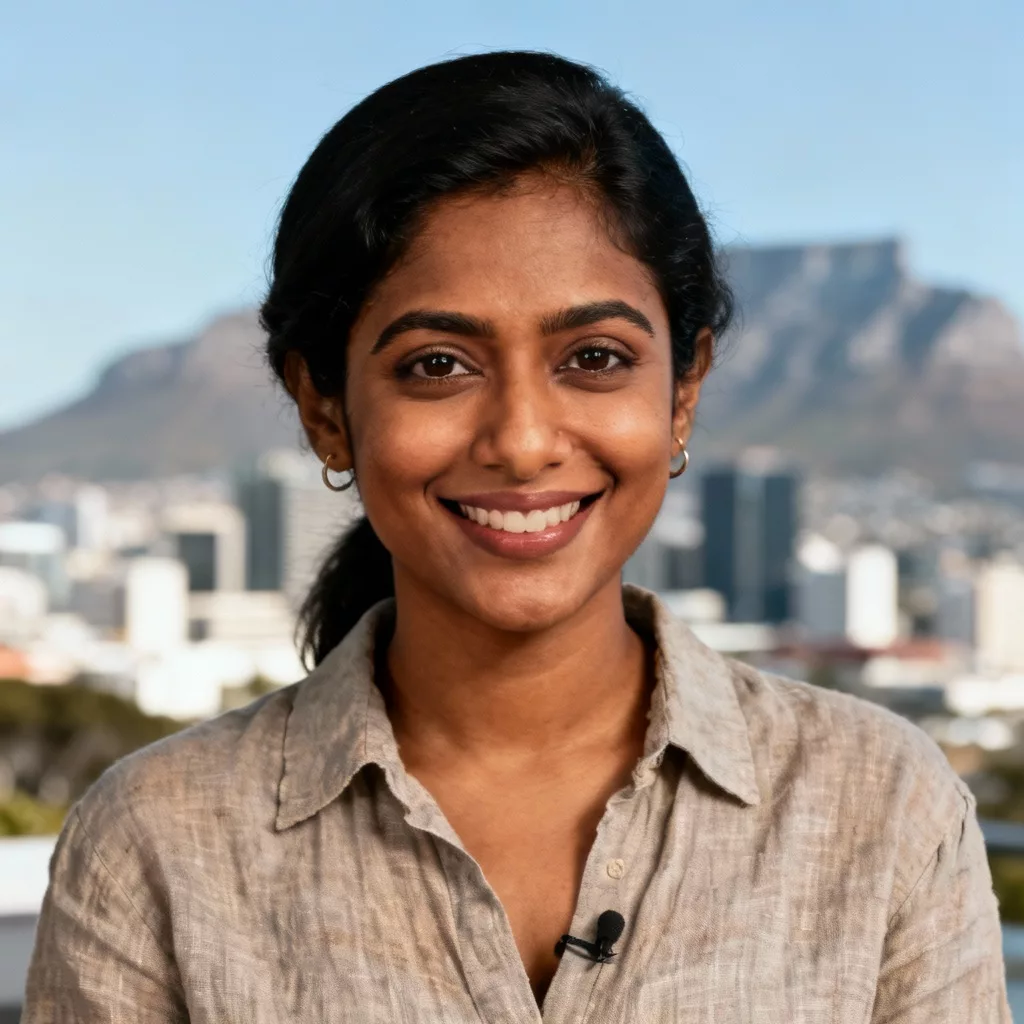
Zola Naidoo is a Cape Town journalist who chronicles the city’s shifting politics and the lived realities behind the headlines. A weekend trail-runner on Table Mountain’s lower contour paths, she still swops stories in her grandmother’s District Six kitchen every Sunday, grounding her reporting in the cadences of the Cape.
View all articles →