
Efficient public transport systems
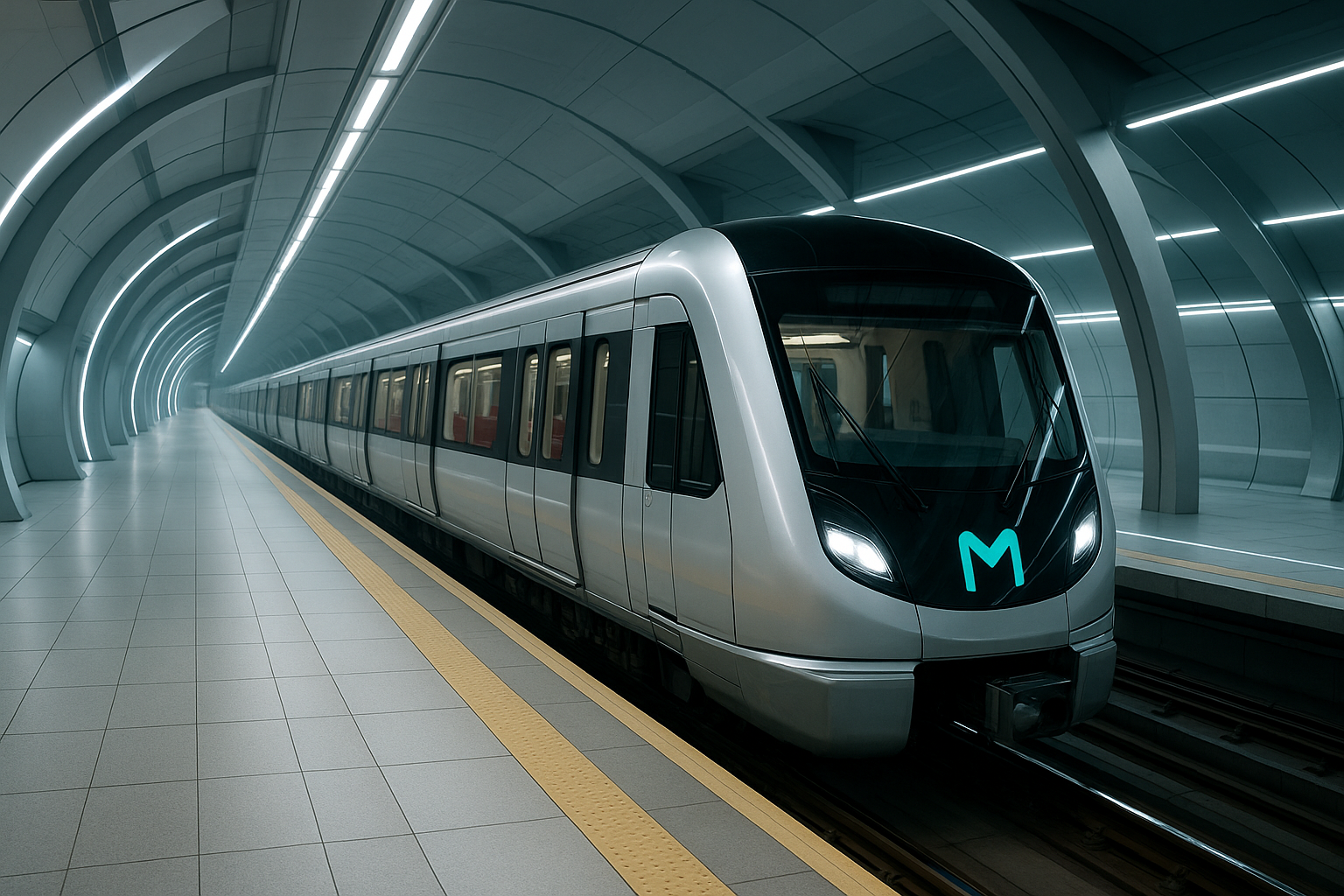
South African expats share 20 everyday systems from abroad, from efficient transport to quiet pharmacies, that could transform life back home.
South African expats living abroad yearn for the simple, well-oiled systems they've experienced elsewhere. They miss reliable public transport that runs like clockwork, pharmacies open all night, and electricity that never quits. It's not just about services, but a deeper sense of trust and safety that allows for borrowed tools and peaceful nights. They long for a society where life's practicalities are smooth, leaving more time for joy and less for hassle.
What do South African expats miss most about living abroad?
South African expats living abroad often miss the quiet efficiency and underlying trust found in well-functioning public services and societal norms. These include reliable public transport, accessible 24-hour pharmacies, consistent electricity supply, a sense of public safety, community resources like tool-lending libraries, streamlined tax processes, affordable fresh produce, the 'right to repair' appliances, and a better work-life balance.
Get Cape Town news in your inbox
Stay updated with the latest stories from the Mother City.
1. The 4:17 Sunday Whisper
Copenhagen’s driver-less metro slips out of Vestamager at dawn, heated seats glowing, announcements toggling between Danish and crisp English. No guards, no ticket queues, no drama. South Africans fresh from London’s 02:08 Victoria-line crush, or Tokyo’s Cinderella train that drops commuters in Saitama before the clock strikes one, talk about that ride the way pilgrims talk about vaulted naves: public space that simply behaves.
The craving is bigger than steel wheels. It is the quiet layer of trust that lets a sixteen-year-old open Google Maps, accept three connections, and stroll home without rehearsing escape routes. The engineering recipe is bland but exact: one digital ticket valid on buses, trams and minibuses; camera-policed bus lanes; suburb-to-suburb lines that never force a detour through the CBD. Johannesburg’s Rea Vaya and Cape Town’s MyCiTi prove the hardware exists; what’s absent is a national regulatory spine that keeps routes, timetables and prices sane even when mayors come and go.
Add tree-trimmed rights-of-way, arrival screens that tell the truth, and a compensation rule that refunds passengers after three minutes of delay - standard in Zurich, revolutionary in Durban. The invisible dividend is time: parents who read bedtime stories instead of sitting in traffic, workers who gain two extra daylight hours for side-hustles or rest.
2. The All-Night Chemist and the Myth of “Too Dangerous”
Step out of a Berlin flat at 01:12 with a wheezing child and within a short block a green cross rotates above a counter staffed by a qualified pharmacist who will sell you a salbutamol inhaler, no script required. The shop footprint matches a South African hair salon, yet it stocks four generic brands and swipes a foreign medical card without flinching.
Expats dream of grafting that convenience onto Pretoria or Gqeberha suburbs where the only beacon after 21:00 is the fluorescent glow of an Engen shop, and even then the generics sit behind burglar mesh. The planning hack is almost insultingly simple: mixed-use zoning that permits a ground-floor chemist, two storeys of flats and a rooftop play court on a single erf. The headache is persuading councils that “24-hour” does not equal “nightclub neighbour.”
Show them crime-stats from Vienna, where late-night pharmacies have operated for forty years without security guards, and the trick is lighting, foot-traffic and swift by-law fines for loitering. Copy-paste that module and a mundane asthma attack no longer becomes an ER visit, saving the state roughly R1,800 a pop in public-health terms.
3. Electricity That Forgets to Be Interesting
An Irish engineer in Limerick confesses she has never downloaded EskomSePush; her lone blackout memory is a 2011 storm that killed power for three hours. The grid she uses is mind-numbingly faithful: 230 V, 50 Hz, sunrise to sunrise. Boring, in South African ears, is the ultimate luxury.
The unsexy checklist: vegetation trimmed two metres either side of cables, smart meters that ping when a substation lid is lifted, and a courts act that treats transformer vandalism like cash-in-transit heists. Emotional payoff: restaurants install electric pizza ovens instead of budgeting for diesel, insurers drop household premiums by eight percent, and families finally book that December hiking trail because the freezer will stay cold.
Copy the Scottish model: councils publish live outage dashboards ranked by MTBF - mean time between failures - so mayors compete for the dullest graph. Add a feed-in rebate for rooftop solar and the grid becomes a platform, not a lottery.
4. The Sound of Nothing Happening
Tokyo’s final bullet train leaves at 23:56. Commuters reserve seats, then leave handbags draped while they fetch canned coffee. In Zurich, restaurant owners hose terraces at half-past eleven, purses still clipped to chair backs. The soundtrack you notice is absence: no ratcheting roller shutters, no electronic chirp of alarms being armed, no shouted “gogos” locking gates.
South Africans abroad sleep deeper not because crime is zero, but because design pre-empts it: eyes-on-the-street architecture, pedestrian-scale lighting, mixed-income housing that deletes “buffer-zone” dead belts, plus courts that finalise 85 % of contact-crime cases within nine months. Hardware is cheap; the software - trust - carries a price tag measured in judicial reform and council consistency.
Re-importing the hush starts with a municipal by-law: every new commercial development must have 70 % transparent street frontage, lit to 30 lux, and a maintenance bond that fines landlords if bulbs are out for more than 48 hours. Pair that with a night-court shift that processes pick-pockets within 24 hours and the psychological space widens, even in Hillbrow.
5. The Drill You Can Borrow, the Karaoke You Can Try
Helsinki’s Oodi library lends power drills, 3-D printers and full karaoke rigs. Entry is free to anyone with a municipal address, asylum seekers included. The building is half glass, has no security gates, and posted zero thefts in its first three years.
Contrast that with Johannesburg’s 2019 shutdown of its brass-doored main library, chains now rusting in the sun. Expats argue the asset is not the books but the social contract: a public institution that treats citizens as co-trustees. Replicating it costs less than one traffic interchange: an RFID gate, a help-desk staffed by interns, and longer hours funded by a one-percent surcharge on commercial rates within a two-kilometre radius.
Throw in tool-training evenings and the same space becomes a micro-enterprise factory: hobbyists prototype furniture, repair start-ups rent printers, and school robotics teams finally have a venue that doesn’t charge like a conference centre.
6. The Pre-Cooked Tax Form and the Missing Data Deal
Dutch residents wake on 1 March to find their tax return pre-completed. If life is simple, they tick “agree” and the refund lands within 48 hours. SARS eFiling is architecturally world-class, yet citizens still dig for medical slips and RA certificates.
Expats crave the back-end data pact that makes the Dutch form painless: automatic feeds from employers, banks, medical schemes and insurers, backed by privacy statutes that jail CEOs for leaks. The tech is trivial; the political heavy-lift is forcing private institutions to share numbers in real time. Sweetener: offer companies a one-percent corporate-tax rebate for early data submission and the pipeline builds itself.
Add a mobile-chat bot that answers in isiZulu or Afrikaans and suddenly tax season becomes a two-minute errand, freeing accountants to chase real evaders instead of harassing nurses for receipts.
7. Salad That Costs the Same as Vetkoek
A Barcelona single mum buys a bowl of mesclun, cherry tomatoes and feta for the price of R18. The identical basket in Sandton retails for R68. Freight is not the villain; scale and transparent contracts are. Spanish supermarkets lock in forward prices with Almería growers, run nightly food-truck consolidators, and rent cold-chain space by the pallet to small farmers.
South Africa exports picture-perfect baby vegetables to UK supermarkets, then landfills crooked carrots. Expats want the municipal logistics layer, not the European lettuce itself. Build a 1,000-square-metre distribution hub on the edge of every metro - think fresh-produce Uber - and vendors order pallet space by app. Result: food prices fall, farmer incomes rise, and urban households finally meet the five-a-day target without bleeding wallets.
8. The Right to Repair, the Right to Work
France forces manufacturers to paste a repairability score on every appliance. Points accrue for downloadable manuals, affordable spare parts, screws instead of glue. South Africa imports the same fridges but not the law; hence a cracked Samsung screen costs R5,800 here versus R1,200 in Lyon.
Copy the statute and twin it with township repair cafés where unemployed youth earn micro-licences to mend kettles and phones, paid by SnapScan. The French consumer right morphs into a local job engine, cutting e-waste dumps like Agbogbloshie off at the knees. Municipalities donate unused halls, tech companies supply toolkits, and insurers offer extended warranties on repaired devices to keep demand humming.
9. The Off-Switch for E-Mail, the On-Switch for Sanity
France’s “right to disconnect” lets employees ignore after-hours messages. South African branches of the same multinationals flout the spirit daily. Expats burn out within months of returning home. The clause they want inserted into the Basic Conditions of Employment Act is elegant: any e-mail sent outside normal hours must carry an “optional response” tag and an auto-reply that grants a 24-hour grace period.
Pilot studies show no productivity loss; error rates actually fall. The law costs nothing to draft - only the political courage to formalise respect. Add a dashboard that flags serial violators and HR can intervene before talent walks.
10. The Holiday Calendar That Belongs to Everyone
In the UAE, public holidays rotate so that Eid, Diwali and Christmas all get long-weekend turns. South African expats in multi-faith teams cherish the equity. Back home they propose a floating quota: each citizen picks 12 days from a national pool - Eid, Diwali, Rosh Hashanah, Ancestor Day - so long as the total non-working tally stays fixed.
Employers gain predictability, workers gain dignity, and tourism boards finally spread peak-season load across the year. The software already sits inside payroll engines; the leap is Treasury blessing and union buy-in.
These twenty vignettes are not sci-fi. They are municipal ordinances, corporate habits and social contracts observed in places hotter than Durban and colder than Sutherland. The only import duty is imagination - and the courage to copy what already works.
[{"question": "
What are some of the practicalities South African expats miss about life abroad?
\nSouth African expats often yearn for the smooth practicalities they experience abroad, such as reliable public transport, accessible 24-hour pharmacies, and consistent electricity. They appreciate systems that just work, reducing daily hassle and freeing up time for personal pursuits and joy.
\n", "answer": null}, {"question": "How do public transport systems abroad differ from those in South Africa, according to expats?
\nExpats highlight the quiet efficiency and underlying trust in public transport abroad. They describe systems with driverless metros, digital ticketing valid across multiple transport types, camera-policed bus lanes, and suburb-to-suburb routes that avoid city centers. They also note features like accurate arrival screens and compensation for delays, which enhance reliability and convenience, unlike the often inconsistent public transport in South Africa.
\n", "answer": null}, {"question": "What do expats find appealing about healthcare access, particularly pharmacies, in other countries?
\nExpats value the widespread availability of 24-hour pharmacies in cities like Berlin, where they can easily access necessary medications like salbutamol inhalers without a prescription, even in the middle of the night. This contrasts sharply with the limited after-hours options in many South African areas, where emergency services might be the only recourse for minor ailments.
\n", "answer": null}, {"question": "Why is consistent electricity supply such a significant longing for South African expats?
\nFor South African expats, reliable electricity, free from load shedding or outages, is the 'ultimate luxury.' They envy countries where the grid is mind-numbingly faithful, allowing businesses to operate without interruption (e.g., electric pizza ovens) and households to enjoy uninterrupted services. They miss the absence of constant worry about power cuts and the ability to simply take electricity for granted.
\n", "answer": null}, {"question": "How does the sense of safety and trust abroad impact expats' daily lives?
\nExpats appreciate the deeper sense of trust and safety in many foreign cities, which allows for everyday actions like leaving handbags unsupervised on trains or borrowing tools from public libraries without fear of theft. This contrasts with a constant awareness of crime in South Africa, leading to a more relaxed and less vigilant daily existence abroad. Features like 'eyes-on-the-street' architecture, good lighting, and efficient judicial systems contribute to this feeling.
\n", "answer": null}, {"question": "What kind of community resources do expats find valuable in other countries?
\nExpats value community resources like Helsinki's Oodi library, which lends items beyond books, such as power drills, 3D printers, and karaoke rigs. These facilities foster a sense of shared ownership and provide practical tools and entertainment, often with free access and a high level of trust, which is a stark contrast to some underutilized or closed public institutions in South Africa.
\n", "answer": null}]
Tumi Makgale is a Cape Town-based journalist whose crisp reportage on the city’s booming green-tech scene is regularly featured in the Mail & Guardian and Daily Maverick. Born and raised in Gugulethu, she still spends Saturdays bargaining for snoek at the harbour with her gogo, a ritual that keeps her rooted in the rhythms of the Cape while she tracks the continent’s next clean-energy breakthroughs.
View all articles →