
First-time home buyers: Majority single women in South Africa
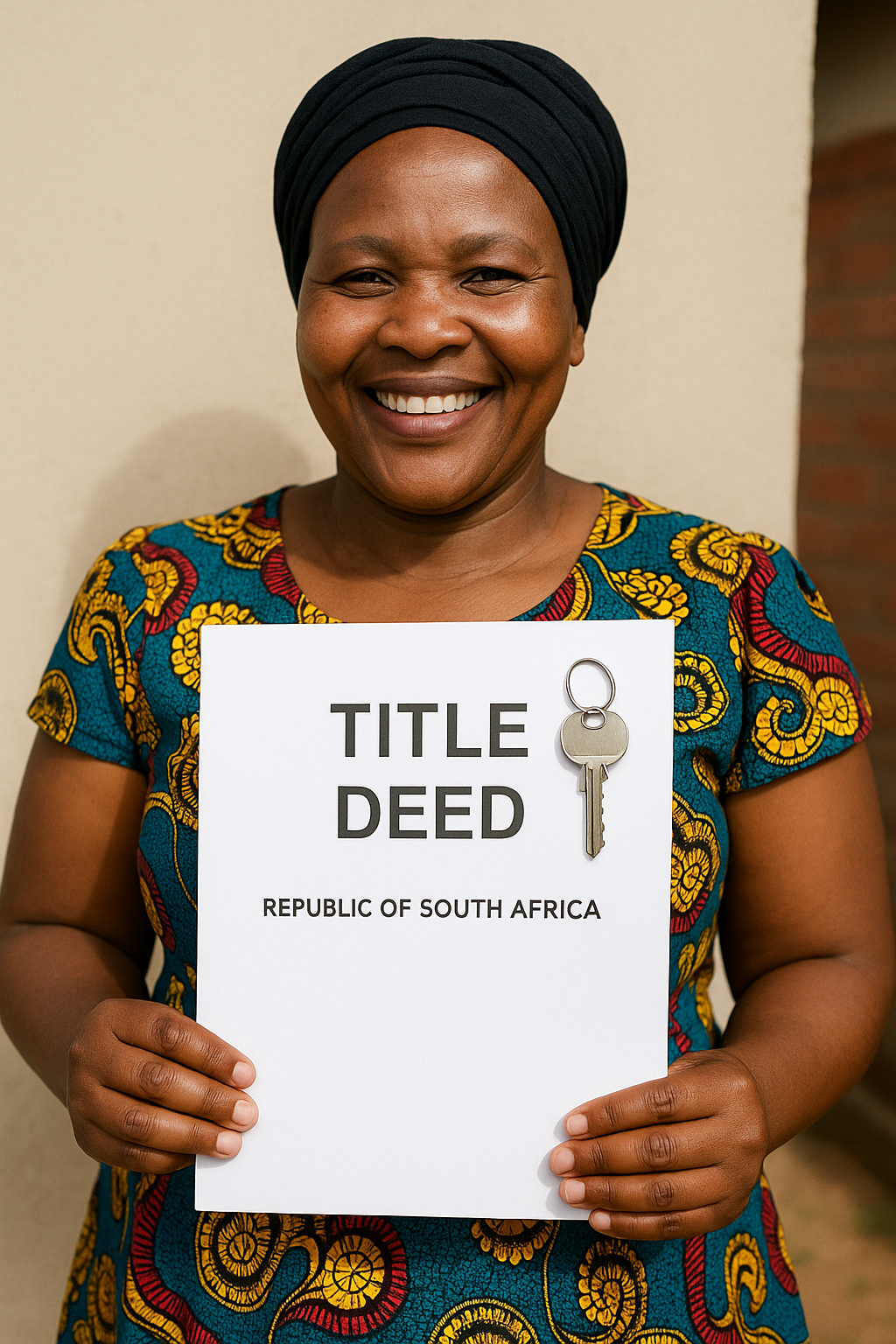
Unmarried South African women are reshaping homeownership, becoming a majority of first-time buyers and influencing property development.
South African women, especially single first-time buyers, are taking over the home security market! They are smart with money, asking for smaller loans, and often get help from family. This change is making banks, builders, and architects rethink everything to fit what these independent women need for their homes.
How are South African women changing the home security market?
South African women are significantly redrawing the home security map, particularly unmarried first-time home buyers. This shift, driven by financial prudence, smaller loan requests, and often family support, is reshaping lending models, property development, and even architectural designs to cater to the needs of solo female households.
Get Cape Town news in your inbox
Stay updated with the latest stories from the Mother City.
1. The Stat That Flipped the Boardroom
Walk into any big-bank bond office right now and the first dashboard you meet is a plain white spreadsheet: 54 % of last quarter’s first-time applicants were unmarried women.
The font is boring, the paper is thermal, yet the figure has already reshuffled the seating plan: product teams now open meetings with “what does a solo-female household need?” before they worry about double-income couples.
This is not a one-off spike; the share has crept up roughly one percentage point every three months since late-2022, according to raw application pipes from four large lenders and transfer deeds verified by Lightstone.
In a country where only 43 % of adults (and just 34 % of women) can access any form of credit, a female-majority queue at the 20-year debt counter is a historic first.
The number matters because it is forward-looking.
Bond books are built today on applications that will still be repaid in 2045, so a sustained tilt in the customer base forces banks to rewrite affordability models, marketing budgets and even the size of kitchen cupboards on development blueprints.
If you want a single snapshot that explains why new launches are shrinking to 55 m² and security estates are adding co-working pods instead of pubs, start with that bland 54 %.
2. Why “Solo” Carries More Weight Than “Female”
Marriage in South Africa has quietly become the outlier: the 2022 Community Survey shows 61 % of women over 15 have never tied the knot or are widowed or divorced.
Credit engines, however, still run on 1990s repayment curves that assumed a second pay-cheque in the household.
A lone applicant therefore faces higher decline odds, steeper interest and a thicker deposit book.
That women are vaulting over these hurdles in record numbers signals a hard-nosed balance-sheet choice rather than a fairy-tale “nesting” impulse: secure a fixed roof now, before retrenchment, ageing parents or the next pandemic turns tenure into fantasy.
The shift is also behavioural.
Lenders report that solo women arrive with folder-ready budgets: salary slip, side-gig print-out, stokvel letter and a colour-coded Excel of living costs.
Men, by contrast, still quote “future bonus” or “overtime I always get.”
In a regulatory climate governed by the National Credit Act’s “reckless-lending” clause, paper beats promise.
The result is systemic: the same algorithm that once penalised single earners now quietly favours the gender that brings less baggage and smaller loan requests.
3. The R900 k Bull’s-Eye and the Anatomy of “Yes”
Scroll through provincial deeds offices and you will see the same price tag blink like a lighthouse: median purchase sits between R850 k and R950 k, well below the national rookie average of R1.05 million.
Zoom in and the unit is always the same triad: a 55 m² sectional-title flat built after 2000, within seven kilometres of a private hospital, on a route served by one of the new ride-hail bus lines.
Translation: small enough to survive on one salary, close enough for the day medical-aid savings evaporate, and transport-cheap for the week the car collapses.
Developers who once marketed braai packs and golf memberships now swap spreadsheets and Google-Map screenshots.
Absa’s public funnel shows an odd twist: a lone woman is approved 1.7 times more often than a lone man in the same income bracket.
The driver is counter-intuitive: women earn less but owe less, carrying 30 % fewer short-term debts and credit scores 15 % higher.
Men ask for bigger bonds and bring store-card skeletons; women arrive with a clean slate and ask modestly.
In the post-NCA world, modesty is the new gold.
The silent tilt is therefore not charitable; it is actuarial.
4. Hidden Fuel, Next Frontier and the 2030 Blueprint
Behind every modest deposit often sits an invisible booster: the 2023 Old Mutual Savings Monitor found 42 % of black women under 35 who bought property received an average cash gift of R195 k from parents or an aunt; for men the figures were 17 % and R115 k.
Sociologists call it “family insurance” – a daughter’s deed is expected to shelter younger siblings or retired parents later.
Sunday viewings in Soweto or Umlazi regularly feature a quiet older woman whose single nod unlocks the offer.
Estate agents have learned to address the aunt before they address the buyer.
Government’s FLISP subsidy – up to R169 k off a home under R1.1 million – has become the next frontier.
In 2022 only 19 % of approvals went to women; by 2025 the number had flipped to 51 % after the Department shifted marketing to WhatsApp voice notes in isiZulu and seSotho.
In Cosmo City and Motherwell a 42 m² starter now lists at R699 k; minus FLISP the required bond is R530 k – cheaper than a mid-range Toyota.
Township developers are scrambling to shrink units, add pre-paid meters and plaster “FLISP-ready” on every brochure.
Construction-finance desks already sketch the 2030 skyline: units 30 % smaller, densities 40 % higher, ground-floor crèches as standard.
Demographers predict one in every two urban title deeds will carry a woman as sole or joint owner by 2030, up from 39 % today.
When the person who balances the household budget also holds the deed, builders switch to induction hobs because open gas is “too dangerous,” fibre is pre-laid because “remote work is work,” and rainwater tanks come fitted because “municipal chaos is a given.”
The architectural brief is being written in real time, one Offer to Purchase at a time.
How are South African women changing the home security market?
South African women, especially single first-time buyers, are significantly redrawing the home security map. They are financially prudent, request smaller loans, and often receive family support, which is reshaping how banks, builders, and architects cater to the needs of solo female households.
What percentage of first-time loan applicants are unmarried women?
According to data from late-2022, 54% of last quarter's first-time loan applicants were unmarried women. This figure has been steadily increasing, demonstrating a sustained shift in the demographic of home buyers.
Why are single women more successful in securing home loans than single men?
While women generally earn less, they tend to carry 30% fewer short-term debts and have credit scores 15% higher than men. They approach lenders with meticulous budgets and smaller loan requests, which, in a regulatory environment focused on preventing reckless lending, makes them actuarially more favorable candidates despite lower incomes.
What is the typical profile of a property purchased by these women?
The median purchase price for properties bought by South African women, particularly first-time buyers, is between R850,000 and R950,000, which is below the national rookie average. These properties are typically 55m² sectional-title flats built after 2000, located within seven kilometers of a private hospital, and on a route served by ride-hail bus lines, prioritizing affordability, convenience, and access to essential services.
How does family support contribute to women's homeownership?
Family support plays a significant role, with 42% of black women under 35 who bought property receiving an average cash gift of R195,000 from parents or aunts. This 'family insurance' often means the property will provide shelter for younger siblings or retired parents in the future.
What changes are predicted for the housing market by 2030 due to this trend?
By 2030, demographers predict that one in every two urban title deeds will carry a woman as a sole or joint owner, up from 39% today. This shift is leading to the development of housing units that are 30% smaller, densities 40% higher, and standard features like ground-floor crèches, induction hobs, pre-laid fibre internet, and rainwater tanks, reflecting the practical needs and priorities of these homeowners.

Sizwe Dlamini is a Cape Town-based journalist who chronicles the city’s evolving food scene, from boeka picnics in the Bo-Kaap to seafood braais in Khayelitsha. Raised on the slopes of Table Mountain, he still starts every morning with a walk to the kramat in Constantia before heading out to discover whose grandmother is dishing up the best smoorsnoek that day.
View all articles →