
Flip Flop Day 2026 steps up for children
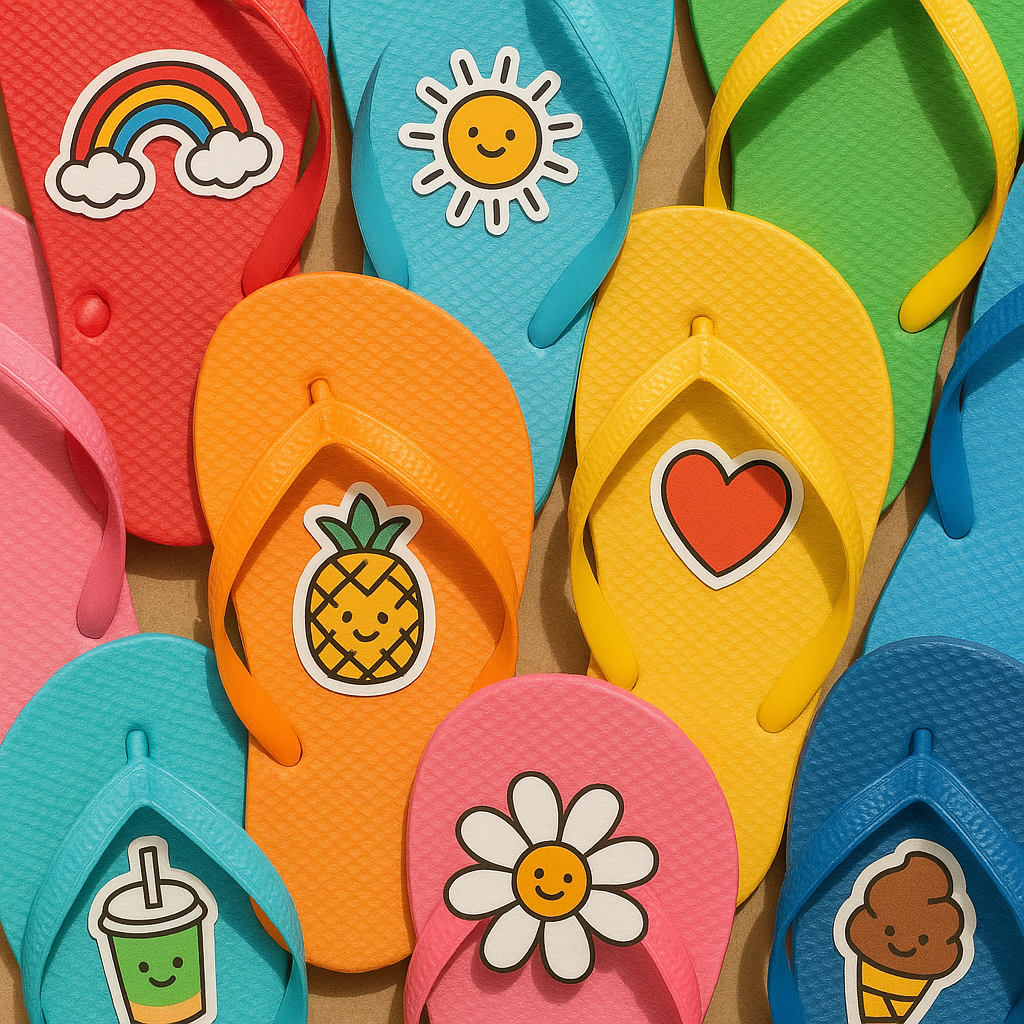
Flip Flop Day 2026: A nation unites in flip flops, wearing R10 stickers to support CHOC and children with cancer in South Africa.
Flip Flop Day 2026 is a special day in South Africa where everyone wears flip flops and buys a small R10 sticker. This tiny sticker helps children with cancer and their families. From busy morning commutes to kids learning math, the whole country joins in, showing that even a small act can make a huge difference. It's a day where simple flip flops turn into a big wave of kindness and support for CHOC.
What is Flip Flop Day 2026?
Flip Flop Day 2026 is a nationwide South African fundraising event where people wear flip flops and purchase an R10 sticker to support CHOC (Childhood Cancer Foundation SA). This small act of solidarity transforms everyday commutes and activities into a massive collective donation effort, funding essential services for children with cancer and their families.
Get Cape Town news in your inbox
Stay updated with the latest stories from the Mother City.
1. Dawn: The Commute That Forgot Its Shoes
The alarm still hurts at 05:30, but the closet looks different. Leather soles and ankle boots have surrendered the front row to neon beach slappers, zebra-print slings and cracked plastic that once advertised a 2018 margarita brand. By the time the Gautrain doors hiss open, the carriage sounds like a lazy drum circle: rubber kissing heels in half-speed syncopation. No banner announces the ritual; the soundtrack does the talking.
In Durban a minibus taxi conductor refuses passengers who still wear sneakers - “Not today, bhuti, today we glide.” He says it with a grin, but the rule is real. In Cape Town the N2 jam becomes a runway of mismatched straps: corporate navy suits paired with sunflower-yellow flip flops, high-school socks swallowed by cherry-red thongs. The common denominator is a palm-sized day-glo circle slapped on the strap: #FlipFlopDay26, R10, matte paper already curling like an old bus ticket.
That tiny sticker is the country’s quietest revolution. It costs less than a packet of chips, yet it flips the social pyramid. CEOs queue for coffee behind interns, all of them exposing the same dusty heel. The security guard at Hatfield Plaza salutes with turquoise flowers between his toes. No one hides the sticker under tape or laminates it; by dusk it must look lived-in, frayed, maybe even torn - proof you stayed in the game all day.
2. The Invisible Highway: How a Rand Travels 614 km Before Breakfast
Long before commuters wiggle their feet into plastic, a warehouse in City Deep hums like a beehive. Volunteers - many of them parents who once watched their own children sleep in a CHOC House - sit on upturned crates, counting stickers into brown boxes. They work by memory: 250 stickers weigh exactly 180 g, a box should not exceed 12 kg or the courier van will grumble.
The Courier Guy’s purple fleet arrives at 04:00 sharp. Drivers load fast, no paperwork mishap allowed; every kilometre is donated. From here the parcels spider-web outward: 198 Tekkie Town stores, 47 community stations, eight coastal resorts, one Karoo padstal that still handwrites receipts. Data geeks later calculate the average journey: 614 km per sticker, enough to get you from Johannesburg to the Namibian border and back.
Inside retail stores the competition is fierce but friendly. The Bloemfontein Tekkie Town branch still displays the 2019 receipt that shows how CHOC never billed a family for 42 nights. Staff who weren’t even there then still point at the laminated slip like it’s a sports trophy. Regional managers arm-wrestle for the painted-Ipanema prize customised by Zeitz MOCAA-featured artist Khanyi S’biya. Last year’s champs in Polokwane sold 8 400 stickers between 07:00 and 17:00 - one every 4.3 seconds at peak.
3. Algebra, Physics, and the Law: Institutions Trade Uniforms for Plastic
Schools turn the gimmick into tuition. At St Stithians Boys’ Prep, Grade 7s discover that 240 stickers keep the Soweto CHOC House lit for one night - electricity, linen, security guard’s flask of coffee included. They build spreadsheets for imaginary families: if ma’am earns R3 200 after taxi fare, how many nights can she “buy” before choosing between food and hospital visits? The answer bruises, but the maths sticks.
Durban Girls’ College drags decibel readers into the corridor. The cheapest Chinese pair clocks 73 dB - vacuum-cleaner territory - triggering a discussion on why oncology wards aim below 45 dB after 22:00. Learners measure, argue, redesign soles from foam and cork; suddenly physics has a heartbeat.
Even the courts play dress-up. A Sandton judge overrides a mining conglomerate’s objection to “improper courtroom attire,” green straps peeking beneath her robe. The litigation team must argue silicosis claims while their own toes wiggle in public. The photo of polished mahogany sandwiched by 34 rubber sandals trends at 1.2 million views; opposing counsel gains no sympathy points.
4. Dusk and the Long Tail: From Assembly-Line Silence to Midnight Art
At the Port Elizabeth VW plant, every R10 sticker buys one minute of production downtime. By 15:30 the tally reaches 6 hours 42 minutes - 270 Polos never born, but 400 workers hear a CHOC mom explain how transport stipends rose 38 % since 2022. The German parent company loves the PR so much it diverts €50 000 to psychosocial programmes; the union calls it “a strike that pays forwards.”
After dark the campaign refuses to sleep. In Johannesburg rooftop bars hand out colour-coded headphones: red channel for accommodation costs, blue for petrol vouchers, green for trauma counselling. Dancers switch channels, their soles flashing like LED fish. In Durban viewers watch “Soul Surfer” on a lycra screen stretched between two surfboards; at credits they leave their flip flops at the tide line, stickers glowing until waves erase the sculpture.
Zeitz MOCAA suspends 21 000 pairs from the atrium - one for every child diagnosed annually. Visitors brush against rubber, smell beach and factory and clinic all at once. By 23:59 the dashboard locks at 2.87 million stickers, enough for 143 500 acts of help: one night’s sleep, one 3 a.m. taxi, one counselling session, one maths workbook. Statistically it is only 4.7 % of the nation, but the slap-slap echo down hospital corridors says mathematics can’t measure temperature, scent, solidarity.
What is Flip Flop Day 2026?
Flip Flop Day 2026 is a nationwide South African fundraising event where people wear flip flops and purchase an R10 sticker to support CHOC (Childhood Cancer Foundation SA). This small act of solidarity transforms everyday commutes and activities into a massive collective donation effort, funding essential services for children with cancer and their families.
How does an R10 sticker make a difference?
An R10 sticker, though small in cost, represents a significant collective contribution. The funds raised from these stickers directly support children with cancer and their families through CHOC. This includes covering accommodation costs (like those provided by CHOC Houses), transport stipends for hospital visits, psychosocial support and counselling, and even basic necessities like electricity and linen in CHOC facilities. It's a simple way to contribute to critical services.
Where can I buy a Flip Flop Day sticker?
Stickers for Flip Flop Day 2026 are widely available across South Africa. They are distributed through various channels, including 198 Tekkie Town stores, 47 community stations, eight coastal resorts, and even specific Karoo padstals. Volunteers and courier services work diligently to ensure stickers reach these locations, making it accessible for almost everyone to participate.
What kind of impact does Flip Flop Day have on daily life in South Africa?
Flip Flop Day significantly alters the daily landscape of South Africa for one day. From morning commutes on the Gautrain where the sound of flip-flops replaces regular footwear, to minibus taxi conductors jokingly (or not so jokingly) refusing passengers in sneakers, the day is marked by widespread participation. Even formal settings like courtrooms see judges and lawyers in flip-flops, symbolizing a collective commitment to the cause. It creates a visible and audible wave of solidarity across all sectors of society.
How are schools and educational institutions involved in Flip Flop Day?
Schools actively integrate Flip Flop Day into their curriculum, turning it into a learning experience. For example, Grade 7s at St Stithians Boys' Prep use mathematics to understand the real-world impact of donations, calculating how many stickers are needed to fund a CHOC House for a night. Durban Girls' College students use physics to study decibel levels of flip-flops, leading to discussions about creating quiet environments in oncology wards. This involvement teaches valuable lessons in empathy, social responsibility, and practical application of academic subjects.
What happens with the donations and awareness after Flip Flop Day?
The impact of Flip Flop Day extends beyond the single day. The funds collected from the stickers directly support CHOC's ongoing operations, providing essential services throughout the year. The awareness generated also has a lasting effect; for instance, the event has inspired international companies like VW to donate to psychosocial programs. Art installations, like the one at Zeitz MOCAA displaying 21,000 pairs of flip-flops (representing annual diagnoses), continue to remind the public of the cause, fostering sustained support and understanding for children with cancer and their families.

Oliver Daniels is a Cape Town journalist who chronicles the intersection of food, migration and identity in South Africa's kitchens—from wood-fired Gugulethu braai spots to Constantia vineyards. Born and raised on the slopes of Devil’s Peak, he still starts each week with a dawn walk across Table Mountain to catch the first Atlantic light before filing copy.
View all articles →