
From farewell to fresh start: Dorp Street Sunday Market is back!
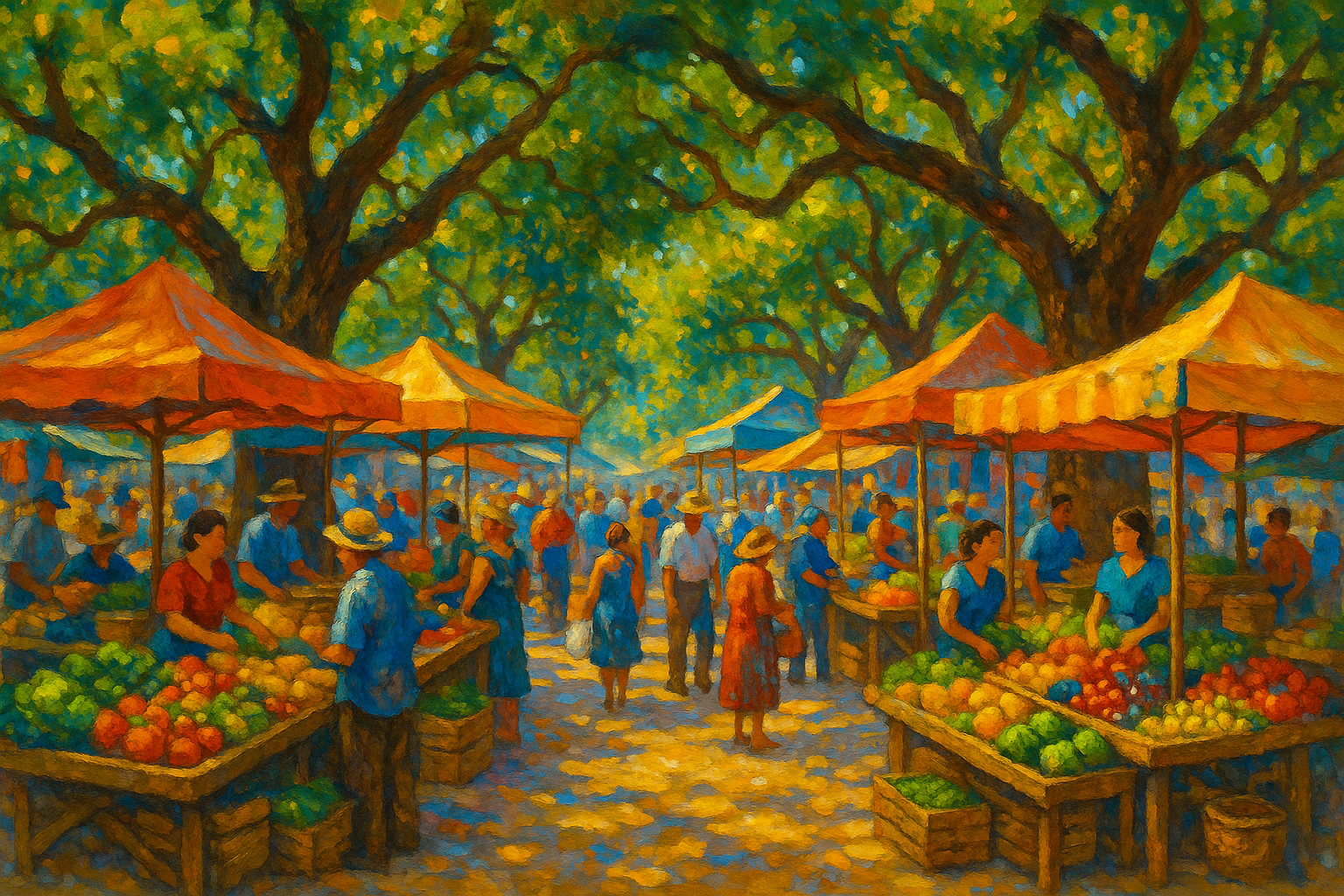
Stellenbosch's beloved Dorp Street Market returns in 2026, reinvented with more stalls, new currency, and sustainable practices.
Stellenbosch’s Sunday Pulse Rises Again: Inside the Market That Refused to Die
The Stellenbosch market, a beloved Sunday gathering, is back! After being closed for 18 months, it's reopening on January 25, 2026, bigger and better than ever. Get ready for more stalls, yummy food, cool crafts, and even repair services. It's a fresh start for a community favorite, bringing back that special Sunday feeling to Stellenbosch.
What is the Stellenbosch market?
The Stellenbosch market, also known as the Doren-om-Sondag Mark, is a vibrant Sunday market in Stellenbosch, South Africa. It features diverse stalls including food, crafts, vintage items, and repair services. After an 18-month closure, it is set to reopen on January 25, 2026, with expanded offerings and community-focused initiatives.
Get Cape Town news in your inbox
Stay updated with the latest stories from the Mother City.
The Quiet After the Music – How a Town Lost Its Weekend Heartbeat
Stellenbosch has always exhaled most deeply on a Sunday.
After the Saturday bar-hops shrink to Sunday-myth, church bells finish their rolling count and the oaks along Dorp Street start to collect the unhurried scuff of locals who refuse to sign off on the weekend. Between 2020 and the start of 2025 that lazy rhythm had a living soundtrack: steel cups knocking, saffron-scented rice hissing, small sneakers thudding as kids dived through second-hand crates in search of Charizard cards or vintage Springbok jerseys. Then one grey-blue March morning the soundtrack cracked. A tangle of council forms, insurance ping-pong and one foggy sentence in a municipal by-law swung the gates shut on the Doren-om-Sondag Mark. Traders hauled wooden pallets home, black-boards were wiped blank and the town’s cheapest dose of serotonin vanished before nightfall.
Eighteen silent months followed. In that stretch a toddler can master full sentences, a first-year can toss a mortarboard, an oak can carpet the tar with more than a million leaves. It also proved long enough for a fresh mayor to scroll through 3 400 e-mails all screaming “bring back our market”, for a WhatsApp group of two hundred stall-holders to register a co-op, and for an online auction of odds-and-ends – hand-painted chairs, a World-Cup-winning boot, a chef’s promise to cook paella in your own kitchen – to tip R147 000. When the council’s final rubber stamp thumped down on 22 December, the organisers bit their tongues for three days (Christmas Eve news is cruelty; wrapping paper wins every time). At 07:00 on the 25th the reveal dropped online: a picture of familiar cobbles, captioned “See you 25 January 2026. We never gave up, you never gave up.” By supper the post had clocked 18 000 reactions; someone ordered four thousand canvas totes, and a micro-brewery capped its first batch “Dorp Street Resurrection.”
What Rises Is Bigger – Layout, Money and Power Re-imagined
The 2026 version keeps the old address – Dorp Street between Hofmeyr and Ryneveld – yet now spills into the primary-school forecourt next door, leased for a token single rand a year. Stall count jumps from 120 to 200, split into five pocket-neighbourhoods. “Bloom” smells of fynbos compost and stocks heirloom tomatillo seedlings. “Rewind” is a vinyl-and-vintage loop where a ’74 denim coat may swap owners for a Miriam Makeba LP. “Fixery” puts cobblers, jewellers and seamsters side-by-side so you can watch your heel, zipper or hem come back to life. “Taste” parks pandemic-hardened chefs who lost brick-and-mortar spots; they ladle Thai street crêpes, Swahili mandazi and vegan bobotie spring rolls. “Read” is a mini book-fair run by the faded campus shop: poetry on the hour, every purchase wrapped in discarded sheet-music. A sixth lane, labelled only “?”, shape-shifts weekly; on launch Sunday it becomes a dark-room freight container where silver-gelatin prints blossom in trays that reek of pickles and rust.
Payment has been localised. Shoppers buy “Oak Slips” – R10 vouchers obtainable at any Spar in the country – and spend them on pour-over Ethiopian or hand-stitched leather tags. A visiting granny in Bloemfontein can mail twenty slips to her student granddaughter, secure in the knowledge the cash can only pulse inside the town’s artisan veins. Traders cash out every Monday at a solar-charged ATM-style kiosk; money lands in their accounts within thirty minutes, skimming away card fees, cash-theft and load-shedding panic. The panels feeding the kiosk have been nick-named “the Sunday sun,” a nod to the only load the market can’t do without.
Black-outs have been choreographed rather than feared. Stage-6 cuts usually bite at 10:00; salt-water ice-plates, dreamt up by a Stellenbosch chemistry undergrad, keep cold-chain foods below 4 °C for eight hours and recharge overnight in any home freezer. Coffee jockeys pull levers on 1960s Italian railway machines, bragging about “gravity pre-infusion” while a saxophonist curls notes around the hiss. At 11:30 the municipal brass band weaves past every generator, tuba drones swallowing engine growl. By noon a real-time dashboard declares the day carbon-neutral: 312 kg of organics heading to pig farms, 67 ℓ of grey-water irrigating portable reed-beds, 1 042 km of car travel neutralised through e-bike vouchers.
Children, Cicadas and Night-time Alchemy – Community Glue in Action
Children under twelve receive a scavenger card printed on wild-flower seed paper. Spot five brass cicadas (cast from cola cans collected at 2025 varsity rugby games) hidden in oak trunks and you earn a wooden token that funds the planting of a tree in Platbos Forest. Scan the cicada’s QR code and you’ll hear kids from Rhenish Primary tell soil stories in isiXhosa, Afrikaans and English. The dream: five thousand germinating cards will blaze a “butterfly highway” beside the Eerste River before October 2026.
Dusk flips the market into “Night-Market Lite.” From 17:00 stalls may sling bottled negronis, micro-dosed gin-lollies or booch that tastes like naartjie. Pedal-bikes power overhead fairy lights: three minutes of cycling keeps the constellation alive for R5. Against the old Lutheran wall a 1920s silent reel flickers while a violinist saws live accompaniment and spectators sprawl on hay. A free library-bus ferries farm-workers from Klapmuts at 15:30 and home by 20:00; show any library card, even an expired one, and the seat is yours.
Security – the gremlin that killed the 2025 edition – is now handled by “safety scholars,” final-year criminology students who earn bursary credits for smiling, greeting and de-escalating. Mint-green caps and a private WhatsApp channel link them to the neighbourhood policing forum. Since October they have logged 1 000 incident-free patrol hours, trimming insurance premiums by 35 % and making public-liability cover affordable again.
Roots, Rails and Ritual – Engineering a Living Memory Machine
Infrastructure itself has gone to finishing school. Rubber “smart-root” pipes, slipped into the ground by university horticulturists, aerate soil compacted by decades of soles. Adopt-a-root via QR code and you’ll receive moisture data for a year plus an invite to a twilight picnic where profs translate fungal networks into social-media metaphors. Coin donations drop into wooden “tree tithing” boxes bolted around trunks, funding an open-air arboretum that doubles as a living lab.
Sunday transport now behaves itself. The R44 slows to 40 km/h between 09:00 and 16:00, gifting cyclists the left lane without horn symphonies. A mountain-bike club valet parks 600 steeds in a locked playground; kids trade fruit-shaped stickers for an orange on return. Drop-off apps are shunted to Van der Stel Street, a five-minute saunter brightened by rain-reactive chalk murals. Councillors vow that if market-day accidents stay below two per quarter for a year, the slow lane becomes permanent – civic joy driving policy rather than picket lines.
Even the closure has been alchemised. Three journalism majors shot 147 days of empty cobbles on 35 mm film, crowdfunded a photo-book called Quiet Cobblestones in 48 hours and pledged one square metre of renosterveld restoration at Jan Marais for every copy sold. Opening-day visitors who haul a copy along receive a hand-pulled map of “their” plot; drones will live-stream the vegetation’s rebound for the next decade. Rumours swirl that the first hundred guests flashing 2020 market wristbands will score mystery envelopes, and that the mayor may – or may not – tap-dance barefoot on a crate at noon, reprising a party-piece from his 40th. Organisers simply grin; they know myths write themselves.
January in the Boland is apricot-heavy, vineyard-tasselled, assignment-free. On the 25th gates will swing wide at 09:00 – not 08:59, because the dominee at Moederkerk owns the 08:30 bell-slot and some rituals still deserve reverence. By 09:05 the first cup will be poured, the first dog will christen an oak root, the first pancake will hit the bricks. Come 11:00 the air will braid cardamom, damp soil and beeswax; by lunchtime someone will almost certainly say “yes” beneath the giant pecan; at three the Cape Doctor will gust in, whipping napkins like albino butterflies into the vineyards that baptised this place. None of these instants is contract-bound, yet every one feels inevitable, because a market is more than a cash box – it is the town’s rolling, remembering heart.
When is the Stellenbosch market reopening?
The Stellenbosch market is reopening on Sunday, January 25, 2026, at 9:00 AM, after an 18-month closure. The organizers made the announcement on December 25, 2025.
Where is the Stellenbosch market located?
The market retains its original address on Dorp Street, between Hofmeyr and Ryneveld. It will also expand into the primary school forecourt next door, leased for a nominal fee.
What new features can visitors expect at the reopened market?
The revamped market will be "bigger and better than ever," featuring an increased stall count from 120 to 200, organized into five themed sections: "Bloom" (plants and garden), "Rewind" (vintage and vinyl), "Fixery" (repair services), "Taste" (diverse food offerings), and "Read" (mini book-fair). There will also be a sixth, weekly shape-shifting lane, starting with a dark-room freight container.
How will payments work at the new market?
The market will utilize a localized payment system called "Oak Slips." These are R10 vouchers that can be purchased at any Spar in the country and spent at market stalls. Traders can cash out their Oak Slips at a solar-charged ATM-style kiosk, receiving funds in their accounts within thirty minutes, avoiding card fees and load-shedding issues.
How is the market addressing sustainability and load shedding?
The market has implemented several sustainability initiatives. It aims to be carbon-neutral, with organic waste going to pig farms, grey-water irrigating reed-beds, and e-bike vouchers neutralizing car travel. To combat load shedding, salt-water ice-plates keep cold foods fresh, and pedal-bikes power fairy lights during the "Night-Market Lite." The solar-powered kiosk is also a key feature.
What community initiatives are in place at the Stellenbosch market?
The market is deeply community-focused. Children under twelve receive scavenger cards made from wildflower seed paper, which, when completed, fund tree planting. A free library-bus ferries farm-workers to and from the market. Security is handled by "safety scholars" (criminology students earning bursary credits), and a "Night-Market Lite" offers an evening experience with silent films and live music. "Smart-root" pipes and "tree tithing" boxes support local arboretums and soil health.

Oliver Daniels is a Cape Town journalist who chronicles the intersection of food, migration and identity in South Africa's kitchens—from wood-fired Gugulethu braai spots to Constantia vineyards. Born and raised on the slopes of Devil’s Peak, he still starts each week with a dawn walk across Table Mountain to catch the first Atlantic light before filing copy.
View all articles →