
Fuel relief extended as levy cuts cushion looming price surge
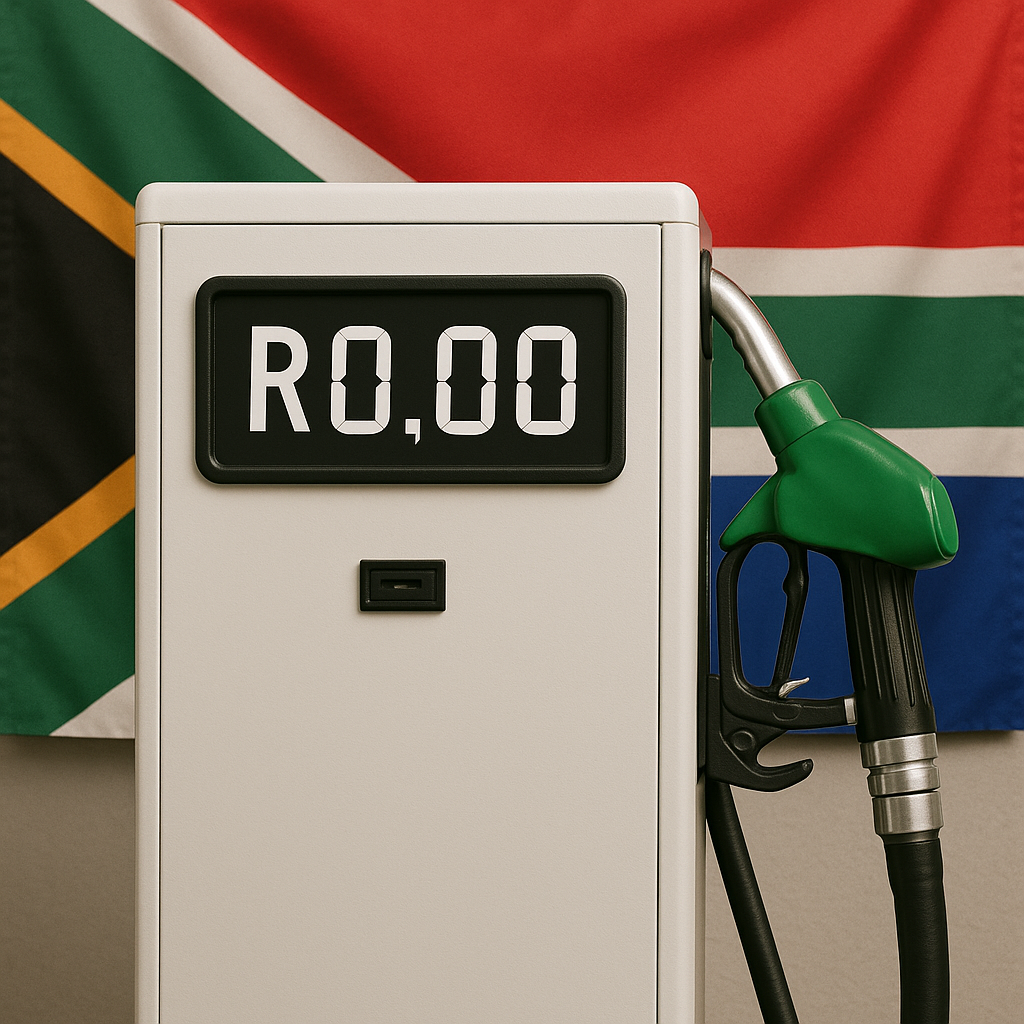
SA's temporary fuel levy holiday: who benefits, who loses, and the big questions for after June. Get the full breakdown.
South Africa hit pause on a big fuel tax for 90 days. This made petrol and diesel cheaper, trying to help people and businesses. It was a clever move that even got a nod from the IMF. But it's a tricky game, and what happens after June 30th is a big question for everyone.
What is the purpose of South Africa's 90-day fuel tax pause?
The 90-day fuel tax pause in South Africa aims to alleviate the financial burden on consumers and stimulate the economy by temporarily reducing petrol and diesel prices. The government hopes this measure will help mitigate inflation, support essential economic activities like freight and agriculture, and provide relief to households.
Get Cape Town news in your inbox
Stay updated with the latest stories from the Mother City.
1. The 19:03 Shockwave
Just after seven on the first Tuesday night in April, garage staff were busy sticking new digits on price boards when their phones buzzed. A two-page note from Pretoria had bulldozed the Central Energy Fund’s sums: instead of the feared R2.05 petrol spike and the eye-watering R5.42 diesel leap, drivers would swallow barely noticeable single-digit rises. The trick? Government flipped the general fuel levy to zero for diesel and trimmed it to R1.07 for petrol, handing motorists a stealth R3.00–R3.93 per litre discount. The gift expires at midnight on 30 June, but Treasury has warned software engineers to keep code loose: if Brent crude closes under 85 USD for ten straight trading days the rebate can vanish instantly, leaving pumps to absorb the full whack.
2. Anatomy of a Pump Price
South Africa’s fuel receipt is one of the planet’s most itemised. Every cent is published on the DMRE website, yet few drivers bother to scroll. An inland litre of 95-octane at April’s R25.45 broke down like this: R13.12 covers the landed cost of the liquid itself, R3.96 was the general fuel levy, R2.18 fed the bankrupt Road Accident Fund, R3.81 paid trucks and forecourts, and R2.38 mopped up storage, customs and slate adjustments. Pretoria could only zero the general levy; the RAF portion stayed put because its R400 billion backlog is protected by court orders. The general levy, by contrast, pours straight into the National Revenue Fund and can be switched off by ministerial pen, making it the perfect shock absorber.
3. Diesel’s Jackpot Moment
Diesel keeps the economy breathing: 93 % of freight tonne-kilometres, every combine harvester and every cellphone tower when the grid collapses. Because wholesale diesel prices float, bulk users buy off the daily Central Energy Fund curve. A R3.93 tax holiday turns into:
- R1 965 saved by a 28-wheeler on the Jo’burg–Cape Town return leg;
- R86 000 kept in a grain farmer’s pocket for planting, irrigation and harvest on 500 ha;
- R1.2 million sliced from a Tier-III data-centre diesel bill when Eskom hits Stage-6.
Treasury is gambling that the macro payoff beats the R9.8 billion quarterly revenue hole. SARB models say every 10 c/litre cut in transport costs shaves 0.04 percentage points off CPI; with diesel weighted at 2.1 % in the basket, headline inflation could drift 0.35 ppt lower – enough to keep 2024 prints inside the sacred 3–6 % corridor.
4. Petrol Politics and the Middle-Class Gift
South Africa counts 12.3 million licensed cars but fewer than four million credit-active households, so the petrol rebate lands squarely in the richest decile. Treasury’s own sums show the top-earning 20 % of households hoover up 64 % of the benefit. To soften the optics, the minister slipped a 75 c/litre biodiesel blending lift (5 % to 7.5 %) into the same statement – a tweak that diverts R1.2 billion a year to soy and canola growers in the North-West and Eastern Cape. Subsidising Sandton BMWs still looks ugly, but rural jobs buy political breathing space.
5. The Machinery Behind the Money
SARS built a cloud-based “excise differential module” in ten flat days. Wholesalers upload daily upliftment; the engine spits out a per-litre credit that hits their tax profile within 48 hours. Retailers keep paying the full levy at the terminal, but an automatic EFT from the wholesaler lands the next morning. If a garage orders 30 000 litres on Monday but sells only 22 000 by Friday, the unrebated balance is clawed back, removing any incentive to hoard. In week one 497 million litres flowed through the pipe without a single failed transaction – a quiet tech triumph inside the Pretoria machine.
6. How the World is Watching
Jakarta hacked subsidies in March and watched inflation rip to 12 %; Ankara gutted fuel VAT and blew a USD 5 billion hole in the budget; New Delhi froze excise but slapped a windfall tax on local crude, robbing Peter to pay Paul. South Africa’s move – temporary, transparent and rule-bound – earned a gold star in the IMF’s April Fiscal Monitor. The key: Pretoria never fixed the retail price; it only trimmed the tax, leaving the demand signal intact.
7. Rand Fatigue, Hedge Mysteries and EV Acceleration
The basic fuel price is rand-based on a 20-day USD/ZAR average. Between early March and mid-April the currency sagged from 18.90 to 19.65, adding 47 c/litre before the tax cut even landed. Some traders swear the Reserve Bank quietly bought June call options at USD 95/bbl through a Johannesburg broker, hedging 40 % of quarterly crude imports. Treasury books show a mysterious R20 billion hike in the ceiling for “financial transactions in assets” – exactly the placeholder a hedge of that size would need.
Meanwhile, a litre of petrol now carries 30 c more tax than a prepaid kWh after VAT. BYD’s local enquiry line jumped 40 % for the Atto 3; BMW fast-tracked the iX2 launch to August. Genesis Analytics says an R25/litre pump price pulls the EV cost breakeven for a R550 000 hatchback from eight years to five – a timeline that could gut fuel-tax revenues for good.
8. Cliff-Edge Chronicles: July and Beyond
Come October’s medium-term budget, Treasury must pick an exit ramp. Option A: full snap-back on 1 July, wear the R23 billion loss and pray oil retreats below USD 80. Option B: keep a R1.50 diesel rebate, funded by resurrecting truck e-tolls at 30 c/km. Option C: scrap the general fuel levy forever, replace it with a carbon tax surcharge phased in at R20/tonne CO₂ (45 c/litre) and claw the shortfall via a higher electricity levy. Option C thrills the presidential climate commission but would add 70 c to every litre of petrol in 2025 – political cyanide weeks before local elections.
Farmers, meanwhile, are staring at a hedge cliff. Maize growers normally lock in 70 % of harvest-time diesel in May; forward quotes after July gap R4.30 above spot, so they’re gambling on only 35 % coverage. If the levy snaps back and the rand wobbles, input costs for the 2025 crop could surge R1.3 billion before anyone notices. Cape Town’s bus union has inserted a “fuel escalator” clause demanding a 4 % wage top-up if diesel breaches R22/litre; the city has priced the contingent hit at R260 million over three years, but the rebate has temporarily sunk diesel to R18.40, turning wage talks into a game of chicken.
And then there is the illicit frontier. Beitbridge scanners have already grabbed three 36 000-litre rigs bound for Harare with forged rebate papers, each load worth R1.4 million in arbitrage. Treasury now tags every rebate with a QR-coded “excise passport” that must be scanned at the border – a trick borrowed from EU alcohol warehouses.
Real-time addicts can paste Treasury’s open formula into a spreadsheet and watch the cliff edge approach. By 2 June the model was flashing a 67 % chance of snap-back – a statistic now monitored as closely as Eskom’s outage schedule.
What is the purpose of South Africa's 90-day fuel tax pause?
The primary goal of South Africa's 90-day fuel tax pause, enacted from April to June, is to reduce the financial burden on consumers and businesses by temporarily lowering petrol and diesel prices. This measure aims to mitigate inflation, support critical economic sectors like freight and agriculture, and provide relief to households facing rising living costs. The government hopes this temporary relief will stimulate economic activity and offer a crucial breathing space.
How did the fuel tax pause affect petrol and diesel prices?
Instead of significant price increases, the government's intervention in April led to minimal single-digit rises in fuel prices. This was achieved by zeroing the general fuel levy for diesel and reducing it to R1.07 for petrol. As a result, motorists effectively received a discount of R3.00 to R3.93 per litre. This temporary reduction aimed to soften the impact of rising global oil prices and currency fluctuations on local fuel costs.
Which parts of the fuel price were affected by the pause and why?
South Africa's fuel price is highly itemised, comprising the landed cost of the fuel, the general fuel levy, the Road Accident Fund (RAF) levy, and costs for transport, forecourts, storage, customs, and slate adjustments. The government specifically targeted the general fuel levy for the pause, as this portion flows directly into the National Revenue Fund and can be adjusted by ministerial decree. The RAF levy, however, remained unchanged due to its substantial R400 billion backlog and protected by court orders, preventing its reduction.
Who primarily benefits from the petrol rebate?
While intended to provide broad relief, the petrol rebate disproportionately benefits higher-income households. Data indicates that the top-earning 20% of households capture 64% of the benefit, largely due to their higher car ownership and fuel consumption. To balance this, the government also introduced a 75 c/litre biodiesel blending lift, intended to support soy and canola growers and create rural jobs, thereby softening the political optics of the rebate.
How is the world reacting to South Africa's approach to fuel tax?
South Africa's temporary and transparent approach to the fuel tax pause has received international recognition, earning a 'gold star' from the IMF in its April Fiscal Monitor. Unlike some other countries that implemented broad subsidies or drastic tax cuts leading to high inflation or significant budget holes, South Africa's strategy focused on trimming the tax without fixing the retail price, thereby maintaining market demand signals. This cautious and rule-bound method is seen as a more sustainable way to offer relief.
What are the potential scenarios and challenges after the 90-day pause ends on June 30th?
After June 30th, several scenarios loom for South Africa. The government could opt for a full return of the levy, which would result in a significant price hike. Alternatively, it might consider a partial diesel rebate, potentially funded by reintroducing truck e-tolls. A more radical option involves scrapping the general fuel levy permanently and replacing it with a carbon tax surcharge and a higher electricity levy, a move supported by the presidential climate commission but politically sensitive. The decision will impact farmers' input costs, potential wage demands from transport unions, and could even accelerate the adoption of electric vehicles if fuel prices surge.

Emma Botha is a Cape Town-based journalist who chronicles the city’s shifting social-justice landscape for the Mail & Guardian, tracing stories from Parliament floor to Khayelitsha kitchen tables. Born and raised on the slopes of Devil’s Peak, she still hikes Lion’s Head before deadline days to remind herself why the mountain and the Mother City will always be her compass.
View all articles →