
Fuel relief talks lift May hope
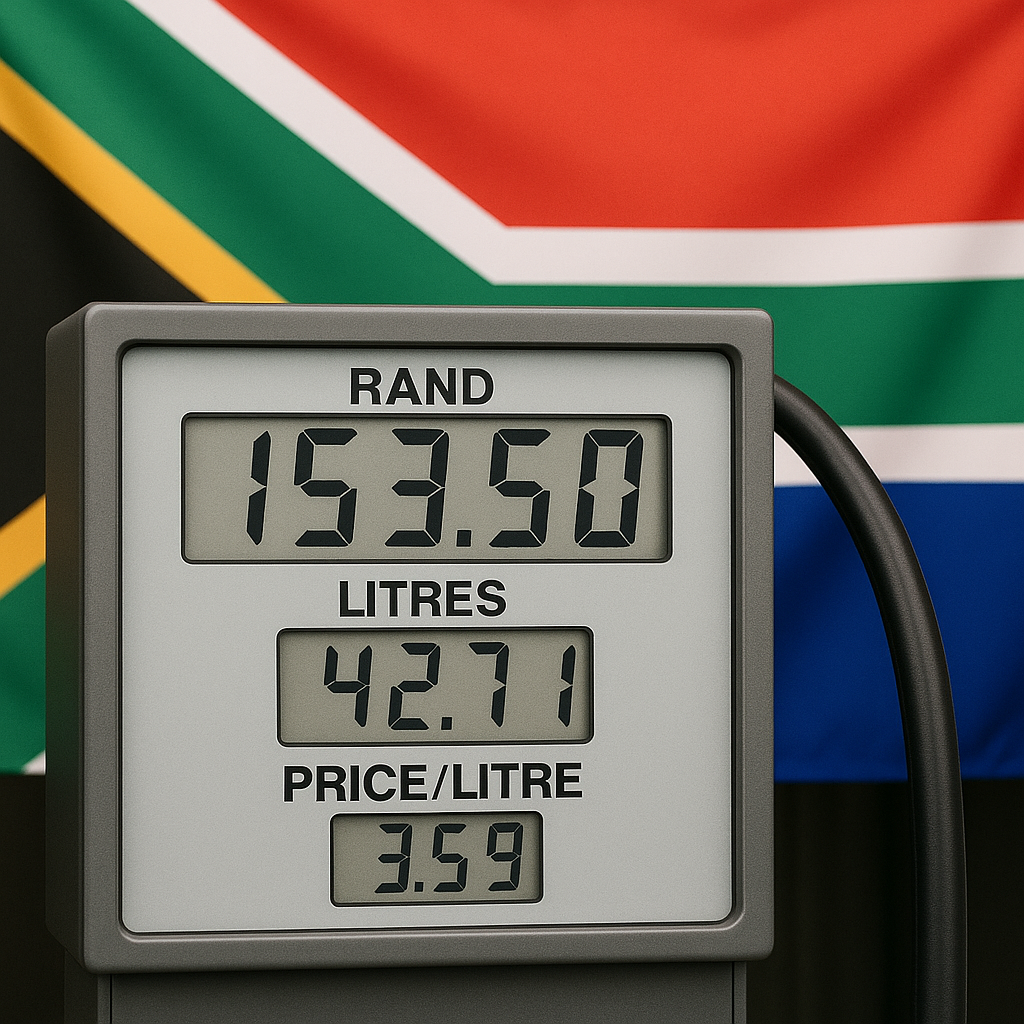
SA faces another fuel price hike in May. Diesel nears 2022 highs due to import reliance & taxes. Govt explores options as consumers adapt.
South Africa is facing a big jump in fuel prices this May, mainly because of how much the rand is worth against the dollar and the global cost of oil. Getting fuel from far-off countries and paying taxes also makes it more expensive. This means people will pay more at the pump, making everyday life harder. Many are finding new ways to save fuel, like sharing rides or using less gas, as the cost keeps going up.
What is causing the fuel price increase in South Africa?
South Africa's fuel price increase is primarily driven by a combination of factors: the rand-dollar exchange rate, global crude oil prices (Brent), and the 12,000-kilometre supply chain from Arabian refiners. Additionally, taxes (Road Accident Fund, General Fuel Levy, carbon surcharge) and rising freight rates and refinery margins significantly contribute to the cost.
Get Cape Town news in your inbox
Stay updated with the latest stories from the Mother City.
1. Midnight on the Slate: How 82 Cents Became Inevitable
At dusk on 23 April the Central Energy Fund’s daily ledger flashed a bright-red warning: every litre of 93-octane motorists bought left oil companies 82 cents short, while 95-octane lagged by 94 cents. Diesel told the same grim story - low-sulphur 0.05% trailed by 98 cents and the cleaner 0.005% grade by R1.12. These snapshots dance with the rand-dollar tide and the price of North-Sea Brent, yet the arrow has pointed one way since mid-March. Should the pattern hold until the Department of Mineral & Petroleum Resources locks the books on the final Friday of April, South Africans will open the month on their seventh consecutive petrol increase and the fourth diesel spike in a row. Inland wholesale diesel is poised to pierce R24.50 a litre, a figure last witnessed in July 2022 when war headlines pushed crude to $128 a barrel. Today Brent languishes near $91, proving the torment is no longer crude alone but the 12 000-kilometre supply chain that ferries fuel from Arabian refiners to neighbourhood pumps.
The merciless mathematics behind the Basic Fuel Price formula explains why. More than half of every litre - about 52% - mirrors what it would cost to sail product from the Arab Gulf to Durban, pipe it to Johannesburg and price it at Singapore spot parity. Taxes swallow another 32%: R3.96 for the Road Accident Fund, R3.52 for the General Fuel Levy and, almost unnoticed, last year’s 10-cent carbon surcharge. Freight rates, refinery margins and insurance premiums feed straight into the import-parity blender; when Middle-East diesel cracks leapt from $16 to $22 a barrel in April, the model converted almost every extra dollar into a 90-cent to R1.10 local hike, erasing the one-month 18-cent levy holiday that expired in March.
Treasury bean-counters whisper that the brief levy suspension bled R2.9 billion from social-wage coffers, so an encore is fiscally awkward. Yet allowing the full hike to run free four weeks before a national election is political cyanide. Deputy Director-General Tseliso Maqubela confirms officials are weighing familiar pain-killers: another levy pause, a margin cap, or instructing the Central Energy Fund to park part of the under-recovery in the slate account and drip-feed it over winter. Each remedy stores trouble for later - deferred costs snowball, and trimmed wholesale margins can dry up depot stocks when independent dealers can no longer finance wet inventory.
2. Why Africa’s Industrial Giant Still Imports 70% of Its Juice
The recurring drama has revived a stubborn question: why does the continent’s most advanced economy refine only three of every ten litres it burns? The answer is buried in a policy pivot two decades old. In 200 government accepted industry warnings that cleaner-sulphur rules would demand billion-rand upgrades; a gradual “import optimisation” route looked cheaper. Coastal plants dialled down complexity and poured money into storage tanks instead of crackers. Sapref, Sasolburg and Enref shelved key units; PetroSA’s Mossel Bay GTL plant gambled on eternally cheap offshore gas and lost when feed assumptions collapsed after 2014. Today only Natref in Sasolburg and Astron Energy’s Milnerton plant still cook crude, together covering barely 35% of inland demand. KZN Energy’s promised 60 000 b/d Durban “Cradle” refinery remains stuck at the environmental-permit counter, while a Chinese-led 200 000 b/d Coega project was quietly deleted when Beijing redirected capital to Hengli and Zhejiang.
Import dependency turns the rand into the biggest wild card in the price equation. Since January the currency has surrendered 4.3% to the dollar, but the ride has been roller-coaster steep: on 12 April it touched R19.34, its weakest since the Covid panic of May 2020, only to claw back below R18.60 when the U.S. Fed hinted at September rate relief. Every ten-cent swing adds or shaves about seven cents at the pump, so traders glued to the 29 May MPC verdict could nudge the coming hike by plus-or-minus 25 cents.
While Treasury and the DMPR fiddle with short-term cushions, labour is demanding structural tax surgery. COSATU wants the Road Accident Fund levy yanked out of the pump price and folded into the progressive national budget, arguing the move would strip 90 cents off a litre and shield workers who devote up to 26% of disposable income to transport. Treasury counters that the switch would widen the budget gap by 0.6% of GDP and lift bond yields at a time gross debt hovers at 74% of output. A middle-ground proposal would morph the RAF into a self-standing insurance scheme financed through vehicle-licence premiums, but the switch needs three to four years and a legislative overhaul.
3. The Quiet Revolution on the Road
Official data misses the small, daily rebellions already under way. SANRAL’s e-toll sensors show weekday freeway kilometres in Gauteng down 6.1% year-on-year - the sharpest slide since the 2021 riots. Ride-hailing apps report a 14% shrink in average trip length as drivers chase short hops to stay within fuel budgets. Car-pool WhatsApp groups - once a suburban novelty - have exploded: UCT’s transport survey reckons 32% of daily commuters now share rides at least three days a week, up from 18% in 2022. Even minibus-taxi associations in Tshwane and Ekurhuleni have filed for 12–15% fare hikes, well above the usual inflation glide-path, blaming diesel that has climbed 38% since January 2023.
Fleet owners are testing dual-fuel long-haulers that gulp 30% compressed natural gas and 70% diesel. Retrofits cost R110 000 each but save about R8 000 a month at today’s prices, paying for themselves in 14 months. The snag is infrastructure - only three public CNG pumps exist, all in the Eastern Cape - though Transnet has floated a R1.4 billion CNG import terminal at Coega that could supply 200 000 diesel-equivalent litres a day by 2026.
Battery cars remain a curiosity - just 6 200 full electrics on the national register by December 2023 - but the second-hand hybrid tide is rising. Corolla Cross hybrids from 2018 land in Durban for under R260 000 after duties, and banks dangle green-asset loans at prime minus 0.5%. Eskom’s overnight load curve shows most owners top up after 22:00, so the utility is asking NERSA for a time-of-use tariff that could drop night-time electrons to 79c/kWh - 20c a kilometre, one-fifth the fuel bill of a 7 L/100 km petrol car.
4. What Happens on 1 May - and the Day After
Forecourt managers pencil in a 95–98 cent petrol rise and R1.05 diesel jump, tempered perhaps by a 25-cent slate-levy postponement that merely kicks the can to June. Money markets have baked in a 25-basis-point SARB rate cut on 30 May to dull the inflationary sting, yet a softer rand could feed straight back into June’s Basic Fuel Price, erasing the relief before it reaches anyone’s pocket. Households are therefore honing quieter coping scripts: tanking up on Tuesdays when loyalty discounts shave 20 cents, shopping once a month to avoid mall shuttles, or hoisting the second family car on bricks until the cycle turns. The numbers say the roller-coaster is still climbing; the only choice left is how creatively South Africans learn to ride it.
What is causing the fuel price increase in South Africa?
South Africa's fuel price increase is primarily driven by a combination of factors: the rand-dollar exchange rate, global crude oil prices (specifically North-Sea Brent), and the lengthy 12,000-kilometre supply chain from Arabian refiners. Additionally, various taxes such as the Road Accident Fund levy, General Fuel Levy, and a carbon surcharge, along with rising freight rates and refinery margins, significantly contribute to the overall cost. The country's high dependency on imported refined fuel (around 70%) means currency fluctuations have a substantial impact.
How much is the fuel price expected to increase in May?
Forecourt managers are anticipating an increase of 95–98 cents per litre for petrol and a R1.05 per litre jump for diesel. This could potentially be tempered by a 25-cent slate-levy postponement, effectively pushing some of the increase to June. This would mark the seventh consecutive petrol increase and the fourth diesel spike in a row, with inland wholesale diesel potentially exceeding R24.50 per litre, a price point last seen in July 2022.
Why does South Africa import so much of its fuel?
South Africa imports approximately 70% of its refined fuel due to a policy pivot two decades ago. In 2000, industry warnings about the cost of upgrading refineries for cleaner-sulphur rules led to a strategic shift towards "import optimisation." This resulted in coastal plants focusing on storage over upgrading, with several key refinery units being shelved or running at reduced capacity. Only Natref and Astron Energy's Milnerton plant are currently operational, covering a mere 35% of inland demand. New refinery projects have also faced significant delays or cancellations.
What measures are being considered to mitigate the fuel price hike?
Officials are weighing several options to alleviate the impact of the fuel price hike. These include another temporary suspension of the fuel levy, implementing a margin cap, or instructing the Central Energy Fund to utilize the slate account to absorb part of the under-recovery and spread the cost over winter. However, each of these remedies carries potential future complications, such as snowballing deferred costs or impacting the viability of independent fuel dealers.
How are South Africans adapting to the rising fuel prices?
South Africans are implementing various strategies to cope with the escalating fuel costs. Data indicates a 6.1% year-on-year decrease in weekday freeway kilometres in Gauteng, and ride-hailing apps report a 14% reduction in average trip length. Car-pooling has significantly increased, with 32% of daily commuters sharing rides at least three days a week. Even minibus-taxi associations are requesting fare hikes due to increased diesel costs. Some fleet owners are exploring dual-fuel vehicles (CNG and diesel), and there's a growing interest in second-hand hybrid cars, with banks offering green-asset loans.
What role do taxes and other charges play in the fuel price?
Taxes and other charges constitute a significant portion of the fuel price, accounting for about 32% of every litre. This includes R3.96 for the Road Accident Fund levy, R3.52 for the General Fuel Levy, and a 10-cent carbon surcharge. Additionally, freight rates, refinery margins, and insurance premiums are factored into the Basic Fuel Price formula, which is designed to reflect the cost of importing fuel from the Arab Gulf to Durban and then piping it inland, priced at Singapore spot parity. Labor organizations like COSATU are advocating for structural tax reforms, such as moving the Road Accident Fund levy out of the pump price.

A Russian-Spanish journalist and Cape Town native, channels his lifelong passion for South Africa into captivating stories for his local blog. With a diverse background and 50 years of rich experiences, Serjio's unique voice resonates with readers seeking to explore Cape Town's vibrant culture. His love for the city shines through in every piece, making Serjio the go-to source for the latest in South African adventures.
View all articles →