
Gang violence to growth & reforms: Key SONA 2026 takeaways
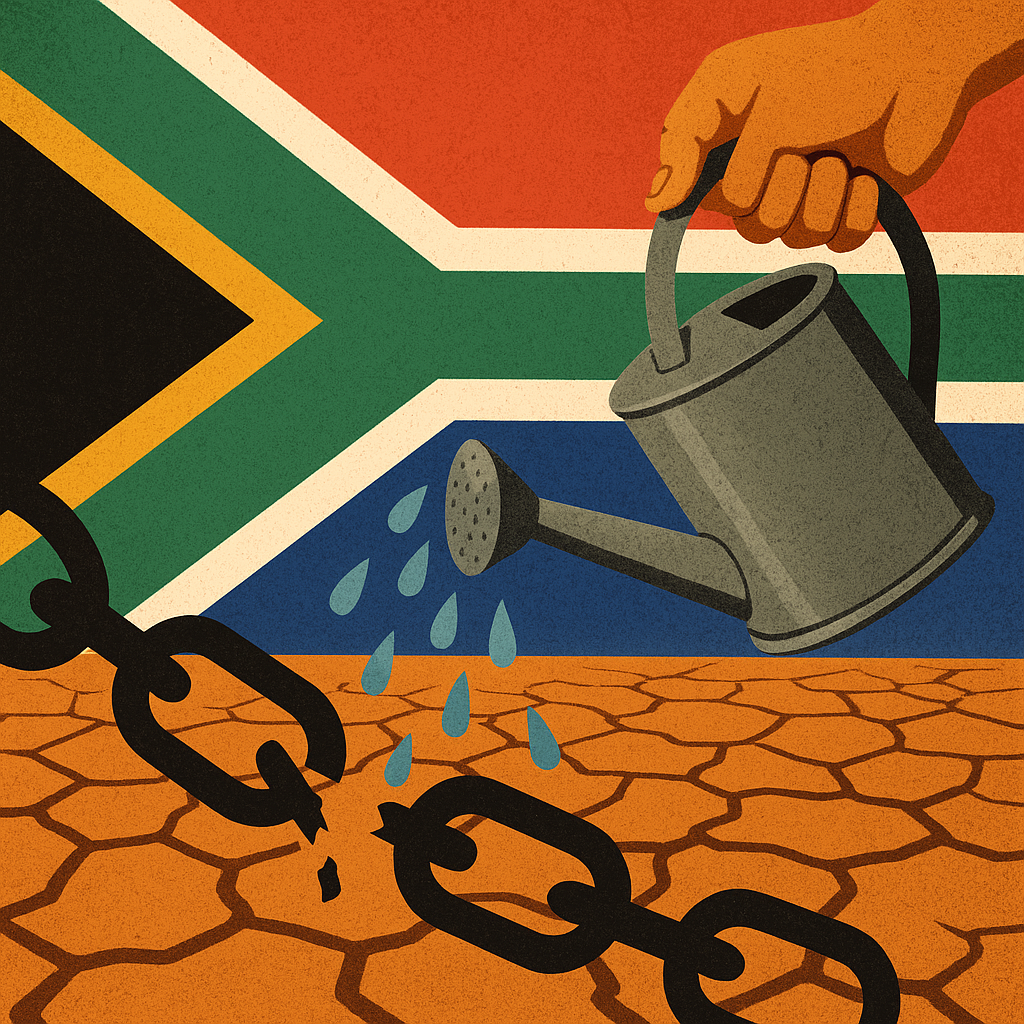
Ramaphosa's R1-trillion gamble to re-wire South Africa: From security surges & water reforms to a skills revolution & digital IDs.
President Ramaphosa is kicking off a huge R1-Trillion plan to make South Africa strong again by 2026. He's sending soldiers to fight crime and fixing broken water pipes, even making cities use 'blue bonds' to pay for repairs. Big money from the government and private companies will fund these changes, and new 'speed courts' will make justice faster. It's a bold move to clean up the country, create jobs, and get the economy humming.
What is the focus of Ramaphosa's R1-Trillion Reboot for South Africa in 2026?
Ramaphosa's R1-Trillion Reboot for South Africa in 2026 focuses on comprehensive reforms across security, infrastructure, and economic development. Key initiatives include deploying troops with strict deadlines, implementing financial transparency for officials, addressing water infrastructure failures through
Get Cape Town news in your inbox
Stay updated with the latest stories from the Mother City.
Section 1 – The Opening Shot: Mandela’s Old Stage, a New Wager
Cape Town’s Grand Parade shook again at 19:00 on 12 February 2026.
The symbolism was deliberate: the building that witnessed the birth of political freedom was now asked to endorse fiscal shock therapy.
Ramaphosa’s message was simple - build, protect, include - yet the sub-text carried the urgency of a nation whose youth bulge, criminal networks and leaking pipes could still derail the democratic experiment.
No passive promises this time; every pledge came with a clock, a price-tag and a visible enforcer, from orbiting satellites to live-streamed courtrooms.
Section 2 – Guns, Gangs and Governance: Soldiers Return, But on a Tight Leash
Troops on the ground, wallets in the sky
Ramaphosa is not the first president to send the army into suburbs; Operation Fiela in 2015 trimmed contact crime for half a year yet left kingpins untouched. The 2026 script adds hardware and hard deadlines. Defence will receive R3.8-billion seized from crime bosses, ring-fenced so the generals cannot raid the normal budget. SumbandilaSat-2, launched three weeks ago, beams infrared footage straight to a drone hub in Bishop Lavis, letting foot-patrol soldiers watch the same feed as detectives in the operations room.
Sunset at 18 months
Parliament inserted an expiry clause: if any precinct is not handed back to a re-vetted station commander within 18 months, the deployment becomes unlawful and the minister must face a censure vote. Analysts call this the “political handcuff” - Western Cape voters have begged for boots on the ground for a decade, while Gauteng leaders fear militarisation. By synchronising both provinces Ramaphosa turns safety into a non-negotiable election issue, pushing ethnicity and ideology off the 2026 local-government poster.
Vetting the generals before they vet you
The Madlanga Commission showed 301 top cops earned undeclared cash from illegal mining. Last night’s gazetted regulation demands seven years of bank statements - from generals, their spouses and dependent children - processed by the Financial Intelligence Centre’s AI engine “Project Kwezi” that trawls car ownership, title deeds, crypto wallets and even race-horse syndicates. The first 50 exposed names will be published on 1 May, Youth Day, so teenagers see handcuffs, not impunity. Refusal equals instant dismissal; the Whistle-Blower Protection Bill unleashes a constitutional-damage suit against any boss who retaliates, with legal costs billed to the minister’s own vote.
Section 3 – Water, Bonds and Blue Collars: Turning Leaks into Loans
A weekly war-room at dawn
South Africa spills 1.9 billion cubic metres through cracked pipes - Joburg’s three-year supply - every 365 days. Ramaphosa copied the 2023 load-shedding playbook: a National Water Crisis Committee he chairs every Monday at 06:00, before cabinet meets. Metro governments must shave non-revenue water by 2 % annually and post audited dashboards online; 56 councils have already been criminally charged, the list climbs to 92 in April.
Blue bonds and cheaper coupons
Treasury will issue “blue bonds” whose interest rate drops when a city beats its savings target. The World Bank bought USD 750 million of the first tranche, pricing it 35 basis points below South African sovereign debt because investors trust the penalty regime. In effect, conservation becomes a profit line, not a compliance headache.
Townships first, spreadsheets later
The stick is matched by a R54-billion “Metro Water Reform Incentive” transferred only when metrics turn green. Municipalities that hit targets can spend the grant on labour-intensive pipe replacement, creating township jobs while cutting losses. Early pilots in eThekwini show a 12 % drop in leaks within 120 days and 4 000 new maintenance posts filled largely by women under 35.
Section 4 – Trillion-Rand Toolbox: Courts, Pensions and Chinese Cranes
Where the money really lives
The R1-trillion is not sloganeering. Treasury will cough up R400-billion over the next three years; the Infrastructure Fund adds R350-billion after its risk guarantee was lifted to 17 % of project value, nudging pension funds off the sidelines; and private bidders - ports, digital rail, school PPPs - bring the remaining R250-billion under an amended PPP Act that deems a concession approved if bureaucrats miss the 120-day shot-clock.
Speed courts you can watch on YouTube
To stop legal log-jams, the old Johannesburg Post Office morphs into a “speed court”: 28-day mediation, 90-day judgment for claims under R200-million, retired commercial judges paid bonuses for cleared dockets. Hearings stream live so protesters outside can fact-check proceedings instead of burning tyres. The model borrows from Singapore and Dubai, but transparency is pure South African seasoning.
Energy, hooves and passports
Eskom’s transmission arm formally splits at midnight, unlocking a 14 GW wind and 6 GW solar sprint - 40 % renewables by 2030. A new GIS portal flashes red-amber-green for transformer space; the server crashed within an hour of the speech as developers rushed to book slots. Meanwhile 28 million hoof-and-mouth vaccines - ordered under covid-style indemnity - will be drone-delivered, with blockchain livestock passports making cattle without digital tags unwelcome at any abattoir. Indians and Chinese already use the 24-hour ETA visa app; 88 more countries, including Nigeria and Vietnam, join tonight, spawning township homestay packages and prompting Emirates to open a fourth daily Cape Town flight.
Silence that lingers
The address skipped the 35 % public-service wage bill, offered no NHI money after 2027, and merely promised a “pre-colonial geo-referenced audit” for land reform minus deadlines. Markets reacted with mild applause: the rand gained 0.6 %, bond yields dipped 9 basis points, construction stocks leapt 4.8 %. Yet the true moment came when the ANC, DA, IFP and Patriotic Alliance rose together - proof that four rivals can still synchronise their hands, if not yet their hearts.
[{"question": "What is Ramaphosa's R1-Trillion Reboot for South Africa in 2026?", "answer": "President Ramaphosa's R1-Trillion Reboot is a comprehensive plan launched in 2026 to revitalize South Africa. It aims to address critical issues such as crime, failing infrastructure, and economic stagnation through significant governmental and private sector investment. The plan includes deploying military personnel to combat crime, repairing crucial water infrastructure, and implementing 'blue bonds' for urban development, all with a strong emphasis on accountability and transparency."}, {"question": "How will the R1-Trillion Reboot address crime and security issues?", "answer": "To combat crime, the Reboot involves deploying soldiers to high-crime areas, but with strict 18-month deadlines for handing precincts back to vetted police commanders. The initiative is funded by R3.8-billion seized from crime bosses. Advanced technology, such as the SumbandilaSat-2 satellite and drone surveillance, will aid ground troops. Furthermore, a rigorous vetting process, including extensive financial background checks for generals and their families, will be conducted to tackle corruption within law enforcement, with consequences for non-compliance."}, {"question": "What measures are being taken to fix South Africa's water infrastructure?", "answer": "The plan addresses the massive water loss from cracked pipes by establishing a National Water Crisis Committee, chaired by Ramaphosa, which meets weekly. Metro governments are mandated to reduce non-revenue water by 2% annually, with audited dashboards posted online. Financial incentives include 'blue bonds' whose interest rates decrease if cities meet water-saving targets, and a R54-billion 'Metro Water Reform Incentive' grant for municipalities that achieve green metrics. This grant can then be used for labor-intensive pipe replacement, creating jobs, particularly for women under 35 in townships."}, {"question": "How is the R1-Trillion funding structured and where does it come from?", "answer": "The R1-Trillion funding comprises R400-billion from the National Treasury over three years, R350-billion from the Infrastructure Fund (with an increased risk guarantee to attract pension funds), and R250-billion from private bidders for projects like ports, digital rail, and school Public-Private Partnerships (PPPs). An amended PPP Act ensures projects are approved if bureaucrats miss a 120-day deadline, streamlining the process."}, {"question": "What are 'speed courts' and how will they improve justice in South Africa?", "answer": "'Speed courts' are a key judicial reform, exemplified by the transformation of the old Johannesburg Post Office. These courts aim to expedite legal processes with 28-day mediation periods and 90-day judgments for claims under R200-million. Retired commercial judges will be incentivized with bonuses for clearing dockets. A significant aspect is the live streaming of hearings on platforms like YouTube, promoting transparency and allowing public oversight, a model inspired by Singapore and Dubai but adapted with a focus on South African transparency."}, {"question": "Beyond crime and infrastructure, what other economic and social initiatives are part of the Reboot?", "answer": "The Reboot includes significant energy reforms, with Eskom's transmission arm splitting to unlock 14 GW of wind and 6 GW of solar power, aiming for 40% renewables by 2030. Agricultural initiatives involve drone-delivered hoof-and-mouth vaccines and blockchain livestock passports. Tourism is boosted by expanding the 24-hour ETA visa app to 88 more countries, including Nigeria and Vietnam, encouraging international travel and local township homestays. While the plan focuses heavily on infrastructure and security, it also includes job creation through labor-intensive projects and aims to improve overall economic activity."}]

Chloe de Kock is a Cape Town-born journalist who chronicles the city’s evolving food culture, from township braai joints to Constantia vineyards, for the Mail & Guardian and Eat Out. When she’s not interviewing grandmothers about secret bobotie recipes or tracking the impact of drought on winemakers, you’ll find her surfing the mellow breaks at Muizenberg—wetsuit zipped, notebook tucked into her backpack in case the next story floats by.
View all articles →