
Garden Walk opens as Hartenbos expands
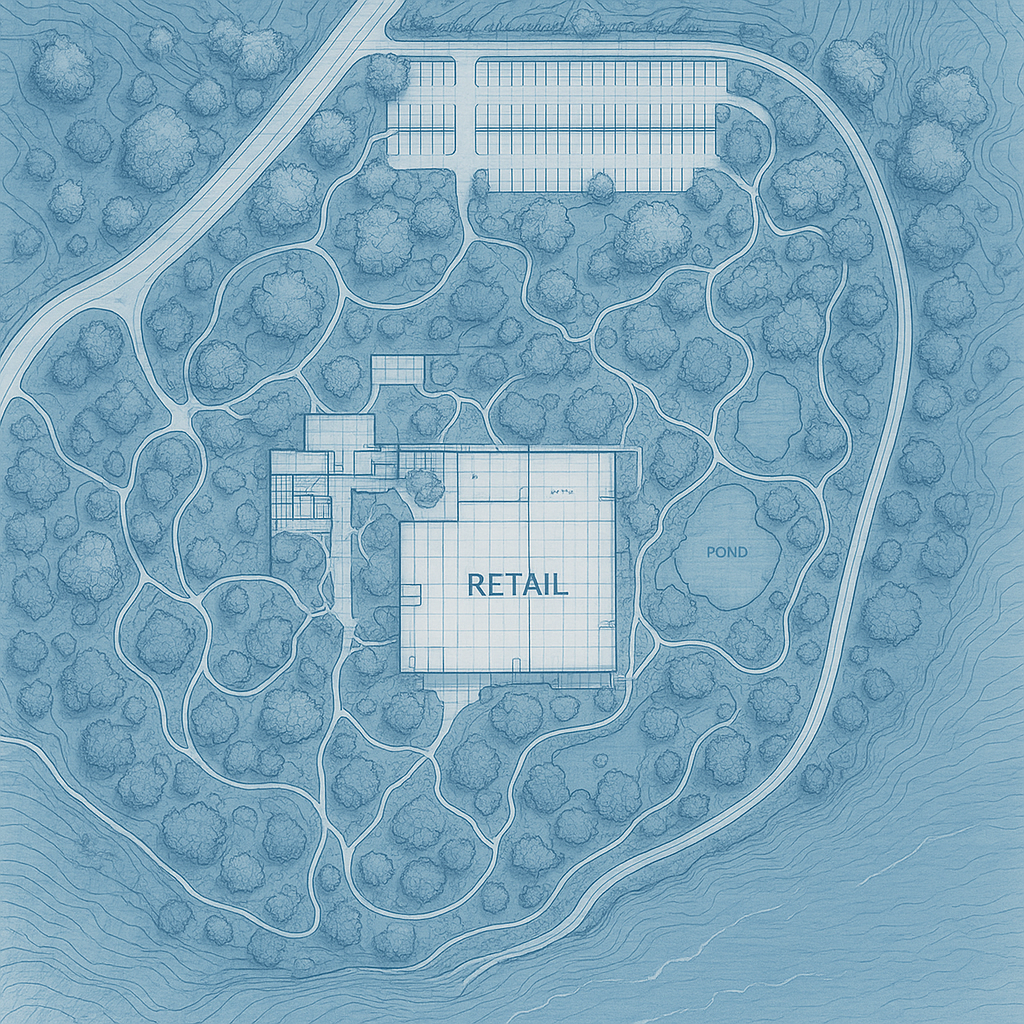
Garden Walk Hartenbos: A 20,000m² mall reshaping the Garden Route. Discover its unique design, economic impact, and community integration.
Garden Walk Hartenbos is a brand new "village mall" in South Africa, reshaping the Garden Route. It boasts 51 shops and over 1,000 parking spots, all built with eco-friendly designs. This mall is a big deal because it helps the area grow fast, welcoming new residents seeking a different lifestyle. It's more than just shopping; it's a new way of living for those moving to the coast.
What is Garden Walk Hartenbos?
Garden Walk Hartenbos is a 20,000 m² "village mall" located near Hartenbos, South Africa, featuring 51 shops, over 1,000 parking stalls, and significant sustainable design elements. It's redefining the Garden Route's economy by catering to the region's rapid population growth and the
Get Cape Town news in your inbox
Stay updated with the latest stories from the Mother City.
1. Latitude, Altitude and Attitude
Pin the map at 34°07′20″ S, 22°07′07″ E and you land on a gentle bend of the N2 where the off-ramp tilts toward the Indian Ocean. The site sits 3,2 km inland, only 14 m above sea-level, on dunes that carried an “agricultural” zoning stamp until 2016. Today the same ground carries 20 000 m² of lettable space, 1 046 parking stalls, 51 shops and an 8 m-high roofline that never dares to lift its head above the Outeniqua ridge. A reed-ringed “lake” hides a 7 800 m³ storm-water vault underneath, keeping the complex single-storey and horizon-friendly.
Architects were handed a blunt brief: “Keep the mountain view from the beach intact.” That edict produced a low-slung shell, never taller than the surrounding fynbos-covered dunes. Drivers topping the nearby bridge still see the same skyline their grandparents saw; only the shimmer of solar panels and the flicker of retail signage betray the newcomer.
The numbers sound modest - until you realise the entire regional economy once pivoted on caravan parks and ice-cream cones. A single parking row now handles more cars than Hartenbos’s original grid could manage at rush hour, and the wetland pond teems with tadpoles that were not on the original tenant list.
2. Semigration 3.0 and the Geography of “Why Now”
Wave one of coastal relocation (2000-2010) parked retirees in Hermanus and Plett. Wave two (2010-2019) installed wealth managers in Stellenbosch and pixel-pushers in Langebaan. The third surge - fuelled by fibre, fear of city crime and the freedom to Zoom from anywhere - targets secondary nodes that still quote sectional-title prices one-third of Clifton’s. Mossel Bay posted 3,8 % annual population growth from 2019-2023, StatsSA’s quickest non-metro rise in the Western Cape.
Hartenbos, once a dorp of caravans and sunblock, currently has 2 400 detached homes under construction north of the highway. Most sold off-plan to Gauteng buyers who have never spent more than a long weekend near the sea. They arrive with laptops, mountain bikes and expectations of same-day grocery delivery; the mall is simply the retail echo of that migration.
The convergence of cheap land, under-utilised runway capacity and existing fibre backhaul makes this stretch of coast the logical pressure-release valve for Cape Town’s congestion. Developers bet that Covid-era workplace flexibility is permanent; early credit-card data suggest they called the trend correctly.
3. Money, Mud and Green Labels
An 18 ha parcel changed hands in 2018 for R43 million through a Mauritius-registered SPV wholly owned by Organic Coral. After rezoning, the dirt booked at R127 million. Equity cheques totalling R480 million arrived from Moolman Group’s open-ended Retail Income Fund II, hunting a 19 % IRR. A R520 million green-labelled senior loan from Absa Corporate priced at 3-month Jibar plus 270 basis points completed the stack.
Lenders inserted hard sustainability clauses: achieve a 4-Star Green Star SA – Custom Mixed-Use rating, cap potable demand at 0,35 kL/m² annually and generate 35 % of common-area power from a 2,1 MW rooftop PV array. A modular membrane bioreactor plant, tucked beneath overflow parking, recycles black water and feeds a constructed wetland that doubles as biodiversity theatre. The numbers satisfy bankers; the frogs appear to approve.
Local councils liked the pitch because the centre pre-funded R67 million in bulk infrastructure - water, sewer, power and a traffic hack that removed the need for another robotised intersection. Ratepayers got upgraded services without a rates hike; investors got a faster planning consent.
4. Curation: Tenants Who Drive, Paddle and Post
Anchor negotiations turned on daylight, diesel and door heights. Checkers FreshX demanded north-facing glass so 06:00 produce shots could hit Instagram before breakfast. Dis-Chem refused to sign until a 120 m³ on-site diesel tank promised uninterrupted refrigeration if highways close - the 2022 riot databank shows Garden Route chemists empty in 45 minutes. Outdoor Warehouse insisted on a 4 m roller-shutter opening straight onto the bakkie strip so sea kayaks slide out without reversing.
Smaller names ride a “step-rent” escalator: R80/m² in year one, climbing to R180/m² by year five. The structure keeps Elvis Brew and Krust Café alive through two winter cycles while footfall matures. No textbook predicted the arrangement; it emerged from a spreadsheet that modelled local rainfall, school holidays and Gauteng school terms.
Behind the boxes, a 400 m² dark-store fulfils click-and-collect within a 15 km radius. Easter Monday saw 2 100 orders at an average R487 basket - 2,3× the walk-in norm. Because Hartenbos still counts as “rural edge,” drone delivery is legal; Zulzi pilots fixed-wing VTOL drops to Friemersheim, trimming a 45 min gravel slog to 8 min air-time.
5. Jobs, Traffic Jams and Braai Culture
Peak construction payroll touched 1 270 bodies, 62 % recruited within 30 km. Women filled 18 % of hard-hat roles and youth (18-25) another 9 %. R197 million in wages hit local bank accounts; R32 million stayed in the district for bricks, sand and aggregate. Operating day-plans now budget for 950 direct and 775 indirect jobs. Checkers alone keeps 212 staff on a R6 800 average take-home, 14 % above minimum wage - the store competes with ship-repair yards for semi-skilled hands.
Traffic engineers skipped a new traffic light and instead carved a 450 m “filtered right” that slips mall traffic under the N2 without crossing 120 km/h lanes. Drone LiDAR clocks average midday delay per car at 18 s, down from 42 s in 2022. The N3 Toll Concession has requested the drawings for a similar fix at Harrismith.
Social life is mutating in the parking lot. On opening Saturday 27 Jeep Wranglers lined up, popped kettles and held a boot-lid braai. Security waved them in; three weeks later the “Park & Braai” Telegram channel hit 1 800 members. Management now sanctions a monthly “Car-boot Cook-off” with certified gas rings and a pop-up beer garden - retail as tail-gate theatre, a category no leasing agent ever modelled.
6. Climate Tech, Thermal Eyes and the Next 35 Hectares
A 55 000 m² Sika Sarnafil roof membrane reflects 82 % of solar load, shaving 2,1 °C off the ambient heat-island index. Perforated aluminium screens angled 27° north echo historical Khoi fish-drying racks, gifting 54 % shade while still inviting night breezes. HVAC set-points drift to 24 °C without shopper complaint. Beneath, a modular MBR plant recycles 45 kL/day; the outflow polishes through a vertical-flow wetland now home to 7 300 Cape river frogs.
Security favours transparency: a 1,8 m see-through palisade lets informal hawkers on the embankment keep “eyes on street.” One hundred and twelve thermal cameras run on a private 5G slice; algorithms flag unattended objects after 90 s. Shrinkage sits at 0,37 % of turnover - half the national neighbourhood-centre median. The real deterrent is architectural: all service yards face the public square, so crime happens under civic scrutiny.
Across the off-ramp, Moolman has stitched together options on another 35 ha. Draft plans show a 120-key teaching hotel with CPUT, 10 000 m² of light-industrial studios for CGI creatives, Dutch glasshouses feeding tomatoes to the hypermarket, and a 1 500-seat amphitheatre shaped like Lego bricks. Modellers predict R110 million annual ticket spend - enough to justify another wetland, another braai circle, another data point in South Africa’s continuing coastal migration.
What is Garden Walk Hartenbos?
Garden Walk Hartenbos is a 20,000 m² "village mall" located near Hartenbos, South Africa. It boasts 51 shops, over 1,000 parking spots, and is designed with significant eco-friendly and sustainable elements. It's playing a crucial role in the rapid growth of the Garden Route region by catering to new residents seeking a different lifestyle.
How does Garden Walk Hartenbos address environmental concerns and sustainability?
Garden Walk Hartenbos incorporates numerous eco-friendly designs. A 55,000 m² Sika Sarnafil roof membrane reflects 82% of solar load, and perforated aluminium screens provide 54% shade. It features a modular membrane bioreactor plant that recycles 45 kL/day of black water, which then polishes through a vertical-flow wetland. A 2.1 MW rooftop PV array generates 35% of common-area power, and potable water demand is capped at 0.35 kL/m² annually. The project is designed to achieve a 4-Star Green Star SA – Custom Mixed-Use rating.
How is Garden Walk Hartenbos contributing to the local economy and employment?
During peak construction, the project employed 1,270 people, with 62% recruited locally, 18% women, and 9% youth (18-25). This injected R197 million in wages into local bank accounts. Currently, the mall supports 950 direct and 775 indirect jobs. For example, Checkers alone employs 212 staff with an average take-home pay 14% above minimum wage, making it a significant employer in the region.
What makes Garden Walk Hartenbos unique compared to traditional malls?
Garden Walk Hartenbos is designed as a "village mall" that integrates with the natural landscape, keeping a low profile to maintain mountain views. It features unique tenant requirements like north-facing glass for Instagram-ready produce at Checkers FreshX and large roller-shutter openings for sea kayaks at Outdoor Warehouse. It also embraces local culture, sanctioning monthly "Car-boot Cook-offs" and a pop-up beer garden, turning its parking lot into a social hub, which is far from a traditional mall model.
How does the mall cater to the "semigration" trend in South Africa?
The mall is a direct response to the third wave of coastal relocation, where people are moving to secondary nodes driven by remote work capabilities, security concerns, and more affordable lifestyles. Many homes in the area are sold off-plan to buyers from Gauteng who expect modern amenities like same-day grocery delivery. The mall provides the retail and service infrastructure to support these new residents who arrive with laptops and demand a connected, convenient lifestyle.
What are the future expansion plans for the area around Garden Walk Hartenbos?
Moolman Group has secured options on another 35 hectares across the off-ramp. Draft plans for this area include a 120-key teaching hotel in partnership with CPUT, 10,000 m² of light-industrial studios for CGI creatives, Dutch glasshouses for local produce supply to the hypermarket, and a 1,500-seat amphitheatre. These developments are projected to generate an additional R110 million in annual ticket spend, further cementing the area's growth as a vibrant coastal hub.

Oliver Daniels is a Cape Town journalist who chronicles the intersection of food, migration and identity in South Africa's kitchens—from wood-fired Gugulethu braai spots to Constantia vineyards. Born and raised on the slopes of Devil’s Peak, he still starts each week with a dawn walk across Table Mountain to catch the first Atlantic light before filing copy.
View all articles →