
Hout Bay power response gets major boost as electricity depot opens
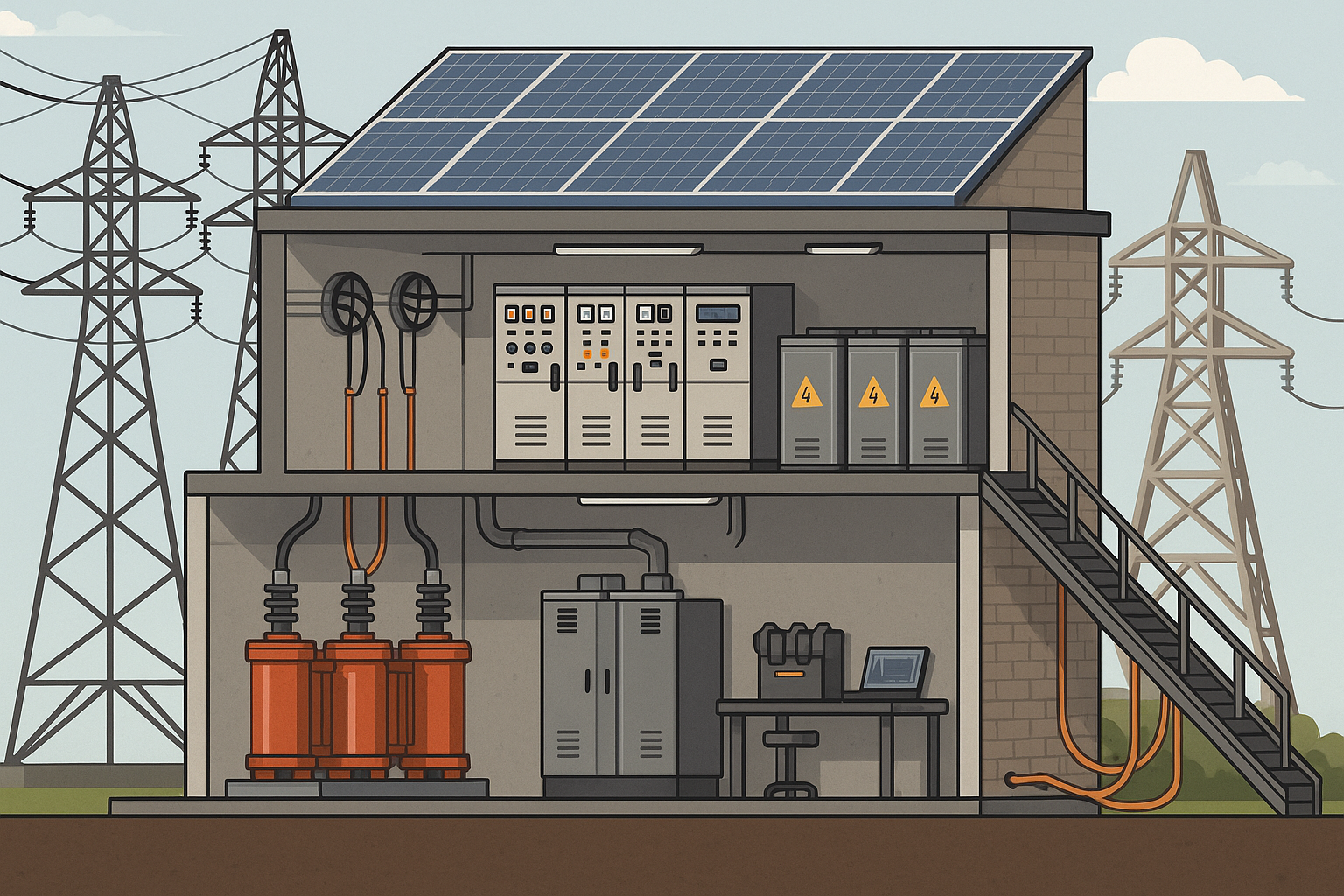
Hout Bay's R60M electricity depot cuts outage times & boosts local economy. A micro-city with smart tech keeps lights on.
Hout Bay's new R60-Million Power Hub is a game-changer! It cuts electricity outage repair times from four hours to just 45 minutes, saving tons of money for businesses and homes. This amazing hub has smart tech, a solar roof, and even trains local workers, boosting the economy and making the area safer from fires. It's not just a building; it's a huge step forward for the whole community, creating jobs and ensuring the lights stay on.
What is the purpose of Hout Bay's new R60-Million Power Hub?
Hout Bay's new R60-Million Power Hub significantly reduces electricity outage restoration times from four hours to 45 minutes by stationing staff and spares locally. This investment aims to save an estimated R3.2 million per hour of downtime, bolstering the local economy by supporting businesses and households.
Get Cape Town news in your inbox
Stay updated with the latest stories from the Mother City.
1. Why a 26 km Taxi Ride Was Killing the Local Economy
Before April 2024, any blown fuse, stolen cable or leaning pole in Hout Bay started its “healing” journey in Wynberg - almost half-an-hour away on Google Maps, yet a four-hour odyssey once traffic, rock falls, tourist coaches and protest barricades were factored in.
For 9 400 households and businesses that wait translated into cold pizza dough, thawing snoek, one-star Airbnb rants and an estimated R3.2 million lost for every 60 minutes the lights stayed off.
The maths was merciless: restaurants bin refrigerated stock, fishers can’t ice their catch, pubs miss golden-hour trade, and the entire valley’s reputation takes a knock.
Collapsing that four-hour “mean-time-to-restore” to 45 minutes is the depot’s headline promise - achieved simply by stationing people, spares and a bed for the night-shift inside the valley instead of on the other side of the mountain.
But the building is more than a parking lot for yellow trucks.
It is a deliberate bet that proximity plus brains beats distance plus muscle.
Every design tweak inside the 3 200 m² structure shaves minutes off the next outage, which, compounded over a year, buys back millions in economic activity.
In short, the City spent R60 million so the rest of us don’t have to spend R3.2 million every time a kudu collides with a pole.
2. A Warehouse That Pretends to Be a Tiny Power Station
Technically the new facility is listed as a “minor distribution centre”; walk inside and it feels like the love-child of a data centre and a submarine dock.
Dual 11 kV ring mains - one from Hout Bay North substation, the other all the way from Kloof Nek - mean the depot itself can never go dark while crews are out rescuing customers.
A 120 kWp solar roof pours electrons into a 250 kWh lithium-iron-phosphate battery bank, keeping lights, lifts, EV chargers and computers alive for 36 hours when Eskom pulls the plug; the set-up doubles as a live test rig for the City’s plan to solar-power all 36 depots before 2030.
Trainees don augmented-reality headsets on a mezzanine floor; holograms show cable depth, joint positions and safe digging corridors on the real trench floor below, trimming apprentice fault-finding time by roughly one third.
A five-ton overhead crane can swing a one-ton transformer clear of a truck bed - kit Wynberg never had, forcing managers to hire private cranes at R9 000 a pop while outages ticked on.
Medium-voltage joints are cooked in an ISO-7 clean-room; Atlantic salt mist and fynbos dust used to slash sleeve life by half, so the filtered air alone should double joint longevity and cut repeat faults.
A two-storey telemetry wall gulps 1 800 data points every second from 42 reclosers and 17 looped panels scattered across the valley; machine-learning models flag 72 % of incipient failures at least 90 minutes before the fuse even smells hot.
In plain English: trucks often roll before the customer knows anything is wrong.
Add the workshops, lecture rooms, gym and dispatch mezzanine and you get a micro-city that keeps 55 direct jobs - and 330 extended-family stomachs - filled every month.
3. Concrete, Cash and Community: Where the Extra R18 Million Went
The internal business case stopped at R42 million for a basic shed; every extra rand after that was a conscious social investment.
Thirty-five EPWP workers - six out of ten women, nine out of ten locals - clocked 28 000 labour days and banked R42 million in wages that immediately cycled through spaza shops, taxi ranks and hair salons.
Brickforce, mesh and 800 m³ of ready-mix came from Imizamo Yethu micro-batch plants born after the 2017 fires; the depot order kept those plants busy long enough to win follow-up contracts on private home rebuilds.
A Hangberg youth co-op paired with a Stellenbosch drone firm to LiDAR-map every overhead line; the same co-op now holds a three-year maintenance tender for the entire peninsula south of Camps Bay, proving that a pay-slip beats a sledge-hammer for turning at-risk youth into stakeholders.
Even the perimeter wall earns its keep: 112 metres of mosaic designed by Llandudno primary-school kids, each tile GPS-tagged so that a digital twin can alert the neighbourhood WhatsApp group within four minutes of any vandalism - security through selfies and civic pride rather than razor wire alone.
The result is a building that funds micro-enterprises while it fixes faults, a rare case where social ledger and technical ledger both finish the year in the black.
4. Fire, Fish, Instagram and the Future
Hout Bay’s electricity demand doubles between 17:30 and 19:30 in season, when 35 restaurants blaze their pizza ovens and 1 800 holiday lets fire up geysers precisely as the sun ducks behind the Sentinel.
Algorithms now pre-cool eight 1 MVA transformers with auxiliary fans two hours before peak, pushing thermal head-room from 92 % to 108 % and avoiding the nuisance trip that could black out sunset selfies.
A WhatsApp bot nags hospitality managers when predicted load nears 92 %; last December voluntary switch-offs shaved 400 kW in nine minutes - enough to keep the main breaker closed and TripAdvisor scores intact.
Upstream, 4.3 km of covered conductor - ordinary aluminium core wrapped in XLPE - now runs above the settlement where 120 km/h winds once clashed bare wires and sparked the 2017 fire that ate 600 ha of fynbos.
CSIR modelling says the insulated line cuts ignition probability by 78 %.
Crews also stock 300 fire-suppression gel-pods that clip onto stay-wires and burst at 150 °C, smothering sparks before they kiss the ground.
Add it up and the depot is quietly rewriting the valley’s climate-risk profile, one cable, one sensor, one micro-grid at a time.
Landlubbers rarely realise that the 1 800 MW, 350 kV Western Corridor submarine cable from Mozambique surfaces at nearby Scarborough; a fibre health-monitoring strand terminates inside the Hout Bay telemetry wall.
Every 15 minutes a pulse checks for 1 mm shifts in cable armour - early warning of anchor drag or seismic twitch.
A modest neighbourhood depot therefore doubles as coastal lifeguard for half of Cape Town’s imported electrons, proving that the best infrastructure stories are the ones you cannot see.
The headline numbers: 9 400 customers, SAIFI slated to drop from 11.4 to 5.0 outages a year, SAIDI from 19.6 hours to 7.2 hours, a simple economic payback of 4.3 years even before you count social spin-offs.
City bosses have already templated the design for Delft (2026) and Philippi East (2027), tweaking panel sizes and adding urban farms irrigated by compressor-room condensate.
Replication is cheaper the second time; the real dividend is the demonstration that persistence, community labour and clever engineering can turn four hours of darkness into 45 minutes of inconvenience - and save a valley’s economy while they’re at it.
What is the primary benefit of the new Hout Bay Power Hub?
The primary benefit is the dramatic reduction in electricity outage repair times. Previously, outages could take up to four hours to resolve; with the new hub, this is cut down to just 45 minutes. This saves an estimated R3.2 million per hour of downtime, significantly boosting the local economy and supporting businesses and households.
How does the Power Hub achieve faster repair times?
The hub achieves faster repair times by strategically stationing staff, spare parts, and equipment directly within Hout Bay. This eliminates the need for personnel and resources to travel 26 km from Wynberg, a journey that previously could take hours due to traffic, geographical challenges, and other disruptions. The facility also features advanced tools like a five-ton overhead crane for handling heavy equipment, which was previously outsourced.
What advanced technologies are incorporated into the Power Hub?
The Hout Bay Power Hub is equipped with several advanced technologies. It boasts a 120 kWp solar roof connected to a 250 kWh lithium-iron-phosphate battery bank, ensuring the facility remains operational for up to 36 hours during outages. Trainees use augmented-reality headsets for fault-finding, and a two-storey telemetry wall processes 1,800 data points per second from across the valley, using machine-learning to predict 72% of failures 90 minutes before they occur. It also includes an ISO-7 clean-room for medium-voltage joint manufacturing to increase longevity.
How does the Power Hub contribute to the local community beyond electricity supply?
The Power Hub provides significant community benefits, including job creation, skills development, and economic stimulation. It has created 55 direct jobs and supported 330 extended family members. An additional R18 million was invested in social initiatives, including employing 35 EPWP workers (predominantly local women), procuring materials from local micro-batch plants, and engaging a Hangberg youth co-op for LiDAR mapping. A mosaic perimeter wall, designed by local children, also fosters community pride and security.
How does the Power Hub mitigate fire risk and manage electricity demand?
To mitigate fire risk, 4.3 km of bare overhead power lines have been replaced with insulated covered conductors, reducing ignition probability by 78%. Crews also stock 300 fire-suppression gel-pods that activate at high temperatures. For demand management, algorithms pre-cool transformers before peak hours to prevent trips, and a WhatsApp bot alerts hospitality managers during high load periods, encouraging voluntary switch-offs to maintain grid stability and prevent blackouts.
Does the Hout Bay Power Hub have a broader impact or future implications?
Yes, the Power Hub has broader implications. It doubles as a coastal lifeguard for half of Cape Town's imported electrons by monitoring the 1,800 MW Western Corridor submarine cable from Mozambique. The design is also being templated for replication in other areas like Delft (2026) and Philippi East (2027), demonstrating a scalable model for improving electricity reliability, incorporating renewable energy, and fostering community development. This initiative is expected to drastically reduce SAIFI (System Average Interruption Frequency Index) and SAIDI (System Average Interruption Duration Index) in the region.

Sizwe Dlamini is a Cape Town-based journalist who chronicles the city’s evolving food scene, from boeka picnics in the Bo-Kaap to seafood braais in Khayelitsha. Raised on the slopes of Table Mountain, he still starts every morning with a walk to the kramat in Constantia before heading out to discover whose grandmother is dishing up the best smoorsnoek that day.
View all articles →