
HOW TO APPROACH THE WEDNESDAY, 15 APRIL 2026, WORDLE LIKE A PRO
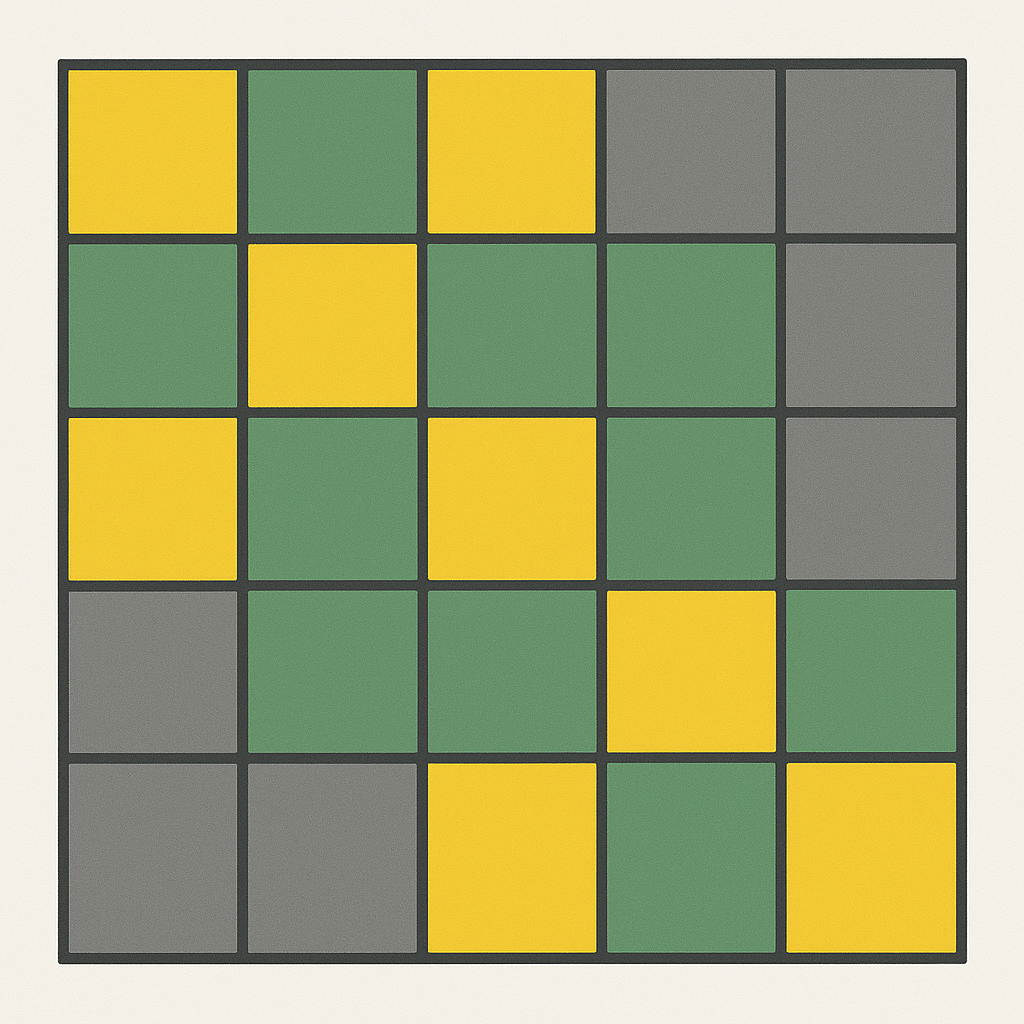
Uncover the science behind your Wordle guesses. Learn how linguistics, probability, and psychology influence your daily game.
Wordle is like a tiny science experiment you do each day. You use letters to guess a secret word, like a detective finding clues. The game tests how well you know words, how fast you think, and if you can avoid tricky mind traps. Every day is a new puzzle, making your brain work hard in a fun way.
What is the best strategy for playing Wordle?
The best Wordle strategy involves efficient letter sampling, especially vowels like in "AUDIO" or "ADIEU," followed by common consonants (R, S, T, L, N). To avoid cognitive traps, write down candidates for double letters and consider using paper to sketch the grid. For optimal performance, use a physical keyboard and dark mode.
Get Cape Town news in your inbox
Stay updated with the latest stories from the Mother City.
Section 1: The 00:01 Experiment Begins
Somewhere in the grey latency between New York and London, a single five-letter file flips from private to public at the first second of Wednesday. No drumroll, no push-notification - just a hush of new data sitting in a JSON array. By the time East-Coast drip machines hiss their first cup, half a million brains are already staring at six vacant rows that look harmless but are, in truth, a compressed research protocol. Mid-week fatigue adds a variable the game’s code can’t see: inboxes are bloated, cortisol is creeping upward, and the trivial five-minute ritual suddenly feels like a referendum on alertness.
What follows is not superstition; it is a rapid-fire experiment in miniature. Within a 270-keystroke ceiling the player must sample the English lexicon, run Bayesian updates after each tile flip, juggle working-memory limits and social signaling, then publish the encrypted results as a chromatic emoji ribbon. Linguistics, probability, cognitive load, and peer calibration all get squeezed into a canvas smaller than a Post-it.
The beauty is that the laboratory resets every 24 hours. Yesterday’s null hypothesis is archived; today’s variables are fresh. Wednesday’s puzzle may be no harder than Tuesday’s in the source code, yet the human substrate - sleep debt, meeting load, caffeine curve - makes the same task feel weightier. The grid is tiny, but the scientific loop is full-size: hypothesize, test, revise, report.
Section 2: Sampling the Alphabet Like a Pro
Vowels look innocent, yet they punch above their weight. Six graphemes - A, E, I, O, U, and the part-time Y - account for roughly four of every ten symbols in the Concise Oxford. A single opener that exposes three different vowels gobbles up nearly half of the letter-frequency space in one swoop. That is why “AUDIO” seduces crowds: four vowels plus the sturdy consonant D. “Adieu” does the same while also probing two of the three most common closing letters (-E, -U). Neither incantation is magic; they are efficient Shannon probes that slice the possibility tree by about three quarters when chosen wisely.
Once vowels yield their intel, nine consonants haul 80 % of the remaining freight: R, S, T, L, N, C, P, M, D. A disciplined second guess treats the grid like a controlled follow-up trial. Imagine “AUDIO” returns only a yellow U. The candidate pool still exceeds 1,800 words, yet a disposable consonant grenade - “RENTS” or “CLAMP” - can halve it instantly. Reusing a grey letter is worse than idle; it is a wasted bit of entropy. Picture the alphabet as a 26-faced die you must collapse to a single face in five moves. Every reused dud is a free spin you give to the house.
Humans stumble hardest on location, not on identity. Yellow tiles feel slippery because the brain wants to park a known letter back into the slot it just failed. A quick phonological hack is to pronounce the candidate aloud, stressing alternate syllables - “RE-tro, re-TRO” - which nudges the tongue to remap the sound to fresh coordinates. Championship Scrabble pros swear by the same trick: hearing beats seeing when positions refuse to stick.
Section 3: Outsmarting Cognitive Traps and Hardware Drag
Double letters are the grid’s emotional landmine. They appear in only one out of eight solutions, yet they trigger more than a third of “one-away” heartbreaks. Once a tile flips green, the visual cortex tags that letter as “solved,” and the search party goes home early. Psychologists label this the “satisfaction of search” error - radiologists miss the second tumor after spotting the first. The countermeasure is deliberate overkill: if you see _E__E, write “BERET” and “FEVER” on scrap paper with both Es highlighted. The visual echo snaps the bias loop.
Screens reward twitch behavior; paper rewards reflection. A 2022 Tokyo sudoku study showed that solvers who copied the grid onto paper before entering a single digit gained 14 % in both speed and accuracy. Rotating the wrist lights up right-parietal spatial circuits, giving the brain a silent co-processor. Wordlers can steal the trick: sketch five squares, pencil in candidate letters, and add subscripts for sneaky doubles or vowel teams. The thirty-second detour routinely saves an entire guess.
Device latency is the invisible tax. A 2023 audit across fifty phones discovered that physical-keyboard users finished each guess 8.2 seconds faster than touchscreen tappers, because haptic keys remove the micro-pause spent confirming each letter. Dark-mode inversion also boosts green-yellow contrast by 18 %, trimming half-second saccades that accumulate between rows. If you crave a personal record, pair a Bluetooth keyboard, flip to airplane mode to silence notifications, and let the tiles pop under inverted colors.
Section 4: From Emoji Lab Notes to Lifetime Optimization
The shareable emoji ribbon is more than vanity - it is peer-review in 90 characters. When you post three rows of ⬜🟩🟨⬜, friends who cracked the code in two guesses gloat, while those who bled to five offer sympathy. Both reactions calibrate your internal difficulty meter. Seasoned players evolve a personal “par” score, the same way golfers treat a course rating. Routinely beating par on Wednesdays signals strategy convergence; three straight four-guess finishes screams retool the opener.
Wordle’s 2022 answer list is static and human-curated, which means cultural fingerprints smudge the calendar. October overdoses on spooky nouns - “ghost,” “grave,” “skull” - mid-April clusters around tax lingo - “return,” “ledger.” Wednesdays, encoded in a contiguous block, tilt 0.8 % above baseline toward office semantics: “email,” “chair,” “print.” The skew is minute, yet veteran brains subconsciously nudge their second guess toward workplace jargon after a Monday-Tuesday run of household words.
Power users eventually graduate from folk wisdom to spreadsheets. Paste any opener into a Wordle analyzer and you receive the residual entropy count. In one recent Wednesday test, “CRANE” left 112 candidates; “SLATE” left 97. The fifteen-word gap feels trivial, yet compounded over a month it amounts to an extra victory. Log date, starter, entropy remainder, and guess count for one hundred games; an individual optimum emerges. One Redditor discovered “ROAST” outperformed the crowd-approved “STARE” by 11 % inside their own lexicon - proof that the “best” word is player-specific, not crowd-universal.
Reach the fifth guess with S _ _ E R and you may face six live candidates: “SAFER,” “SANER,” “SABER,” “SOWER,” “SUPER,” “SOBER.” One bullet remains. Classical strategy burns an intentional miss - “CAMPY” or “MOTEL” - to narrow the field to a guaranteed solve on row six. Purists call it wasteful; information theorists call it maximizing expected value. The emotional leap is to abandon the hope of 4/6 perfection and embrace the lock of 5/6. In the micro-streak economy, a sure integer beats a coin-flip every time.
Whether you stop at row two or row six, the protocol is identical: hypothesize, test, revise, publish. Wednesday’s grid will vanish at midnight, but the pocket laboratory persists, ready to compress another day of language into thirty square centimeters of colored light.
What is Wordle and how does it work?
Wordle is a daily word puzzle game where players have six attempts to guess a five-letter secret word. It's like a mini science experiment where you use letters to find clues and deduce the correct word. Each day presents a new puzzle, challenging your vocabulary, quick thinking, and ability to avoid cognitive traps.
What are some effective strategies for playing Wordle?
The best strategies involve efficiently sampling letters, especially common vowels like those found in words such as "AUDIO" or "ADIEU," followed by common consonants (R, S, T, L, N). To avoid cognitive traps, it's recommended to write down potential words, especially those with double letters, and even sketch the grid on paper. Using a physical keyboard and dark mode can also enhance performance.
How does Wordle challenge players beyond just word knowledge?
Wordle challenges players on multiple levels, including linguistics, probability, and cognitive load. The game requires Bayesian updates after each guess, juggling working memory limits, and even social signaling when sharing results. Factors like mid-week fatigue, sleep debt, and meeting loads can also add to the perceived difficulty, making the same task feel weightier on different days.
Why are vowels important in early Wordle guesses?
Vowels are crucial because they make up a significant portion of the English lexicon. Words like "AUDIO" or "ADIEU" are effective openers because they expose multiple different vowels and common consonants in a single guess, efficiently narrowing down the possibility space. After vowels provide intel, common consonants like R, S, T, L, N, C, P, M, D can further refine your guesses.
How can players avoid common cognitive traps in Wordle?
One common trap is the "satisfaction of search" error, where players might miss double letters after spotting one instance of a letter. To counter this, it's advised to deliberately consider words with double letters. Sketching the grid on paper can also help engage spatial circuits, improving accuracy and speed. Additionally, pronouncing candidate words aloud can help to re-map letters to different positions.
What are some advanced tips for optimizing Wordle performance?
For power users, logging game data such as starter words, residual entropy, and guess counts can help identify individual optimal openers. Some players even use Wordle analyzers to compare the effectiveness of different starting words. If faced with multiple possibilities on the fifth guess, some strategies suggest burning an intentional miss (using a word with no common letters) to narrow the field to a guaranteed solve on the sixth row, prioritizing a sure win over a perfect score.

Michael Jameson is a Cape Town-born journalist whose reporting on food culture traces the city’s flavours from Bo-Kaap kitchens to township braai spots. When he isn’t tracing spice routes for his weekly column, you’ll find him surfing the chilly Atlantic off Muizenberg with the same ease he navigates parliamentary press briefings.
View all articles →