
‘If I were black, Starlink would be live’ – Elon Musk fumes at SA govt
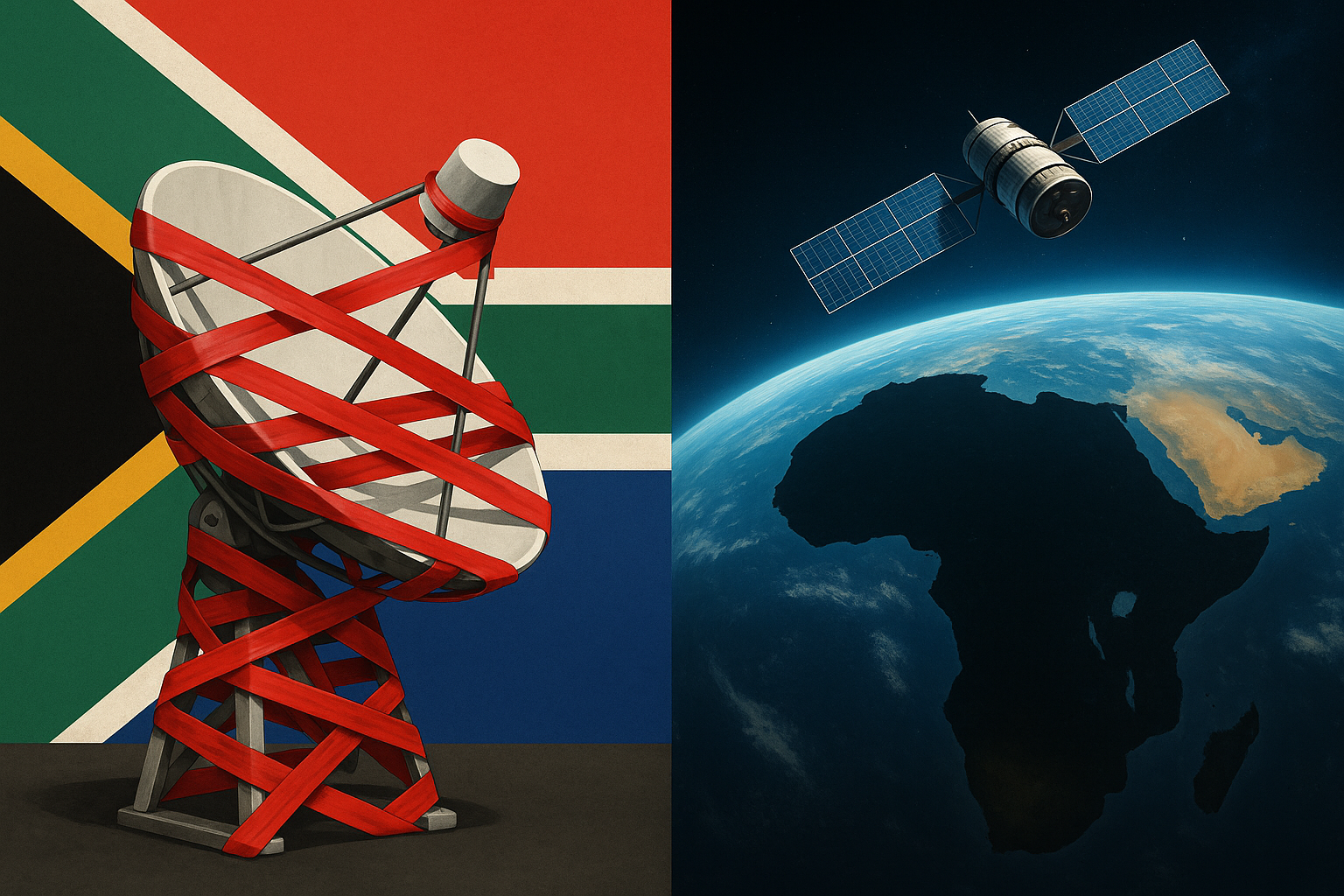
Starlink vs. B-BBEE: Elon Musk's Starlink faces a licensing stand-off in South Africa over Black ownership rules and rural access.
Starlink, Elon Musk's internet from space, wants to bring fast internet to South Africa. But South Africa has a rule: telecom companies must have 30% black ownership. Starlink offered a big donation instead, but the government said no, they need ownership. This means many people in South Africa, especially in rural areas, can't get Starlink's internet, even though they really want it. It's a big fight between new technology and old rules.
Why is Starlink facing licensing issues in South Africa?
Starlink faces licensing issues in South Africa primarily due to the country's Black Economic Empowerment (B-BBEE) regulations, specifically the 30% black-ownership requirement for telecommunications service providers. Despite offering a significant philanthropic donation, Starlink has not agreed to the equity stipulation, leading to a stalemate with the Independent Communications Authority of South Africa (ICASA).
Get Cape Town news in your inbox
Stay updated with the latest stories from the Mother City.
1. A Midnight Tweet That Lit the Fuse
At 03:42 SAST on 20 February 2026, Elon Musk tapped out a 180-character grenade while his jet idled on an Austin runway.
“Born-free country now punishes people for not being Black,” he wrote, claiming 140 laws “privilege one race” and blaming the same rules for locking Starlink out of South Africa. By the time the Gulfstream reached 40 000 ft, the message had circumnavigated Twitter, been translated into nine languages and detonated inside South Africa’s pre-election pressure-cooker.
Within hours #StarlinkSoWhite was the top tag in Gauteng, while rural Free State schoolkids countered with #WeWantStarlink. The EFF branded Musk “apartheid’s spoiled heir”; the DA accused the ANC of “data apartheid”; ICASA’s inbox swelled by 3 400 new e-mails - many carrying photos of pupils hunched over solar lamps. Parliamentarians cut short constituency week to draft talking points, and the Presidency’s media unit switched to crisis mode before sunrise.
The uproar was louder because the timing was cruel: South Africa is six months from what polls say will be its first sub-50 % ANC result, and every party needs a rural-wifi miracle. Musk’s late-night jab turned a technical licensing tiff into prime-time political theatre, forcing ministers to choose between transformation gospel and angry voters who simply want Netflix without buffering.
2. What Starlink Really Is - and Why the Law Still Says “No”
Picture 5 798 toaster-sized spacecraft screaming overhead at eight kilometres every second, 550 km above your braai. Together they form the biggest broadband mesh ever flung into orbit, capable of replacing copper, towers and even fibre in places geography forgot. A pizza-box antenna - nick-named “Dishy” - catches their Ka- and Ku-band chatter and turns it into 120 Mbps internet for R1 099 a month, roughly half the price of uncapped fibre in Sandton but still three days’ pay for a Humansdorp farmhand.
Because radio waves refuse to recognise borders, every sovereign state demands four separate permits before a single packet lands: a satellite-gateway licence, a user-device licence, plus the local ECS and ECNS papers. Without that quartet of stamps, Starlink’s signal is legally indistinguishable from a 1990s pirate radio rave. Pretoria’s rules are not exotic; they mirror those Brazil, India and Indonesia eventually signed. The catch is what Pretoria tacks on top: the 30 % black-ownership decree.
That demand is not a polite request hidden in a policy green-paper; it lives in section 4(3)(b) of the 2016 ICT Sector Code. MTN, Vodacom, Rain and even the bankrupt husk of Cell C swallowed the pill, either by listing black partners on their boards or by funding multi-billion-rand supplier-development funds. Amazon Web Services danced around it with R4 billion worth of cloud credits and internships. Starlink marched in offering a once-off R500 million “gift” to wire 5 000 rural schools - no shares, no board seats, no enduring dividends. ICASA’s reply was curt: philanthropy is lovely; equity is non-negotiable.
3. Thirty Percent That Trumped Half a Billion
Musk’s lawyers insist the code targets domestic mobile carriers, not roaming satellite fleets. ICASA fires back that any service “provided to persons in the Republic” is captured, no matter where the shareholder certificate is domiciled. The stalemate is so South-African it hurts: a black-ownership threshold born in mining charters has now drifted into low-earth orbit, and nobody quite knows how to land it.
The parties have tried creative maths. One draft proposed a “black user discount” counted as synthetic equity; another suggested that rural jobs be monetised into ownership points. Each time the regulator pointed to the same sentence: “CSR initiatives, donations or philanthropic spend may not be substituted for ownership.” The code may be amended, but only by the dti minister after public consultation - an 18-month odyssey no election-year politician wants to sponsor.
Enter Plan B. City Press revealed that Musk’s cousin, Lyndon Rive, has quietly negotiated a R3.5 billion PIC-backed fund that would buy exactly 30 % of a new “Starlink SA” vehicle. Harith and Pembani would round out the consortium, mimicking the 1998 Ubuntu-Botho deal that empowered MTN without scaring foreign investors. The structure could satisfy the letter of the law while keeping operational control in California. Talks are pencilled for March - two weeks before ICASA’s final hearing - turning pensions into rocket fuel for political peace.
4. Spectrum Soap-Opera: Delays, Smugglers and the China Card
Long before Musk’s midnight tweet, South Africa’s spectrum file was already a mess. The country missed the 2015 analogue-TV switch-off, dragged its feet on high-demand auctions until 2022, and still hoards the 6 GHz band that the rest of the planet uses for Wi-Fi 6E. A 2019 satellite-licence round collapsed when the Department demanded an overarching policy; the promised direction never reached Cabinet because the minister was axed in a midnight reshuffle. When Starlink first knocked in March 2021, officials politely asked it to “wait.” The policy landed four years later, leaving an 18-month queue Musk’s tweet just hijacked.
While lawyers argue, 11 000 rogue dishes have slipped through OR Tambo and Lanseria, most labelled “TV spare parts.” Facebook Marketplace auctions them at R18 000 a pop - nearly triple the retail sticker - registered to roaming addresses in Mozambique or Rwanda. ICASA has seized 312 units, but warehouse space is maxed out and court rolls are clogged until 2027. The fiscus loses an estimated R1.2 billion in subscription revenue booked offshore, a leak the National Treasury - already R20 billion light on VAT - would love to plug.
National-security hawks add another twist. A leaked SSA memo warns that uncontrolled LEO gateways could become spy hubs for the CIA, especially since SpaceX already launches Pentagon payloads. China’s use of Starlink backup at Gwadar port is cited as proof that satellites are geopolitical footballs. Defence mandarins want local earth stations majority-owned by a State-Owned Enterprise, effectively resurrecting the old Telkom monopoly liberalisation tried to kill. Starlink counters it can route all African traffic through a Pretoria bunker with black-box lawful-intercept ports; the spooks counter that back-doors are only trustworthy if the shareholder register sings Nkosi Sikelel’ iAfrika.
So the clock ticks toward 31 March, ICASA’s consultation deadline. After that, an independent tribunal has 90 days, but the Minister may stretch the calendar “in the public interest.” If July passes without a stamp, Musk’s 2026 capex shifts to Kenya and Tanzania where gateways rise faster than maize after rain. Kirkwood’s children will still ride kombis to the Engen garage, smugglers will still strap dishes under Hilux canopies, and 5 798 silent satellites will keep crossing the Southern Cross - streaming cat videos to countries that simply said yes.
What is Starlink and why is it relevant to South Africa?
Starlink is a satellite internet constellation operated by SpaceX, providing high-speed, low-latency broadband internet across the globe. It is highly relevant to South Africa, particularly for rural and underserved areas, as it offers a potential solution to the lack of reliable internet access where traditional infrastructure is scarce or non-existent.
Why is Starlink facing licensing issues in South Africa?
Starlink faces licensing issues in South Africa primarily due to the country's Black Economic Empowerment (B-BBEE) regulations. South African law requires telecommunications service providers to have 30% black ownership. Starlink's offer of a significant philanthropic donation was rejected by the government, which insists on equity ownership.
What is South Africa's B-BBEE requirement for telecom companies?
South Africa's B-BBEE (Broad-Based Black Economic Empowerment) regulations stipulate that telecommunications service providers must have a minimum of 30% black ownership. This requirement is enshrined in section 4(3)(b) of the 2016 ICT Sector Code and is non-negotiable for companies wishing to operate in the country's telecom sector.
How has Starlink attempted to resolve the ownership issue?
Initially, Starlink offered a once-off R500 million donation to wire 5,000 rural schools in lieu of equity. However, this was rejected by ICASA (Independent Communications Authority of South Africa), which stated that philanthropy cannot substitute for ownership. More recently, there have been reports of a potential Plan B involving a R3.5 billion PIC-backed fund to acquire exactly 30% of a new "Starlink SA" vehicle, with other consortium partners like Harith and Pembani.
What are the broader implications of this licensing dispute?
The dispute has significant implications. For Starlink, it means a potential delay or complete lockout from a potentially lucrative market, forcing it to shift investment to other African countries like Kenya and Tanzania. For South Africa, it means continued limited internet access for many citizens, particularly in rural areas, hindering economic development and digital inclusion. The situation also highlights a conflict between promoting local equity ownership and embracing global technological advancements.
What is the current status of the negotiations and what are the next steps?
As of the information provided, negotiations are ongoing. A proposal for a consortium-based 30% black ownership of a new "Starlink SA" vehicle is reportedly being discussed, with talks penciled for March, two weeks before ICASA's final hearing. ICASA's consultation deadline is March 31st, after which an independent tribunal has 90 days to make a decision. However, the Minister has the power to extend this timeline in the public interest.

Isabella Schmidt is a Cape Town journalist who chronicles the city’s evolving food culture, from Bo-Kaap spice merchants to Khayelitsha microbreweries. Raised hiking the trails that link Table Mountain to the Cape Flats, she brings the flavours and voices of her hometown to global readers with equal parts rigour and heart.
View all articles →