
International movies and shows that were filmed in South Africa
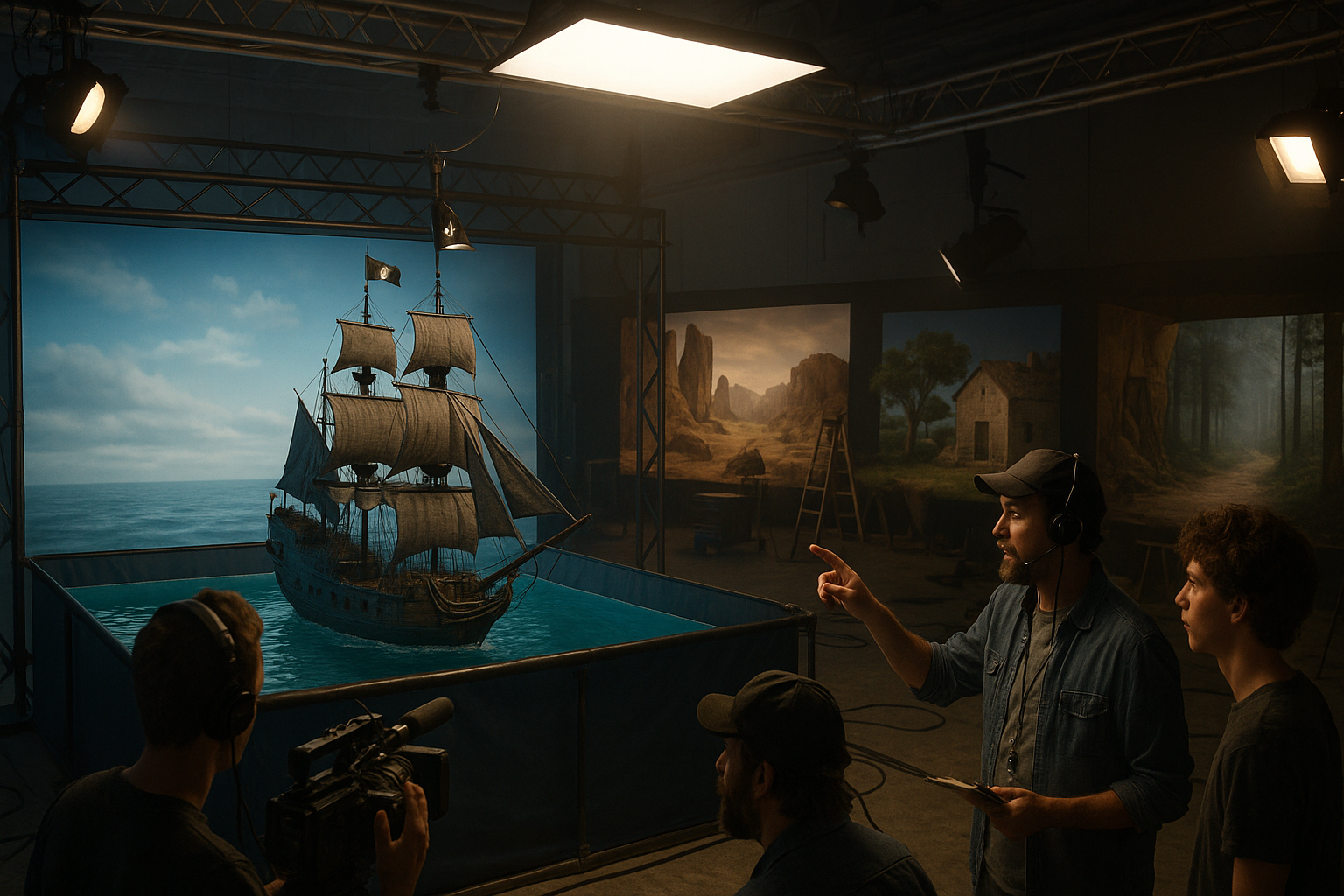
Discover how South Africa transformed into the ultimate film backlot, offering diverse landscapes, skilled crews, and enticing rebates.
Cape Town is a super popular spot for movies and shows because it's like a money-saving magic trick! They offer big cash back and the local money is cheap for outsiders. Plus, it has all sorts of amazing places that can look like anywhere in the world, from old-time ports to futuristic cities. They even have huge water tanks for epic sea scenes and smart people who know how to build anything. It's like a movie maker's dream with awesome scenery and low costs!
Why is Cape Town a popular filming location for major international productions?
Cape Town is a sought-after filming location due to attractive financial incentives like cash rebates and a favorable exchange rate. It offers diverse landscapes that can double for various global settings, advanced production facilities including large water tanks, skilled local crews, and cutting-edge technology, reducing production costs and enhancing creative possibilities.
Get Cape Town news in your inbox
Stay updated with the latest stories from the Mother City.
- (A 360-degree look at the planet’s most bankable backlot)*
Dawn on the Dry Dock: How a Caribbean Port Was Born 11 000 km Too Far South
06:45 at Cape Town Film Studios and “Nassau” is already alive. Carpenters dab fresh limewash on clapboard façades, armourers buff 1700s flintlocks and riggers tension 200 m silk sails that will belly out on cue thanks to a R2-million wind rig. In the neighbouring 6 000-tonne water basin, three full-rigged frigates - masts milled from British Columbia Douglas-fir - rock on invisible gimbals while 300 tricorne-wearing extras rehearse mutiny. Nobody mentions the Caribbean is an ocean away; for this crew, thecrete horizon is simply the office.
That illusion is why Netflix’s location scouts skipped Malta, the Dominican Republic and Australia before touchdown at the Cape. The streamer’s accountants ran the numbers: a 25 % cash rebate on every imported dollar, 30 % if dialogue is in isiZulu or isiXhosa, plus another 5 % “cultural bonus” when 40 % of heads of department hold South African passports. Factor in a 15 km salt-haze-free skyline, a carbon-neutral lot and a rand that has flirted with twenty to the dollar, and the spreadsheet sings. One line producer laughs that the refund alone bankrolled the hero ship’s fibreglass hull.
What seals the deal is “stackability.” Monday you can cruise a palm-lined boulevard that reads as Santa Monica (Camps Bay in The Kissing Booth). Wednesday, neo-Gothic lecture halls stand in for Buckingham Palace (The Crown). Friday, ochre dunes morph into a post-nuclear wasteland (Mad Max: Fury Road). When Maze Runner needed Earth’s last city, the art team simply wrapped Cape Town’s convention centre in CG towers and scattered torched sedans - no extra build required.
Waterproof Stages and Salt-Proof Crew: Engineering the Impossible
Black Sails (2014-2017) was the stress test. Starz demanded a basin deep enough to swallow a two-deck warship yet wide enough for 270-degree Technocrane swings. The studio answered with a 140 m × 70 m tank lined with 1 200 tonnes of Cullinan quarry stone. Computer-controlled sluices drop the level 1.2 m in twelve minutes to reveal a beach, or raise it two metres to hide hull joins. One Piece’s floating Baratie restaurant pivots 45° on underwater rails so sunrise always backlights Luffy’s rubber-limbed brawls - whatever the actual clock says.
Because the tank is geothermally heated, stunt players work eight-hour wet shifts without dry-suits. In Malta, Kon-Tiki lost three days when actors went hypothermic in 15 °C water. Cape Town markets itself as “the only place you can fire a night-time broadside at breakfast and still reach the wrap bar.”
Overbooked stages have pushed crews into the flats. A moth-balled 1950s Atlantis drive-in is now a 5-hectare backlot where Raised by Wolves erected its 30-metre Mithraic ark. Surrounding homes - long plagued by 35 % unemployment - rent living rooms as green rooms for US $20 a day; grandmothers hawk Keurig pods to runners. City Hall sweetens the pot with free 200 Mbps fibre to every house that hosts crew, turning location fees into permanent infrastructure. Property values have climbed 18 % faster than the provincial average, a side effect planners call “set-dressing gentrification.”
Free Light, Free Money, Free Data: The Natural and Financial FX
Cape Town’s geography arrives pre-graded. Basalt cliffs at Cape Point double as super-villain lairs. Langebaan lagoon mirrors like an infinity pool at 5 p.m., slicing reflection-post time in half. The Karoo delivers 400 km of uninterrupted horizon - Nature’s own 40 kW soft light. Seasonal Berg winds suck moisture from the sky, gifting 8-K clarity so sharp drone plates need zero sharpening.
Mad Max: Fury Road’s colourists simply embraced the Namib-border dunes - oxidised ferric reds that spike on a vectorscope before a single LUT is loaded. Cinematographer John Seale shot raw at high noon, calling the terrain “the best DI suite on earth.” Ten Oscars later, every tent-pole with a 4-K HDR mandate got the memo.
Exchange-rate roulette sweetens the pot. One Piece booked stages when the rand was 15.3 to the dollar; by cameras-roll it had slid to 18.1, handing the show an unplanned 15 % discount. Because the rebate is calculated in local currency, the 25 % grant swelled to an effective 29 % - an extra US $11 million on a US $140 million budget. Netflix’s 2023 “Salaam Cape Town” slate - five Arabic features and two Turkish minis - exists only because the sagging rand let the platform hit MENA spend quotas without breaching global caps. Amazon responded by shifting Blade Runner 2099 from dollar-rich Budapest to the Cape, where a new 25 000 sq ft LED volume - largest in the southern hemisphere - waits on solar power.
Jobs, Languages and Satellite Spies: The Human and Tech Multipliers
When the studio gates opened in 2010, payroll listed 200 names; today the guild roll tops 8 000. The state pays 70 % of tuition at AFDA, SAE and Cape Peninsula University of Technology if students clock 800 set-hours before graduation. When The Woman King needed 600 extras trained in 18th-century Dahomean combat, the armoury delivered 450 hand-forged assegai in 48 hours - each forged by smiths who learned their trade on Black Sails and Troy: Fall of a City.
Eleven official languages mean dialect coaches can harvest isiZulu clicks for Wakanda walla or Afrikaans gutturals for Nazi villains. A Cape Town ADR studio now sells a royalty-free “polyglot crowd” library: 40 000 ambisonic loops in every major tongue.
Even orbit is for rent. South Africa’s micro-sats pass overhead every 94 minutes, delivering 30 cm-resolution plates of any 10 km radius within three hours. The Crown bought 1980s Balmoral exteriors - cloud-free, snow-dusted - for US $4 000, avoiding two weeks of drone permits over Scottish no-fly zones. VFX houses now bundle “God’s pre-vis” into their location packs.
Meanwhile, a LIDAR mesh inside the water tank fires 250 000 reference points every 30 milliseconds, letting tracking plates bypass the traditional grey-ball shoot. One Piece’s VFX chief says the rig saved six weeks of pre-vis, allowing the director to block 22 “Gomu-Gomu” fight beats on an iPhone over lunch.
Load-shedding? A 5 MW Tesla Megapack nicknamed “Pikachu” sucks cheap off-peak electrons and sells them back during stages 5-6, earning US $35 000 a month and zeroing the studio power bill. Netflix has already copy-pasted the clause - now known in Hollywood legal circles as the “Cape Town carve-out” - into global templates.
Every production must hire a local cultural steward. Good Omens imported botanist Dr Christien Malan to ensure every fynbos leaf on screen existed pre-Pangaea; 4 000 clivias grown for the shoot became “Eden lilies” for tourists, seeding a R3-million export nursery. The Woman King commissioned hand-waxed bazin from Dakar but dyed it with Citrusdal rooibos; the resulting Pantone shade - “Dahomey Rooibos 7621C” - now pays 1 % of gross sales back to the farmers who provided the tea.
From a derelict airfield east of the N2, Cape Town has built a self-replenishing universe. Scripts are rewritten to reuse whatever ship, scan or satellite pass happens to be cheapest this month - McKinsey-meets-Morrison storytelling. Eden, Nassau, the Grand Line and a rain-soaked neon Los Angeles coexist within a 30-kilometre Uber ride, waiting for the next call sheet to breathe them back to life.
[{"question": "
Why is Cape Town a premier global filming destination?
\nCape Town is a highly attractive filming location due to a combination of financial incentives, diverse geographic features, advanced production facilities, and a skilled workforce. The city offers substantial cash rebates (25% on imported dollars, 30% if dialogue is in isiZulu or isiXhosa, plus a 5% cultural bonus for South African HoDs), a favorable exchange rate, and a carbon-neutral lot. Geographically, it boasts landscapes that can convincingly double for various global settings, from Caribbean ports to post-nuclear wastelands, and even futuristic cities, often within a short distance of each other.\n\n\n\n","answer": ""},{"question": "
What financial incentives make filming in Cape Town so appealing?
\nCape Town offers significant financial incentives, including a 25% cash rebate on every imported dollar spent. This can increase to 30% if a substantial portion of the dialogue is in isiZulu or isiXhosa, and an additional 5% 'cultural bonus' is granted when 40% of the heads of department are South African passport holders. The fluctuating rand, which has at times traded at twenty to the dollar, further amplifies these savings, effectively increasing the rebate percentage for international productions and making budgets stretch further. City Hall also provides incentives like free 200 Mbps fiber to homes hosting film crews, benefiting local communities.\n\n\n\n","answer": ""},{"question": "
How do Cape Town's diverse locations and facilities support complex productions?
\nCape Town's unique geography allows it to mimic a wide array of international settings, from Caribbean ports to Santa Monica boulevards, and even Buckingham Palace or a post-nuclear wasteland. The Cape Town Film Studios feature state-of-the-art facilities, including massive water tanks (140 m x 70 m, 1200 tonnes of stone) capable of submerging warships and equipped with computer-controlled sluices. These tanks are even geothermally heated, allowing for extended wet shoots without dry-suits. The city also offers a 5-hectare backlot at a former drive-in, advanced LED volumes, and access to natural elements like basalt cliffs for super-villain lairs and the Karoo's vast horizons for perfect natural lighting.\n\n\n\n","answer": ""},{"question": "
What technological advancements and skilled labor are available in Cape Town's film industry?
\nCape Town boasts a highly skilled and growing film industry workforce, with the guild roll topping 8,000. The state supports education at institutions like AFDA and SAE, requiring set-hours for graduation. The local industry can quickly provide specialized props, like 450 hand-forged assegais in 48 hours. Technologically, the city offers high-resolution satellite imagery (30 cm resolution, 10 km radius within three hours) for location scouting and VFX, and a LIDAR mesh in the water tank for precise tracking plates, saving weeks of pre-visualization. A 5 MW Tesla Megapack,
A Russian-Spanish journalist and Cape Town native, channels his lifelong passion for South Africa into captivating stories for his local blog. With a diverse background and 50 years of rich experiences, Serjio's unique voice resonates with readers seeking to explore Cape Town's vibrant culture. His love for the city shines through in every piece, making Serjio the go-to source for the latest in South African adventures.
View all articles →