
It’s official: Chinese cars are winning over South Africa’s motorists
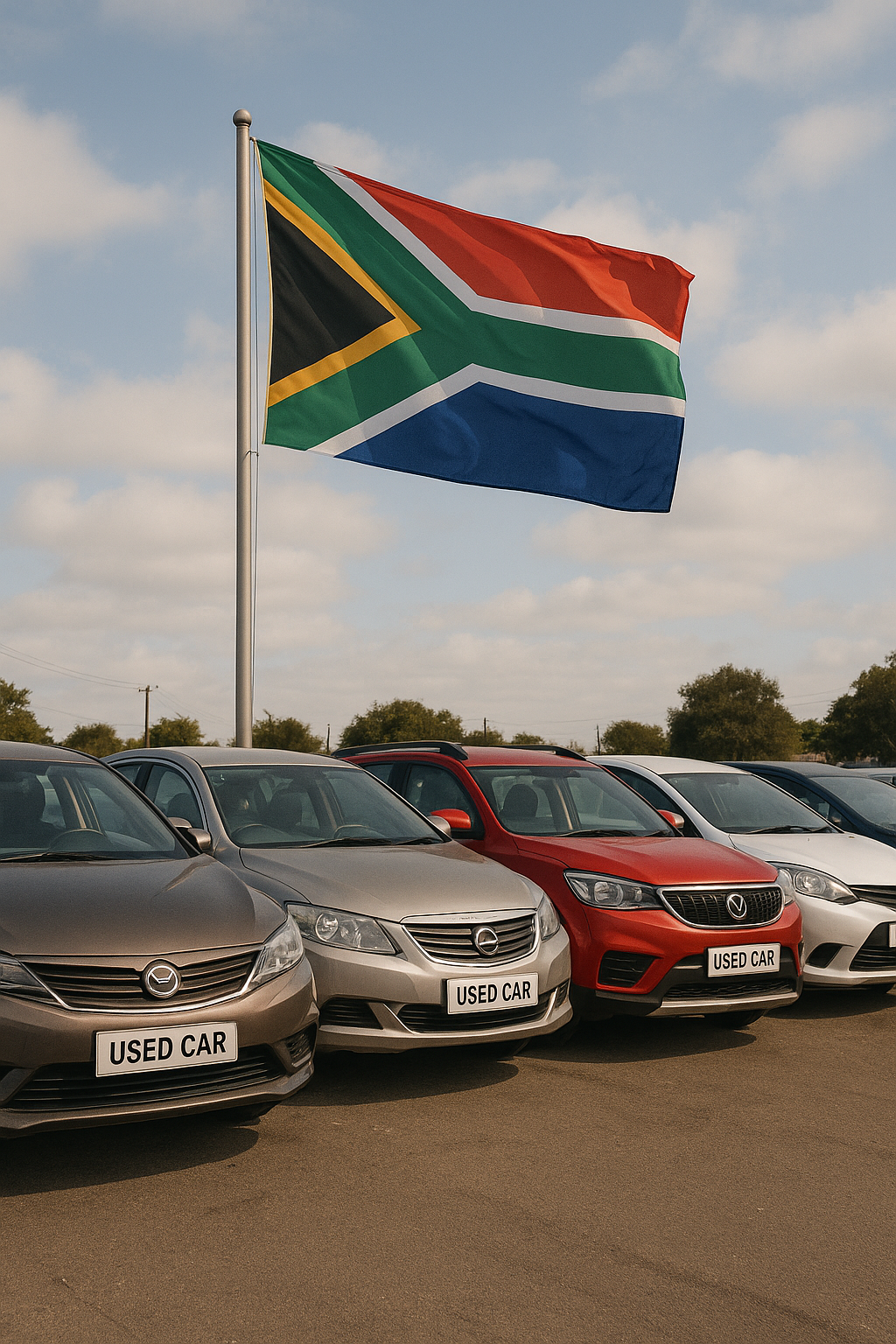
Chinese car brands like Chery, Haval, GWM, and Omoda are dominating South Africa's used-car market, proving their value and reliability.
Chinese cars are taking over South Africa's used car market! People used to joke about them, but now they're super popular because they're reliable and cheap to fix. Things like affordable parts, less chance of theft, and cool big screens make them a smart buy. Even experts agree, these cars are a big hit because they make sense for your wallet.
How did Chinese car brands gain popularity in South Africa's second-hand market?
Chinese brands gained popularity in South Africa's second-hand market due to private owners' positive experiences with reliability and lower repair costs. Factors like affordable parts, readily available stock, lower theft risk, and larger touchscreens, coupled with competitive pricing and reduced insurance premiums, have driven their success.
Get Cape Town news in your inbox
Stay updated with the latest stories from the Mother City.
1. The Braai Paradox: Where Pride Meets the Parking Lot
You’ll still hear the old chorus at weekend braais from Roodepoort to Gqeberha: “Nothing beats German engineering,” or “You need a bakkie that can pull a boat.” Yet the cars actually parked outside the butcher tell a different story. In 2019, fewer than one in every hundred online classified ads for pre-owned cars wore a Chinese nameplate; today the ratio is one in twelve. That eight-fold jump is not the result of secret dumping by importers - it's the verdict of private owners who have lived with the product, paid their own repair bills, and are now happy to stake someone else’s money on the same badge.
The disconnect between braai-talk and asphalt-reality is so wide that the national insult - “it’s Chinese” - still gets thrown around as shorthand for flimsy, even while Tiggos and Jolions outnumber Golfs in the commuter queue. Language always lags behind behavior; by the time the mockery stops, the shift is already irreversible. The revolution, in other words, happened while the chops were still on the coals.
2. The Second-Hand Jury: 92 % of the Market Has the Final Say
New-car headlines grab attention, yet only eight percent of South Africans ever sign on the bottom line of a factory-fresh deal. Everyone else enters through the used-car door, where reputations are carved by invoices for brake pads, not billboards. Out here, there is no warranty cushion, no coffee-machine showroom, just potholes, taxi-dodging and the merciless maths of cost-per-kilometre. When AutoTrader clocks 3 100 Chery Tiggo 4 Pros changing second owners in twelve months, each sale is a miniature referendum on whether the car still felt trustworthy after 40 000 km of sun-baked tar and the occasional axle-snapping crater.
A model that survives this arena has passed the country’s toughest exam. Mechanics, insurers, stokvel treasurers and Uber-fleet admins all keep private scorecards; if any column turns red, resale demand disappears. Chinese badges have now survived long enough to earn green ticks in every column that matters - parts price, parts presence, theft risk, fuel tolerance and screen size. The gatekeepers of the 92 % club have spoken, and they are speaking with their wallets, not hashtags.
3. Hidden Rivers: Where the Cars Really Come From
Glittering Sandton showrooms account for only a trickle of the stock. Three quieter rivers feed the pool:
-
Rental run-off*
Imperial, Tempest and First Car Rental ordered hundreds of Chery Tiggo 4s and Haval Jolions during the 2022/23 rate crash, paying 30 % less than a comparable Corolla Cross fleet. After 18-month cycles the cars were released to auction houses with guaranteed residuals, giving banks the confidence to finance the next buyer. -
Entrepreneur upgrades*
The contractor who bought a GWM Steed 6 single-cab to service a municipality now needs a P-Series double-cab; his well-thumbed workhorse enters the market with honest scars, tow-ball polished by cattle trailers and service stamps that prove the oil was changed on time, every time. -
Gentle repossessions*
When 2024 interest rates spiked, Chinese models were not spared, but their lower sticker prices meant owners were less likely to drown in negative equity. Absa figures show repossessed Tiggos spend 27 days on the auction floor versus 41 for Korean rivals, simply because the reserve is within reach of township dealers and stokvel pools.
4. Mileage Myths, Parts Prices and the Screen-Size Wars
Conventional wisdom says “buy the lowest odometer you can find,” yet data from 2025 reveal that a three-year-old Haval H6 is healthiest at 58 000 km, not 23 000 km. Cars that rarely moved beyond airport parking bays often suffer turbo-sludge and diesel-particulate grief; those that cruised the N3 at legal limit display uniform tyre wear and injectors as clean as the day they left Port Elizabeth. Sellers now brag about “highway kilometres,” a phrase that would have drawn laughter when a Chinese badge was still laughed off the forecourt.
Cheques are further won over by price tags in the parts bin: a front-brake-pad set for a Tiggo 4 Pro retails at R715, the equivalent VW T-Cross part at R2 307. Availability trumps price - VW pads sit on a six-week boat while Chery stock is ex-Centurion, thanks to a R30 million parts hub opened in 2023. Independent accessory stores keep GWM oil filters on the shelf next to Golf items, and insurers have noticed: Santam downgraded the Tiggo 4 Pro from risk group 17 to 11 within three years, cutting premiums by up to R180 a month for a 26-year-old driver. When cover becomes cheaper than a 2018 Polo, finance approvals rise and residuals strengthen - an upward spiral Toyota once owned alone.
Touch-screen acreage seals the deal among digital natives. A 2022 Tiggo 7 Pro shipped with a 10,25-inch wireless CarPlay slab, a spec the 2023 RAV4 GX still omitted. Each trade-in passes the wide display to the next twenty-something buyer, compressing the age demographic from 38 (Qashqai) to 28 (Jolion). Embedded SIMs feed live telemetry to JaSure, pushing Omoda C5 theft-recovery to 94 % within six hours and slicing premiums below even the humble Polo. In the township stokvel economy, a R250 k pot buys the crossover cash; it then earns R8 k a month on ride-hail routes, pays itself off, and re-enters the market with full service books and the exact high-mileage profile that workshop-savvy shoppers prefer.
5. Bakkie Cred, Hybrid Futures and the Showroom Re-Shuffle
To crack the holy “one-ton” leisure market, GWM entered a fleet of P-Series double-cabs in the punishing 2024 Donkervoort 24-hour endurance relay. Three of the five rigs finished, one inside the overall top-ten. Clips of a stock silver bakkie overtaking a Ranger Raptor on Kimberley dunes lit up farming WhatsApp groups; residuals after 36 months now stand at 64 %, only six points behind the Hilux 2.8 GD-6. Mythology, once the property of Toyota, is being rewritten in real time.
Hybrid technology is following the same fast-track. The Jaecoo 1.5 petrol-electric arrived in November 2024; by April 2025 used units with 4 000 km were listed at R499 900 against a list price of R569 900 - a 12 % drop that mirrors the Corolla Cross hybrid. Transferable eight-year battery warranties, underwritten at Lloyd’s, remove the dread that sank early Nissan Leaf residuals. If the curve holds, hybrid Chinese stock will complete the journey from “risky unknown” to “default choice” in under 18 months, even faster than their purely petrol stablemates.
The final sign of arrival is physical placement. At CMH Isando the used lot is now grouped by body style, not brand. A Tiggo 7 Pro rubs shoulders with a Tucson; a Jolion mirrors a Corolla Cross. Sales staff earn the same commission whichever key they hand over, so the conversation centres on monthly cost, not badge ancestry. Chinese metal has finally earned equal shade under the same canopy that once sheltered only blue-oval or three-pointed-star royalty. The quiet revolution is complete: the cars won the argument while nobody was looking - one brake pad, one insurance quote, one data-driven stokvel purchase at a time.
[{"question": "### What factors have contributed to the surge in popularity of Chinese cars in South Africa's second-hand market?", "answer": "Chinese cars have rapidly gained popularity due to their perceived reliability and lower repair costs. Key factors include affordable parts, high availability of stock, a lower risk of theft compared to other brands, and desirable features like larger touchscreens. These attributes, combined with competitive pricing and reduced insurance premiums, make them an attractive option for budget-conscious buyers."}, {"question": "### How significant is the shift towards Chinese brands in the second-hand market compared to previous years?", "answer": "The shift is substantial. In 2019, Chinese nameplates represented less than one percent of online classified ads for pre-owned cars. Today, that figure has jumped eight-fold to one in twelve. This dramatic increase reflects a growing acceptance and trust among private owners who have experienced the cars firsthand."}, {"question": "### Where do most of the used Chinese cars entering the market come from?", "answer": "The majority of used Chinese cars in the South African market originate from three main sources: rental car fleets (such as Imperial, Tempest, and First Car Rental), entrepreneurial upgrades (where business owners trade in older models for newer Chinese vehicles), and gentle repossessions. The lower sticker prices of Chinese models often mean owners are less likely to be in negative equity during economic downturns, making repossessed vehicles more accessible for resale."}, {"question": "### What are the advantages of buying a higher-mileage Chinese car, and how do parts and insurance compare to other brands?", "answer": "Contrary to conventional wisdom, data suggests that a three-year-old Haval H6, for example, is healthiest at around 58,000 km, indicating that 'highway kilometers' are often beneficial for a car's health. In terms of parts, Chinese cars offer significant advantages: a front-brake-pad set for a Tiggo 4 Pro costs R715, compared to R2,307 for an equivalent VW T-Cross part. Parts availability is also excellent, with local distribution hubs ensuring quick access. Insurers have responded by reducing premiums for Chinese models, with the Tiggo 4 Pro, for instance, seeing its risk group downgraded from 17 to 11, leading to lower monthly costs for drivers."}, {"question": "### How are Chinese car brands addressing theft concerns and incorporating advanced technology?", "answer": "Chinese brands are actively addressing theft concerns through advanced technology. For example, the Omoda C5 uses embedded SIMs to feed live telemetry to services like JaSure, resulting in a 94% theft recovery rate within six hours. This technology helps to slice insurance premiums, making these vehicles even more appealing. Furthermore, many Chinese models come equipped with large touchscreens and features like wireless CarPlay, often exceeding the technology offered in similarly priced competitors, which appeals strongly to younger, digitally native buyers."}, {"question": "### What is the future outlook for Chinese car brands in South Africa, particularly regarding bakkies and hybrid vehicles?", "answer": "Chinese brands are making significant inroads into segments traditionally dominated by other manufacturers. In the 'one-ton' leisure bakkie market, GWM P-Series double-cabs have shown strong performance in endurance relays, leading to impressive residual values that are closing the gap with established brands like Toyota Hilux. Hybrid technology is also rapidly gaining traction, with models like the Jaecoo 1.5 petrol-electric entering the market and retaining strong resale values, bolstered by transferable eight-year battery warranties. This indicates a rapid shift towards these vehicles becoming a 'default choice' in various segments, further solidifying their position in the South African market."} ]

Lerato Mokena is a Cape Town-based journalist who covers the city’s vibrant arts and culture scene with a focus on emerging voices from Khayelitsha to the Bo-Kaap. Born and raised at the foot of Table Mountain, she brings an insider’s eye to how creativity shapes—and is shaped by—South Africa’s complex social landscape. When she’s not chasing stories, Lerato can be found surfing Muizenberg’s gentle waves or debating politics over rooibos in her grandmother’s Gugulethu kitchen.
View all articles →