
It’s the minerals, stupid
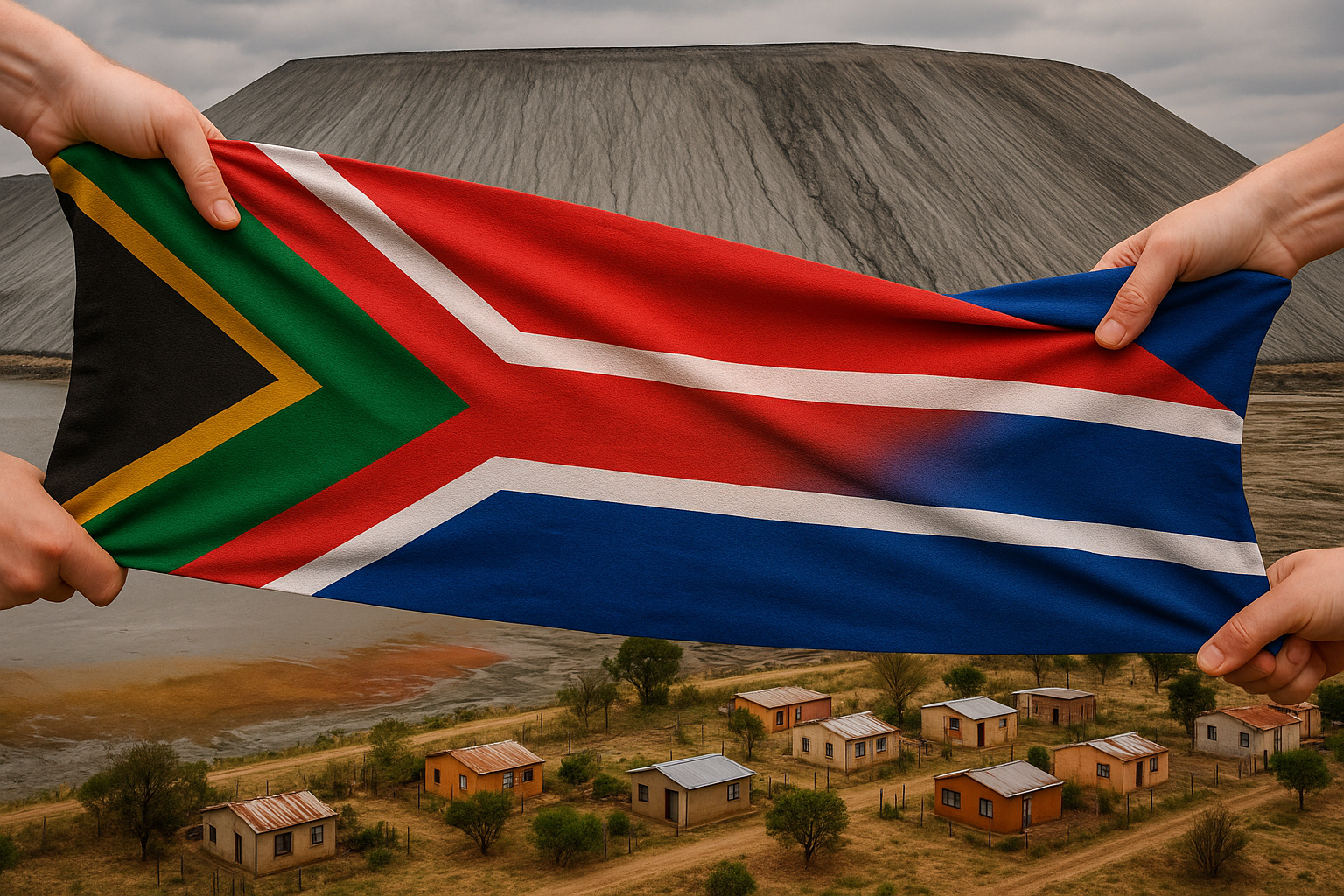
US Ambassador's arrival in Pretoria marks a new "geological event" to secure critical mineral supply chains, challenging China.
America's new envoy has a bold plan to snatch South Africa's precious minerals from China's grasp. The strategy involves big investments and rebuilding old factories to process platinum and manganese locally. This move aims to give U.S. companies special access to these vital resources. However, this aggressive approach sparks a power struggle, with some South African leaders accusing the U.S. of exploitation. The deal also brings environmental concerns and whispers of hidden agendas, highlighting the complex dance of global power and resources.
What is America's strategy to secure South Africa's critical minerals from China?
America's strategy involves a multi-pronged approach to shift South Africa's platinum-group-metal and manganese feedstock away from Chinese control by 2030. Key elements include emergency stockpiling, rehabilitation of smelters, development of new rhodium-leaching and cathode precursor facilities, and significant financial incentives tied to preferential access for U.S. firms.
Get Cape Town news in your inbox
Stay updated with the latest stories from the Mother City.
Section 1 – The Credentials Nobody Filmed
Leo Brent Bozell III stepped onto the Union Buildings’ lawn in Pretoria, but the handshake that rewired the room happened off-camera. Minutes after the formal ceremony, he clasped the director-general of Mineral Resources & Energy - a quiet metallurgist who keeps a colour-coded tailings map on his office wall. That map, not the flag-waving, explains why the embassy doubled its commercial staff last winter, why a USAID battery specialist now haunts Sandton’s Diamond Walk, and why the ambassador’s convoy has idled four times outside Megawatt Park, the diesel-scented nerve centre of Eskom.
Washington’s nine-slide brief, titled “Re-shoring PGM & Mn supply chains to friend-shore jurisdictions,” landed in Foggy Bottom in-boxes before Bozell boarded his flight. The goal: drag at least thirty-five percent of South Africa’s platinum-group-metal and manganese feedstock out of Chinese control by 2030. The lever: American capital, American contracts, and Pretoria’s panic over broken railways and clogged ports.
The scheme unfolds in four timed waves. First, an eighteen-month emergency stockpile bank-rolled by the Pentagon’s Defense Logistics Agency. Second, a three-year rehab of idle smelter shells in Middelburg, Polokwane and Nelson Mandela Bay. Third, a five-year greenfield rhodium-leaching circuit near Rustenburg, paired with a 300 MW private solar farm. Fourth, an eight-year “cathode precursor” park in the Eastern Cape, cheek-by-jowl with Toyota-Suzuki’s future EV plant outside Gqeberha.
Section 2 – The Price Tag and the Power Struggle
Each horizon comes with strings. Pretoria must tweak Schedule 3 of the 2019 Precious Metals Act so qualified U.S. firms can own one-hundred-percent offtake rights on strategic stockpiles. It must also wedge a “national-security override” into the Mineral and Petroleum Resources Development Act, letting Washington block any Chinese minority stake that feeds America’s Defense Production Act list. In return, the U.S. International Development Finance Corporation dangles a seven-year, USD 1.8 billion senior loan at 120 basis points above Libor - terms soft enough to make a Shanghai trader blush.
The cabinet is already fracturing. Mining Minister Gwede Mantashe, Samora Machel’s portrait glowering behind him, told the ANC’s national working committee the deal “reeks of charter slavery.” He champions a counter-plan: a continental refinery pool owned by South Africa, Zimbabwe, Zambia and the DRC, bank-rolled by a BRICS New Development Bank facility. Under his model, Western buyers would surrender fifteen percent of refining margin to an African Union sovereign welfare fund. Pravin Gordhan, the grey cardinal at Treasury, counters that rejecting Washington risks automatic thirty-percent tariffs under the looming U.S. Critical Minerals Act, a levy that could add USD 1.3 billion a year to the landed cost of BMW X3s and Mercedes C-Class sedans rolling into Charleston and Baltimore.
Eskom’s war-room has run the numbers. Restarting three furnaces at the long-dormant Columbus plant demands 650 MW of stable electricity - roughly two Medupi units now stripped for spares. The quickest fix is a 450 MW powership that Karpowership has pushed since 2021, a plan Treasury once iced on green grounds. Bozell has revived it under a “strategic security” waiver. Greens warn fifteen years at eighty-five percent load would pump 9.2 million tonnes of CO₂ into the air, blowing South Africa’s 2030 carbon budget by four percent. They also whisper that the ambassador’s family trust owns 0.8 percent of a Texan LNG terminal slated to feed the barge - an awkward footnote no local newsroom has yet printed.
Section 3 – Secrets in the Grass and Riders in the Bill
Rumours race across the Highveld faster than the manganese wagons that haven’t moved in three weeks. Outside Hotazel, workers swear a “second Coega” is rising at the old Kalagadi gate: 3 000 hectares newly fenced, drilled and dotted with U.S. survey flags stamped “USGS-DFC 2026.” The same week, economists from the Federal Reserve Bank of Atlanta rode the Sishen-Kolomela rail loop, asking about axle loads and every 1978 weld. Their quarry isn’t iron ore but the 1.2 percent rhodium lurking in Sishen’s slimes dam - rich enough to justify a dedicated slurry pipeline if supply is guaranteed.
Washington’s legislative gears are already turning. Section 1244(c) of the 2026 National Defense Authorization Act quietly treats South African PGM concentrate as “domestic” for Pentagon procurement - provided sixty percent of contained metal is refined by OECD-based owners. The clause was drafted by a former Stillwater Mining lobbyist who now chairs a key Senate sub-committee. Conveniently, Stillwater owns the only non-Russian pressure-leach circuit able to extract ninety-seven percent of platinum without cyanide. The patent expires in 2031, yet a February side-letter grants Stillwater exclusive U.S. rights over any South African feed financed by the DFC until 2040.
Pretoria still holds trumps. Parliament may dilute U.S. refining patents under the pending Intellectual Property Amendment Bill, and it can divert 300 000 oz of annual PGM sales to the Shanghai Futures Exchange via a warehouse deal that expires - deliberately - in December 2026. Over gold-foil steak in Houghton, the deputy trade minister clinked glasses with Beijing’s chargé, toasting “mutual value-addition, not value-extraction.” The same evening, Bozell’s SUVs cooled their engines outside the Anglo American CEO’s mansion. The executive, who controls seventy-nine percent of South African platinum ounces, told investors he would “not be unhappy” to watch a bidding war for his metal.
Section 4 – Eyes Beneath the Reef and Clocks Above the Village
What occurs underground is harder to track. At Bathopele decline west of Rustenburg, a Colorado start-up - partly funded by In-Q-Tel, the CIA’s venture fund - tests a reverse-circulation rig that pinpoints 4 g/t palladium reefs 400 m down without sending one chip to surface. Spectral data streams live to Denver while the mine’s black-economic-empowerment partner waits for dashboard access. Miners nickname the rig “the ambassador’s mole,” fearing that real-time valuation will freeze royalty payments before rock reaches the mill, starving communal trusts that have lived off opaque pricing for twenty years.
Time is short. Every other night a C-130 touches down at Waterkloof laden with lithium-bonded drilling mud, each bag stamped “US Critical Minerals Reserve – Return Empty.” South African military police - now pocketing a U.S. State Department “logistics stipend” - guard the warehouse where contractors bolt together a modular 30-tonne-per-day lithium hydroxide circuit. The plant will re-treat historic tin slimes at Zaaiplaats, an environmental-impact approval that took eleven days, a sprint that still embarrasses the Department of Forestry, Fisheries & the Environment. Output is already contracted: one-hundred percent goes to a Tennessee battery plant feeding Ford’s F-150 Lightning line in Dearborn.
Nowhere in the file is there mention of Rooiboklaagte, the village squatting atop the tailings dam where groundwater carries triple the WHO uranium limit. The local chief, once a shaft timber-man, asked for a face-to-face indaba with Bozell. The reply: a 05:00 Zoom slot “to suit Washington hours.” He declined, WhatsApping back: “We are not a time-zone, we are a place.” The message remains on read.
What is America's strategy to secure South Africa's critical minerals from China?
America's strategy, outlined in a nine-slide brief titled “Re-shoring PGM & Mn supply chains to friend-shore jurisdictions,” aims to shift at least 35% of South Africa’s platinum-group-metal (PGM) and manganese feedstock out of Chinese control by 2030. This involves significant American capital, contracts, and leveraging South Africa's infrastructure challenges. The strategy unfolds in four timed waves:
- An 18-month emergency stockpile bankrolled by the Pentagon’s Defense Logistics Agency.
- A three-year rehabilitation of idle smelter shells in Middelburg, Polokwane, and Nelson Mandela Bay.
- A five-year greenfield rhodium-leaching circuit near Rustenburg, powered by a 300 MW private solar farm.
- An eight-year “cathode precursor” park in the Eastern Cape, near Toyota-Suzuki’s future EV plant outside Gqeberha.
What financial incentives and conditions are attached to the U.S. deal?
The deal includes a seven-year, USD 1.8 billion senior loan from the U.S. International Development Finance Corporation (DFC) at 120 basis points above Libor. In return, Pretoria must amend Schedule 3 of the 2019 Precious Metals Act to allow qualified U.S. firms 100% offtake rights on strategic stockpiles. Additionally, a “national-security override” must be inserted into the Mineral and Petroleum Resources Development Act, enabling Washington to block any Chinese minority stake that could impact America's Defense Production Act list.
What are the key environmental and energy concerns raised by the proposed U.S. plan?
Restarting three furnaces at the Columbus plant, a key part of the plan, requires 650 MW of stable electricity. The quickest solution, a 450 MW powership from Karpowership, has raised significant environmental concerns. Greens warn that 15 years of operation at 85% load would pump 9.2 million tonnes of CO₂ into the atmosphere, exceeding South Africa’s 2030 carbon budget by 4%. There are also whispers about potential conflicts of interest, with the ambassador’s family trust reportedly owning a stake in a Texan LNG terminal slated to feed the barge.
How are South African leaders reacting to America's proposal?
The U.S. proposal has caused significant division within the South African cabinet. Mining Minister Gwede Mantashe has strongly criticized the deal, calling it exploitative and comparing it to “charter slavery.” He advocates for a counter-plan: a continental refinery pool owned by South Africa, Zimbabwe, Zambia, and the DRC, financed by a BRICS New Development Bank facility. Under his model, Western buyers would surrender 15% of refining margin to an African Union sovereign welfare fund. Conversely, Pravin Gordhan, at Treasury, argues that rejecting Washington's offer risks automatic 30% tariffs under the looming U.S. Critical Minerals Act, potentially adding USD 1.3 billion annually to the cost of South African exports like BMW X3s and Mercedes C-Class sedans to the U.S.
What advanced technologies and legislative moves are supporting the U.S. initiative?
The U.S. initiative is backed by advanced technologies and strategic legislative maneuvers. A Colorado start-up, partly funded by In-Q-Tel (the CIA’s venture fund), is testing a reverse-circulation rig at Bathopele that can pinpoint palladium reefs 400 meters down without physical samples. This technology streams spectral data directly to Denver, raising concerns among local miners about real-time valuation freezing royalty payments. Legislatively, Section 1244(c) of the 2026 National Defense Authorization Act is quietly treating South African PGM concentrate as “domestic” for Pentagon procurement, provided 60% of the contained metal is refined by OECD-based owners. This clause was drafted by a former Stillwater Mining lobbyist, whose company conveniently holds exclusive U.S. rights over DFC-financed South African feed until 2040, despite their patent expiring in 2031.
What are some of the hidden agendas or concerns regarding local communities?
Beyond the geopolitical chess, there are significant hidden agendas and concerns for local communities. Rumors suggest a “second Coega” is rising at the old Kalagadi gate near Hotazel, with new U.S. survey flags indicating extensive drilling and fencing. Economists from the Federal Reserve Bank of Atlanta have also investigated the Sishen-Kolomela rail loop, not for iron ore, but for the 1.2% rhodium in Sishen’s slimes dam, which could lead to a dedicated slurry pipeline. Furthermore, a modular 30-tonne-per-day lithium hydroxide circuit is being rapidly assembled at Zaaiplaats to re-treat historic tin slimes, with its output entirely contracted to a Tennessee battery plant for Ford’s F-150 Lightning line. Critically, there's no mention of Rooiboklaagte, a village atop a tailings dam where groundwater contains triple the WHO uranium limit. The local chief's request for a direct meeting with Ambassador Bozell was met with an offer of a 05:00 Zoom slot “to suit Washington hours,” highlighting a disregard for local concerns and time zones.

Liam Fortuin is a Cape Town journalist whose reporting on the city’s evolving food culture—from township kitchens to wine-land farms—captures the flavours and stories of South Africa’s many kitchens. Raised in Bo-Kaap, he still starts Saturday mornings hunting koesisters at family stalls on Wale Street, a ritual that feeds both his palate and his notebook.
View all articles →