
KAIZER CHIEFS HAVE TWO AREAS OF CONCERN TO FIX
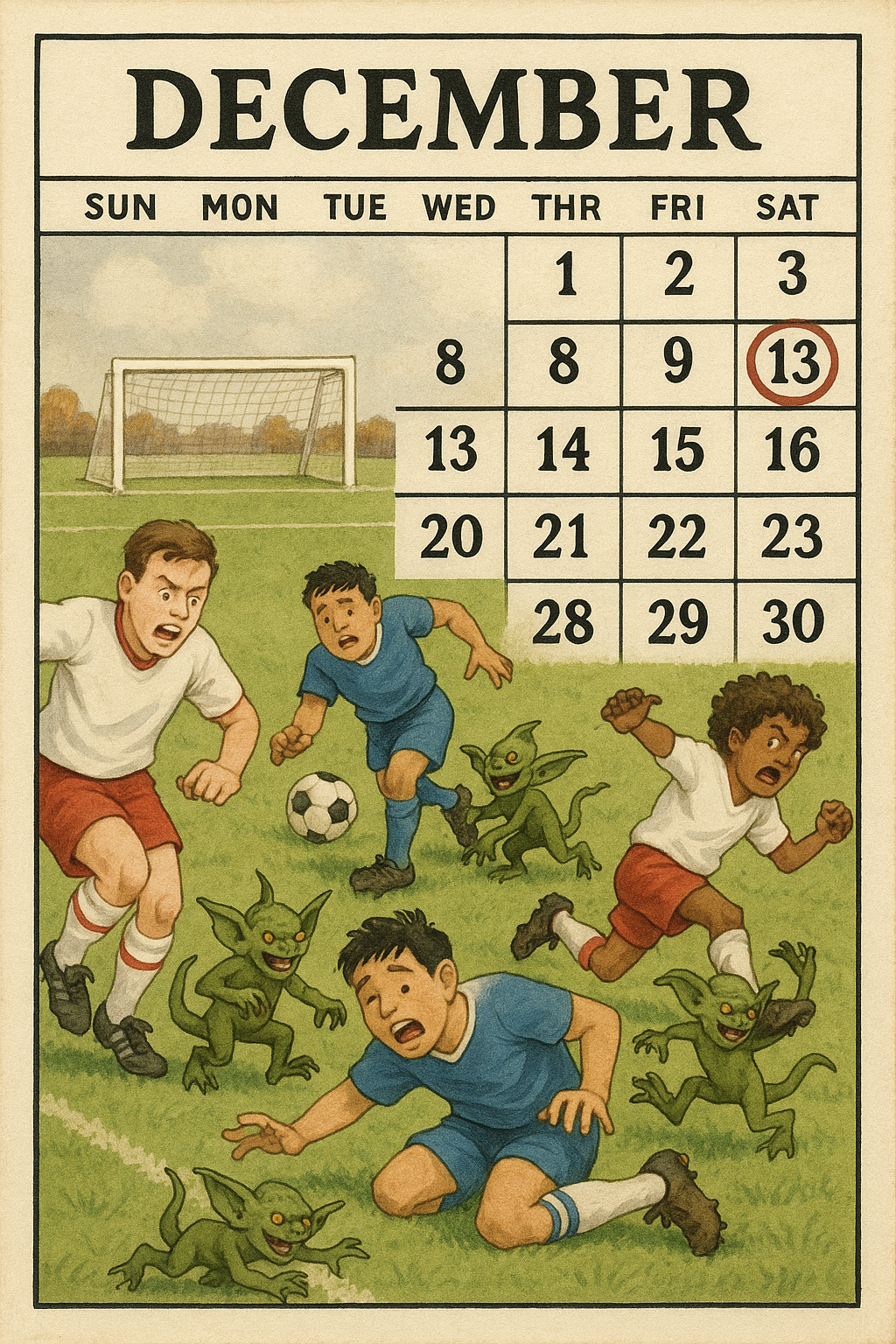
Kaizer Chiefs' Spanish tour reveals persistent issues: giving up leads and goal droughts. Can new coach Da Cruz fix these gremlins?
Kaizer Chiefs' new coach, Fernando da Cruz, faces five big challenges. He needs to stop the team from losing leads and help them score more goals, especially after the festive season. Da Cruz also has to fix their midfield passing, make their full-backs more effective, and boost the team's mental strength to handle the pressure of being a top club. He has 18 days to prove he can change things before his contract officially starts.
What are the main challenges facing Kaizer Chiefs' new manager, Fernando da Cruz?
Kaizer Chiefs' new manager, Fernando da Cruz, faces five critical challenges: addressing the team's recurring pattern of squandering leads, improving their alarming drop in goal production after the festive season, solving midfield passing issues, maximizing full-back contributions, and enhancing the squad's mental fortitude to overcome the "Chiefs Tax."
Get Cape Town news in your inbox
Stay updated with the latest stories from the Mother City.
Kaizer Chiefs' time in Spain has produced mixed results so far - two 1-1 draws, respectable showings against capable opponents, and a steady stream of cheerful social media content featuring players posing on golf carts near their Marbella hotel. Yet behind the carefully curated training footage and optimistic sound bites, two stubborn problems that have haunted the Naturena outfit for years have already surfaced to test their new Portuguese-Angolan manager.
The first issue involves squandering 1-0 advantages and failing to secure maximum points. The second concerns the alarming drop in goal production that typically arrives once the festive season passes. These deficiencies have hardened into entrenched patterns, and as any top-level strategist understands, such patterns prove far more stubborn to dismantle than straightforward tactical adjustments. Da Cruz enjoys eighteen days remaining until his official contract commencement on August 1st - eighteen days to persuade supporters, executives, and crucially, his playing personnel that the forthcoming campaign will finally break from the repetitive cycle of the previous five seasons.
The analysis below examines these prominent concerns alongside three additional structural weaknesses demanding urgent attention if Chiefs hope to genuinely challenge Mamelodi Sundowns' domestic supremacy and restore their reputation as a reliable pipeline for national team talent.
The Comfort Trap: Why Leading Positions Keep Slipping Away
The Recurring Pattern
In both exhibition matches played thus far, Naturena's finest struck first - Mfanyana Mthethwa converting a neat combination move against Rangers, followed by teenager Mfundo Thikazi's far-post header versus Al Kholood - only to surrender equalisers within eight minutes on each occasion. The defensive breakdowns followed an unsettlingly familiar script: central midfielders pressed toward the ball, full-backs found themselves isolated in two-against-one situations, and central defenders retreated excessively deep, permitting cut-backs into what analysts label the "red zone" - that dangerous central corridor between eight and fourteen metres from the goal line.
The Manager's Diagnosis
Da Cruz, a detail-oriented polyglot who reportedly kept a worn Spanish translation of "The Art of War" during his assistant tenure at Troyes, has already identified the underlying behavioural flaw. "We abandon our game plan and shift toward result preservation," he explained to club journalists this Tuesday. "The brain detects security and consequently reduces blood flow to the limbs - this represents neuroscience rather than any conscious betrayal of instructions."
The Proposed Remedy
Eliminating this comfort response requires more than simply shouting "focus!" from the technical area. Instead, the coaching team intends to instil automatic reflexes through what they've termed "transition triggers." The moment Chiefs regain possession inside the attacking third, the closest central midfielder must immediately sprint to the halfway line, establishing instant defensive cover, while the opposite full-back narrows to create a three-man defensive line. This exercise will repeat until squad members execute it consistently at 8.5 km/h average sprint speed without seeking visual confirmation from the bench - a standard Da Cruz previously implemented at Clermont Foot, where it yielded a 37% reduction in second-half collapses within France's second tier.
Breaking the Goal Drought: Rebuilding a Toothless Attack
Historical Underperformance
The previous campaign saw Chiefs manage merely 0.92 league goals per ninety minutes, their most anaemic attacking return since the 2004-05 season when relegation loomed as a genuine threat. Their expected goals figure of 1.11 indicates that poor finishing rather than misfortune drove this underachievement. The shot statistics from Spain offer little comfort: twenty-two total attempts across two fixtures, merely six on target, with an average shooting distance of 19.4 metres suggesting insufficient penetration.
Individual Development Solutions
Da Cruz possesses proven credentials for sharpening blunt attacking instruments. During his Troyes tenure, he transformed 1.78-metre striker Yoann Touzghar from a 0.28 xG/90 contributor into a 0.57 xG/90 penalty-box specialist by incorporating a three-step "blind-side spin" sequence into his weekly training routine. This technique requires the centre-forward to initiate from the far-side centre-back's shoulder, time his rotation between the full-back and retreating defensive midfielder, and assault the six-yard corridor. Applying similar methodology to Ashley du Preez - who remains excessively dependent on raw pace rather than clever movement - ranks as the immediate priority. Du Preez has already remained after morning sessions to practice one-touch finishes against a mobile aluminium rebound board positioned at thirty degrees, equipment modelled on that employed by Kylian Mbappé's personal trainer.
Positional and Tactical Adjustments
However, Chiefs' scoring struggles extend beyond individual technique. Nearly half of their previous season's goals - 48% - originated from set-pieces, the highest proportion among top-eight finishers. When opponents organised defensively in open play, the team lacked alternative creative outlets capable of unlocking compact blocks. The potential solution may already wear the club colours: 22-year-old Mduduzi Shabalala, who registered thirty-two sprints against Rangers, the highest single-friendly total by any Chiefs player since Stats Perform began tracking the team in 2019. Da Cruz intends to deploy Shabalala in the "free 8" position he occupied at youth level, permitting him to roam into the right half-space and link with Reeve Frosler's under-lapping movements.
Engineering Progression: The Midfield Passing Problem
Identifying the Bottleneck
Neither Spanish friendly revealed a midfielder capable of receiving facing forward and immediately dispatching a progressive pass travelling at least ten metres into the opposition's defensive third. While this metric might appear excessively technical, its consequences prove substantial. Chiefs' sluggish ball progression forces centre-backs into hopeful diagonal launches, which cede possession and invite precisely the counter-attacks that punish them after establishing leads.
Quantified Targets and Learning Resources
Da Cruz demands his double-pivot combine for 12.5 progressive passes per ninety minutes at 85% completion; last season's Maart-Castillo partnership managed merely 8.4 at 78%. To close this gap, analysts have compiled 150 clips featuring Cádiz's Fali and Racing Santander's Íñigo Sainz-Maza - two Segunda División specialists who combine destructive instincts with metronomic distribution - for squad viewing during tomorrow's bus journey to Estepona. The underlying message: penetrating pressure requires no physical transformation, merely shoulder positioning and two pre-rehearsed two-touch combinations.
Wide Reinvention: Maximising Full-Back Contribution
The Crossing Crisis
Contemporary full-backs function as supplementary attackers; Chiefs' wide defenders managed just 1.4 accurate deliveries per ninety last term, the lowest figure among PSL top-half clubs. Selection difficulties compound this weakness: September will see Sifiso Hlanti turn thirty-four, with his acceleration diminishing to the point where overlapping and recovering prove unsustainable.
Structural Innovation
Da Cruz experiments with an asymmetrical 3-2-5 formation when his team controls possession, advancing the right-back (typically Frosler) while the opposite flank tucks inside as an auxiliary centre-back. This arrangement necessitates a left-sided midfielder comfortable drifting wide; twenty-year-old Donay Jansen, promoted from the development ranks, has excelled in this hybrid capacity, supplying three assists during internal matches last week.
Mental Fortitude: Dismantling the "Chiefs Tax"
The Double-Edged Sword
South African football journalists frequently reference the "Chiefs Tax" - the intangible premium opponents experience when facing the nation's most popular club: amplified crowds, intensified scrutiny, extended additional time. Yet within the dressing room, this phenomenon operates inversely: every squandered chance receives endless SuperSport replays, every shared point feels equivalent to defeat. By winter's arrival, this burden manifests physically - posture deteriorates after the hour mark, direct balls become the automatic choice.
Scientific Interventions
Da Cruz, whose UEFA Master's dissertation examined "Emotional contagion in high-performance football," has enlisted former Springbok sports psychologist Henne van Niekerk for the entire camp duration. Players will monitor heart-rate variability through wearable patches during sessions; individuals registering below 45 milliseconds two days before fixtures will undergo supplementary thirty-minute "colour therapy" - essentially strolling through Andalusian botanical gardens while absorbing binaural beats tuned to 432 Hz, a frequency demonstrated to lower footballers' cortisol spikes by 18% in 2023 University of Pretoria research.
Benchmarks for Success: The August 1st Checklist
Internal expectations permit no negotiation:
- Find the net at least twice in each remaining friendly (Sevilla Atlético and an unnamed Qatari opponent)
- Maintain clean sheets throughout final fifteen-minute periods
- Produce minimum 1.6 xG from open-play situations, excluding set-pieces
- Secure 55% possession against Sevilla's development squad, specialists in positional build-up
- Complete camp without any non-contact soft-tissue injuries
Achieve these markers and Da Cruz will return convinced that the same group trailing Sundowns by eighteen points can reduce that deficit by half before December's Africa Cup of Nations interruption. Fall short and the storyline composes itself - another year of recycled promises, another manager contemplating identical foundational fractures beneath superficial renovation.
What are the main challenges facing Kaizer Chiefs' new manager, Fernando da Cruz?
Kaizer Chiefs' new manager, Fernando da Cruz, faces five critical challenges: addressing the team's recurring pattern of squandering leads, improving their alarming drop in goal production after the festive season, solving midfield passing issues, maximizing full-back contributions, and enhancing the squad's mental fortitude to overcome the "Chiefs Tax." He has 18 days before his contract officially starts to prove he can make a difference.
How does Fernando da Cruz plan to stop the team from losing leads?
Da Cruz has identified that the team tends to abandon their game plan and shift towards result preservation, causing a psychological "comfort response." His proposed remedy involves instilling automatic reflexes through "transition triggers." When possession is regained in the attacking third, the closest central midfielder must sprint to the halfway line for defensive cover, and the opposite full-back narrows to create a three-man defensive line. This technique, which he successfully implemented at Clermont Foot, aims to reduce second-half collapses.
What is Da Cruz's strategy to improve the team's goal-scoring?
Kaizer Chiefs suffered from a toothless attack last season, with a mere 0.92 league goals per ninety minutes. Da Cruz plans to address this through individual development, such as applying specific training methodologies to players like Ashley du Preez to improve their movement and finishing, similar to how he transformed Yoann Touzghar at Troyes. Tactically, he aims to utilize Mduduzi Shabalala in a "free 8" position to create more open-play scoring chances, moving away from the team's over-reliance on set-piece goals.
How will Da Cruz fix the midfield passing problem?
Da Cruz has noted a bottleneck in midfield where players struggle to receive the ball facing forward and deliver progressive passes. He demands his double-pivot achieve 12.5 progressive passes per ninety minutes at an 85% completion rate, a significant increase from last season's figures. To achieve this, players will study clips of Segunda División specialists known for their destructive instincts combined with metronomic distribution, focusing on shoulder positioning and pre-rehearsed two-touch combinations for effective ball progression.
How does the manager plan to maximize the contribution of full-backs?
Recognizing that contemporary full-backs act as supplementary attackers, Da Cruz is experimenting with an asymmetrical 3-2-5 formation during possession. This setup advances the right-back while the opposite full-back tucks inside as an auxiliary center-back. This requires a left-sided midfielder comfortable drifting wide, a role successfully filled by twenty-year-old Donay Jansen in internal matches, aiming to improve the team's low rate of accurate deliveries from wide defenders.
What is the "Chiefs Tax" and how will Da Cruz address the team's mental fortitude?
The "Chiefs Tax" refers to the intense pressure and scrutiny faced by Kaizer Chiefs as South Africa's most popular club, which can lead to mental and physical fatigue during games. Da Cruz, who has a master's in emotional contagion in football, has enlisted a sports psychologist, Henne van Niekerk. Players will use wearable heart-rate monitors, and those showing lower heart-rate variability before matches will undergo "colour therapy" sessions in botanical gardens with binaural beats to reduce cortisol spikes and improve mental resilience.

Aiden Abrahams is a Cape Town-based journalist who chronicles the city’s shifting political landscape for the Weekend Argus and Daily Maverick. Whether tracking parliamentary debates or tracing the legacy of District Six through his family’s own displacement, he roots every story in the voices that braid the Peninsula’s many cultures. Off deadline you’ll find him pacing the Sea Point promenade, debating Kaapse klopse rhythms with anyone who’ll listen.
View all articles →