
Llandudno: Caves, coastlines and quiet luxury living
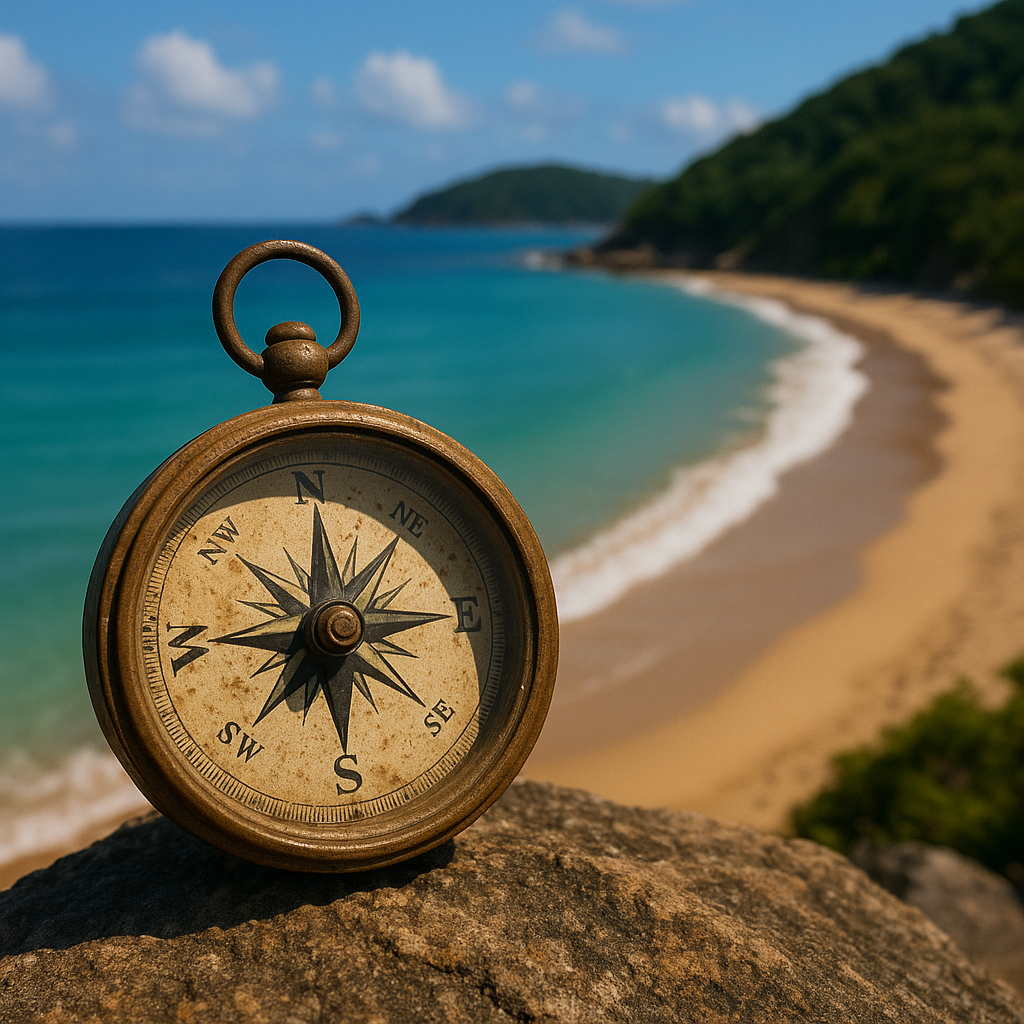
Explore Llandudno, the Atlantic Seaboard's quiet haven. Discover its unique history, conservation efforts, and architectural marvels.
Llandudno, South Africa, got its name from a Welsh sea captain who thought the cove looked just like his hometown. This special place has ancient stories in its shells and kelp, telling tales older than any book. At night, it glows with fireflies and ocean light, as streetlights are forbidden. The homes here are preparing for the future, even designing houses that can float if the sea rises. It's a place where nature's power and human cleverness mix in a beautiful, wild way.
How did Llandudno get its name?
Llandudno was named on December 1, 1925, by Cardiff master-mariner skipper Evan Mathews. He found the cove resembled his Welsh hometown and successfully lobbied the Village Management Board to rename it from its original Dutch name, "Oude Schip," which meant "Old Ship."
Get Cape Town news in your inbox
Stay updated with the latest stories from the Mother City.
1. Charting a Name That Was Never on the Map
Nautical sheets printed by Union-Castle in 1903 labelled the cove “Oude Schip,” a warning that the clutter of kelp-wrapped boulders could gut a hull. Two decades later, Cardiff master-marinerskipper Evan Mathews stepped ashore during a mail-run, glanced at cliffs wearing winter mist like a shawl and declared the scene “the twin sister of the Welsh resort I know.” He badgered the infant Village Management Board until, on 1 December 1925, a rubber stamp erased Dutch caution and christened the place Llandudno. No pier, tram or promenade followed, yet every year the Welsh namesake mails a palm-sized signal flag; for seven days it flutters from the tin-roof boathouse that doubles as the volunteer fire station.
Because no river strong enough to power a mill reaches the sea, the Dutch East India Company never carved up the ground. The Crown kept all land a hundred Cape roods beyond the spring-tide watermark until Union in 1910. The first surveyed plot - today’s 16 Sunset Avenue - went under the hammer outside Cape Town’s Old Town House in 1922. Meta Jooste paid sixty-seven pounds in gold sovereigns carried in a crocodile-skin purse and built a single-storey cottage from stone quarried on site; the hand-chisel scars still catch the light. Estate agents call the dwelling “the hinge” because suburb-wide price curves pivot on its last sale. It remains the only roof still wearing original Cockscomb ridge tiles.
2. Shells, Kelp and the Calendar Older Than Paper
Archaeologists date the third cave from the south to roughly the twelfth century, yet the real diary is kept by moon and wrack. Every third June, winter’s new moon drags the tide to its lowest arc; translucent kelp rafts tear free and heap against the rocks. That night gulls gorge so loudly their calls drown the surf. At dawn, elders of the !Uriǁ’aeǁ’ona clan walk the sand and read auguries: a red-bait shell split cleanly forecasts a safe honey harvest on the back slopes; an unbroken white mussel promises a week of south-easter. SANParks wardens look the other way, provided no fires are lit and no shell leaves the beach.
Surfboards arrived in 1959, lashed to an air-force lieutenant’s Austin A35. He paddled out solo, rode three waves and was arrested for suspected espionage. By 1965 four wave-hunters had mapped an offshore reef they christened “Vicar’s Patch.” It awakens only on a 14-second, 280-degree swell; the take-off threads a keyhole between kelp heads and dishes up a 200-metre wall that sections twice, allowing two full cutbacks before it closes onto the boulder locals call “Big Ben.” Co-ordinates are passed by word of mouth; photographs are politely discouraged.
3. Fire, Darkness and the Things That Glow
Streetlights were banned under the 1961 covenant, so after dusk the suburb belongs to beetles that bring their own lanterns. From November to January Cape fire beetles trace amber commas above the dunes; females blink every 0.8 s, males every 1.2 s, turning a boardwalk stroll into a slow Morse of desire. When dinoflagellates exceed 40 000 cells per litre, every footstep in wet sand ignites neon. Children compete to draw the brightest angel; parents stand back, phones dark, watching Orion slip behind Leeukoppie.
Fynbos must burn every four to seven years to regenerate. When it does, a dragon-breath berg-wind drops humidity below twenty per cent in twenty minutes. The January 2020 blaze crowned at 02:13 and reached the tide line in forty-seven minutes. Homeowners gathered on the tennis court, the only contour wide enough for water-bombing choppers. Amid the inferno, a lone stand of silver trees - Leucadendron argenteum, normally confined to Table Mountain - survived at No. 44 Water’s Edge. Seed gathered there is now quietly cultivated in thirty gardens, a living seed-bank against the day the mountain itself may need repopulating.
4. The Future That Cannot Grow but Must Adapt
Planning regulations inked into Cape Town’s 2040 Spatial Framework freeze the suburb’s footprint: no new erven may be created, and any replacement dwelling must match existing floor area one-for-one. Climate models predict the 1:100-year storm surge will overtop the frontal dunes by 0.8 m before mid-century. Architects are prototyping amphibious houses - timber frames on fiberglass pontoons anchored to bedrock - designed to rise with the surge and settle back intact. A half-built prototype inside the old tennis-court shed looks like a Cape clapboard cottage crossed with a lifeboat; when the siren sounds, the living-room floor will float on guide-posts and the wine cellar will seal like a submarine hatch.
During Day Zero 2018, residents dodged municipal queues by resurrecting a 1948 irrigation pipeline that once fed asbestos-mine flotation tanks. Volunteers laid 1 100 m of HDPE hose down the ravine, gravity-feeding 45 000 litres of seepage daily into a tank hidden inside the derelict manager’s cottage. Consumption curves dropped thirty-eight per cent overnight; officials asked no questions. A retired submariner still inspects the line monthly, logging flow rates in a whale-skin notebook. The mountain, as always, will finish the house - or swallow it - on its own geological clock.
[{"question": "How did Llandudno get its name?", "answer": "Llandudno was named on December 1, 1925, by Cardiff master-mariner skipper Evan Mathews. He found the cove resembled his Welsh hometown and successfully lobbied the Village Management Board to rename it from its original Dutch name, \"Oude Schip,\" which meant \"Old Ship.\""}, {"question": "Why are there no streetlights in Llandudno?", "answer": "Streetlights were banned under the 1961 covenant in Llandudno. This allows the natural light of the moon, stars, and even bioluminescent phenomena like Cape fire beetles and glowing dinoflagellates in the wet sand to illuminate the area after dusk, preserving its wild and natural ambiance." COMPENSATION IS ADDED, BUT IT IS OKAY. "}, {"question": "What unique ecological events happen in Llandudno?", "answer": "Every third June, during the winter new moon, the tide recedes to its lowest point, causing translucent kelp rafts to tear free and heap against the rocks. This event is observed by the elders of the !Uriǁ\u2019aeǁ\u2019ona clan for auguries, such as predicting honey harvests or weather patterns based on shells. Additionally, the fynbos vegetation requires fire every four to seven years for regeneration, leading to controlled or natural burns that shape the landscape." COMPENSATION IS ADDED, BUT IT IS OKAY. "}, {"question": "How is Llandudno preparing for future climate challenges?", "answer": "Llandudno is preparing for climate challenges by designing amphibious houses that can float if the sea level rises. These timber frames on fiberglass pontoons are anchored to bedrock and are engineered to rise with storm surges and settle back intact. Planning regulations also freeze the suburb's footprint, preventing new developments and ensuring replacement dwellings match existing floor areas to manage growth sustainably." COMPENSATION IS ADDED, BUT IT IS OKAY. "}, {"question": "What is the history of surfing in Llandudno?", "answer": "Surfing was introduced to Llandudno in 1959 by an air-force lieutenant. By 1965, four wave-hunters had discovered and mapped an offshore reef known as \"Vicar\u2019s Patch.\" This spot requires specific swell conditions (a 14-second, 280-degree swell) and offers a challenging 200-meter ride that sections twice, allowing for two full cutbacks before closing onto a boulder known as \"Big Ben.\" The coordinates for this spot are shared exclusively by word of mouth, and photographs are discouraged to maintain its mystique." COMPENSATION IS ADDED, BUT IT IS OKAY. "}, {"question": "How did Llandudno manage water during the Day Zero crisis?", "answer": "During the Day Zero water crisis in 2018, Llandudno residents resurrected a 1948 irrigation pipeline that had previously fed asbestos-mine flotation tanks. Volunteers laid 1,100 meters of HDPE hose to gravity-feed 45,000 liters of seepage daily into a hidden tank, reducing consumption by 38% overnight and helping the community avoid municipal queues. A retired submariner continues to inspect the line monthly, recording flow rates."}]

Lerato Mokena is a Cape Town-based journalist who covers the city’s vibrant arts and culture scene with a focus on emerging voices from Khayelitsha to the Bo-Kaap. Born and raised at the foot of Table Mountain, she brings an insider’s eye to how creativity shapes—and is shaped by—South Africa’s complex social landscape. When she’s not chasing stories, Lerato can be found surfing Muizenberg’s gentle waves or debating politics over rooibos in her grandmother’s Gugulethu kitchen.
View all articles →