
Longstanding Sandy Bay naturist element under SANParks review
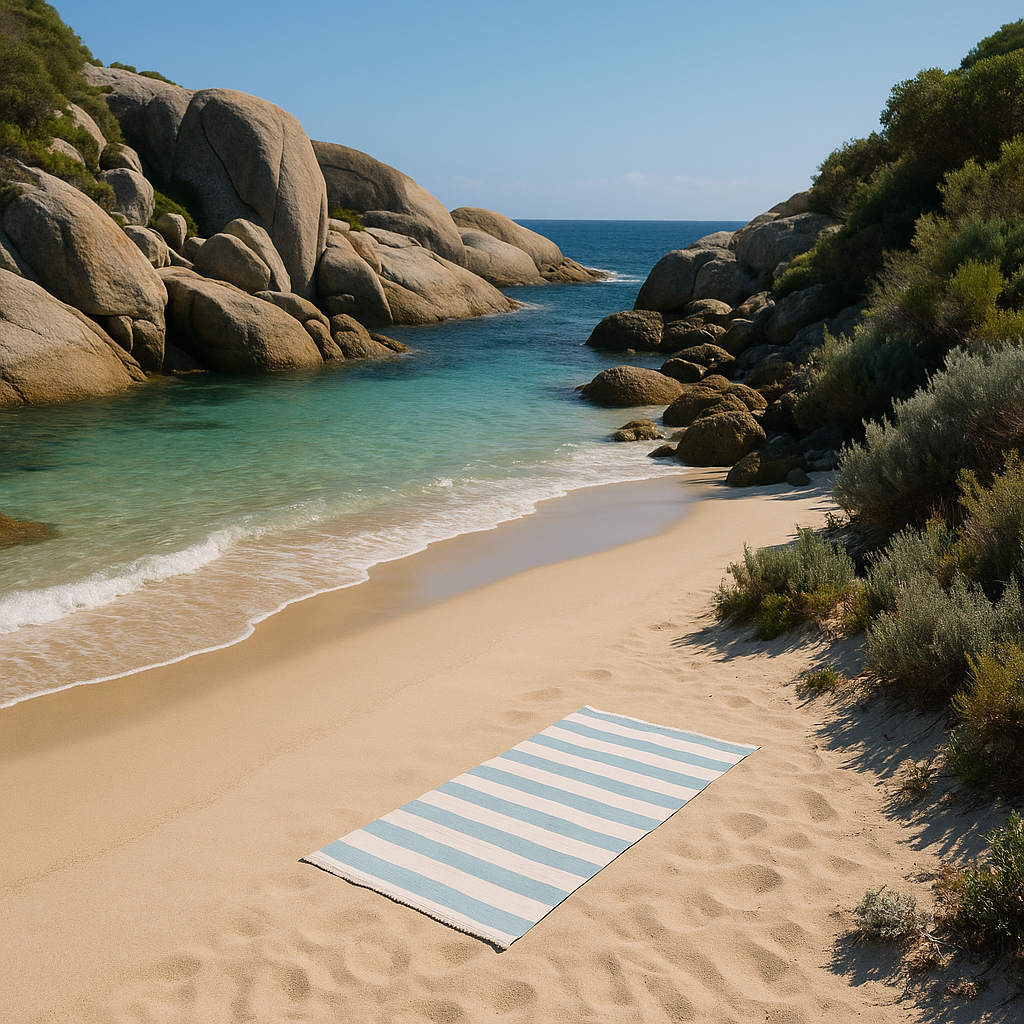
Explore Sandy Bay, Cape Town's unofficial clothing-optional beach. Discover its unique history, culture, and ongoing legal tug-of-war.
Sandy Bay, South Africa's most famous clothing-optional beach, began over 50 years ago with university students. This unique spot within Table Mountain National Park is hard to reach but draws a diverse crowd who shed their clothes freely. It's a place where old rules meet new ideas, and people connect with nature in a very open way. Despite new tech and challenges, it remains a special place where freedom is celebrated with every tide.
What is Sandy Bay known for?
Sandy Bay is renowned as South Africa's most storied clothing-optional beach, a unique social laboratory where university students first started the tradition over fifty years ago. Located within Table Mountain National Park, it's famous for its challenging accessibility and an unwritten code of conduct governing a diverse community of naturists and visitors.
Get Cape Town news in your inbox
Stay updated with the latest stories from the Mother City.
Tucked beneath Karbonkelberg’s shadow, a whisper-thin trail drops toward a crescent of ivory sand that doesn’t advertise itself on any highway billboard. Taxi drivers won’t brag about it, and Google Maps keeps its name in lowercase, yet every summer the narrow path disgorges a quiet parade of day-trippers who will, within minutes, trade fabric for sunbeams. No minister ever christened the spot “officially clothing-optional”; still, for fifty-odd years bathers have treated the act of undressing as casually as kicking off shoes at a friend’s kitchen door. What began as a handful of university students escaping exam stress has become South Africa’s most storied open-air social laboratory, a place where jurisdiction, etiquette and epidermis overlap in ways no legislature ever planned.
The appeal is partly logistical: the beach sits inside Table Mountain National Park yet can be reached only by city footpaths that start in either Llandudno or Hout Bay. The result is a bureaucratic blind spot - declared conservation land, policed by municipal bylaws, and governed in practice by an evolving handshake among strangers. From the Llandudno parking lot the route dives 140 vertical metres in barely a kilometre, the final scramble so steep locals joke about installing an escalator. Most visitors opt for this shorter “goat-track,” sneakers crunching over rosemary-scented fynbos while seagulls heckle from thermals overhead. Those approaching from Hout Bay face a five-kilometre slog across dunes, which explains why the western trailhead remains the preferred artery for the towel-toting, sunscreen-slicked congregation.
How Word Travelled Before Wi-Fi
In the mid-seventies the first regular nude sunbathers were University of Cape Town students who thumbed rides out on Friday afternoons, cooler boxes balanced on tanned shoulders. Flyers run off on library photocopiers circulated through campus bars: “Bring a towel, NOT a swimsuit.” By the eighties, bilingual guidebooks aimed at German and Dutch tourists were spilling the secret; guesthouses in Llandudno slipped “clothing-optional beach 15 min walk” into welcome packs, and a micro-economy of shuttle rides, sarong stalls and cold-drink coolers sprouted without permits or fanfare. The mountain simply absorbed the bodies the way it absorbs winter rain - quietly, thoroughly, asking no questions.
When Table Mountain National Park was gazetted in 1998, rangers charged with counting rare geophytes suddenly found themselves responsible for a beach where tan lines were the only thing under threat. The founding charter never mentioned nudity; managers were busy uprooting Port Jackson willow and building boardwalks for penguins three bays away. Occasional radio chatter - “Control, third dune, pink umbrella, zero attire” - met with laughter and static. For twenty glorious years the unofficial policy was a collective shrug: if no one complained, no one enforced.
Pixels, Drones and the End of Anonymity
Around 2015 two technologies converged: Instagram geotags and budget drones. Within months, unposed images of bare beachgoers ricocheted across foreign tabloids under headlines like “Cape Town’s Secret Naked Paradise.” Some weekenders arrived expecting Ibiza-level theatrics, loudspeakers and quadcopters in tow. Lifelong naturists grumbled about “zoom-lens voyeurs” and petitioned park officials for formal protection. The response was not signage but sporadic patrols: rangers with citation books issuing fines under the woolly clause “public indecency in a national park,” a phrase that outraged purists who noted Parliament never defined nudity as indecent in the first place. Thus began the current tug-of-war between etiquette, legality and the right to feel seawater on every square centimetre of skin.
The Invisible Economy Beneath the Dunes
Hike the ridge on a midsummer morning and you may meet “Towel-Taxi Tony,” a retired safari guide who, for fifty rand, will haul your beach bag down the goat-track and lend you a freshly laundered towel against a deposit. Farther along, a cooler box labeled “Honesty Bar” dispenses iced rooibos and reef-safe sunscreen; the attendant, a Zimbabwean muralist named Tendai, sticks a QR code on the lid and trusts patrons to pay city-centre prices. Weekends bring a roaming masseuse who erects a shade net and charges four hundred rand for thirty minutes of aromatherapy “with the soundtrack of surf.” None of these micro-entrepreneurs holds a permit; all operate on the unspoken contract that visibility equals legality. Customers value the lack of paper trail as much as the convenience - no receipts, no Instagrammable receipts either.
Environmental purists occasionally claim human feet pulverise dune vegetation; botanists reply the main track follows an ancient elephant-seal highway compacted long before the first bikini was discarded. Real damage stems from off-track shortcuts carved by impatient hikers seeking shade behind milkwood trees. Park authorities’ proposed signage is therefore less about modesty than about concentrating footfall onto hardened surfaces. Meanwhile, the animals have voted: dassies now forage among picnic scraps, and African black oystercatchers nest within metres of reclining humans, apparently unfazed by the absence of fabric. One theory holds that the 2009 dog ban matters more to shorebirds than whether bathers wear thread or nothing.
Rip Currents, Phone Thieves and the SafeTan 5000
Sandy Bay faces due west; Southern Ocean swells roll in unobstructed, creating a shore break beloved by body-boarders and rip currents that hug the northern rocks. Lifeguards? None. Instead, a volunteer WhatsApp group - tagged “Sandy Bay Eyes” - flashes colour-coded alerts: purple for jellyfish, red for rip, green for all-clear. Anyone can join; the admin is a woman known only as “Auntie Buoy.” Since 2021 the network has coordinated at least three rescues, proving that social capital can outperform municipal budgets. Crime is sporadic: opportunistic phone theft from unattended backpacks prompted one regular to market a two-kilogram portable safe disguised as a sunscreen bottle - Google it under “SafeTan 5000.”
South Africa lacks a statute that specifically outlaws nudity on beaches; prosecutors must rely on common-law crimen iniuria, which requires an offended complainant. Contrast that with Spain, where every region except Cantabria presumes nudity permissible, or Germany, where FKK symbols appear on official trail maps. In Denmark you can skinny-dip within royal line-of-sight; in Dubai visible underwear under a wet T-shirt can land you in jail. Sandy Bay therefore occupies the fuzzy middle - neither legalised nor criminalised, living in the legislative cracks of a Victorian-era parks code updated for post-millennial bodies.
Towels, Telephoto Lenses and the Unwritten Code
Draft signs - rumoured since March 2022 - may soon declare: “Table Mountain National Park regulations apply. Dress appropriately. No drones. No sexual activity.” Lawyers insist the phrase “dress appropriately” gives rangers wiggle room without inviting constitutional lawsuits based on freedom of expression. Naturist groups want an addendum: “Nudity tolerated south of the third gully,” mirroring Vancouver’s Wreck Beach compromise. SANParks fears that codifying “zones of permission” inside a conservation estate will invite tomorrow’s request for a mountain-bike downhill track through rare fynbos. Until metal meets sand, behaviour is policed by peer pressure and a five-point etiquette memo veterans recite like catechism: sit on your towel, ask before shooting photos, keep voices low, gawkers should act like museum visitors not zoo-goers, and pack out every shred of trash.
Dermatologists caution that Cape Town’s 34-degree latitude delivers twenty percent more UV-B per square centimetre than equivalent Mediterranean beaches. A 2022 Stellenbosch study found regular Sandy Bay users sported thirty percent higher vitamin D levels than their swimsuited counterparts, but twice the incidence of actinic keratosis on shoulders. Their verdict: SPF 50 every forty-five minutes, not the European two-hour standard. Meanwhile marine biologists note that oxybenzone from sunscreen can bleach coral - except Sandy Bay has no coral. The nearest reef lies eight kilometres south at Oudekraal; dilution models deem the risk negligible, so naturists can safeguard both skin and conscience without conflict.
Using anonymised cell-phone pings, researchers logged roughly seventy-eight thousand visits between October 2022 and April 2023, a forty percent jump over pre-pandemic winters. Peak density occurred on 27 December: thirteen hundred bodies on eight hundred metres of sand, shoulder-to-shoulder yet still chair-less, bar-less and lifeguard-less. Despite the crowd, litter mass remained flat thanks to an ingrained pack-in/pack-out ethic. The only newcomer pollutant: disposable vapes in pastel colours, nicknamed “nudist glow-sticks.”
A Daily Referendum on Freedom
Somewhere between city bylaws, conservation mandates, and the universal urge to feel salt on every square centimetre of skin, Sandy Bay stages its quiet plebiscite on what freedom means in an overcrowded world. Each dawn, newcomers still pick their way down the powder-dry fynbos, pulse racing at the first glimpse of cobalt water framed by ochre cliffs. They leave shirts on a sun-warmed boulder, footprints in quartz sand, and stories - spoken or merely breathed - in the salt wind that scours Karbonkelberg clean every afternoon. No verdict arrives, no final sign is planted; the experiment simply renews itself with every tide.
What is Sandy Bay known for?
Sandy Bay is famous as South Africa's most storied clothing-optional beach, a tradition started by university students over 50 years ago. It's known for its challenging accessibility within Table Mountain National Park and for being a place where people connect with nature in a very open way, celebrating freedom with every tide.
How do people access Sandy Bay?
Sandy Bay is intentionally difficult to reach, contributing to its secluded appeal. Visitors can access it via city footpaths from either Llandudno or Hout Bay. The route from Llandudno is shorter but steeper, often called the "goat-track," while the Hout Bay approach involves a longer, five-kilometre walk across dunes. There are no direct road access points, and Google Maps keeps its location somewhat understated, adding to its mystique.
What is the history of Sandy Bay's clothing-optional status?
The tradition began over 50 years ago with University of Cape Town students seeking an escape from exam stress. They spread the word through campus flyers, and by the 1980s, it was being mentioned in international tourist guidebooks. While never officially designated as clothing-optional by the government or park authorities, the practice became an unwritten rule, tacitly tolerated and embraced by a diverse community of naturists and visitors.
What challenges does Sandy Bay face in the modern era?
With the advent of technologies like Instagram geotags and budget drones around 2015, Sandy Bay experienced a shift. Unposed images of beachgoers began circulating, leading to increased visitor numbers and concerns about privacy. This led to a

Thabo Sebata is a Cape Town-based journalist who covers the intersection of politics and daily life in South Africa's legislative capital, bringing grassroots perspectives to parliamentary reporting from his upbringing in Gugulethu. When not tracking policy shifts or community responses, he finds inspiration hiking Table Mountain's trails and documenting the city's evolving food scene in Khayelitsha and Bo-Kaap. His work has appeared in leading South African publications, where his distinctive voice captures the complexities of a nation rebuilding itself.
View all articles →