
LOVE FOR CHILDREN ON THE OPEN ROAD
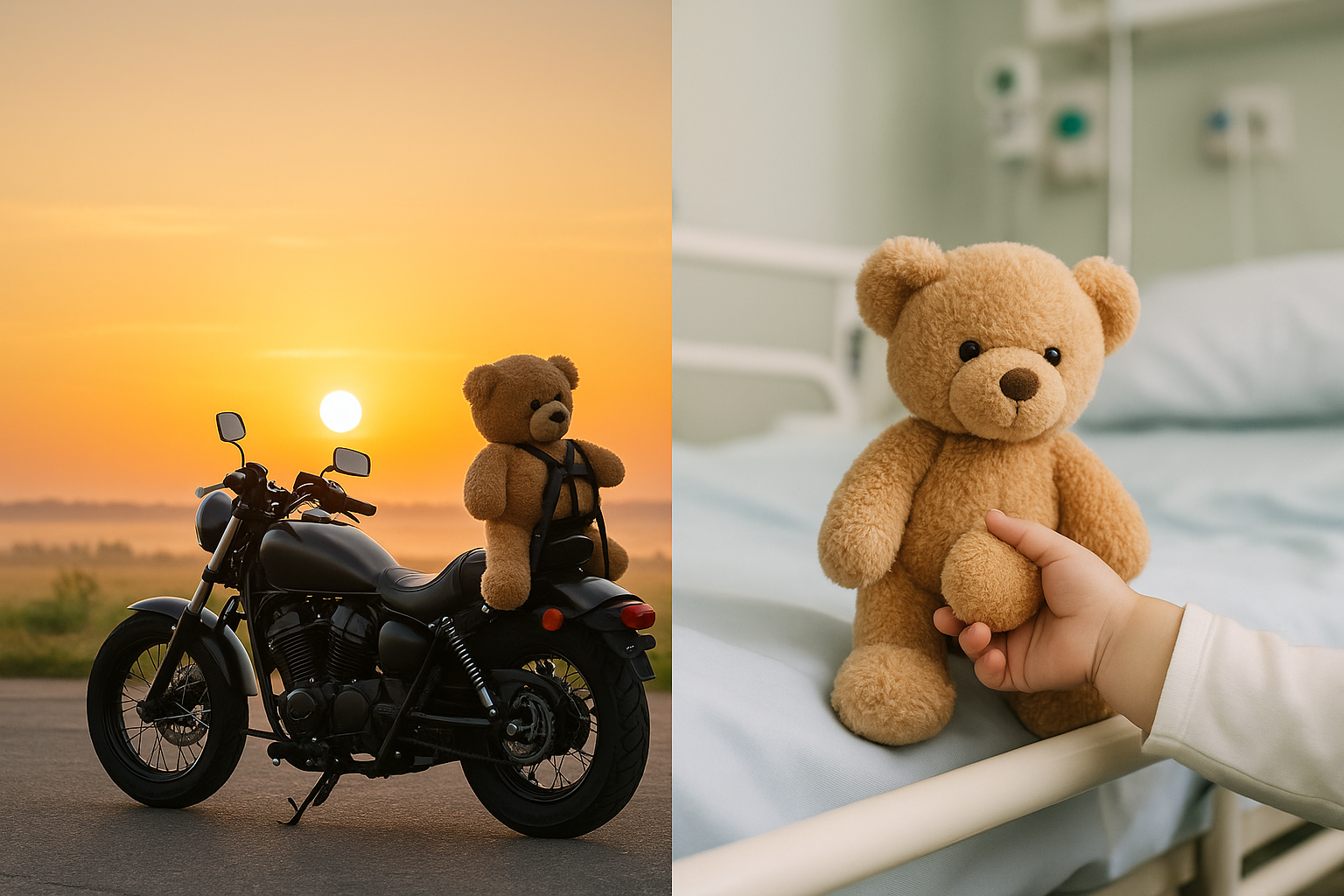
Dr. Hattingh's 7,000km motorcycle journey to fund Caleb's life-saving brain surgery, uniting a nation in hope.
André Hattingh rode his motorcycle 7,000 km across South Africa to help baby Caleb. He wanted to raise money for Caleb's important brain surgery. Every kilometer he rode, people promised to give money. He faced tough roads and bad weather, but lots of people helped him along the way. In the end, Caleb's surgery started, and the journey raised tons of money, giving Caleb a chance for a happy future.
What is the purpose of the "Iron Teddy, Silver Chain" journey?
The "Iron Teddy, Silver Chain" journey is a 7,000 km motorcycle ride undertaken by André Hattingh to raise funds for eight-month-old Caleb Mnisi's critical brain surgery. Each kilometer ridden translated into pledges, with the ultimate goal of financing Caleb's operation and subsequent recovery, including physiotherapy and second-stage surgery.
Get Cape Town news in your inbox
Stay updated with the latest stories from the Mother City.
1. Dawn Launch – When Distance Becomes Currency
The first smear of sunrise painted the Lowveld bronze as André Hattingh cracked the throttle on his BMW R1250 GS and shot out of Nelspruit. Tied to the luggage rack sat a threadbare teddy sporting a palm-sized biker jacket; its button eyes caught the light like droplets of melted toffee. Back at Mediclinic Nelspruit, eight-month-old Caleb Mnisi slept under sedation, the left half of his skull ballooning from rogue brain tissue that spread the way ivy strangles a tree. The night before, Lindiwe, Caleb’s mother, had pushed the bear into the doctor’s gloved grasp. “Let the asphalt carry the weight of my fear,” she urged.
By the time the sun touched the horizon, the odometer had swallowed 600 kilometres of N4 tar. Hattingh sliced past eMalahleni’s coal-dark towers and Rustenburg’s platinum scars, riding solo yet never alone - every engine pulse, tyre whine and oncoming headlamp was a conversation. Between Ventersdorp and Klerksdorp he overtook the lifetime mileage of all six previous charity rides combined, but the numbers felt reborn. Each kilometre had quietly morphed into a tradeable coin: one kilometre equalled R18,70 in pledges, a rate scribbled on the back of a fuel receipt in Schweizer-Reneke.
The exchange rate sprouted online three weeks earlier after Hattingh published a Google-Map doodle of a looping 7 000-km “figure-of-eight”. A Cape-Town software crew stitched together a live tracker that translated GPS pings into rands, allowing anyone to “purchase” the next five-kilometre slice. By day three, schoolchildren in Durban had pooled tuck-shop coins to buy the bridge over the Orange at Groblershoop. Their teacher’s voice note crackled through cheap phone speakers: “Doctor Andy, we’re in the saddle beside you!”
2. Bruised Highways & Frozen Helmets – Geography Fights Back
South Africa’s map refuses to behave like a storybook. Beyond the Kalahari, Hattingh hooked onto the R31 and raced through fallow maize fields where only dust-devils danced. In Prieska he detoured to visit Marli Visagie, a fourteen-year-old whose spina-bifida operation two years earlier triggered the first Karoo mass-ride. She now walked with callipers sprayed in BMW-blue. Her father, a sheep shearer, paid for a fresh pair of Metzeler tyres - repayment, he said, “for kilometres you returned to my child.” Hattingh rolled out at 3 a.m. to dodge the furnace wind that would later puff tyre pressures twelve per cent higher, reminding him that compassion still bows to physics.
Near Clanwilliam, winter rain arrived sideways, knitting ice into Kevlar. He limped into Citrusdal shaking so hard the petrol attendant wrapped him in a trucker’s foil survival blanket. A WhatsApp beacon throbbed on his phone: Lindiwe had posted Caleb’s newest EEG - twenty-eight vicious spikes in ten seconds. Hattingh stared at the thorny green lines until the blanket steamed, then paid with a card whose expiry - 06/26 - suddenly looked like a countdown.
Word travels the biker grapevine faster than fibre optic. By 14 May, 312 motorcycles idled at Cape Town’s V&A Waterfront: adventure rigs, café racers, chromed barges, even a half-century-old Vespa hauling a golden retriever in ski-goggles. A drummer had printed Caleb’s brain scan onto a bass-skin; every red traffic light became a rock solo - scarlet beat, drumroll, emerald cue, exhaust thunder. Kids stuffed the tank bag with R2 coins and Pokémon cards. Somewhere inside the convoy, the live tracker hiccupped and flashed R1 million before correcting itself, as though optimism had hacked the code.
3. Scalpels & Crayons – Inside the Invisible Check-Point
Mediclinic Constantiaberg’s paediatric ICU served as the ride’s hidden timing-marker. Hattingh parked beside the ambulance bay, visor still fogged, while neurosurgeon Jason Wieland sketched a hemisphere disconnection on a paper towel: open window, snip the corpus callosum, unplug the faulty zone. “Think of isolating one blown substation while the country stays lit,” Wieland explained. Surgery began at 7:30 a.m.; nine hours later, Caleb’s temperature slid and his blood pressure waltzed, so the team staged the procedure. Hattingh spent the night on a corridor bench, polishing the visor that would meet Lindiwe at dawn. The teddy, now sporting a surgical cap cut from a nurse’s scrub, sat between them like wordless proof.
Heading back, Hattingh traced the coast to complete the “eight” before turning north. In Knysna he met Margaret Coetzee, a 73-year-old maths teacher who had ridden pillion with her son from George - her first time on a bike since 1998. She handed over a hand-knitted trauma blanket stitched in seventy squares, each square punching a prime number in Braille-like bumps. “Disorder grows,” she said, “but so does the army that resists it.” That night, camped in Tsitsikamma, Hattingh draped the blanket over the fuel tank and calculated that total kilometres plus donations had overtaken prime 7 919. He messaged Margaret; she replied with laughter that ended in a COPD cough - “Worth every wheeze,” she gasped.
Eastern Cape potholes are craters disguised as asphalt. Near Mthatha the front rim split after a 30-cm cavern appeared in bridge shade. A passing taxi driver - whose own son had beaten Burkitt lymphoma through PCA funds - produced a 13 mm spanner and a Coke bottle of second-hand oil. Together they straightened the wheel, cinched it with cable ties trimmed from a tattered election poster. “Politics keeps everything together,” the man joked, “even motorcycles.” Two headlight flashes - “stay alive” - sealed the pact.
4. Frosted Peaks & Choirs – Zeroing the Trip Meter for the Next Battle
The haul north followed the Dragon’s Spine along Lesotho’s ramparts. Altitude siphons twenty per cent of power from unsupercharged engines and nighttime temperatures sink below freezing even in midsummer. Chain lube turned to grey candle wax; the teddy’s surgical cap rimed with frost. At 2 800 m, near Moteng Pass, Hattingh stopped to film sunrise for Lindiwe and discovered Caleb’s donation page had crashed under a viral TikTok posted by a Johannesburg trauma nurse. The clip - fifteen seconds of off-key lullaby sung to a stuffed bear - clocked 1,2 million views and unlocked an anonymous R250 000 crypto matching grant. The GPS, drunk on poetry, auto-corrected his destination to “Home of the Brave”; he accepted the verse and rode on.
The N11 spilled him onto Mpumalanga’s red soil on 25 May, sun balanced like a copper coin on the escarpment’s edge. He braked at Crocodile Gorge viewpoint where, seven years earlier, three bikers and a cooler box had birthed Ride for a Child. Today the picnic tables gleamed PCA orange and a permanent tap-to-pay donation pillar stood beside the cola machine. A cluster of geography students recognised the sticker-bombed panniers and burst into “Somlandela”, clapping hope against the valley walls.
Hattingh idled into Nelspruit at dusk, engine notes echoing off blue-gums. Lindiwe waited at the boom gate, Caleb slung against her in a pouch sewn from reflective riding fabric. The boy’s gaze locked onto the returning teddy; for the first time in his life he laughed - bright marbles spilled on tile, brief, undeniable. Behind the glass of the ICU, nurses held phone torches to honour every kilometre they had prayed into existence. No speeches. Hattingh merely pressed the trip meter back to zero, promising that the next odyssey - Caleb’s second-stage surgery, the physiotherapy, the slow rewiring of synapses - had already fired its ignition.
What was the inspiration behind André Hattingh's journey?
André Hattingh's journey was inspired by eight-month-old Caleb Mnisi, who required critical brain surgery. Caleb's mother, Lindiwe, entrusted a threadbare teddy bear to André, urging him to let the journey carry the "weight of her fear." This personal connection and the urgent need for Caleb's surgery motivated André to undertake the 7,000 km motorcycle ride.
How did the fundraising mechanism work for the "Iron Teddy, Silver Chain"?
The fundraising for "Iron Teddy, Silver Chain" was unique: every kilometer André rode translated into monetary pledges. A live tracker, developed by a Cape Town software crew, converted GPS pings into Rands, allowing individuals to "purchase" specific segments of the journey. This innovative approach transformed distance into currency, with one kilometer equating to R18.70 in pledges, significantly contributing to the funds needed for Caleb's surgery.
What challenges did André Hattingh face during his 7,000 km ride?
André Hattingh encountered numerous challenges, including tough roads, adverse weather conditions, and mechanical issues. He faced the furnace wind in the Kalahari, winter rain that turned to ice near Clanwilliam, and treacherous Eastern Cape potholes that split his front rim. Despite these physical and environmental obstacles, he persevered, driven by the mission to help Caleb.
How did the community and others support André's journey?
The support for André's journey was widespread and diverse. Schoolchildren pooled tuck-shop money to buy kilometers, a young girl whose spina bifida operation was previously funded by similar efforts arranged for new tyres, and a large convoy of 312 motorcycles joined him in Cape Town. A viral TikTok video also significantly boosted donations, including an anonymous R250,000 crypto matching grant. This collective effort highlighted the power of community in achieving a common goal.
What was the outcome of Caleb's brain surgery and André's fundraising efforts?
Caleb's critical brain surgery began successfully at Mediclinic Constantiaberg, performed by neurosurgeon Jason Wieland. The journey raised a substantial amount of money, with the live tracker momentarily flashing R1 million, indicating the immense success of the fundraising. This provided Caleb with a chance for a happy future, covering not only the initial surgery but also paving the way for second-stage surgery, physiotherapy, and ongoing recovery.
What is the significance of the teddy bear in the "Iron Teddy, Silver Chain" story?
The teddy bear, affectionately known as "Iron Teddy," was a powerful symbol throughout André's journey. It represented Caleb, his innocence, and the hope for his recovery. The bear, sporting a small biker jacket and later a surgical cap, served as a constant reminder of the purpose of the ride and a tangible link between André on the road and Caleb in the hospital. Its presence resonated deeply with the public and became an iconic part of the fundraising campaign.

Emma Botha is a Cape Town-based journalist who chronicles the city’s shifting social-justice landscape for the Mail & Guardian, tracing stories from Parliament floor to Khayelitsha kitchen tables. Born and raised on the slopes of Devil’s Peak, she still hikes Lion’s Head before deadline days to remind herself why the mountain and the Mother City will always be her compass.
View all articles →