
Lower interest rates on the horizon in South Africa, say experts
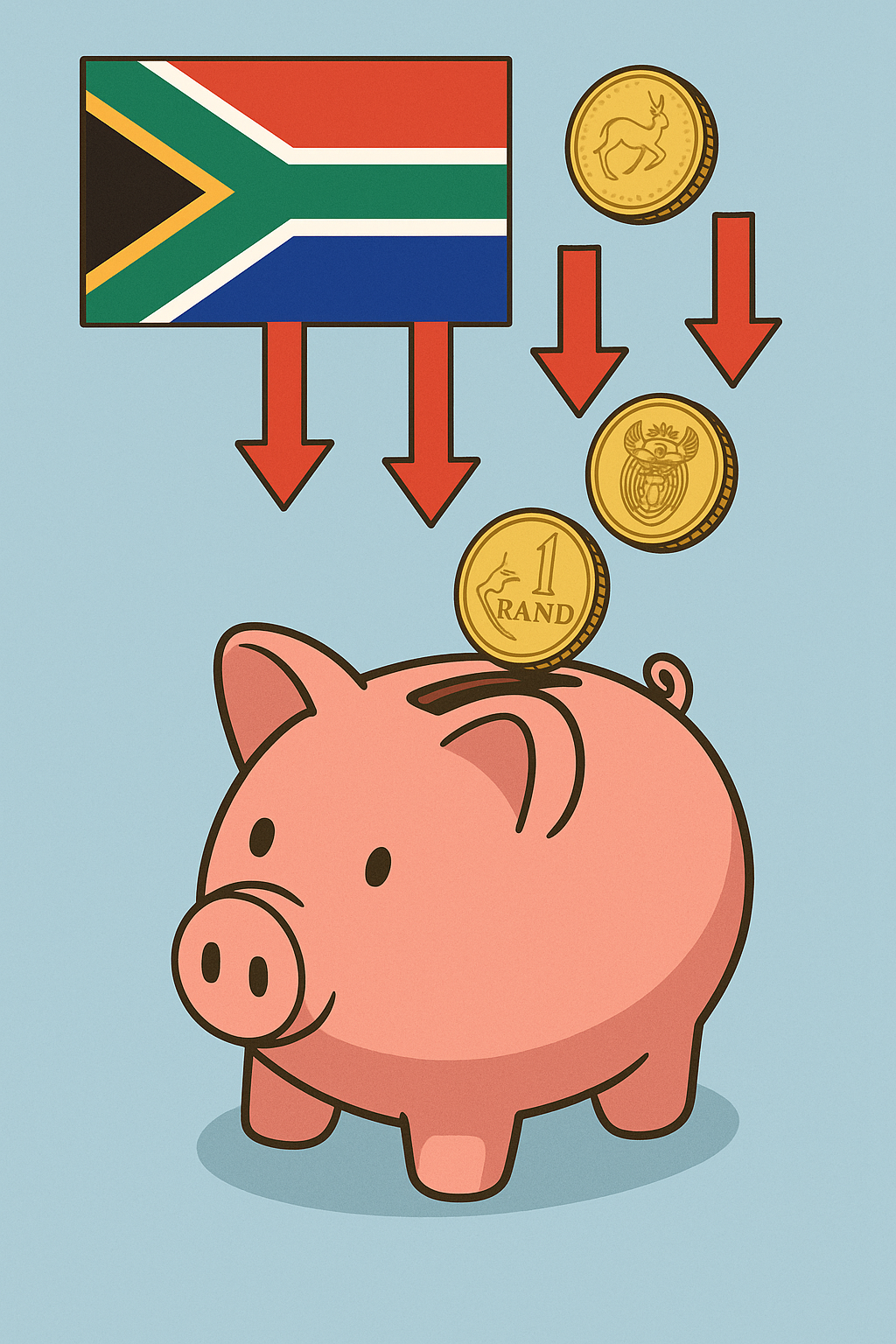
SARB's 3% inflation target is reshaping South Africa's economy. Expect faster rate cuts, boosting growth, jobs, and housing.
South Africa’s Rate Story Has Moved On: The Question Is How Fast the Dominoes Fall
South Africa's money managers are expecting interest rates to drop soon! The central bank is now aiming for a lower 3% inflation, thanks to a stronger rand, cheaper oil, and a great maize harvest. This means borrowing money will get cheaper, making it easier for people to buy homes and cars, and for businesses to grow. While there are still risks, everyone is watching to see how quickly these good changes will happen and help the economy.
What is the current outlook for interest rates in South Africa?
South Africa's interest rate outlook is shifting towards lower rates, with the Reserve Bank's Monetary Policy Committee now targeting 3% inflation. This recalibration is driven by factors like a stronger rand, falling oil prices, and a record maize harvest, easing inflationary pressures and allowing the SARB room to cut rates.
Get Cape Town news in your inbox
Stay updated with the latest stories from the Mother City.
1. The Quiet Revolution Inside the Reserve Bank
Everyone, from Bloomberg terminals to the bond desk at a mid-size Pretoria brokerage, already pencils in lower rates. The argument is no longer whether the cycle has flipped, but how quickly, how deeply and which sectors feel the first push. Behind the unanimity sits an equally important shift inside the South African Reserve Bank: the 3 % inflation goal is no longer a dusty appendix; it is the live beacon that the Monetary Policy Committee follows when it gathers on 29 January.
This recalibration dwarfs the usual gossip over 25-basis-point moves. By dropping the de-facto ceiling from 4.5 % to 3 %, the MPC has rewired every wage deal, rental clause, unit-trust fee and supermarket price label in the country. The lower anchor also broadens the real-rate cushion the Bank spent years defending. When the Bureau for Economic Research clocked two-year inflation expectations at 3.7 % in December – an all-time low – staff could open their spreadsheets and still see a real policy rate near 300 basis points even after November’s trim. Put simply, overnight money still pays more than the economy’s speed limit for prices, so the SARB can ease without losing inflation-fighting street cred.
The arithmetic is elementary. A firmer rand slips straight into the fuel-price formula; petrol and diesel carry a 4.5 % weight in the consumer basket, yet they drag transport, packaging and fertiliser costs along for the ride. After the currency strengthened 10 % against the greenback in twelve months, the Bank’s own rule of thumb says headline CPI loses roughly 0.4 percentage points within two quarters. Layer in Brent crude that has shed 18 % since October and a record maize harvest that has shoved spot yellow-corn prices to a three-year low, and the supply-side downdraft turns obvious. Food inflation, which screamed at 14 % in 2022, is now limping along below 2 %, pulling the overall basket down with it.
Global cross-winds are just as helpful. The US Federal Reserve has sliced 175 basis points since mid-2025, widening the yield gap even after Pretoria’s November cut. Carry traders who had stacked R85-billion in three-month swaps during the 2023 spike are now rolling into longer-dated government bonds, tempted by 9 % nominal on the R2035 benchmark while US ten-years hand over only 3.4 %. Bond inflows have already topped R30-billion in the first three weeks of 2026, beating last year’s total. Every extra billion that crosses the JSE firewall props up the currency, reinforcing the virtuous circle that keeps imported prices docile.
2. Why the SARB Still Sets Policy for South Africa
Governors come and go, yet Lesetja Kganyago keeps repeating one line: the MPC “sets policy for South African conditions.” Those conditions still include GDP per capita that lags its pre-pandemic peak by 4 %, an official unemployment rate glued to 32 % and households whose debt-service ratio sits at 7.8 % of disposable income – above the twenty-year average despite two years of belt-tightening. In that setting, the task is less about singing in the global easing choir and more about making sure real rates do not smother a fragile rebound.
Transmission to ordinary people is already visible. Banks reprice roughly 70 % of new mortgages off the prime curve within 30 days of a repo move; November’s cut trims the average R1.2-million bond by about R190 a month – pocket change in Sandton, but an extra grocery bag for households earning under R15,000. Vehicle finance, credit-card balances and small-business overdrafts reset even faster, releasing roughly R3.5-billion in annual debt-service savings for every quarter-point reduction, according to Aluma Capital. Markets now price two more cuts this year; multiply the relief and the disposable-income boost nears R7-billion – enough to add 0.3 percentage points to consumption growth, the missing ingredient in last year’s feeble 0.6 % GDP print.
Boardrooms keep just as close an eye on working capital. Eskom’s debt swap, Transnet’s locomotive leases and Johannesburg’s waste-to-energy PPP all pay floating coupons tied to three-month Jibar. A 50 bp drop in the benchmark saves those three issuers roughly R2.1-billion a year in interest, cash that municipalities can divert to maintenance backlogs. In the listed-property space, where average loan-to-value ratios hover near 40 %, each quarter-point cut lifts distributable income by about 3 %. Growthpoint and Redefine have already rerated 12 % since October, narrowing the discount to net-asset value that haunted the sector since 2020.
Gold, the rand and the current-account kicker rarely make the rate-cut headlines, yet they matter. At $2,740/oz, the yellow metal trades 14 % above its 2024 average, fattening the Reserve Bank’s mineral-revenue account and muting any fear-of-floating angst that usually dogs aggressive easing. Because the SARB now targets CPI rather than the exchange rate, a buoyant bullion price loosens the external constraint and lets policymakers worry about domestic growth instead of currency panic. The current-account deficit is forecast at only 2.1 % of GDP in 2026 – half the size that forced emergency hikes in 2013 and 2018.
3. What Lower Rates Mean for Markets, Banks and Borrowers
Fixed-income players confront a subtler equation. Duration risk is back: the R186 10-year bond has rallied 60 basis points since November, squeezing the real yield to 2.9 % – barely 50 bp above the new inflation bull’s-eye. Global real-money funds are therefore rotating into 30-year paper, wagering that the SARB’s dovish tilt anchors the long end even if the Fed pauses. Domestic pension funds, handcuffed by Regulation 28, are also lengthening duration, locking in inflation-plus-3 % on index-linked bonds whose principal now compounds off a 3 % reference.
Smaller banks and non-bank lenders feel margin pinch but see volume promise. Capitec, which underwrites a quarter of all unsecured advances, can reprice its book downward within 90 days; net-interest margin may narrow 15 bp, yet history shows origination volumes jump 4 % for every percentage-point cut, more than offsetting margin leakage. African Bank, reborn from curatorship with a squeaky-clean balance sheet, is testing “repo-minus” pricing for prime clients – unthinkable when the policy rate was 8.25 %. Micro-lenders, still charging 27 % on average, will face political heat to follow suit, though Treasury’s 2025 credit-amendment bill already caps retroactive interest and trims their wiggle room.
House-hunters are pulling purchases forward. Pam Golding Properties reports a 19 % surge in viewing volumes in the R700,000–R1.5-million bracket since November; preliminary approvals show bond-acceptance rates climbing to 54 % from 48 % half a year ago, even as average deposits shrink. The rental market – the safety valve after earlier hikes – is cooling; national rent inflation slowed to 3.2 % in December, the first sub-CPI reading since 2021. Motor dealers echo the trend: Naamsa new-vehicle sales leapt 8.4 % year-on-year in December, led by light-commercials that SMEs finance off prime. Second-hand prices, down 11 % in 2025, are finally stabilising as cheaper credit outweighs residual depreciation.
4. Signals to Watch, Risks That Could Bite
The January MPC communiqué will be scoured for three coded hints. First, the vote split: a 3-2 or 4-1 count would flag that doves are still courting consensus rather than declaring victory. Second, the quarterly projection model track: should the forecast repo rate three years out drop below 6 %, traders will pencil in another 75–100 bp of cumulative easing. Third, the language around the neutral rate – the theoretical 2.25 % real level that implies a nominal repo near 5.25 % once 3 % inflation sticks. Any nod that the committee sees today’s 6.75 % as still “restrictive” will lock in expectations for March and September moves.
Politics nudges the SARB toward caution rather than caprice. Municipal elections loom in May 2026, and history shows consumer-sensitive councillors quietly lobby for looser policy. Yet Governor Kganyago, freshly sworn in for a second term, keeps reciting the mantra of “unqualified institutional independence.” Markets, for now, believe him: the five-year sovereign credit-default swap has tightened to 135 bp, within ten basis points of its tightest level since 2015.
Plenty could still unravel. A Trump-style tariff bombshell could revive the dollar, shove oil past $80 and re-import inflation through the energy channel. At home, the public-sector wage round opens in March; unions demand CPI-plus-2 %, a menace to the 3 % target if settlements leak into private contracts. Eskom’s winter schedule, though improved, still carries 4,000 MW of planned-maintenance risk; any return to Stage 6 would reignite diesel and food-price pressures. Finally, the rand’s 2026 rally is partly a portfolio-reallocation trade that can unwind within days if US payrolls surprise on the upside or if February’s budget reveals a deficit wider than the promised 3.5 % of GDP.
For now, however, the constellation – inflation expectations under 4 %, a commodity-fed current account and a Fed that is still cutting – hands the SARB rare room to manoeuvre. Traders on the Johannesburg overnight-index-swap curve price a 72 % chance of a January reduction and a cumulative 68 basis points by December. Those odds will twitch with every US CPI release and every flicker of Stage-4 load-shedding, yet the underlying drift is unmistakable: South Africa’s interest-rate premium, once the widest among twenty major emerging markets, is compressing fast. Whether that sets the stage for a durable growth dividend or merely shuffles income from savers to borrowers will depend less on the MPC’s next press conference and more on how quickly firms convert cheaper capital into jobs – and how stubbornly households opt to rebuild balance sheets rather than re-leverage them.
[{"question": "
What is the current outlook for interest rates in South Africa?
", "answer": "South Africa's interest rate outlook is shifting towards lower rates, with the Reserve Bank's Monetary Policy Committee now targeting 3% inflation. This recalibration is driven by factors like a stronger rand, falling oil prices, and a record maize harvest, easing inflationary pressures and allowing the SARB room to cut rates."}, {"question": "What factors are driving the expectation of lower interest rates?
", "answer": "Several factors are contributing to this outlook: a stronger rand (which reduces import costs), cheaper Brent crude oil (reducing fuel and transport costs), and a record maize harvest (lowering food inflation). Additionally, global factors like cuts by the US Federal Reserve are widening the yield gap, attracting bond inflows and further strengthening the rand."}, {"question": "How does the South African Reserve Bank (SARB) plan to achieve its 3% inflation target?
", "answer": "The SARB's Monetary Policy Committee (MPC) is using the 3% inflation goal as its guiding principle. By setting a lower inflation anchor, the MPC aims to influence wage deals, rental clauses, and pricing across the economy. Even with potential rate cuts, the real policy rate is expected to remain positive, indicating that the SARB can ease policy without compromising its inflation-fighting credibility."}, {"question": "What impact will lower interest rates have on ordinary South Africans and businesses?
", "answer": "Lower interest rates will make borrowing cheaper. For households, this means reduced monthly payments on mortgages, vehicle finance, and credit cards, freeing up disposable income. For businesses, cheaper working capital will reduce interest costs on loans, benefiting sectors like property and infrastructure projects and potentially leading to increased investment and job creation."}, {"question": "What are the potential risks that could hinder further rate cuts?
", "answer": "Several risks could derail the positive outlook. External factors include a potential surge in the US dollar or oil prices (e.g., due to global events like a 'Trump-style tariff bombshell'), which could re-import inflation. Domestically, public-sector wage demands exceeding inflation targets, a return to severe load-shedding by Eskom, or a wider-than-expected budget deficit could also put upward pressure on prices or reduce confidence."}, {"question": "What signals should observers look for in the upcoming MPC communiqué?
", "answer": "Key signals to watch include the vote split among MPC members (indicating the level of consensus), the quarterly projection model's forecast for the repo rate (especially if it drops below 6% for the three-year outlook), and any language regarding the 'neutral rate' of interest. If the MPC still considers the current rate 'restrictive,' it would strongly suggest further rate cuts are anticipated."}]
Tumi Makgale is a Cape Town-based journalist whose crisp reportage on the city’s booming green-tech scene is regularly featured in the Mail & Guardian and Daily Maverick. Born and raised in Gugulethu, she still spends Saturdays bargaining for snoek at the harbour with her gogo, a ritual that keeps her rooted in the rhythms of the Cape while she tracks the continent’s next clean-energy breakthroughs.
View all articles →