
Markus Jooste’s R105 million mansion finally sold in Hermanus
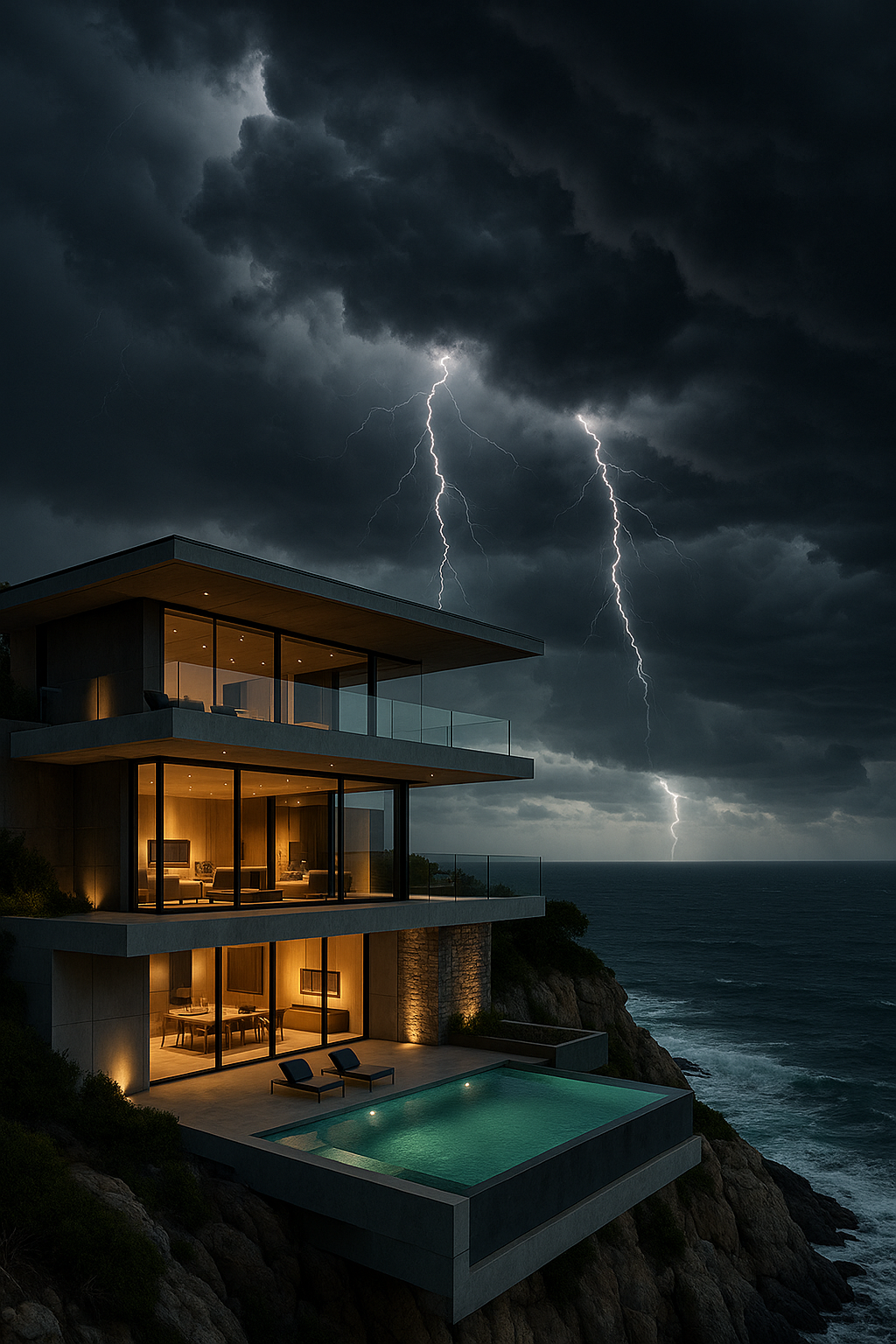
R105M Voëlklip sale: A former Jooste mansion transforms into a luxury eco-lodge, sparking a gilded age in Hermanus.
A huge, fancy house in Hermanus, once owned by a famous scandal-hit person, is getting a new life! It was sold for a lot of money and will become a super luxury hotel focused on nature. This new project will help the town and protect the ocean, even with some neighbors grumbling. It's like a fresh start for the mansion and a big change for Hermanus.
What is the future of the R105-million sea-edge mansion in Hermanus?
The R105-million Hermanus mansion, formerly owned by Ingrid Jooste, is set to become a luxury conservation lodge. New owners plan to develop it into a 10-key "conservation lodge" with eco-pods, offering high-end hospitality and ecotourism experiences, including shark-tagging. This transformation aims to revitalize the property and boost the local economy while focusing on conservation efforts.
Get Cape Town news in your inbox
Stay updated with the latest stories from the Mother City.
1. The Quiet Thursday that Shook the Property Chart
Shortly after the Cape Town Deeds Office opened on a blustery Thursday morning, two adjacent erven on Voëlklip’s cliff crest slipped into new hands. The sticker price - R105 million - catapults the double stand into the country’s ten priciest residential trades outside the Atlantic Seaboard and outruns the previous Hermanus record by more than a third.
The registered seller is a shelf company whose sole director is still Ingrid Jooste, ex-wife of disgraced Steinhoff kingpin Markus Jooste. The purchaser is a freshly-minted South African trust listing four shelf companies as beneficiaries; shareholding drills back to a Gauteng family office that filled its coffers distributing fuel to platinum belts between 2008 and 2014.
The trust deed, lodged the same day, obliges trustees to keep the asset for at least seven years and to “sweat” it through hospitality, conservation and “select agritourism.” In everyday language: the days of one-family occupation are numbered.
2. Anatomy of a Trophy on the Brink
The land hugs the final ridge before a 60-metre drop into the kelp-filled cove locals nickname Die Gang. All told it spans 7 318 m², of which buildings cover barely 2 100 m².
Saota drew the first blueprint in 2006: bleached iroko, frameless rolled glass and horizon pools add up to 1 460 m² of mansion. Farther down the slope squats a 380 m² “studio cottage” originally intended for Ingrid Jooste’s botanical painting sessions.
Spread between the two structures are a flood-lit tennis court, nine climate-controlled garage bays, a 25-metre lap pool jack-hammered into sandstone, a 5 000-bottle wine bunker, walk-in vault, gun room and - most intriguing - a 120 m² reinforced chamber labelled “archive” on plans but whispered about locally as Jooste’s private cinema-cigar retreat.
Even from the sky the estate is almost invisible. Lizl von Wieligh, landscape architect to the Rupert dynasty, planted a three-metre fynbos berm along the northern fence line in 2008, allowing the footprint to melt into Fernkloof Nature Reserve.
3. Why the Joostes Finally Let Go
Although bought with dividends that once flowed from a Luxembourg purse, the December 2017 Steinhoff share-plunge froze that pipeline. Two years later the family’s listed holdings were either attached by the Reserve Bank or locked down in Dutch courts. The mansion - bond-free - stood as their only unencumbered chips.
An off-market campaign in 2020 asked R140 million; soft enquiry and pandemic nerves meant a R35 million haircut by the time ink hit paper this year. Holding costs kept climbing - municipal rates jumped 340 % since 2016, security firms upped fees after the Table Mountain fire crept within kilometres in 2021, and insurers slapped on an 180 % premium bump. The annual bill to keep the lights on now equals a three-bedroom flat in nearby Sandbaai.
4. Inside the Buyer’s Playbook: Tax Breaks, Pods and Pedigree Doctors
Title deeds may read “Voëlklip Vision Trust,” but CIPC filings show Bheki Nyathi’s Bophelo Strategic Partners holding 60 %; the balance sits with a Pretoria physicians’ club that banked serious change selling a private hospital to Netcare in 2021.
For the doctors the attraction is Section 12B of the Income Tax Act: new commercial accommodation in “approved ecotourism nodes” scores a 100 % depreciation write-off in year one. Thanks to vigorous lobbying by ratepayers, the whole Voëlklip hillside was rezoned in 2018, so every rand spent rebuilding can be offset against highly taxed medical income.
Concept drawings already split the former studio into four 80 m² luxury suites and scatter six 45 m² glass-and-timber “eco-pods” among the aloe ridges. Brokers talk of a 10-key “conservation lodge” at R35 000 per suite per night - before the champagne markup.
5. Rupert Roots, Neighbourhood Whispers and the Price of Silence
Few remember that the tract once formed part of the 1 500-hectare Protea Hoogte sheep run the Rupert family assembled in 1927. Antoinette Rupert sliced off the first 10 hectares in 1997, sold to German financier Claus Wisser, who flipped it to Jooste for R12 million - then a Hermanus record.
When word spread that the new cohort intends to trade in overnight guests, a WhatsApp cabal named “Save Voëlklip” rustled up 85 signatures overnight. Objections evaporated after the buyers pledged R750 000 toward street-beautification and boardwalk repairs. Old-money diplomacy, it seems, still speaks fluent rand.
6. Engineering on a Cliff Face - and an Art Vault with a Missing Koons
Building on 200-million-year-old marine sandstone is never simple. The original 2006 contract drilled 38 piers 14 metres deep; today hairline cracks lace the cantilevered pool slab. Arup’s Cape Town office has now been hired to stitch carbon-fibre straps and excavate a discreet 1,2-metre retaining wall so pod foundations won’t nudge the slope toward the sea.
Budgeted civil works: R28 million - loose change measured against the anticipated tax deduction. Biodata Africa, meanwhile, must lift 2 400 endangered limestone fynbos specimens into biodegradable pots and later reinstall them on pod roofs dusted with quartz gravel to mimic original ground heat.
Inside the mansion, receivers found Dale Chihuly’s 3-metre chandelier, 14 Pierneef landscapes and Angus Taylor bronzes - but no sign of the 1,8-metre Jeff Koons balloon dog that featured in every glossy spread. Whether it sits in a Luxembourg free-port or lies under the tennis court is anyone’s guess.
7. Dry Taps, Shark Nurseries and the Sound of Rotor Blades
Hermanus is limping through its third dry summer; the Klein River lagoon hovers at 18 % capacity. Saltwater crept into the estate’s private borehole in March 2023, so owners have shipped in a modular 25-kilolitre-per-day reverse-osmosis rig powered by 150 kW of rooftop solar plus a Tesla Megapack. Brine will be diffused through a grey-water reed bed and released below the low-tide line, but only after the trust funds a second unit for Camphill School for the handicapped down the road.
Six hundred metres below the deck, juvenile white sharks cruise seal-hauling rocks. Marketing staff are scripting “conservation tourism” packages: dawn drone safaris, acoustic-tag sponsorship and resident marine-biologist fireside chats. A trial shark barrier net, fully financed by the lodge, drops in October.
Not everyone applauds the helipad resurrection. The 2006 plans include a recessed circle rated for an EC130; the new consortium claims “emergency medical transfers only,” yet flight-tracking sites already log monthly S-76 practice sorties. Ratepayers have hired the environmental lawyer who squashed a similar bid in De Kelders - court-room drama loading.
8. Timelines, Multipliers and the Town that Just Got Pricier
– July 2024: Heritage Western Cape decides if the main house, younger than 60, may be razed (expect refusal).
– August 2024: Overstrand planning committee votes on “conservation hospitality” rezoning.
– October 2024: Spades hit soil on the first two eco-pods; doors slated for December 2025.
– February 2025: Strauss & Co auctions the Chihuly, estimated at R4,8 million, with proceeds channelled to coastal-clean-up NGOs.
– June 2025: Soft-launch with six suites at R42 000 all-in, shark-tagging included.
Within 48 hours of the sale going public, Seeff’s Hermanus page crashed twice under enquiry spikes. Agents call it the “Jooste multiplier”: each headline sale drags R20–30 million homes up by 15–20 %. The broader shift is cultural - Hermanus is morphing from a retirees’ hide-out into a high-yield, carbon-neutral playground for Silicon Valley “work-from-nature” nomads packing Starlink and nitro-coffee kits.
For now the mansion remains hollow, its glass façades bouncing the Indian Ocean back at itself like a pair of forgotten sunglasses. Security teams glide past on e-bikes, pausing to watch southern rights breach in the bay. Whatever ethical sediment still clings to the sandstone, money - brighter, shrewder and in a hurry - has already taken out its scrubbing brush.
[{"question": "
What is the future of the R105-million sea-edge mansion in Hermanus?
", "answer": "The R105-million Hermanus mansion, formerly owned by Ingrid Jooste, is set to become a luxury conservation lodge. New owners plan to develop it into a 10-key \"conservation lodge\" with eco-pods, offering high-end hospitality and ecotourism experiences, including shark-tagging. This transformation aims to revitalize the property and boost the local economy while focusing on conservation efforts. Concept drawings show the former studio being split into four 80 m² luxury suites and six 45 m² glass-and-timber \"eco-pods\" among the aloe ridges."}, {"question": "Who are the new owners of the mansion and what is their background?
", "answer": "The mansion was purchased by a freshly-minted South African trust named \"Voëlklip Vision Trust\". Shareholding drills back to a Gauteng family office (Bheki Nyathi\u2019s Bophelo Strategic Partners holds 60%) that made its wealth distributing fuel to platinum belts between 2008 and 2014, and a Pretoria physicians\u2019 club that sold a private hospital to Netcare in 2021. The trust deed obliges them to keep the asset for at least seven years and to utilize it for hospitality, conservation, and select agritourism."}, {"question": "Why did the Joostes sell the property and at what price?
", "answer": "The Joostes decided to sell due to financial pressures following the Steinhoff share-plunge in December 2017, which froze their income streams. With other assets attached or locked down, the bond-free mansion became their only unencumbered asset. An off-market campaign in 2020 initially asked R140 million, but due to soft inquiry and pandemic nerves, it was eventually sold for R105 million, a R35 million reduction. The holding costs for the property had also significantly increased, with municipal rates jumping 340% since 2016, security fees rising, and insurance premiums increasing by 180%."}, {"question": "What are the environmental and engineering challenges of developing the property?
", "answer": "Building on 200-million-year-old marine sandstone presents engineering challenges, with existing hairline cracks on the cantilevered pool slab. Arup\u2019s Cape Town office has been hired to reinforce the structure and excavate a retaining wall for the eco-pod foundations. Biodata Africa is tasked with relocating 2,400 endangered limestone fynbos specimens. The area is also experiencing its third dry summer, leading to the installation of a reverse-osmosis rig for water, powered by rooftop solar and a Tesla Megapack. The trust also plans to fund a second water unit for a local school."}, {"question": "How is the new development addressing community concerns and conservation?
", "answer": "When news of the development spread, a local group named \"Save Voëlklip\" raised objections. However, the buyers appeased them by pledging R750,000 towards street beautification and boardwalk repairs. The lodge will focus on conservation tourism, offering experiences like dawn drone safaris, acoustic-tag sponsorship, and marine-biologist chats. A trial shark barrier net, fully financed by the lodge, is also planned for October. Additionally, the trust will fund a second reverse-osmosis water unit for Camphill School for the handicapped."}, {"question": "What is the timeline for the development and its impact on the Hermanus property market?
", "answer": "Key dates include: July 2024 for Heritage Western Cape\u2019s decision on the main house, August 2024 for Overstrand planning committee\u2019s vote on rezoning, October 2024 for the start of eco-pod construction with doors slated for December 2025, and a soft-launch with six suites in June 2025. The sale has already created a \"Jooste multiplier\" effect, with Seeff\u2019s Hermanus page crashing due to inquiry spikes. Estate agents report that the sale is driving up the value of R20\u201330 million homes by 15\u201320%, signaling a shift in Hermanus from a retirees' haven to a high-yield, carbon-neutral destination for remote workers and high-net-worth individuals."]
A Russian-Spanish journalist and Cape Town native, channels his lifelong passion for South Africa into captivating stories for his local blog. With a diverse background and 50 years of rich experiences, Serjio's unique voice resonates with readers seeking to explore Cape Town's vibrant culture. His love for the city shines through in every piece, making Serjio the go-to source for the latest in South African adventures.
View all articles →