
Middle East conflict threaten SA’s fuel price, inflation & interest rate outlook
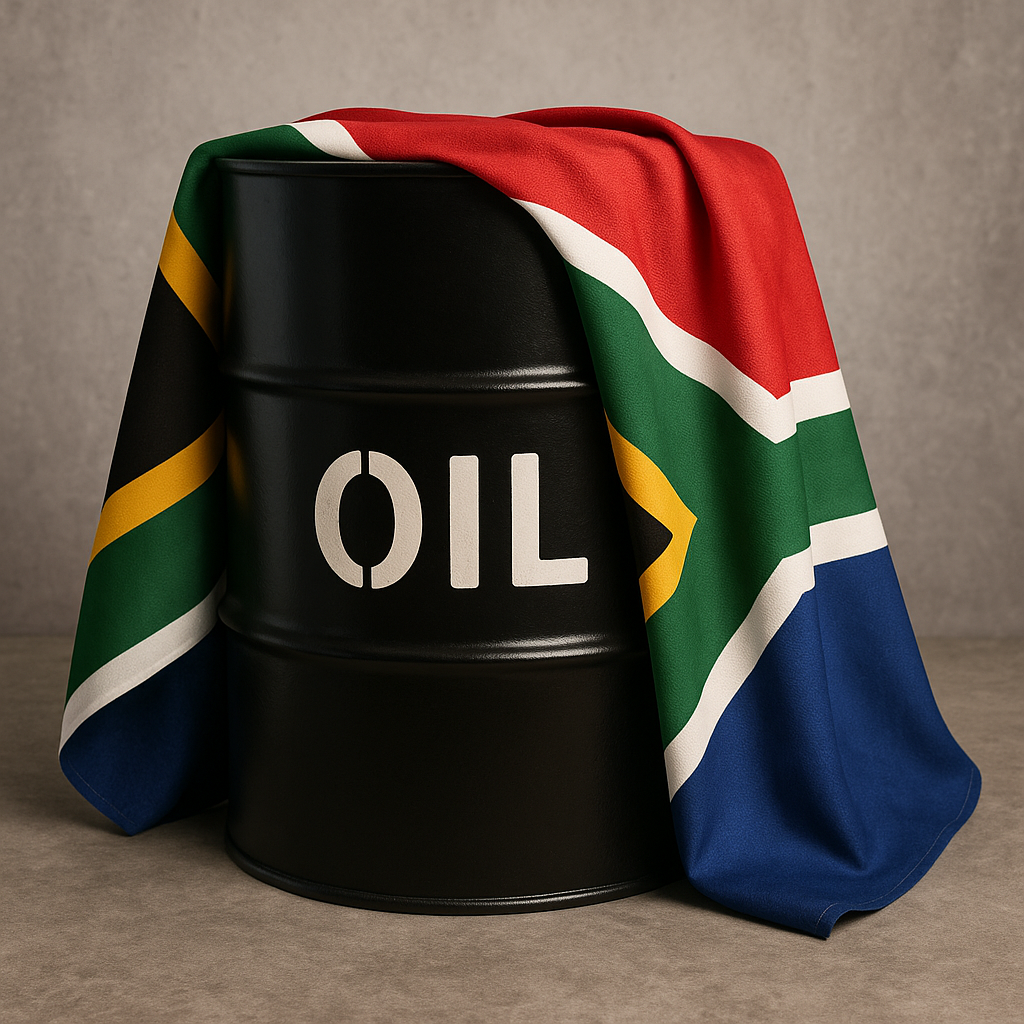
Middle East tensions are rewriting South Africa's inflation script, with rising oil prices and a weakening rand threatening rate hikes and economic strain.
Trouble in the Middle East is making oil prices jump, and that's bad news for South Africa. You'll pay more for gas, which means everything from food to goods will cost more. The central bank might even raise interest rates, making loans and mortgages more expensive for everyone. This could slow down the whole economy and make life harder for families.
How will rising oil prices in the Middle East affect South Africa's economy?
Rising oil prices, fueled by Middle-East tensions, are set to significantly impact South Africa's economy. This will lead to higher fuel prices, increasing transport and agricultural costs, and consequently driving up inflation. The Reserve Bank may implement interest rate hikes, further burdening indebted households and potentially hindering economic growth.
Get Cape Town news in your inbox
Stay updated with the latest stories from the Mother City.
1. From Gulf flashpoint to Pretoria: why the market rewrote SA’s rate path in seven days
At 09:15 SAST on 26 March the Monetary Policy Committee will reveal its first 2025 verdict. Until ten days earlier, forward-rate agreements implied only a one-in-seven chance of a 25-point cut; today the same contracts price a one-in-four chance of a hike and, more strikingly, a net six-basis-point firming. A 30-basis-point swing inside a trading week is the sharpest repricing since the March 2020 pandemic shock, and the spark came 7 000 kilometres away in the Strait of Hormuz.
The timeline that lit the fuse looks like this:
- 11 March – US warships downed Houthi missiles targeting tankers
- 14 March – Israeli jets hit an IRGC logistics site near Isfahan
- 15 March – Iran’s navy commandeered the Liberian-flagged crude carrier MV Southy
Brent leapt from $77.40/barrel to an intraday $83.95, before ending 18 March at $81.60 - an eight-per-cent premium to the February mean. Oil moves feed almost one-for-one into the local basic-fuel-price formula; every sustained $10 rise lifts headline CPI by roughly 0.45 percentage points through the combined 6.4 per cent weight of petrol and diesel. The rand, meanwhile, slid from R15.83 to R16.29, compounding the blow.
Money-market desks now attach a 28 per cent probability that December inflation will pierce the six-per-cent ceiling - exactly the odds the Reserve Bank’s model uses to recommend pre-emptive tightening.
2. How next month’s pump price could add a rand to diesel - and what that means for your wallet
South Africa recalibrates its Basic Fuel Price on the first Wednesday of each month, using a 20-day moving average of Singapore spot quotes, freight, insurance and the concurrent exchange rate. March’s adjustment - announced at midnight on 5 March but computed over 24 January–24 February - caught only the opening salvo of Hormuz jitters; April’s calculation will swallow the full shock.
Researchers at Stellenbosch’s Bureau for Economic Research pencil in:
- Petrol 95: +47 cents a litre
- Diesel 50 ppm: +94 cents a litre
- Illuminating paraffin: +76 cents a litre
Those are baseline figures. Should Brent remain above $85 and the currency drift to R16.50, diesel could spike by more than R1.10, hoisting the Gauteng retail record to R25.30 a litre and adding 0.65 percentage points to annual inflation by June.
The hit is not uniform. Diesel powers 38 per cent of road freight tonne-kilometres and 34 per cent of line-haul operating budgets, so a rand-per-litre jump feeds almost immediately into transport CPI. Farmers face a similar pinch: diesel accounts for 18 per cent of grain production costs; a ten-per-cent upswing raises maize expense by roughly R130 a ton - enough to flatten projected 2025 margins.
3. From tanker to supermarket trolley: the hidden chain that drags food prices higher
Fuel is both a consumer item and a universal input. Stats SA’s 2019 supply-use tables show how the ripple spreads:
Road carriers typically adjust tariffs within 60 days. The Road Freight Association reckons a rand hike in diesel lifts its cost index 2.1 per cent, a rise soon mirrored in bread, milk and maize-meal prices. Chemical naphtha, derived from crude, drives plastics, fertiliser and detergent costs; a ten-per-cent oil spike translates into four-to-five-per-cent packaging inflation within a quarter, turning toiletries and rice into reluctant fellow travellers.
Because agriculture is diesel-intensive, grain farmers hedge diesel exposure on SAFEX via forward contracts. Even so, Grain SA estimates that every sustained R1 diesel increment erodes 3.4 per cent of maize margins, enough to tip some growers from profit to loss this season. Supermarkets feel the squeeze next: packaging, road delivery and farm-gate prices all nudge shelf labels higher, amplifying the initial oil impulse.
4. What the Reserve Bank’s roulette wheel says about inflation breaching six per cent
SARB’s Quarterly Projection Model repeatedly draws 10 000 random paths for 18 outside variables. February’s run - based on $77 oil and R15.80 currency - produced a median 2025-Q4 CPI of 4.1 per cent, with a 90 per cent confidence band of 3.0–5.2 per cent. Rerun the exercise with $85 crude and R16.30 rand and the median inches up to 4.7 per cent while the upper tail reaches 6.1 per cent.
The crucial takeaway is tail risk: the odds of inflation popping above six per cent climb from 11 per cent to 28 per cent, the level at which the model signals front-loaded hikes irrespective of growth.
Forward inflation expectations are already moving. The five-year/five-year breakeven rate on government inflation-linked bonds has jumped 27 basis points in a week - the fastest since the 2016 drought - signalling investors price in structurally firmer price gains. Households follow with a lag; Reserve Bank studies show that when market breakevens reprice more than 20 bps in ten days, surveys of consumer inflation expectations begin to drift within eight weeks.
5. Rate risk ripples: wages, budgets and why 2025’s repo could end at seven per cent
Elevated price expectations leak straight into wage talks. Eskom’s 2025 negotiations kick off 15 April with unions asking for CPI plus two per cent; each 0.5 percentage-point bump in the reference index inflates the utility’s payroll by R3.8bn a year, undermining the February Budget’s slim consolidation path.
Households, already stretched, have little cushion. National Credit Regulator data show 63 per cent of the country’s 27 million credit-active consumers are behind on at least one account; their average debt-service ratio is 78 per cent, an all-time peak. A single 25bp repo increase would add roughly R97 a month to the median R1.2m mortgage, R54 to car finance and R31 to unsecured loans. Across 7.2m indebted homes the monthly drain amounts to R1.4bn - about 0.35 per cent of yearly disposable income.
Markets now imply a 70 per cent chance the repo ends 2025 at seven per cent, up from 6.5 per cent at present. The Bureau for Economic Research’s business-confidence index printed 41 in Q1, below neutral for the eleventh quarter running, with respondents citing “postponed rate relief” and “renewed diesel volatility” as top deterrents to capital spending. Private-sector investment growth has been trimmed from an expected 3 per cent to 0.8 per cent, shaving R12.5bn off nominal fixed capital formation.
6. Counting the cost to the fiscus - and why the rand remains the whipping boy of EM turmoil
The February Budget pencilled gross tax revenue of R1.04trn for 2025/26, anchored on 1.3 per cent GDP growth and 4.2 per cent inflation. Lift CPI by half a percentage point and nominal GDP does rise, yet bracket creep is cold comfort: personal-income-tax yield falls R5.2bn because thresholds lag inflation, while higher diesel rebates cut R3.1bn from VAT. The net shortfall - R8.9bn - widens the consolidated deficit from 4.5 per cent to 4.7 per cent of GDP and nudges gross debt above 75 per cent one year earlier than feared.
A stronger dollar has compounded the pain. The DXY index has added 2.1 per cent since mid-March as US two-year yields touched 4.45 per cent, dashing hopes of Federal Reserve easing in July. South Africa, with twin deficits worth 7.7 per cent of GDP, once again trades as the high-beta proxy for risk-off sentiment. Foreigners sold R11.8bn of JSE bonds in the week to 15 March, the worst outflow since July 2023. Gold has rallied on safe-haven flows, but Pretoria earns only 0.8 per cent on bullion revaluation - scant defence against portfolio outflows of R2.8bn a week.
7. Three forks in the road: how oil and the rand could shape CPI - and your mortgage - by December
Using a stripped-down version of the SARB model, we can map three plausible crude-rand paths onto inflation and policy settings:
| Scenario | Oil | Rand | CPI Dec 2025 | Implied Repo |
| Base | $77 | R15.8 | 4.1% | 6.50% |
| Shock | $85 | R16.3 | 4.7% | 6.75% |
| Severe | $95 | R17.0 | 5.6% | 7.00% |
The severe-shock route - currently a 15 per cent probability - would send inflation to 6.3 per cent in August, compel two 25bp hikes, and lift prime lending to 11.75 per cent, a level last seen during the 2018 EM rout.
Firms are not waiting for Pretoria to decide. Distell shifted 12 per cent of inland volume to rail between Johannesburg and Durban, trimming 9c per litre-equivalent despite Transnet’s tariff jump. Shoprite is piloting 40-ton LNG trucks; a R1.20 diesel rise shortens pay-back on the R480k truck premium from 44 to 31 months. A Free-State maize grower has hedged 80 per cent of 2025 diesel at $82 via a collar, capping pump at R24.50. In Soweto, 120 households pool monthly fees through an app called “Stokvel-Tank,” buying diesel drums 60c below forecourt and dodging rand volatility.
OPEC is still credited with 4.1mbd of spare capacity, yet satellite heat maps show 28 very-large-crude-carriers idling off Fujairah, up from 12 in February, suggesting the cushion is thinner than headline numbers imply. Should Iran mine or drone-swarm the chokepoint, war-risk premiums could spike from 0.25 per cent to 3 per cent of cargo value, adding $2.40 to every barrel landed in Durban. SA sources 55 per cent of its crude through the Gulf; diversions around the Cape still price off Brent, so there is no realistic escape hatch from a Hormuz shock.
Ironically, the oil scare coincides with easing electricity constraints. Eskom’s energy-availability factor hit 68 per cent in February and load-shedding has been muted for 72 straight days, saving R1.1bn a month in diesel burn. The relief, however, accrues to the sovereign, not to household wallets; transport costs still propel CPI, trimming the net inflation benefit to near zero.
Looking ahead, the policy calendar is packed with landmines none of Pretoria’s officials control: 26 March MPC, 29 May MTBPS, 3 July NERSA tariff ruling, 19 November final MPC. Each decision now hinges on a waterway 7 000km away - yet its shadow already stretches to bond auctions, grocery aisles and a Soweto stall where paraffin costs 65c more than it did at Christmas.
[{"question": "How will rising oil prices in the Middle East affect South Africa's economy?", "answer": "Rising oil prices, fueled by Middle-East tensions, are set to significantly impact South Africa's economy. This will lead to higher fuel prices, increasing transport and agricultural costs, and consequently driving up inflation. The Reserve Bank may implement interest rate hikes, further burdening indebted households and potentially hindering economic growth."}, {"question": "What specific events in the Middle East have led to this increase in oil prices?", "answer": "Recent events include US warships downing Houthi missiles targeting tankers on March 11th, Israeli jets hitting an IRGC logistics site near Isfahan on March 14th, and Iran's navy commandeering the Liberian-flagged crude carrier MV Southy on March 15th. These incidents, particularly near the Strait of Hormuz, have caused Brent crude prices to jump significantly."}, {"question": "How will these oil price increases translate to fuel prices at the pump in South Africa?", "answer": "South Africa recalibrates its Basic Fuel Price monthly. April's calculation is expected to fully reflect the recent oil shocks. Researchers at Stellenbosch's Bureau for Economic Research project petrol 95 to increase by 47 cents a litre, diesel 50 ppm by 94 cents a litre, and illuminating paraffin by 76 cents a litre. If Brent stays above $85 and the rand weakens to R16.50, diesel could spike by over R1.10, pushing the Gauteng retail record to R25.30 a litre."}, {"question": "What will be the broader impact of higher fuel prices on everyday costs and inflation?", "answer": "Fuel is a universal input. Higher diesel prices directly increase road freight costs, which will be reflected in tariffs within 60 days, impacting prices of essential goods like bread, milk, and maize-meal. Chemical naphtha, derived from crude, will lead to higher costs for plastics, fertiliser, and detergents. Agriculture is also heavily affected, with diesel representing 18% of grain production costs, potentially eroding maize margins and increasing food prices in supermarkets due to higher packaging, delivery, and farm-gate costs."}, {"question": "How might the South African Reserve Bank (SARB) react to this inflationary pressure?", "answer": "The SARB's Quarterly Projection Model indicates that if oil prices reach $85 and the rand is at R16.30, the probability of inflation exceeding 6% climbs to 28%. This is the level at which the model signals pre-emptive interest rate hikes. Markets are already implying a 70% chance that the repo rate could end 2025 at 7%, up from the current 6.5%, making loans and mortgages more expensive for consumers and businesses."}, {"question": "What are some potential scenarios for inflation and the repo rate given differing oil and rand conditions?", "answer": "Based on a simplified SARB model, three scenarios are projected: a Base scenario ($77 oil, R15.8 rand) with 4.1% CPI and 6.50% repo; a Shock scenario ($85 oil, R16.3 rand) with 4.7% CPI and 6.75% repo; and a Severe scenario ($95 oil, R17.0 rand), currently with a 15% probability, which could lead to 5.6% CPI (potentially 6.3% in August), compelling two 25bp hikes and lifting prime lending to 11.75%.", "additional_info": "Companies are already adapting, with some shifting to rail transport or piloting LNG trucks to mitigate fuel costs. Farmers are hedging diesel exposure through forward contracts. Householders are even pooling resources to buy diesel in bulk. The Strait of Hormuz remains a critical chokepoint, and any further disruptions could significantly increase war-risk premiums for crude, adding substantially to the cost of oil landed in Durban."}]

Oliver Daniels is a Cape Town journalist who chronicles the intersection of food, migration and identity in South Africa's kitchens—from wood-fired Gugulethu braai spots to Constantia vineyards. Born and raised on the slopes of Devil’s Peak, he still starts each week with a dawn walk across Table Mountain to catch the first Atlantic light before filing copy.
View all articles →